English
 Español
 Français
 Deutsch
 Italiano
 Português
In potential, sensation is constitutively anesthesia;
thought is non-thought, work is inoperativity.(Giorgio Agamben)
The poetics of inoperativity, or simply inoperativity —assuming, in the title of this exhibition, a certain proximity to Agamben—, seeks a way to deactivate certain unnoticed apparatuses of power by positing the potential of negation or the potential not to as that which makes possible the freedom “of the one who acts”. Inoperativity attempts to counter the modern construction of the human being as a producer of works, thereby underscoring the intrinsic capacity to suspend the function assigned to an apparatus, an institution or language itself, and situating rest not as the manifestation of a biological restoration necessary for efficiency, and therefore as something subordinated to production, but as the moment in which human activity turns toward contemplation, play and encounter in common.
The inoperative is, then, linked to creation, but diverted from production conceived as a means of counteracting some form of loss. It is the cessation of acting exercised above all through suspension and not as impotence. A tool that a child uses as a toy suspends its utility and returns it to the free and open decision of play; a poem that uses language without seeking to explain or communicate, liberates meaning and reveals the potentiality of language itself, allowing us (for example) to distance ourselves from immediate circumstances.
The artist, then, in general, is inoperative —or the operator of inoperativity—, insofar as the artist pursues no external end, but rather a gesture that presents itself as something that suspends the demand for performance or utility. If the artist is, as Iván Candeo conceives it, the place “where the way in which acts of representation operate becomes conscious”, inoperativity would consist in taking representation itself and freeing it from its functions, its practical-media uses or its claim to encompass interpretations of reality, in order instead to show “what is lost within it”. But, above all —and as far as most of Candeo’s research reveals—, to reveal the ways in which time is constructed, which are the ways in which narrative, history, versions of collective reality, forms of life… are produced, “images that, through contemporary media, are intended to be instilled”.
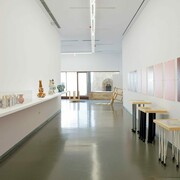
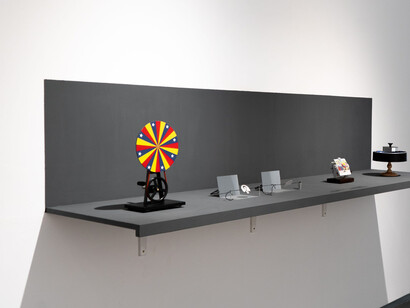
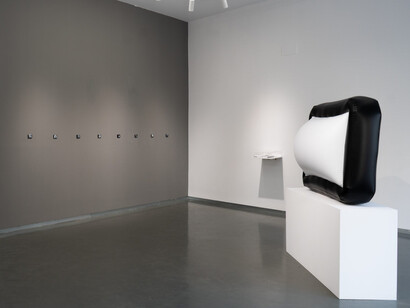
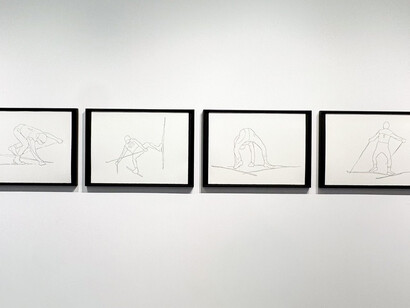
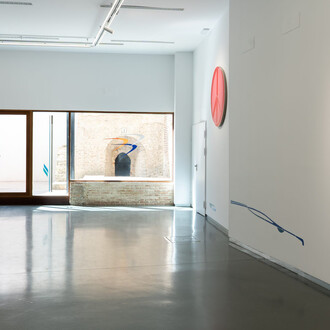
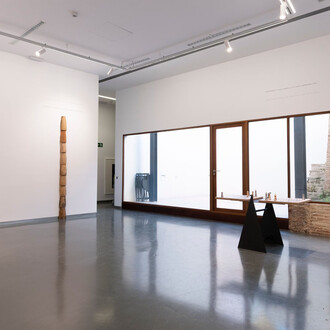
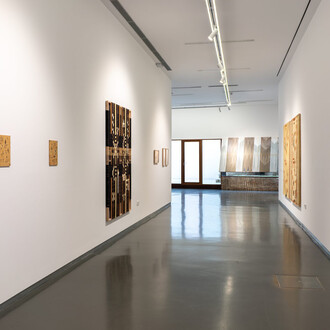
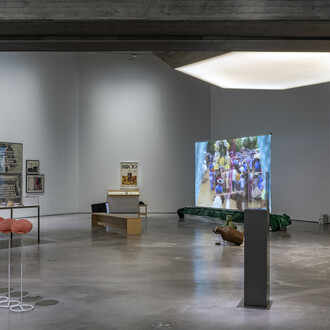
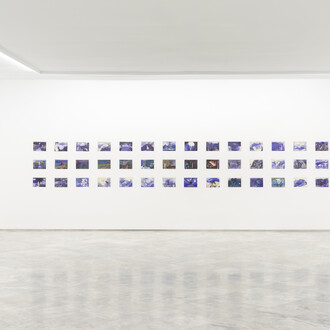
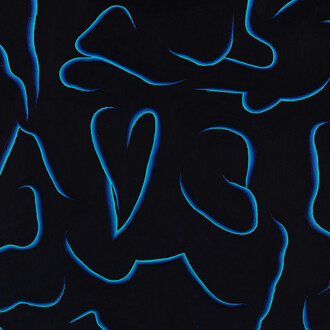
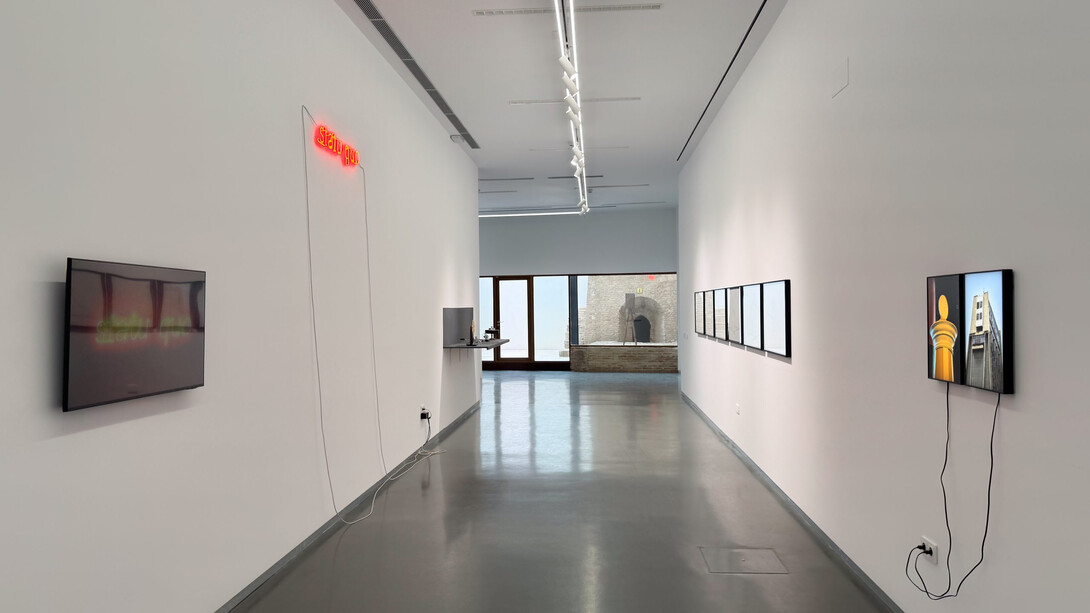
This investigative and metaphorical decision, which at times uses recurrence as a means of arresting (Primeros planos, 2018), diverting, interrupting (Pantalla hinchada and Butacas, 2026) or suspending (Statu quo, 2025 and El esquiador, 2024) the fiction of linear time, has a rhythm or a constancy in the career of the creator of Inoperancias, which is why it is particularly significant that this exhibition includes the Serie Juguetería filosófica or cine de dedos, whose images refer to Venezuela’s failed political history through optical devices used, at some point —or now—, “to experiment with retinal persistence”.
Recurrence, in itself, is linked to the inoperative because repetition wears away the pragmatic or utilitarian meaning of time, its merely instrumental use, and as in a dance or a game, purpose is suspended. What is shown, then, is not what the action is for but the gesture in its own potentiality, the medium or representation themselves, like a distorted cinema screen and therefore deactivated in its condition as a “screen”, or cinema seats that are still recognisable, but displaced from their function of maximum comfort in order to position the body for the reception of imaginal narrative. In this work, as Candeo aptly puts it, “the relationship between the spectator’s space of reception in the cinema and the plane of representation in painting are exchanged, there is [therefore] a transmedial condition within them” which, through this “dismantled cinema”, ceases to concern itself with what happens in the images and begins instead to concern itself with what happens —and ceases to happen—, in the environment of the representation of movement.
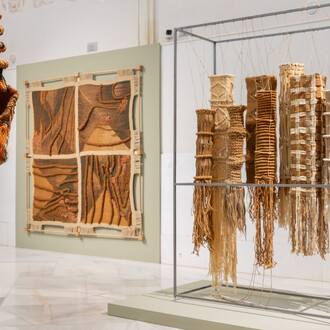
Transposition is also a recurring gesture. It is already implicit in the investigation into the conditions of the media of representation (cinema), but it is also present in the cultural juxtaposition of Cámaras celosías (2023). The meaning of the window in Western culture and the mashrabiya of the Middle East, present through influence in some cities in southern Spain, not only reveals the juxtaposition of the gaze toward the outside and the inside (allowing light to pass through, in this case), but also reminds us of Hans Belting’s controversial thesis according to which, one of the inventions most closely associated with the identity of Western culture, the technique of perspective, is inexorably connected to a mathematical invention by the Arab scholar Alhazen in the eleventh century.
The transposition of media, systems of representation, temporalities; the resignification of the potential not to as that which grounds human freedom, are two ways of approaching part of Iván Candeo’s trajectory at a moment in which some announce inoperativity as a feature that might be generated from a non-human locus. Perhaps from the potential not to, taking this body of works critical of representation as elucidations, we might reconsider the mechanisms, not only of homo faber, but also those of the erasure of all differentiation.
(Text by Carmen Alicia Di Pasquale)