English
 Español
 Français
 Deutsch
 Italiano
 Português
Chat, why do artists need to capture nature, not to represent it, but to become it?...
...And this question, which seems—and I suppose is—absurd, leads us to a series of evolving relationships, like the ones you’ve all had at some point with Chat.
The first thought that comes to mind is: what do I mean when I say an artist needs to capture nature, not to represent it, but to become it? Am I referring to a physical and sensory experience, merging with the landscape, perceiving it from within or is it a more material and ontological question? Working with nature as a living force of which the artist is a part? That’s too much.
I really have no idea what I mean when I ask that question. I feel it inside; after studying both artists in depth, it comes from a hidden poetics, and I don’t want to analyze it that way. I only know that when I set out to discover the worlds of Ángela Rodríguez and Ânia Pais, there’s a fine line that unites them. They want to be landscape. They want to be a leaf.
And that “wanting to be” implies, in and of itself, the impossibility of being, but it leads me to understand that motivation stems from the same root: desire. Because the desire to “want to be” has nothing to do with possibility or impossibility; rather, it speaks to how we want to be affected by—and to affect—what we call the natural world, in this case. A dream in full consciousness.
Both artists draw on an early connection to the rural world, but how can that authentic experience be translated into visual art? That process of translation organizes, transforms, selects, and abstracts. What appears in the work is not nature itself, but a constructed form. Yet the artistic process involves a correspondence between the creator and the materials used: form emerges from the relationship with them. What if that relationship were shaped by the desire to be?
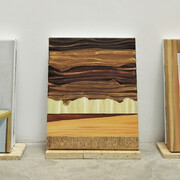
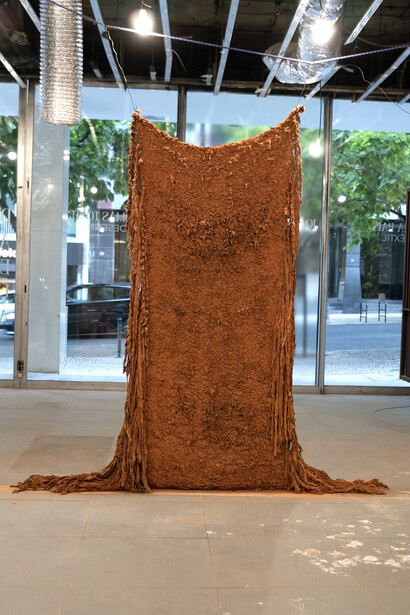
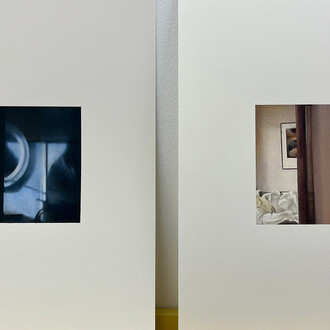
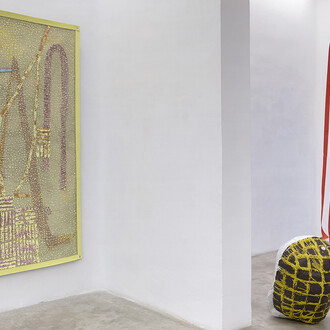
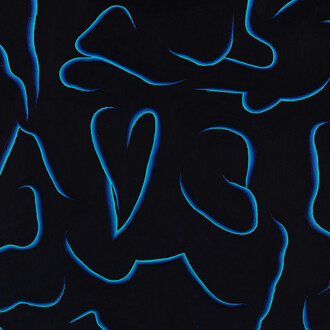
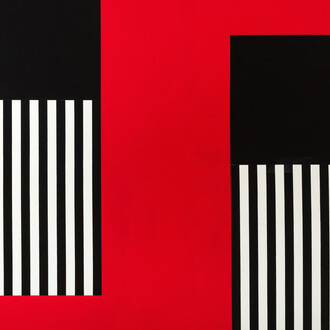
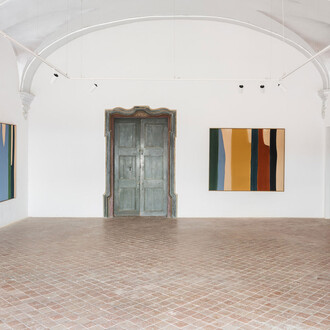
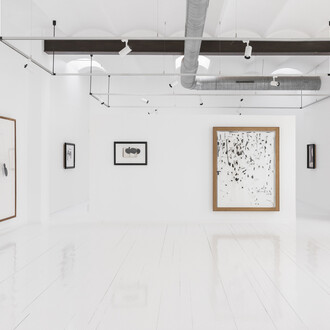
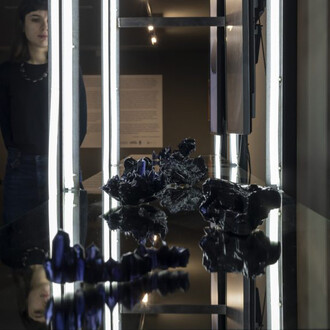
The fabric—as an extension and structure of the body—that Ânia Pais presents to us becomes a space for experimentation where time and transformation play a role in the work. The materials are not passive elements to which the artist imposes a form, but rather presences with which she engages in a conversation.
Incorporating natural elements might seem like an attempt to return to a primordial state, to find something pure in the face of a human world perceived as artificial or depleted. But the earth is neither innocent nor untouched by human intervention; it contains stories, transformations, and forms of life. As Donna Haraway argues, nature and culture are not completely separate realities, but are constituted in relation to one another. Perhaps the power of Ânia’s work, therefore, does not lie in restoring an untouched wild world, but in questioning the distance we have established from it.
Her desire to become landscape need not result in an impossible fusion with the nonhuman. It can become a reality in the very process of creation: in the choice of materials, in their transformation, in the work’s presence in space, and in its exposure to time. Artifice does not disappear, but is transformed into a way of listening, of paying attention, and of allowing herself to be moved by her surroundings.
Perhaps, for Ânia Pais, creating is a way of taking root without possessing, of inhabiting without dominating. Not literally becoming a leaf, but finding in art a way to belong to it.
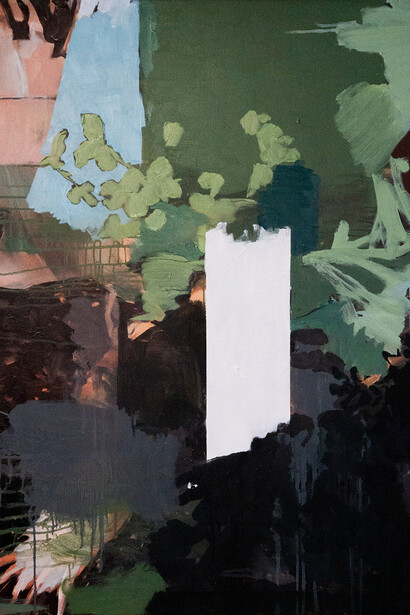
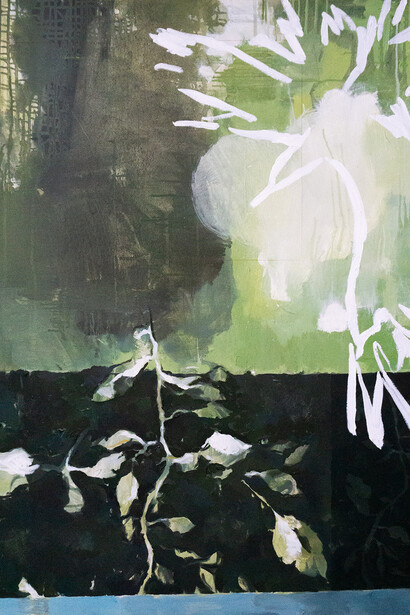
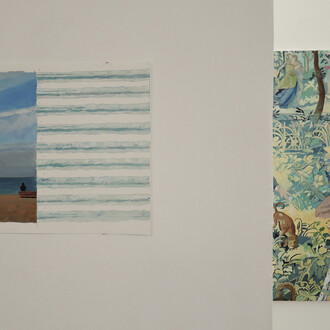
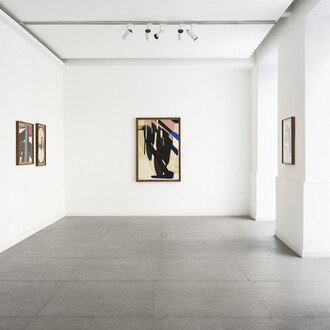
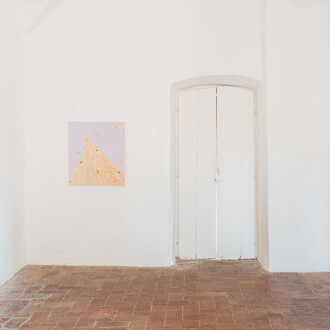
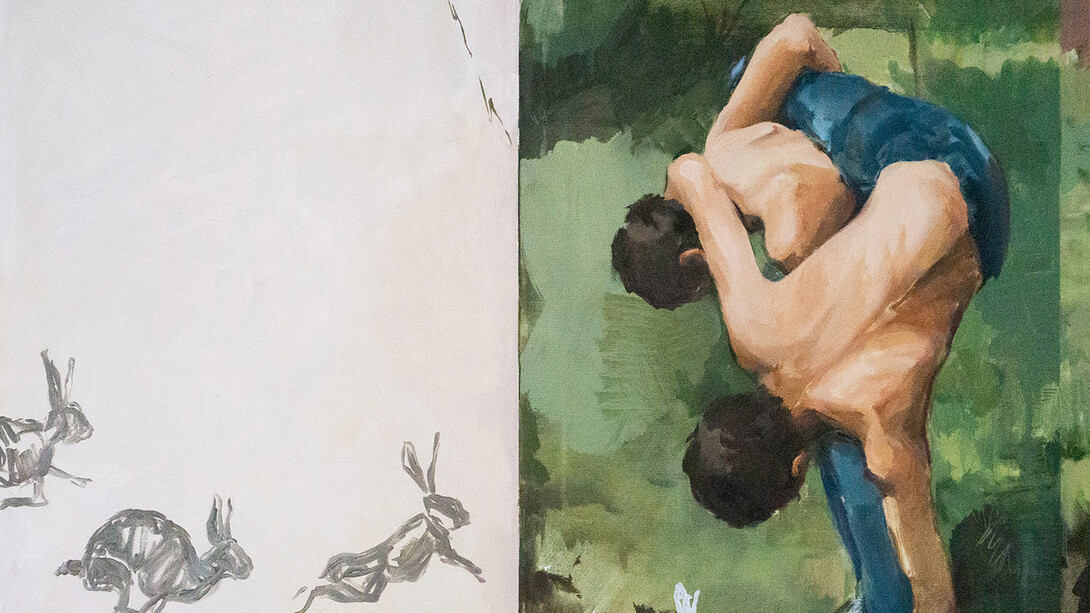
The naivety that Ángela Rodríguez champions in her painting need not be understood as a depiction of an innocent nature, but rather as a way of approaching it. There is a desire in her work to recapture something of the childlike gaze: a direct relationship with things, prior to the need to explain or control them. In this sense, Ángela’s painting seems to oscillate between two possibilities: the spontaneity of the gesture and the desire to return to a freer experience of the world.
Through her painting, Ángela advocates a way of being—of putting down roots like a tree, of letting experience flow through her and allowing it to find its own expression on the canvas. The canvas thus becomes a space where the artist’s narrative and that of the painting itself converge, where a single gesture can open up unexpected paths and the imagination need not be confined to a single interpretation.
But what does it mean to want to reclaim that primal relationship? Nature is neither naive nor innocent: it is also strength, harshness, transformation, and survival. Perhaps Ángela’s desire is not to ascribe to nature a purity it does not possess, but rather to find a way to relate to it without reducing it to the familiar. A way of approaching it that allows her to rediscover curiosity, freedom, and the capacity for wonder. And it translates into a conscious cry: I want to be wild.
What if what we need isn't to stop wanting to be, but to ask ourselves what idea of nature we've constructed that makes us want to desire it? But even so, let's never stop desiring, let’s never stop wanting to be a leaf.
(Text by Vanessa H. Sánchez)