English
 Español
 Français
 Deutsch
 Italiano
 Português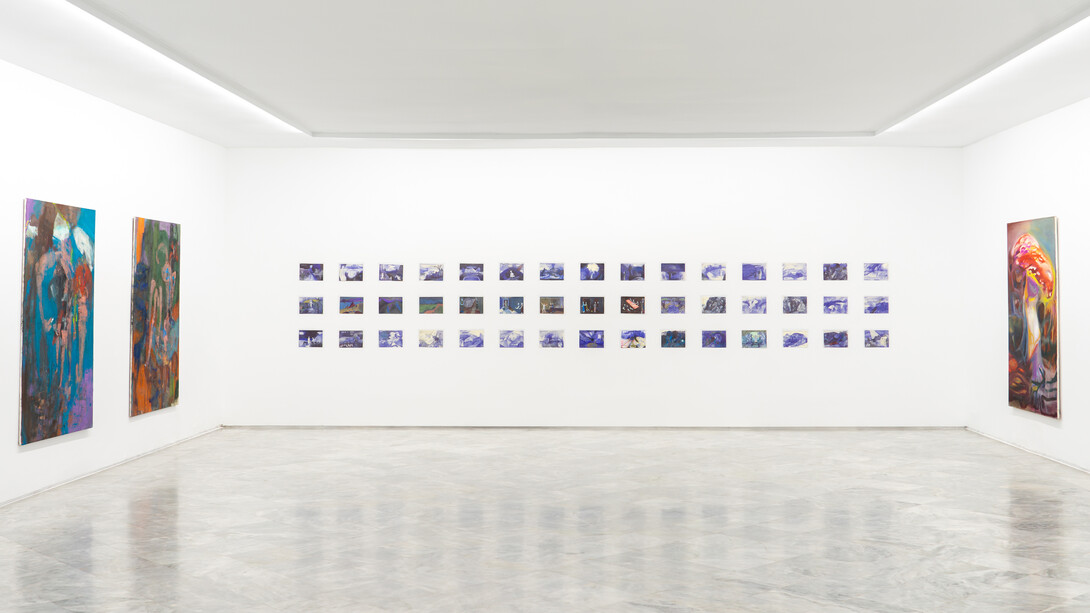
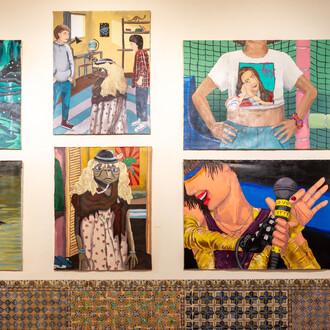
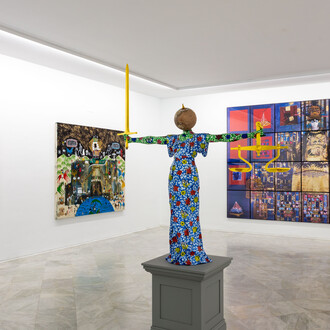
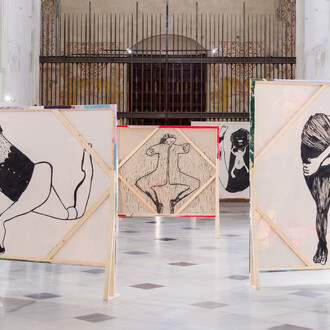
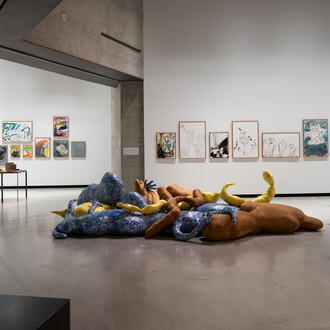
The exhibition entitled The latest painting (La última pintura) is the result of a commission by the CAAC to organize an exhibition that offers a panoramic overview of the pictorial creation currently developing in Andalusia. The project is part of the line of work that the center has been pursuing for years with the aim of giving visibility to the work of young creators active in our region.
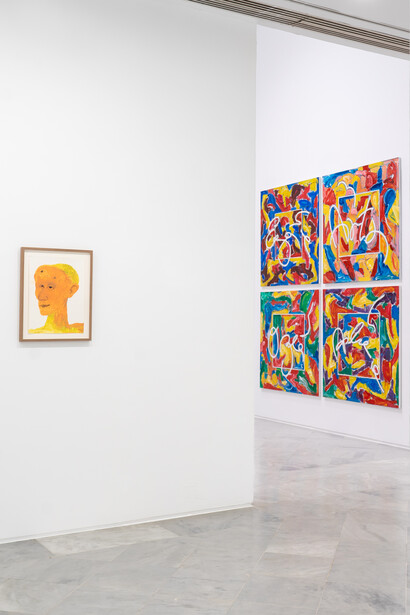
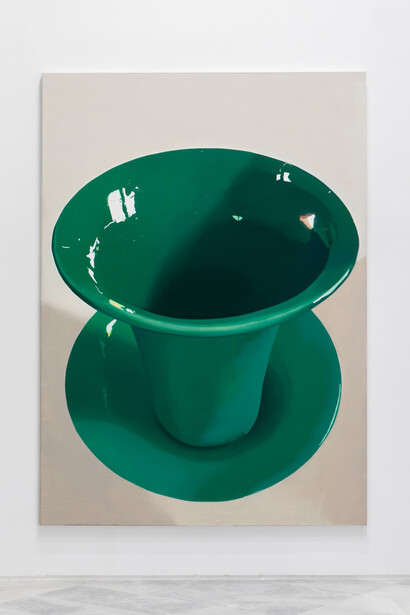
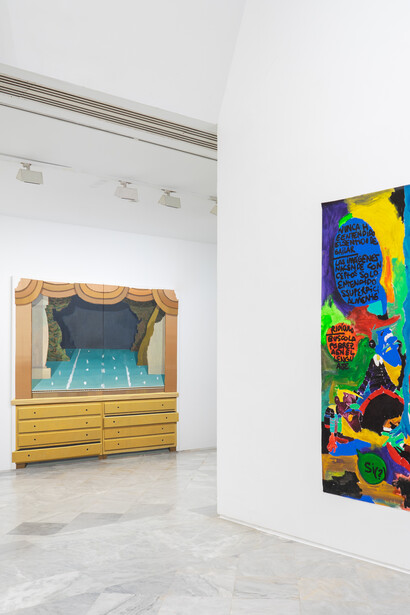
In this light, one of the premises for the selection of artists made by the curators for this exhibition was to prevent it from becoming a mere catalog of names endorsed by the art system. Rather, avoiding the restriction of the concept of painting to current canons, we set out to compose a selection of works produced by Andalusian artists that would allow us to display the variety of ways of approaching painting today. The arrangement of the pieces aims to emphasize the interrelationship between them, seeking to aid their understanding within a broader framework while simultaneously facilitating the proper interpretation of each artist’s personal pictorial practice.
In our view, the works we have selected by Irene Anguita (Córdoba, 1997), Andrés Aparicio (Villarrasa, Huelva, 1989), María Rosa Aránega (Almería, 1995), Fran Baena (Priego de Córdoba, 1999), Marta Beltrán (Granada, 1977), Fátima Calderón (Puebla de Cazalla, Seville, 1986), Carlos Cañadas (Granada, 1998), Alejandro Castillo (Melilla, 1992), Pilar Consuegra (Pozoblanco, Córdoba, 1982), Agus Díaz Vázquez (El Cerro del Andévalo, Huelva, 1987), Pepe Domínguez (Seville, 1996), Abel García (Seville, 1996), Sofía González (Seville, 1994), Susana Ibáñez (Seville, 1981), Julia Llerena (Seville, 1985), Manuel M. Romero (Seville, 1993), Gloria Martín (Alcalá de Guadaíra, Seville, 1980), Martínez Bellido (Cádiz, 1992), Elena Núñez (Seville, 1998), Bernar S.F. (Seville, 1988), Julia Santa Olalla (Granada, 1985), Raquel Serrano (Huelva, 1995), Lucía Tello (Seville, 1996), Jorge Thuillier (Cádiz, 1989), Cachito Vallés (Seville, 1986), José Luis Valverde (Málaga, 1987), and Laura Vinós (Córdoba, 1998) stand as fine examples of their respective commitments to painting and bear witness to the uniqueness of their creativity. Taken together, these highly diverse trajectories also allow us to discover a compelling and enriching panorama of contemporary creation in Andalusia. This is not an exhibition that aspires to be a defense or exaltation of painting within the contemporary art scene.
In our view, such initiatives run the risk of doing more harm than good to the cause they intend to support. In fact, this exhibition might well have been titled The latest painting exhibition, not because we believe this art form is bound to disappear, but because, as we understand it, the separation of art into genres or disciplines has long since ceased to make sense and harks back to obsolete, nineteenth-century criteria. Contemporary visual creation must be understood for what it is—that is, as an archipelago in which different procedures, techniques, and ways of working coexist— and any adequate reflection of this fragmented reality must refrain from relying on academicist divisions.
Why The latest painting? Why organize an exhibition dedicated to painting at all? To be sure, the CAAC’s commission was very precise in this regard; both the demand and the response stem from the fact that, in previous related exhibitions, this field had remained unexplored or underrepresented. Hence the need to grant it visibility. To fail to do so would leave pictorial production neglected—a practice that is, in fact, mainstream within Andalusian contemporary art.
Although the initial objective of this exhibition was to showcase the work of artists who began their production after the turn of the century, it did not take us long to realize that it would be pertinent to incorporate works by five artists from previous generations who remain fully active. We have done so, on the one hand, to avoid a certain frequent “Adamism” (adanismo) in this type of exhibition and, at the same time, to foster an intergenerational dialogue that we consider enriching for everyone: young artists, veterans, and the public alike. These are five authors with a solid trajectory in the field of contemporary creation, whose production is characterized by constant renewal. This fact may have influenced why, in some cases, their work has not achieved the dissemination it deserves.
The exhibition thus includes works by José María Bermejo (Olivares, Seville, 1952), Juan José Fuentes (Benamejí, Córdoba, 1954), Victoria Gil (Badajoz, 1963), Francisco Peinado (Málaga, 1941), and Juan Suárez (El Puerto de Santa María, Cádiz, 1946). Their work can serve as a reference point to help understand the territories through which we detect that a large portion of the young artists selected for the exhibition continue to travel. The journey outlined here is marked by certain milestones, from the narrative expressionist figuration of Francisco Peinado to the more refined abstraction of Juan Suárez, passing through the surrealist pop of Juan José Fuentes, the memory and dreamscapes of Victoria Gil, and the conception of metamorphosis, repetition, and change put forth by José María Bermejo.
Under the title The latest painting, we could be referring either to painting that has just been made—that is, the most recent—or to painting produced at the end of a career. Whichever the case, the works on display reflect their authors’ commitment to an uncompromising practice that shuns easy concessions. We hope that the path traced in this exhibition helps to shed light on their work and stimulates viewers to look as if for the very first time. Only then will they be in a position to appreciate the arduous task of renewal that the artist faces before every canvas. As Chantal Maillard noted: «An artist is one who knows how to play on the edge, at the risk of losing oneself, for this is the rule of the game; they are a tightrope walker crossing the abyss on a high wire, fully aware that the net—any net—is a trap if used.»
We trust that this exhibition will prove useful in broadening the horizons of the debate on the current status and relevance of an activity—painting—that persists in this world of dizzying technological development that so frequently overwhelms us; an ancient task that may perhaps manage to survive despite itself.
(Text by Curro González & Alberto Figueroa)