English
 Español
 Français
 Deutsch
 Italiano
 Português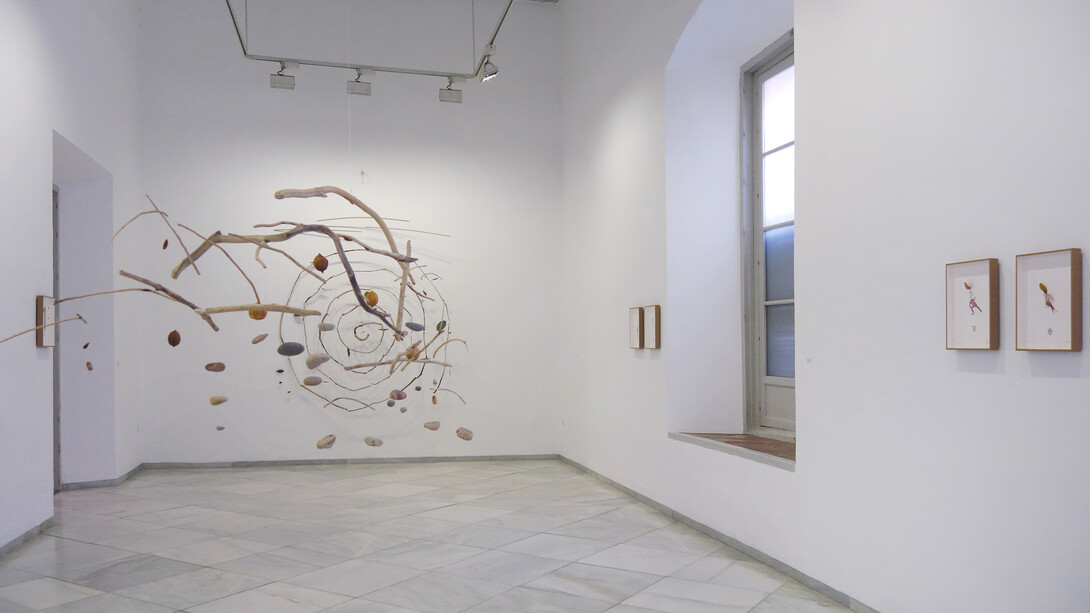
Before it takes shape, before it becomes a gesture or matter, life is electricity: a silent dialogue of charges and potentials that travels across membranes and synapses.
Since the dawn of time, the neural connections of living beings have evolved into the most complex system of all: the one in which consciousness resides.
Every human thought—every memory, every emotion—is nothing more than a difference in voltage sustained over time, a microscopic flash that repeats itself millions of times per second in the intimacy of a brain.
That same electrical logic, that same ability to sense the environment and respond to it, is not the exclusive privilege of the nervous system. Plants, which lack a brain, also speak in a bioelectrical and chemical language: they integrate light, wind, moisture, and friction, and translate that information into signals that propagate, accumulate, and transform into growth decisions. They do not think as we do. But they perceive, communicate, and adapt.
They inhabit the world with a distributed intelligence that does not need a center.
It is hard not to feel awe when faced with this certainty—that nothing lives in isolation, that all of life, whether human, animal, plant, or atmospheric, is a vast network of signals that intersect and respond to one another.
All living things depend on all other living things. A human thought and a leaf turning toward the sun are, at their core, manifestations of the same principle: interdependence as the ultimate condition of all that exists.
Even if only for a moment, we find ourselves in that place of shared wonder where humans, plants, and the atmosphere cease to be separate entities and reveal themselves as variations of the same living, interconnected phenomenon in perpetual motion.
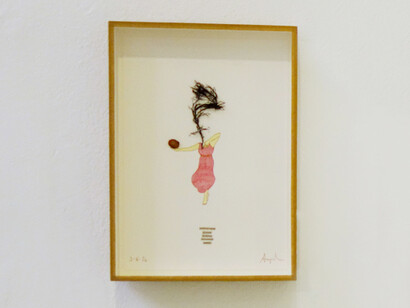
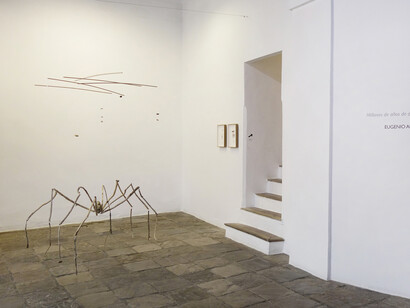
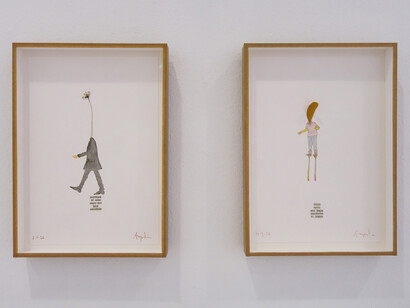
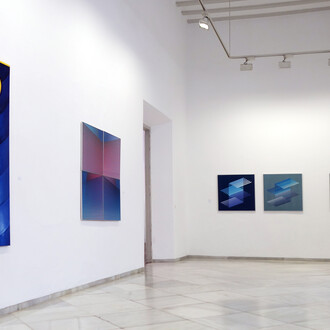
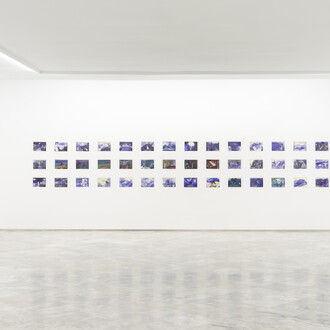
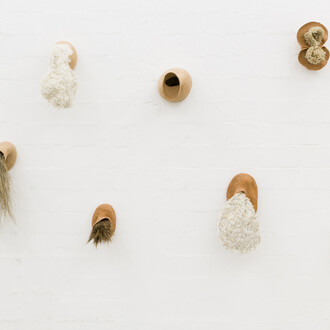
Millions of years of electrical discharges, Eugenio Ampudia’s fourth solo exhibition at Galería Rafael Ortiz, seeks out that intimate pulse of the universal network we belong to.