English
 Español
 Français
 Deutsch
 Italiano
 Português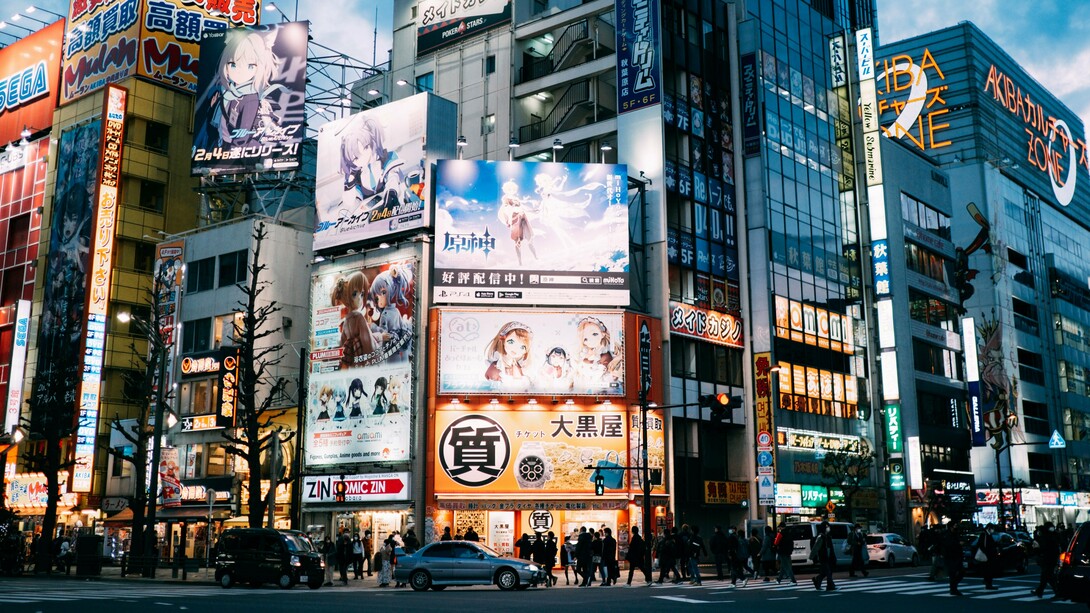
Fans of anime and manga who are active online are aware that the current ubiquity and popularity of those Japanese cultural exports was not always the case. Prior to what is humorously referred to as “The Great Shift” of the late 2010s, early 2020s, fans of anime and manga were a small group of misunderstood visionaries, hoping that their interests would one day no longer draw scorn, derision or that painful drawn-out “okay” that people let out when they want to be released from the tooth-pulling agony of conversations about Haruhi-chan or Mashiro-tan.
Anime is global now. We used to dream of days like this. The word “global” is important here, since anime and manga are cultural exports – elements of a culture that are taken to the rest of the world through the process we have come to understand as globalization.
Go global: anime as a cultural export
One of the most influential scholars of anime, Dr. Susan Napier, uses the term 無国籍 (mokokuseki), the idea of statelessness, in an attempt to describe the current multiplicity of definition and origin we can observe in the realms of anime and manga today. What statelessness describes, according to Japanese sociologist Iwabuchi Koichi, is that there is an intermixing of cultural elements from various sources.
In his dissertation, Adapting Anime: Transnational Media Between Japan and the United States, Dr. Brian Ruh attempts to historicise the process of globalisation of anime through various forms of media. Ruh suggests a “Database Fantasyscape”, the “database” being the set of elements of contemporary media products both familiar and unique, whereas the “fantasyscape” is the word he uses to describe the travel of anime overseas from Japan and how this travel affects the production of these anime-related media in Japan.
For one, Japanese animation itself is in part a product of influence from American animation, with the outsourcing of American animation work to Japan contributing to the early years of the latter’s animation boom in the 1950s (Ruh, 2012). However, it isn’t that there’s some kind of pure distillation of any of these interdependent forms of media. Ruh posits that these cultural exports can be from Japan and therefore, Japanese, but there isn’t an essential “Japaneseness” that can be taken from them because anime and its associated media aren’t “pure” – they are already the product of different perspectives, art forms and disciplines working together. Japanese animation has relied on the labour of South Korean animators for decades.
One of the many disciplines or art forms that has contributed to the various cultural sources from which anime and manga draw their inspiration is literature, be it from the West, Asia or within Japan. Some narratives in anime and manga have a “literary-ness” that serves as the platform of some of the best stories that those forms of art have to offer, and at first glance, it could be surmised that the strength of these feats of anime and manga stems from intertextuality.
Intertextuality and the gamble of adaptation
What gives the best stories in anime and manga an edge over others is intertextuality. The term is used to describe the unique manifestations of homage or ”speaking to” that take place specifically in anime and manga – yes, between anime and manga titles – but between anime/manga and literature. One of the simplest ways in which one text can be in communication with another is through adaptation; however. For the sake of this essay, we’ll posit that there are three main ways we see animanga interacting with literature through:
Direct adaptation
Indirect/partial adaptation
Reimagination.
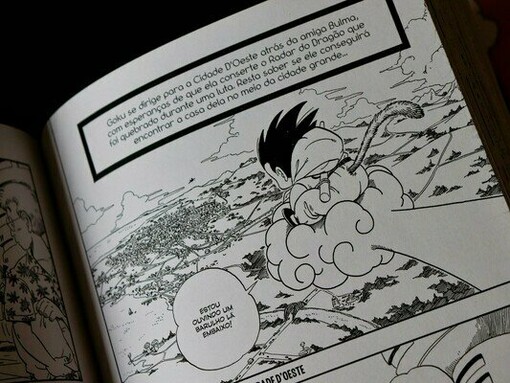
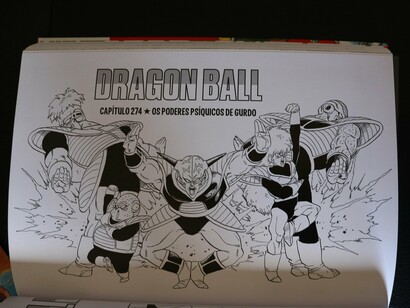
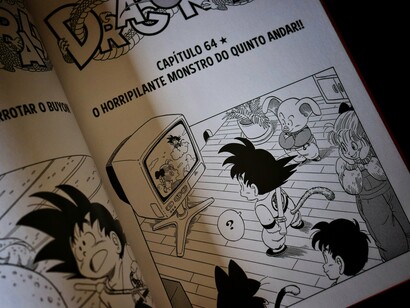
With direct adaptation, the resulting anime/manga is specifically trying to retell the same story as the original, generally with little alteration to the major plot points or emotional beats. For example, something like the Aoi Bungaku series – the purpose of the adaptation is to present the original story to a new audience. With indirect/partial adaptation, the resulting anime/manga has taken noticeable parts from the original story and woven them into a new story that could vary in how deeply based on the original it is. Many anime titles dip into and out of this mode either for individual characters, elements, or arcs. Examples include Dragon Ball, Blast of Tempest, Bungo Stray Dogs, Moriarty the Patriot, Jigokuraku etc.
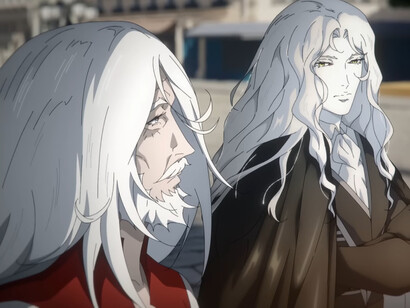
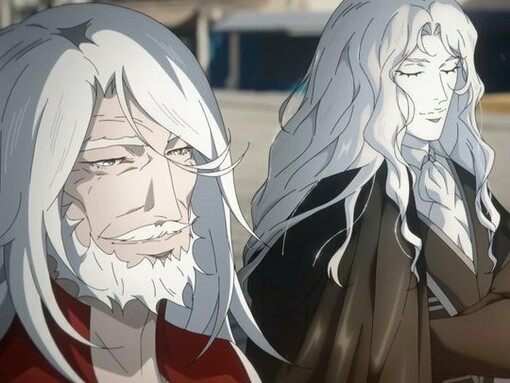
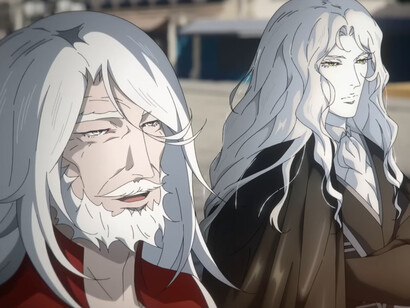
Reimagination can also include the partial adaptations but generally takes from original stories and weaves them into something almost unrecognisable. For example, the titular character of the Lupin III franchise is a character who is descended from the character in Leblanc’s novels, or the Alucard in both Hellsing and Castlevania (and vampires in general), bearing very little resemblance to Bram Stoker’s Dracula. Given the fact that reimagination can happen on a large and small scale, some titles that can be seen as partial adaptations will also fall into the group of reimagined titles. Then what is adaptation, really?
For a lot of people (especially me), the idea of transmuting a work of art from one format to another is one that causes irrevocable losses to the work in question. However, that’s rather cynical, as there have been countless adaptations, especially in anime, that have elevated the core story or concept or made its brilliance clear for scores more people to see. While it may not always be pretty, adaptation requires, or even begets, change, and thus, turning one’s nose up at the idea that Child 44 was turned into a terrible movie with actors speaking English with “Russian accents” isn’t always the most positive, or even the most fun approach.
In Kyung Lee Gagum’s dissertation titled, The Manga Boom: Fairy Tale Transculturation Between Germany & East Asia (2017), the author traces a lineage of the “transculturation” that has taken place between Germany and East Asia, such as the exploration or reproduction of German cultural elements in East Asian forms of media such as literature, manhwa or manga (Gagum, 2017: 11). This dissertation adds several new layers to the discussion of adaptation in anime and manga and to the relationship these mediums have to literature.
Gagum’s work illustrates in great detail the manner in which German (therefore, western) literature, more specifically, tales by the Brothers Grimm, are integral to the development of what became children’s literature in Japan in the 20th century, all the way to the “Grimm Boom” of the mid-1990s, which eventually leads to the export of manga back to Germany – manga that emerged from a Japan whose literary scene was grappling with censorship, but more importantly, westernisation.
The fascinating conclusion one can draw from this dissertation is that much of Japan’s contemporary/modern literary scene owes much of its development to the exposure of the various authors who would eventually become integral players in Japanese literature (and, by extension, other forms of media).
For me, this also translates to the Brothers Grimm being directly tied to the development of the thematic complexity found in anime and manga. The relevance of this conversation when it comes to anime and manga as a cultural export is to continue to dispel the myth or notion of anime and manga as specifically, and only, a Japanese form of expression, but rather something that comes about through the interaction of various cultural and social factors, as well as through the collaboration of people from various origins. These interactions can largely be classified as a phenomenon known as “transculturation”.
The transculturation of anime, manga and German literature
Transculturation refers to the transformation that results at the site of contact between multiple cultures. The term was coined by Cuban anthropologist Fernando Ortiz in 1940, and through influence from several thinkers over several decades, such as Professor Mary Louis Pratt, Professor Diana Taylor and Alan West-Duran (Gagum, 2017: 12). Today, transculturation is understood to be a term that is in constant flux but meant to give language to a complex set of interactions between elements from different cultures operating in an asymmetrical matrix of power.
The cultures that result from the points of contact between multiple cultures come about in a process akin to meiosis; while clearly bearing elements from its constituent cultures, it has become something else entirely (Gagum, 2017: 14). For Diana Taylor, transculturation is the travel of ideas, and how they are altered by their spatio-temporal, socio-economic and political context. Thus, the systemic power experienced by one culture has the ability to impact other cultures.
According to South African scholar David Attwell, it is important to recognise that transculturation does not refer to a one-way relationship but an “ongoing process of cultural destruction and reconstruction on entirely new terms” (2005). It is aware of asymmetry in these dynamics, and, according to Japanese sociologist Iwabuchi Koichi, transculturation is something that occurs through “cultural commodities”, which are exchanged through the central mechanic of globalization.
“Transculturation refers to this process of globalisation in which the asymmetrical encounter of various cultures results in the transformation of an existing cultural artefact and the creation of a new style” (Iwabuchi, 2002). Romanticism was a literary “progressive” movement spread across European countries where languages from the Latin family are spoken, and it was concerned with attempting to connect literature in all its forms to other disciplines like art, philosophy, science and other cool stuff. It was progressive in the sense that it is constantly being formed, contested and conceptualized, much like transculturation.
The Grimm’s Tales infiltrated the Japanese literary landscape in a period of westernization, leading to the country’s fairy tale literature landscape being flooded with various translations of these works. These new translations were disseminated via the cheaper literary medium of magazines, but initially, novel translations of Grimm’s Tales were expensive and the average Japanese person at the time had more pressing uses for their money than fancy new European stories. However, this dissemination through magazines led to the creation of children’s literature read for enjoyment, rather than for education (Gagum, 2017: 32).
Otogibanashi no Tanjo (birth of the fairy tale)
The first major adaptor of these tales for a Japanese audience was Sazanami Iwaya, who led the charge in translating these stories for children’s magazines before himself becoming the pioneer of the very concept of literary fairy tales for children with the release of Koganemaru, a retelling of Japan’s oldest folktale, Momotaro, in 1891.
Iwaya coined the Japanese word 御伽噺 (otogibanashi)– “fairy tales”, thus establishing the foundation of the very idea of a “literature for children” in modernising, westernising Japan. Iwaya’s translations were the most widely read in a period of widespread translation of the Grimm’s Tales into Japanese, and he was one to make several changes to this story to suit a more Japanese palate.
The biggest changes were often to violence or themes of sexuality, In making them accessible through children’s magazines, Iwaya veered away from the rigour of the “story as vehicle for moral lesson” pedagogy pioneered by Johann Friedrich Herbart, Dr Judy Wakabayashi (2008) posits that the constant retranslation of Grimm’s Tale in Japanese is the foundation of the first words of Japanese children’s literature, which then shaped the adults of the future through Kaneda Kiichi’s 1924 and 1927 translations of 248 tales, including 22 that the Brothers Grimm themselves did not compile into a volume.
Kaneda’s translations were the first time the tales had been translated from German into Japanese, rather than from English translations of the original German into Japanese. The objective was to stay faithful to the originals and thus make the tales enjoyable for children and adults, but these tales open the gates to other works of European literature, works that impart romantic (so, of Roman thought) ideas about children.
Retellings were encouraged by Japanese censorship laws and various decisions to retain or remove the darker aspects of the Grimm’s Tales; however, these retellings that kept the more controversial content also lead to retellings with critical analysis through both prose and imagery (Gagum, 2017: 30). Among these retellings and translations emerged some that had a feminist perspective and approach to the themes of the works, and this took place between the 1960s and the 1970s, a significant period in manga specifically because this period saw the emergence of one of the most important developments to manga as a whole through the work of a number of female mangaka, an influential generation known as the Year 24 Group.
The work done by this group of influential mangaka changed the scope of what manga in general could do through the expansion of themes, subject matter, narrative styles and overall complexity of manga directed at girls. In the 1950s and 60s, shojo manga was made primarily for children; however, through the influence of the Year 24 Group, the medium became the site of exploration of various mature themes and complex subject matter.
Where Western literature connects to manga
The work done by the Year 24 Group changed the scope of what manga in general could do through the expansion of themes, subject matter, narrative styles and overall complexity of manga directed at girls. In the 1950s and 60s, shojo manga was made primarily for children; however, the work created by the Year 24 Group; individuals like Ikeda Riyoko, Hagio Moto, Sasaya Nanaeko and Takemiya Keiko to name a few, transformed comics aimed at girls’ across genres, bringing in a thematic complexity and artistic flair.
“Girls’ manga, particularly those by the so-called ‘Year 24 Group’, became a site for women to collectively and critically explore their bodies, gender, and sexuality.” (Anan, 2014). The 1960s saw the arrival of the ‘Gekiga Revolution’, the response to an ageing readership that led to the expansion of the manga industry and the concerted effort to create stories for more mature audiences.”
The 1970s saw the aforementioned Year 24 Group champion a similar revolution in girls’ comics, a severely under-celebrated movement that gave rise to stories like Ikeda’s The Rose of Versailles, arguably the most influential manga in history both when it comes to the revolution in girls’ comics and as a manga of the Gekiga Revolution, one whose impact continues in anime and manga to this day.
These authors and their contemporaries would have been children during the heyday of the various translations of the Grimm’s Tales, engaged with the texts at school, read them leisurely, reimagined them, dreamt about them and syncretised parts of them with parts of themselves before putting the resulting amalgam before us in the form of manga. Could it be that in Japan, comics and literature coming about in the early to middle 20th century coincide as the transculturated attempt to reorient themselves in the wake of westernisation, war and disaster?
How anime and manga crossed cultural boundaries
Where tales by the Brothers Grimm gave rise to an entire section of Japanese literature, this influence eventually led to the rise of Japanese authors who were raised on these stories and thus put these influences into their own works – anime and manga included. Eventually, over a century after the introduction of the Grimm’s Tales to Japan, there’s an interesting returning influence as anime and manga, known cultural exports of Japan, become major in western countries, including Germany and France, lands where the development of an animation and manga industry cannot be disconnected from the influence of Japanese animation and comics. As such, the influence of the Grimm’s Tales makes its way home in a whole new format.
In the same way that Western literature introduced new ways of thinking, pedagogy and, of course, writing, anime and manga do the same, while also acting as pockets of cultural information through which we come to learn about the society behind these exports. Anime and manga aren’t seen as “essentially Japanese” out of nothing – these mediums act as such effective cultural vehicles that societies completely divorced from the cultural context that made them possible have taken to them in ways that have rarely been seen with other art forms.
Very few forms of entertainment inspire those who engage with them to learn new languages, or take to specific forms of art, or even learn about particular histories. Interest in Peaky Blinders rarely turns into someone eventually becoming obsessed with the Battle of Hastings, but in watching anime, people become constantly exposed to the story behind the country’s unification, exposed to its religion, cultural events and customs. Even stories set in worlds not unlike what you’d find in the Grimm’s Tales.
Ruh’s conception of the “fantasyscape” gives the inference that western literature is directly tied to the current state of anime and manga more credence, because under such a paradigm, the various “cultural elements” that Japanese people were exposed to via western literature and Grimm’s Tales gained a particular significance in the zeitgeist of a westernizing, modernising Japan, and remained readily accessible due to their suspension – and constant reinterpretation – in Japan’s own fantasyscape.
References
Werning, S. (2014). Manga, Anime and Video Games: Between Adaptation, Transmedia Extension and Reverse Remediation. Mediascape: UCLA’s Journal of Cinema and Media Studies.
Gagum, K.L. et al. (2017) The manga boom: The recent fairy-tale transculturation between Germany and East Asia, The Manga Boom: The Recent Fairy-Tale Transculturation Between Germany and East Asia. dissertation. University of Arizona.
Wakabayashi, J. (2008). Foreign Bones, Japanese Flesh: Translations and the Emergence of Modern Children’s Literature in Japan. Japanese Language and Literature, 42(1), 227–255.
Iwabuchi, K. (2002). Recentering Globalization: Popular Culture and Japanese Transnationalism. Duke University Press.
Anan, N. (2014), The Rose of Versailles: Women and Revolution in Girls' Manga and the Socialist Movement in Japan. J Pop Cult, 47: 41-63.
Ruh, B., 2012. Adapting anime: transnational media between Japan and the United States. Indiana University.
Pswediting (2025) [Analysis] looking at intertextuality in Mieruko-chan. The Anime View.