English
 Español
 Français
 Deutsch
 Italiano
 Português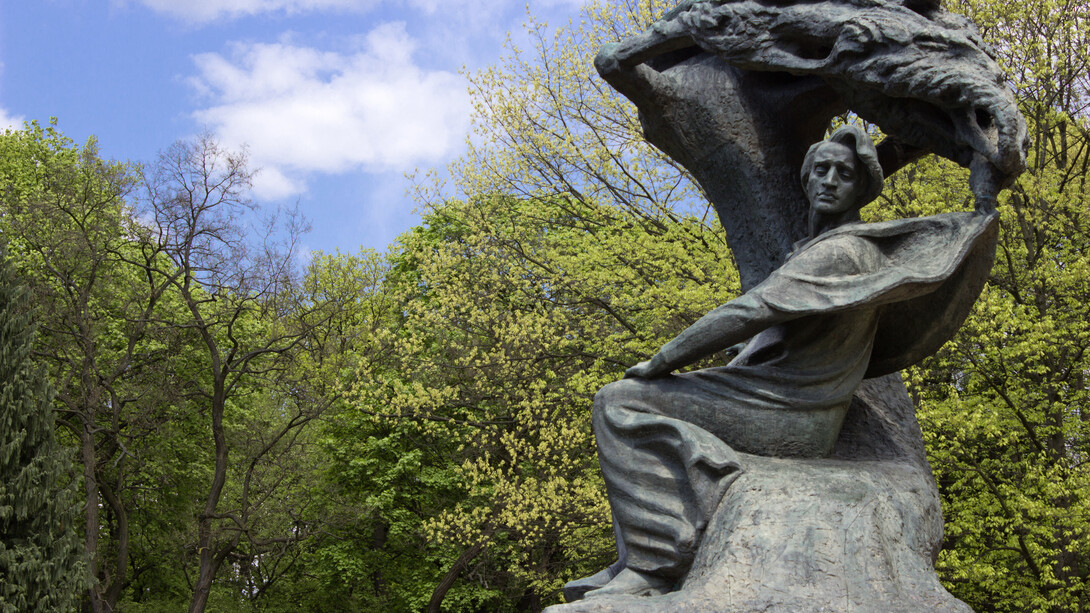
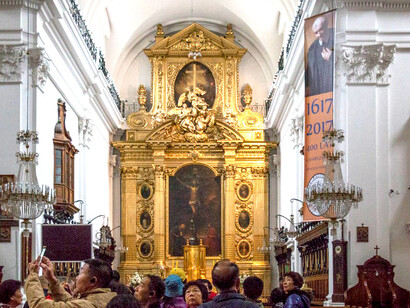
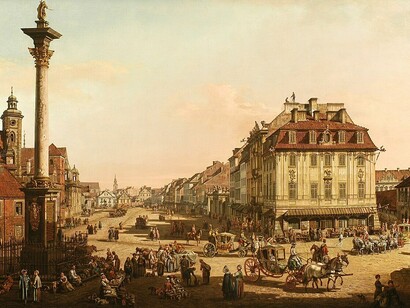
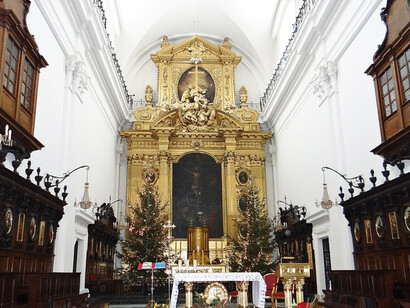
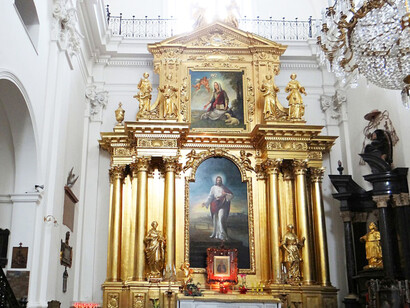
When people walk along Krakowskie Przedmieście in Warsaw, they often pass the Holy Cross Church without stopping for long. The building is elegant, calm, and familiar among the city’s historic streets. Inside, however, something deeply human rests in silence. Hidden within one of the church’s pillars is the preserved heart of Fryderyk Chopin.
Many visitors know this fact. They come because it sounds unusual, even mysterious: a composer’s heart kept far from his body. Some treat it as a strange historical detail, something to see once and remember as an interesting story. But behind this small, sealed urn lies a story that is not strange at all. It is a story of love, exile, longing, and a final wish that was never meant to become a tourist attraction.
To understand why Chopin’s heart is in Warsaw, one must understand why he was not.
Chopin left Poland when he was only twenty years old. At the time, he believed he would return. His departure was meant to be temporary, a journey for study, performance, and growth. But history intervened. Political unrest, the failed November Uprising, and harsh consequences made returning impossible. Poland, divided and controlled by foreign powers, became a place he could carry only in memory.
He settled in Paris and became admired, celebrated, and loved as a composer and pianist. He lived among artists and intellectuals, taught students, performed in salons, and created music that would change the world. Yet no success could replace what he had lost. His letters reveal a quiet sadness, a sense of being suspended between places. He lived in France, but his emotional home remained elsewhere.
That distance shaped his music. Even when written far from Poland, his compositions breathe with its presence. Mazurkas echo village dances. Polonaises carry pride and sorrow at once. Folk rhythms appear like half-remembered dreams. Poland was no longer a country he could touch, but it lived within him, deeply and constantly.
As his health worsened, this feeling grew stronger. Chopin suffered from tuberculosis and related illnesses for many years. His body weakened, but his emotional clarity sharpened. Near the end of his life, he made a quiet request. If he could not be buried in Poland, then his heart should return there.
This was not a grand political statement. It was not meant for public attention. It was a private wish, spoken from exhaustion and love. The heart, in this sense, was not symbolic—it was literal. It was the part of him that felt, remembered, and belonged.
His sister Ludwika took this request seriously. After Chopin’s death in Paris in 1849, she carried his heart back to Warsaw. It was preserved in alcohol and hidden carefully, as transporting human remains was closely controlled. There was risk, fear, and secrecy involved. But she succeeded.
The heart was placed inside the Holy Cross Church, quietly and respectfully. At first, it was not meant to be seen or discussed widely. It was simply where Chopin wanted part of himself to rest.
For a long time, the heart remained just that: a personal relic, known mainly to those who already cared deeply about the composer. But history does not leave things untouched.
During the nineteenth century, Chopin’s role in Polish culture grew enormously. Poland was still divided, its political presence weakened. In this context, music became a form of survival. Chopin’s compositions were no longer only beautiful—they became meaningful. They carried identity when flags could not. They spoke when voices were silenced.
As Chopin became a national figure, his heart slowly changed meaning. It was no longer only a brother’s gift to a homeland. It became a symbol of endurance, of belonging without borders, of a nation living through culture rather than power.
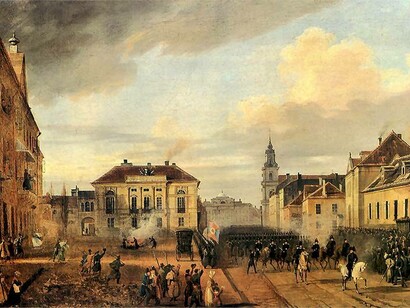
The twentieth century intensified this transformation. During World War II, Warsaw was destroyed almost completely. The Holy Cross Church was damaged, and the heart was removed by German officers. Strangely, even in the violence of war, the heart was not destroyed. It survived, moved again, was protected again, and eventually returned.
By the time Warsaw rebuilt itself, the heart had passed through fire, displacement, and near loss—much like the city itself. From then on, its presence was no longer quiet. It appeared in books, lessons, and travel guides. People came looking for it. Without anyone deciding so clearly, the heart became a destination.
This shift—from intimate wish to public landmark—is not unique. Human history often does this. Objects born from love, grief, or faith become shared symbols. A letter becomes an archive. A grave becomes a monument. A personal loss becomes a collective story.
But something fragile happens in this process.
Tourism simplifies. It turns stories into highlights, places into stops, and meaning into information. When people visit Chopin’s heart only because it is “interesting” or “unusual,” the emotional truth behind it risks fading. The heart becomes a fact, not a feeling.
This does not mean visitors are careless or disrespectful. Many stand quietly. Many feel something they cannot explain. But modern travel often encourages speed rather than reflection. A place becomes valuable because it is rare, not because it is tender.
Still, this transformation does not have to erase meaning.
A visitor who pauses—not just physically, but emotionally—can still meet the original gesture. Chopin’s heart does not ask for admiration. It asks for understanding. It asks us to imagine exile not as history, but as loneliness. To imagine love not as pride, but as vulnerability.
Seen this way, the heart becomes more than a curiosity. It becomes a reminder of how deeply people can belong to places they may never see again.
Many famous landmarks began as private emotions. The Taj Mahal was built from grief. Religious relics grew from personal faith. Museums are filled with diaries never meant to be read. This does not mean public attention destroys intimacy. It means intimacy, when strong enough, survives transformation.
Standing before the pillar in the Holy Cross Church, one stands between two realities. On one side is tourism: cameras, guidebooks, and lists. On the other is a brother’s love, a sister’s devotion, and a man’s final longing for home.
Both exist at once.
The challenge is not to deny one or the other but to hold them together. To be aware that history is not only made of events but also of feelings. That culture is not only preserved through monuments but also through care.
Approaching such places gently changes how we travel. It turns visitors into witnesses rather than consumers. It reminds us that behind every “attraction” lies a human story that was once painfully real.
Chopin’s heart rests in Warsaw not because it is strange, but because it is honest. It speaks of separation, memory, and the quiet power of love that survives distance, time, and death.
To stand there is to stand at a meeting point: between past and present, private and public, body and memory. If we allow ourselves to feel that complexity, then the heart does not lose its meaning by being seen.
Instead, it continues to beat—softly, silently—inside those who pause long enough to listen.

![Nowy Świat (Polish pronunciation: [ˈnɔvɨ ˈɕfjat], meaning “New World”) is one of Warsaw’s main historic thoroughfares. It forms part of the Royal Route (Trakt Królewski), which runs from the Royal Castle and Old Town south to the 17th-century royal residence of King John III Sobieski in Wilanów](/attachments/89f06b476f584e42492445c27d85627efbfedfd1/store/fill/410/308/b4061082593192f5a05ecc4abbff57ca1f873a1aef83933e1615b857d38c/Nowy-Swiat-Polish-pronunciation-novi-cfjat-meaning-New-World-is-one-of-Warsaws-main-historic.jpg)