English
 Español
 Français
 Deutsch
 Italiano
 Português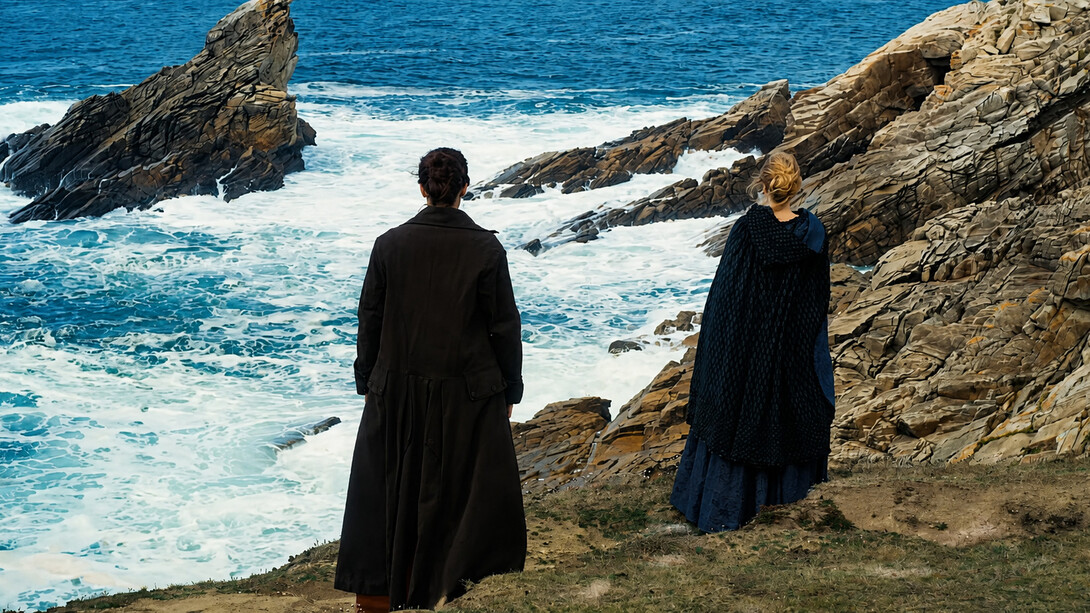
Released on 18th September 2019, a movie I watched in 2025. Going in, I did not know what I was really watching, mainly because the language was French. So, subtitles were the only option for me, alongside reading the characters' expressions and body language. I refused to watch the trailer and went in completely blind, other than asking the internet, "What movies do you think were the best in 2019?" I did not watch any movies in 2019, so I wanted to watch a few good movies that I might have missed.
Where you can watch "Portrait of a Lady on Fire"
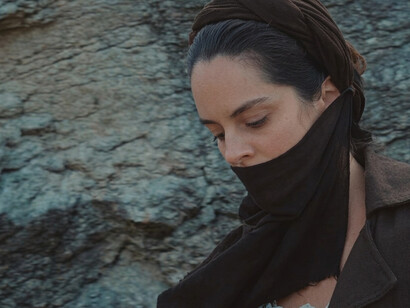
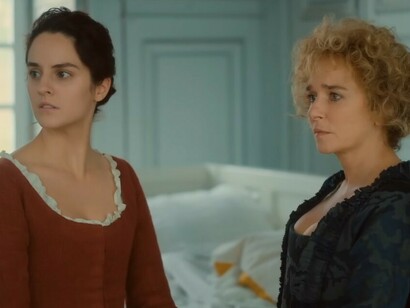
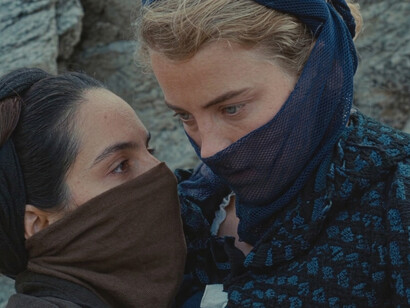
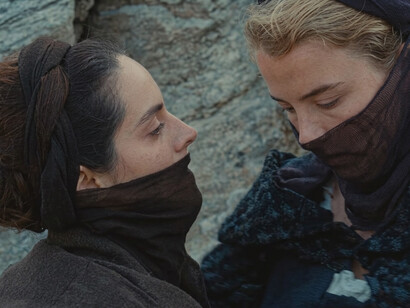
You can watch Portrait of a Lady on Fire on HBO Max or Hulu, the last time I checked. An original drama and not a true story or a book adaptation, it captures angles of life in the late 18th century with a love story that explores the human duality of wanting to know a person and falling in love with the imperfection of being alive, which I found profound in this movie. How society placed unrealistic and unattainable expectations on women and called it, "Women mature early," forcing women to grow when they were just kids.
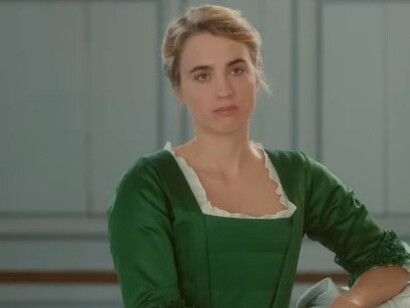
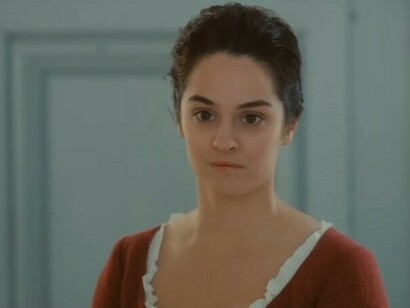
Héloïse leads her to observe more than the physical angles and brush strokes
How, against not that many odds, it shows how a portrait done in two dimensions is more than just colour on canvas. Héloïse shows Marianne, an experienced artist, just that: more than observing the angles of the face, how the hands are placed, and on which side the light falls.
Héloïse knew how to see beyond the surface, beyond the two dimensions; she saw emotions. Marianne was observing physical appearance to make a portrait of Héloïse, as directed by her mother, without making it known to Héloïse.
Capturing an honest review with pencil and paper of a well-regarded movie
As I type this review, I have already watched Portrait of a Lady on Fire three times to get it just right. It took away a lot of pressure when I picked up a pencil and a bunch of paper to write this review on. It felt like writing an essay.
As I start writing, I hear Marianne's voice with the camera on a young lady who is focused on sketching something or someone on her canvas. The camera is on Marianne, who is still, while the students are sketching her.
Capturing without the camera moving around, but instead focused on each shot with no movement. That is part of the reason for the calmness, and the rest is how talented the actors are. Each shot feels focused and still, with calm yet intentional emotions setting in gradually. As Marianne continues giving instructions to her students, "First, my contours." I believe that means the outline. The students are hanging on to every instruction their teacher, Marianne, is saying. There is this calmness I felt and could see, which is rarely captured with such accuracy. Marianne's instructions sound firm, yet not strict or demanding, but soft and confident.
Marianne's attention suddenly goes to the canvas hung on the skeleton behind her students, somewhat in the centre. I saw Marianne's face turn curious and her eyes welling up with tears. She asks, "Who brought that painting out?" and starts looking around at the students.
One of them raises her hand. The same student answers, "From the stock," and proceeds to ask, "I shouldn't have?" Marianne quickly responded with one word, and I heard pain in her voice as she said, "No." The same student asks, "Did you paint it?" Marianne answers, "Yes." Her voice changed tone a bit as she replied. I feel her sinking into sadness but still holding in the tears. Marianne follows up with, "A long time ago."
The camera focused on Marianne, her eyes filled with tears, her body just sitting without any movement. The student asks, "What's the title?" Marianne replies, "Portrait of a Lady on Fire."
The painting is of a lady standing. You can only see her back, and the lower part of her dress has caught fire. The dress matched the colour of the night sky, dark blue. Marianne has also painted the night sky with clouds that are vivid but not too bright. Just enough light that it captures the lady's outline.
My own understanding of the painting, after I watched it three times, is that the dark night is the oppression and expectations the world places on the lady. The vivid clouds with some light are a representation of the good in the world that exists regardless of the oppression. The dark blue dress that the lady is wearing is the lady's own dark side, and the fire represents the spark of self-esteem and the desire to express herself regardless of the oppression and all the expectations.
A very common representation of a character dying in a movie like this always makes me sad. I now check to see if a character will die because then I am not watching with unrealistic expectations.
I am hoping to watch more characters that make it through everything and are still alive by the end of the movie. I hope to write this story myself, knowing that there is so much history that shows that couples make it, and yet movies still show a dreadful ending, especially in films from the late '90s and early 2000s. I always try to look at the motive. In this case, the motive is even sadder than movies ending with one or both characters dying, horribly, by the way.