English
 Español
 Français
 Deutsch
 Italiano
 Português
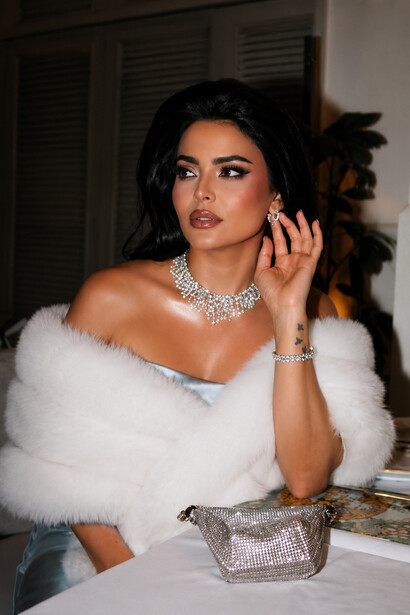
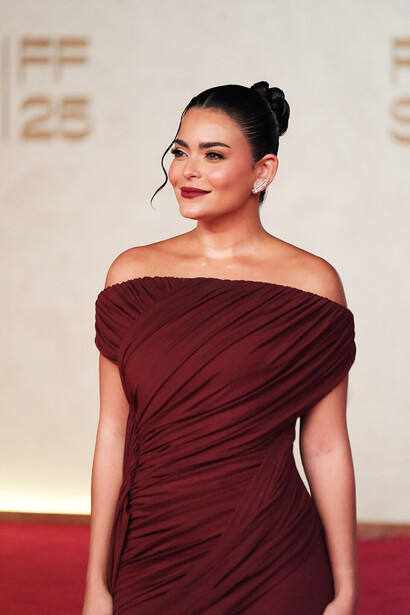
Cairo—I first noticed her long before box office figures began to follow her name.
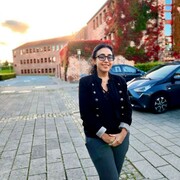
Back then, she was an A-grade student at the Faculty of Media—disciplined, quietly confident, and visibly more drawn to the theater stage than to attention itself. She spoke carefully, listened closely, and carried herself with a seriousness that set her apart from classmates chasing quick visibility. Watching her today, as one of Egypt’s most prominent young actresses, feels less like witnessing sudden fame than following a long, deliberate ascent shaped by patience, preparation, and restraint.
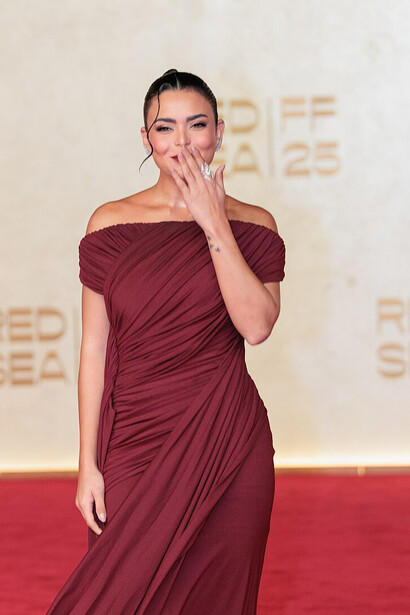
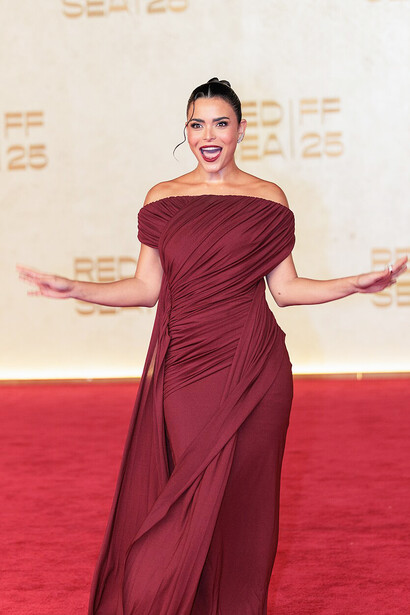
That ascent reached a new milestone this month.
The Egyptian film En Ghab El Qott (“When the Cat’s Away”), starring Asser Yassin and Asmaa Galal, has continued to dominate the local box office, surpassing 30 million Egyptian pounds in ticket sales since its release, according to industry figures. The film has held the top spot for weeks, cementing Galal’s position as a leading presence in a changing cinematic landscape increasingly open to quieter forms of stardom.
Directed by Sarah Nouh in her feature-film debut and written by Ayman Watar, En Ghab El Qott blends social comedy with crime, revolving around the theft of a famous museum painting and the unexpected tensions and relationships that follow. While the film features a strong ensemble cast, Galal’s performance stands out for its restraint—understated, grounded, and emotionally precise without seeking overt dramatization.
“I never believed in shortcuts,” Galal said in a recent interview. “Acting is something you build slowly. Every role teaches you something, if you let it.”
A career built, not launched
Galal’s path into acting followed a familiar but demanding route in Egypt’s entertainment industry. She began with modeling work before transitioning into acting through university theater, workshops, and early television roles. Unlike many rapid-rise careers shaped by virality or social media exposure, hers developed through repetition, training, and sustained discipline.
In her first years, she appeared in multiple television series, taking on diverse roles that required dialect work and emotional range. Industry observers note that her breakthrough did not hinge on a single defining performance but on consistency—a steady accumulation of credibility rather than spectacle or controversy.
That reputation has carried into her film work. On set, colleagues describe her as intensely focused and collaborative, approaching characters analytically rather than relying on instinct alone. Actor Mohamed Shaheen, who appears in En Ghab El Qott, said the project’s appeal lay in its cohesion. “Everything felt considered — from the script to the performances,” he said, noting the natural chemistry among the cast and the absence of performative excess.
Echoes of an earlier cinema
As Galal’s profile has grown, critics have increasingly compared her presence to actresses from Egypt’s cinematic golden age—not as an exercise in nostalgia, but as recognition of a different screen sensibility rooted in emotional clarity rather than visual spectacle.
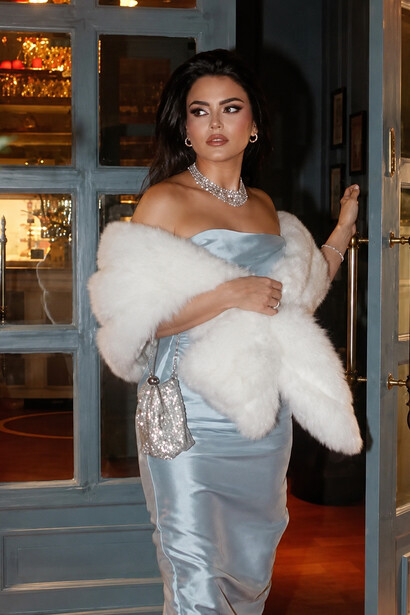
In an era shaped by highly curated aesthetics and social media performance, Galal represents a quieter visual language. Her appeal lies less in exaggeration than in expressiveness, recalling a tradition in which Egyptian beauty on screen was defined by individuality, vulnerability, and emotional authenticity.
She has cited the late Souad Hosny as a formative influence, particularly for her versatility and sincerity. “What I admire most is her freedom,” Galal said. “She could move between joy and sadness without forcing either. That honesty stays with the audience long after the scene ends.”
Success without noise
Despite her rising visibility, Galal has largely avoided the publicity cycles that often accompany success. She speaks selectively, maintains firm boundaries around her private life, and has resisted turning personal narratives into promotional tools or online branding strategies.
That discretion has only sharpened her public image—positioning her as an actress rather than a celebrity figure. Cultural critics note that this approach aligns with a broader shift within Egyptian cinema toward character-driven storytelling and performance-led narratives that privilege substance over spectacle.
A generation in transition
At 30, Galal occupies a pivotal space: no longer emerging, but still evolving. Her rise coincides with a moment of reassessment in Egyptian cinema, as filmmakers experiment with tone, genre, and representation, and audiences respond to performances rooted in realism rather than excess.
For international observers, her trajectory offers insight into a generation reshaping the industry from within—one that values training, continuity, and credibility over instant recognition or algorithmic popularity.
“I still feel like I’m learning,” Galal said. “The moment you think you’ve arrived is the moment you stop growing.”
For those who watched her early steps—from lecture halls to modest theater stages—her success feels earned. And for Egyptian cinema, her presence signals something quietly significant: a return to performances that trust simplicity.
What makes her rise especially compelling is not just commercial success, but the manner in which she has arrived at it. In a cultural moment often dominated by visibility for its own sake, Asmaa Galal’s career suggests another model still matters: one built on patience, seriousness, and the rare ability to let performance speak louder than persona.