English
 Español
 Français
 Deutsch
 Italiano
 Português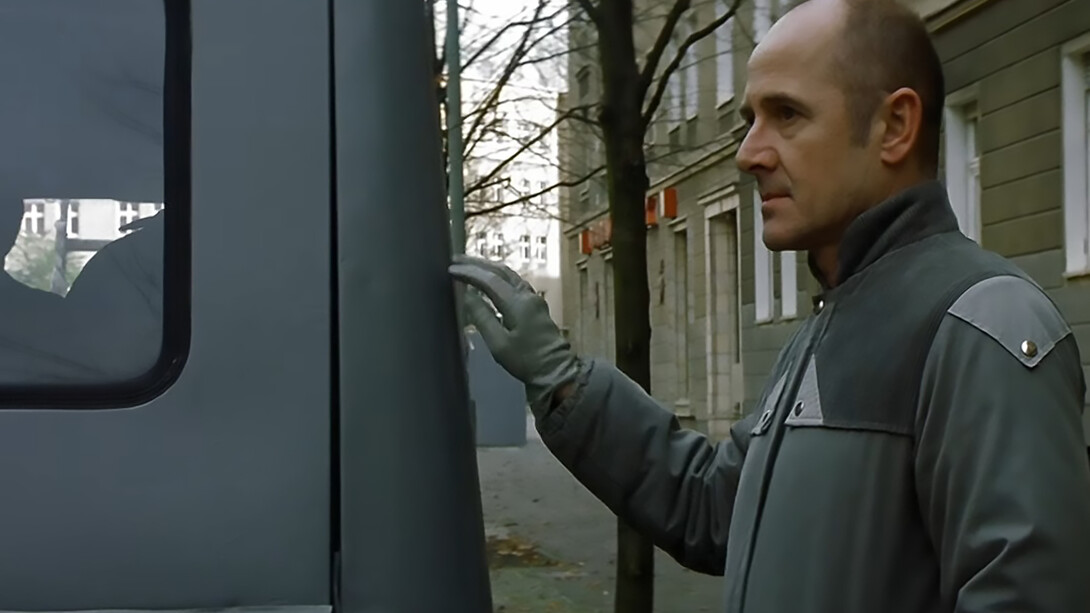
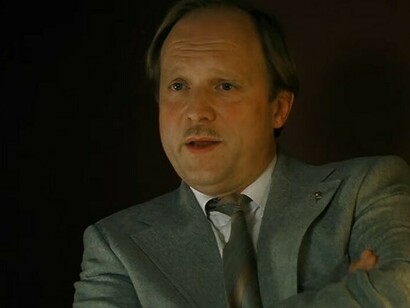
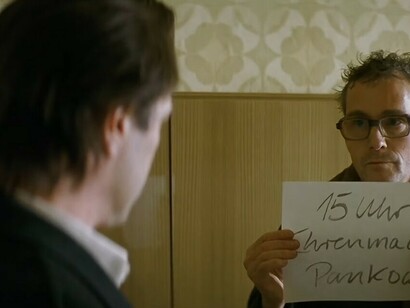
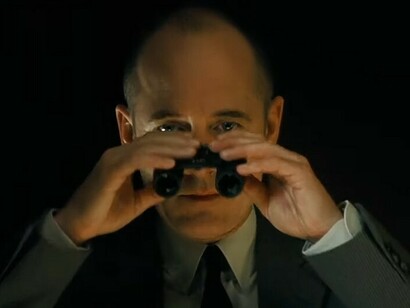
To get a brief idea of the film's plot: the starting point of the film's story is an East German state minister and a socialist regime who want to secretly listen in on writer Georg Dreyman, whom they see as a ‘dangerous’ artist. This illegal task is assigned to Stasi agent Gerd Wiesler, a man of strict German discipline. From the moment Wiesler installed listening devices in the apartment above Dreyman’s, he became an “invisible” presence in his life, as if he had put on Gyges’ Ring.
According to Plato’s Republic, this legendary ring makes its owner invisible the moment it is put on. Imagine being inside a house and witnessing a husband and wife’s most intimate arguments and tears, but no one knowing you are upstairs, secretly listening with headphones. At this point, the question that Plato poses in the Gyges Ring metaphor is relevant for Wiesler: “If no one sees you and you will never be punished, will you still be a good person? Will a person still behave morally when they know they won’t be caught?" With his technological power and invisibility, Wiesler finds himself right in the middle of this test.
Gerd Wiesler, the system’s loyal servant
To understand why Wiesler is the most loyal part of such a disciplined and oppressive system, it is necessary to examine the philosophy underlying the society in which he lives. This society is based on the concept of ‘compulsory justice,' as described by Plato’s student Glaucon. According to Glaucon, people agree to a social contract not because they are inherently good, but because they are ‘forced’ to do so to avoid harming each other and to protect their own interests.
In East Germany’s system, people submitted to the state’s authority because they did not trust each other and feared being harmed by others. Society pushed individual freedom aside and prioritized the security of the state. Justice is maintained not because it is 'good,' but merely to prevent chaos and the fear of the system’s consequences.
At the beginning of the film, Wiesler is the most loyal and flawless cog in the machine. The fundamental principle that guides his actions is based on mutual fear and loyalty to the state. For him, the only right thing to do is to enter people’s most private lives, spy on them secretly, and report everything if necessary for the sake of the state’s survival. In his world, morality is measured by loyalty to the state rather than by individual conscience.
According to Wiesler’s initial motivation, this ‘invisible’ duty is a moral imperative; otherwise, he would be a traitor to his state. For this reason, the actions of Wiesler and the other agents do not initially seem 'immoral.' They carry out these actions out of deep loyalty to their government and their belief in what is right. They know that if they do not carry out these 'tasks,' they will become traitors or criminals in their own eyes. Therefore, Wiesler’s first ‘maxim’ (in Kant's words), or principle of action, is based on unconditional obedience.
Living in the shadow of conditional commands
From a Kantian perspective, we can better understand why the system at the beginning of the film is morally 'flawed.' According to Immanuel Kant, the moral value of an action depends on the intention behind it. If you perform an action solely for personal gain, to receive a reward, or to avoid punishment, that action loses its moral value in his eyes.
Wiesler and the system he belongs to at the beginning of the film are based on a structure that Kant calls a ‘hypothetical imperative.' This structure operates on the logic of “If you want to receive rewards from the state or not be accused by the system, be loyal and follow orders." In other words, loyalty is favored not because it is good in itself, but because of the results it will bring. For Wiesler, the only right thing at that moment is to invade people’s privacy for the sake of the state’s survival: to spy on them and report what he finds out. This stems from his dependence on and sense of duty to the state rather than free will.
However, true morality is to free action from any ‘if-then’ relationship, i.e., from conditions and interests, and to perform it solely ‘because it is right.' Kant argues that our actions are only moral if they can be transformed into a universal law that is applicable everywhere in the world; this test is known as the ‘categorical imperative,' and the subjective principle behind such a moral action is called a 'maxim.'
Early in the film, Wiesler’s life is entirely overshadowed by conditional interests; his actions serve the expectations of the system, not a universal moral law. As the film progresses, however, Wiesler breaks free from this state of mechanical obedience, undergoing a transformation that moves his actions away from the ‘conditional command’ (hypothetical imperative) and towards the ‘unconditional command’ (categorical imperative). He now focuses solely on doing what is right, expecting nothing in return.
The birth of a modern Prometheus: a melody that changes destiny
One day, Wiesler’s cold and mechanical life is shaken by the miraculous sound of piano music rising from his headphones: ‘Sonata for a Good Man’ (Die Sonate vom Guten Menschen in German). This marks the beginning of Wiesler’s Platonic ‘exit from the cave’ and his first step towards the truth. The warmth of art and music begins to melt this agent’s frozen conscience.
This scene marks the biggest turning point in Wiesler’s life, as until that moment he had lived only for the survival of the state. Now, for the first time, he feels the pain and depth of another person. This melody, about which even Lenin said, “If I continue to listen to this music, I will not be able to complete the revolution,” breaks down the rigid ‘conditional commands’ within Wiesler. He is no longer just a 'listener,' but someone who will protect Dreyman's life and art. Wiesler will now follow his own universal moral code.
This change reminds us of the mythological figure Prometheus. Prometheus stole the ‘fire’ (knowledge and enlightenment) belonging to Zeus and gave it to humans. Similarly, Wiesler steals ‘truth’ from the state (i.e., the modern-day equivalent of Zeus). Rather than reporting the banned article that Dreyman wrote to send to West Germany, he hides the typewriter and protects the truth. This is the film’s turning point. Wiesler starts protecting Dreyman instead of reporting him.
He gains nothing personally from doing so. In fact, he will not even receive a thank you from the person he helps; he does it simply because ‘it is the right thing to do.' According to Kant, by acting simply ‘because it is right,' Wiesler adheres to a ‘universal truth,' disregarding his own safety. He is no longer someone who blindly follows orders from the state—he is a follower of his own moral law, or the maxim he has.
The punished ‘Titan’: melancholy in the basement
Every heroic tale comes at a cost. This scene is a reminder of Prometheus being chained to the Caucasus Mountains by Zeus. Just as Prometheus was punished for stealing fire from the gods, Wiesler is stripped of his rank and sent to work in a basement office.
Opening thousands of letters every day in that basement is like the eagle eating at Prometheus’s liver every day; it destroys Wiesler’s soul. The eye of the state (the eagle) is always on him, sentencing him to an isolated, melancholy, and lonely existence. Yet he continues to hold his head high like a ‘Titan’ because no one can take away his honesty, integrity, and moral values.
Final: “this is for me”
Years later, the system collapses and the walls come down. Wiesler is now a postman. In a bookshop, he finds the book that the author, whose life he saved, has dedicated to him. Georg Dreyman has dedicated his book to ‘HGW XX/7’ (Wiesler’s agent code). His response to the salesperson’s question, “Would you like gift wrapping?" sums up this entire philosophical journey: “No, this is for me.” This sentence is a declaration of victory, achieved spiritually by a man who has lost everything physically. Wiesler has put on Gyges’ ring, paid the price like Prometheus, and embraced Kant’s moral law. He is now simply ‘a good person.'