English
 Español
 Français
 Deutsch
 Italiano
 Português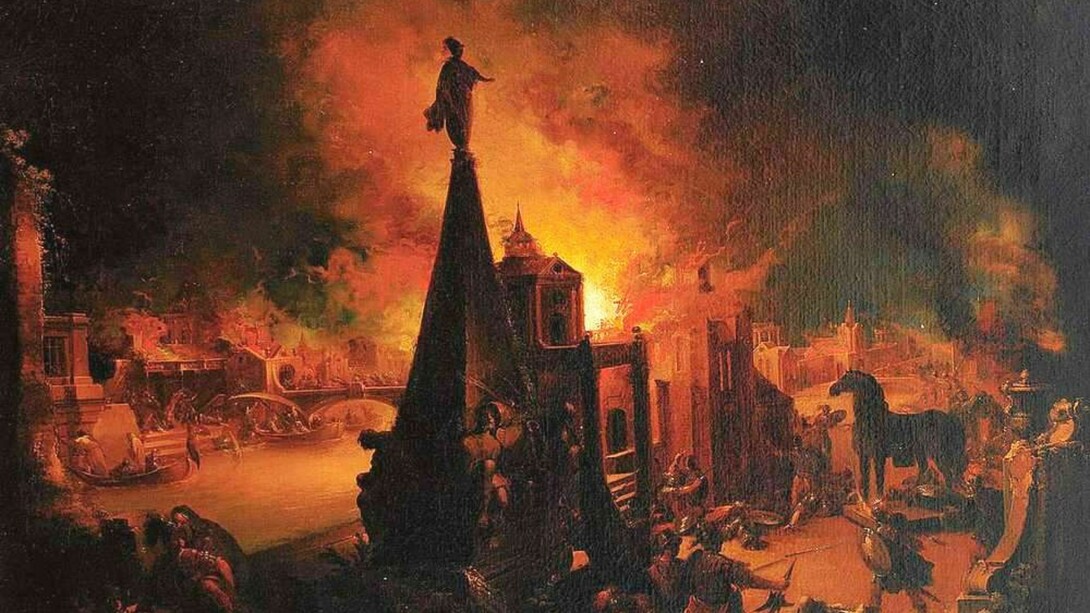
Trump’s breakthrough and move into the White House following Barack Obama was a historic turning point. It changed the political landscape in the U.S. and all wealthy Western countries. The Brexit referendum in the United Kingdom of Great Britain and Northern Ireland in June 2016, for example, put the UK’s withdrawal from the EU on the agenda. Anti-elitist movements were the catalyst everywhere. Their goal – the utter destruction of the old order – was discussed in the new social media but not by the representatives of that order who were bound up with the mainstream media which were also unaware of the gathering storm.
The stormfront had formed around Trump in the U.S. and Nigel Farage in the U.K. It fueled the critique of elites who had legitimized and driven the long wave of economic globalization in which workers with practical skills, but no higher education, had fallen victim to the offshoring of physical manufacturing and decimation of blue-collar jobs. Rising hopelessness and increasing militancy of white men were the results, unintentional but crucial.
Neither the leadership of the two political parties in the U.S. (Democrats and Republicans) nor the elite of the fourth estate (television, radio, and newspaper journalists) had felt the costs of globalization and open borders or noticed the growing discontent among white working-class people. Most often technologically illiterate, socio-culturally out of touch and joined together by ‘good’ backgrounds, better education and behavior, they were not familiar with the upstart new media and their subversive discourses, so much so that the political upheaval caught these representatives of the status quo unprepared and suddenly.
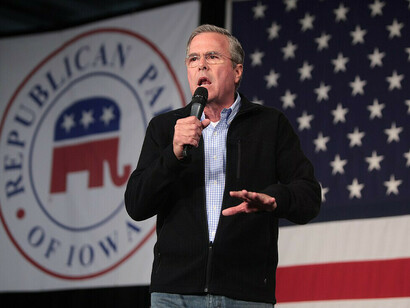
The Republican elite could not believe that Trump and his rebellious voters were railing against the conservative establishment personified by Jeb Bush. For the liberal elite, the mass exodus of working-class voters into Trump’s arms was a mystery. And for the educated classes – the journalistic and academic elites that were supposed to hear the grass grow – it was painful to realize that they had failed to notice the national formation and international expansion of wilding vanguards of populism.
Dark party politics
The freedom to choose between different parties is a hallmark of democracy. Voters who are dissatisfied with the policies and representatives of the party they voted for can cast their vote for a different party in the next election. This is normal and a strength of the democratic system. However, when voters across all established parties are dissatisfied with almost all politicians and policies, this strength turns into a dangerous weakness and prepares the ground for movements that challenge democracy, oppose the political and economic project of an entire region, or pave the way for a strongman. This is exactly what has taken place over the past decade in the U.S. and Western Europe.
Party politics – inevitably caught in the tension between the commonweal and a party’s interest, and therefore always viewed with suspicion – took a dark turn. Dark party politics favors old (and increasingly older) incumbents, is corrupted by big money, disregards the common good, sabotages collective national interests, and destroys our planetary habitat. Trump’s two-term presidency has, for the time being, consolidated this catastrophic form of political competition in the United States.
America’s 80-year-old strongman, who now places himself above Alexander the Great, Julius Caesar, and Napoleon Bonaparte, has turned the Republican Party into an instrument of his grandiose ambitions. And the Republicans, who once competed with the Democrats over how best to serve the nation and the world, are now outdoing one another in their eagerness not to hinder – let alone limit or even end – their leader’s megalomania. Their MAGA enthusiasm promotes the awesome global power of the American president in general, and particularly this one, who will never serve anyone but himself.
The Republican Party deserves to lose its majority in both houses of the U.S. Congress in the upcoming midterm elections in November 2026. By relinquishing its constitutional oversight of the president’s executive power, it has gone from responsible to irresponsible party politics. It crossed that line and left it far behind between 2019 and 2021 when it foiled the impeachment proceedings against Trump for abuse of power and incitement of a deadly insurrection.
Trump has put the “revaluation of all values” proclaimed by Nietzsche into political practice. He and his party exercise power for power’s sake. They don’t accept negative election results, do not respect oversight through democratic procedures, principles, or norms, and denounce all critics, large segments of the population, and the opposing party as un-American and undemocratic.1 Trump and his accomplices have abandoned the search for inclusive visions of the future for the benefit of the entire country and all its citizens by placing their own interests and shameless self-enrichment above the commonweal.
In what follows, I would like to show that the Republican and Democratic Parties have darkened American party politics, the Republican Party arguably more so than the Democratic Party. However, dark party politics, which triggered the rejection of both parties and all elites, is only one of my eight-part explanation of the takeover of America by Trump and Trumpian populism.2 Nevertheless, without the avoidable missteps of both parties, the momentum of Trump’s Trojan horse would have most likely stalled at the gates of power.
Neutral reporting – gone for good
Trump’s emergence on the American political stage put an end to the established division of labor in the American democratic republic in which the Democratic and Republican party elites played their liberal and conservative roles, and most journalists did their best to inform viewers, listeners, and readers objectively and critically.
During the 2016 election year, the parallels to the gradual dismantling of the Weimar Republic (from the end of World War I to Hitler’s rise to power) struck me and I began to take note of the historic upheaval in the U.S. I noticed among other things that the reputable press was forced to take a political stance and join the fight to preserve the republic and domestic democracy. To illustrate this, let’s look at the transformation of the New York Times, the most reputable of all American daily newspapers and, according to Trump’s obscene logic, the ringleader of “fake news.”
On November 5, 2016, three days before the election, the Times abandoned its traditional restraint and attacked the Republican Party and its candidate in unusually harsh terms. For months, the venerable publication had hesitated to consider the previously unthinkable – a President Trump – as a possibility, but now it began to describe Trump as a national threat. Without mincing words, the Times linked the Republican Party to the alt-right movement, the Ku Klux Klan, racists and misogynists, as well as the “crazy people” who inevitably shouted “lock her up” whenever they heard Hillary Clinton’s name. The Times described Trump as a candidate who
stands for torture, reckless war, unchecked greed, hatred of women, immigrants, refugees, people of color and people with disabilities. A sexual predator, a business fraud, a liar who runs on a promise to destroy millions of immigrant families and to jail his political opponent.3
To this day, the Times’ editorial board has maintained its assessment of Trump as well as its partisan language, which no longer shies away from polemical statements. Previously, it had merely criticized Trump’s selfishness and described him as “a man far more consumed with himself than with the nation’s well-being.”4
The Times’ conversion toward partisan clarity occurred when the editorial board realized that Trump might be on the verge of winning the election and becoming President of the United States – but then it was already too late. Even then, however, “the rejection of Trump” advocated by the Times was still portrayed as “the simple part.” The far more difficult part would come later, after Clinton’s election as the 45th president, when she would have to grapple with Trump’s false promises as well as the deep divisions and entrenched positions that the presidential campaigns had created.
The moment of realization dawned in the early hours of November 9. Trump’s unexpected success swept the fog of ignorance away surrounding the mainstream media and shed light on what had long been brewing in the shade. Suddenly, the Times recognized its failure and described the victory of Trump voters for what it was:
a decisive demonstration of power by a largely overlooked coalition of mostly blue-collar white and working-class voters who felt that the promise of the United States had slipped their grasp amid decades of globalization and multiculturalism.5
Romney’s blunder
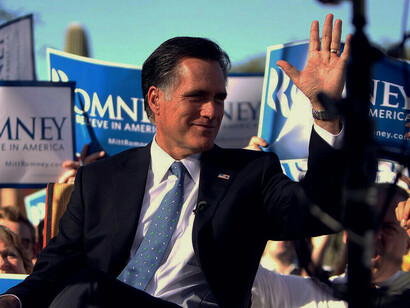
Republican presidential candidate Mitt Romney, who ran against Obama’s re-election in 2012, flopped notably with a speech he delivered at an exclusive private dinner for wealthy donors. In front of about 150 guests, each of whom had paid $50,000 to attend, Romney characterized some 76 million Americans as follows:
There are 47 percent of the people who … are with him [Obama], who are dependent upon government, who believe that they are victims, who believe the government has a responsibility to care for them, who believe that they are entitled to health care, to food, to housing, to you name-it. … And they will vote for this president no matter what. …These are people who pay no income tax. Forty-seven percent of Americans pay no income tax. So our message of low taxes doesn’t connect.6
Lazy reliance on government handouts was a popular Republican theme. Romney’s vision of multitudes of demanding recipients of government welfare was true in Republican eyes. It did not evoke the image of a poor white grandmother living modestly on meager social benefits – a significant portion of the “47 percent” are retirees and seniors – but of countless young freeloaders, primarily immigrants and Blacks.
This Republican nightmare was misleading in many ways. Not paying income tax does not waive payroll taxes, excise taxes, or state and local taxes. And the claim that all those not subject to income tax would vote for Obama “no matter what” was wrong.7 All of this, however, seemed irrelevant, as only Romney’s small group of party-aligned gala guests had heard his table talk.
Four months later, shortly before the presidential debates in October, that changed. A barman at the event had recorded Romney on his phone and given the video to Mother Jones, a left-leaning bimonthly magazine. The magazine’s scoop triggered a flood of negative comments, contributed to Obama’s reelection, and put Romney on the defensive as a multimillionaire who cares only about his own kind. The fact that Romney wanted to question his party’s tax-cutting mantra got lost, and the irony of a bartender’s tip prevailed.
The unintended splash of the “47 percent” blunder forced Romney to deny that he would abandon half of America as president.8 That was not a good position to be in and a greater handicap than hosting an unaffordable dinner. Yet elitist arrogance and partisan missteps were not only Republican but also Democratic faults that Hillary Clinton exhibited.
Clinton mistakes
Clinton’s hubris was on full display two months before the election in a setting her opponent could not have staged more unfavorably. Unlike with Romney, the press was invited, but as in Romney’s case, Clinton also pandered to her friendly audience.
The event: a fundraising gala at New York’s highly exclusive Cipriani Wall Street restaurant on September 9, 2016; attendees: approximately 2,000 to 3,000 paying guests; ticket prices: between $1,200 and $250,000; event title: “Lesbian, Gay, Bisexual, and Transgender for Hillary Gala Dinner.” Barbra Streisand gave a 40-minute performance. Clinton emphasized her “special commitment” to the LGBT community and sought to speak directly to their hearts with the following words:
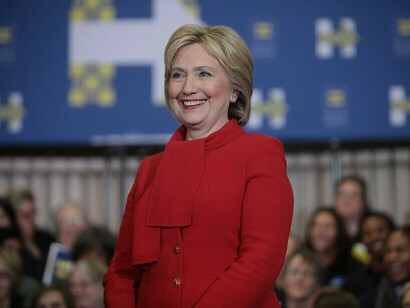
You could put half of Trump’s supporters into what I call the basket of deplorables. Right? The racist, sexist, homophobic, xenophobic, Islamophobic – you name it. And unfortunately, there are people like that. And he [Trump] has lifted them up. He has given voice to their websites that used to only have 11,000 people – now 11 million. He tweets and retweets their offensive, hateful, mean-spirited rhetoric. Now, some of those folks – they are irredeemable, but thankfully, they are not America.9
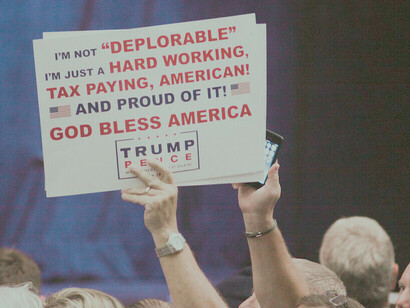
The backlash against that speech was immediate and devastating. T-shirts, pins, hats, mugs, bumper stickers, and tote bags instantly proclaimed, “I’m Deplorable.” Three days after Clinton’s speech, a white man held up a sign at the entrance to a Trump rally that read: “Deplorable Lives Matter.”10 A brilliant counter using the slogan of the anti-Trump movement Black Lives Matter – it left no room for argument. A photo of the counterpunch went viral on Twitter. “Trumpreneurs” promptly spread the new combat slogan across T-shirts, pins, hats, and so on.
Following Cinderella’s example and apparently with no sense for the electoral costs of dividing voters into worthy and worthless groups, Clinton threw half of Trump’s supporters into her “irredeemable deplorable” basket and the other half into a “frustrated redeemable” bin. But even for those who landed in the better bin – folks “we have to understand and empathize with” – there was no clear empathy, concerted outreach or effort to win Trump-leaning voters over. Clinton was unable to extend a helping hand to those,
who feel that the government has let them down, the economy has let them down, nobody cares about them, nobody worries about what happens to their lives and their futures, and they’re just desperate for change. It doesn’t really even matter where it comes from. They don’t buy everything he [Trump] says, but he seems to hold out some hope that their lives will be different.
Clinton’s impression of the mindset of many Trump voters was probably correct, but her notion of them as either redeemable or irredeemable misfits was wrong in two respects. First, it signaled to those classified as hopeless that they had been written off by Clinton and the Democratic Party. That was counterproductive from a party-line perspective. And second, it blurred the important distinction between Trump and his supporters. Trump may be said to be incurable, but the latter should never be viewed as forever smitten by the siren song of Trumpian promises. Again, one would think that, by party-line logic, this would be a no-brainer.
People don’t like being pigeonholed and labeled. Besides, the “deplorables” mistake was completely unnecessary. Clinton had already forcefully attacked Trump’s backing of the radical Alt-Right movement two weeks earlier in Reno, Nevada, without denigrating the supporters of her opponent. There, she declared:
A man with a long history of racial discrimination, who traffics in dark conspiracy theories drawn from the pages of supermarket tabloids and the far, dark reaches of the internet, should never run our government or command our military. 11
Clinton had pointedly asked, “If he [Trump] doesn’t respect all Americans, how can he serve all Americans?” She reaffirmed her pledge to “be a president for all Americans” by saying, “I don’t think we have a person to waste. We want to build an America where every person has a place.” Right! Clinton could have framed “deplorable” as a temporary condition rather than a permanent characteristic. How could she speak of Americans who “are not America”?
Clinton made an additional mistake by deliberately avoiding the supposed trap of “feeling the Bern.”12 Bernard Sanders, the “democratic socialist” from Vermont, was inspiring the progressive base of the Democratic Party and a large portion of young Americans with an outsider campaign for president. Like Trump, “Bernie” called for a populist “political revolution,” but unlike the Republican candidate, he shunned large donations from corporations, super PACs, Wall Street, or the financial industry and accepted only small, individual contributions. His “Not For Sale” campaign raised more money than Trump and any other campaign in U.S. history.
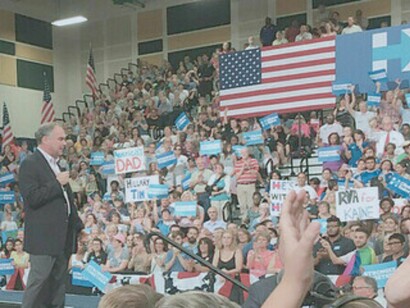
Clinton could have harnessed the energy of millions of young people by asking the left-wing populist to come on board of her campaign as vice president and strengthen her party’s egalitarian plank. Instead, she chose the “safe” but largely unknown Senator Tim Kaine from Virginia, a man who proudly described himself as “boring.” Clinton’s decision to put Kaine on her ticket permitted Trump to dominate the populist challenge. Too many potential new democratic voters stayed home on election night. Their frustration has strengthened the Marxist section of the Democratic Socialists of America, a faction of the organization that has begun to haunt the Democratic Party.
White working-class men – once liberal, now far-right
From Franklin Delano Roosevelt to Lyndon Johnson, working-class and middle-class Americans were the Democratic Party’s most loyal base. David Paul Kuhn has chronicled the story of their alienation, progressive neglect, and eventual realignment.
Kuhn found that the voters who abandoned the Democratic Party between the failed presidential campaigns of George McGovern (1972) and John Kerry (2004) were not only white but also predominantly men. He termed “the margin between the strong majority of white men who support Republicans in presidential elections, in comparison to the minority who vote Democratic,” the “white male gap.” The progressive elites did not appreciate his critical remark that Obama and Hillary Clinton (who both fought hard for the Democratic nomination in 2007) were “significantly closer to the Democrats who led the party [away from white men] since 1972 than to those of the days of JFK or FDR.”13 Consequently, they ignored Kuhn’s implicit warning.
The liberal left has won important battles in the postwar era, the Civil Rights Act of 1964, for example, but its subsequent embrace of multiculturalism and extreme political correctness has put it on the defensive and greatly fueled American conservatism, culminating in Trump’s ruthless counterattack. Democrats have courageously reached out to all kinds of minorities – especially women, Blacks, gays, and immigrants – but not to white men in need. On the contrary, the Democratic Party has driven too many white men into Republican exile. Kuhn’s advice from 2007 still holds true, therefore:
The Democratic revival cannot occur without reaching out to those they lost. But white men will only respect the outreach when they believe the reasons they left the party are respected. Until that day, American conservatives will continue to win the majority of workingmen.14
White American working-class voters who vote Democratic is now a pipe dream, with little to suggest it will become a reality again soon. Since Ronald Reagan’s victory over Jimmy Carter (1980) and the linking of academic gender studies with Democratic politics in the 1990s, most white men have shifted from center-left to the far-right. The Democratic Party has accepted this realignment of its former base without a fight. Trump’s conquest of the Republican Party and pronounced cult of masculinity mobilized white men against American norms and traditions; he has weaponized their grievances and turned these angry males into populist fighters.
Back to reality
Romney and Clinton were, in distinctly Republican and Democratic ways, blind to the plight of struggling workers. Trump, on the other hand, having recognized the enormous electoral potential of the Americans who had been disparaged by both parties, made them his loyal constituency. In an ironic twist of history, he secured his victory over Clinton with the votes of Romney’s imagined 47-percent bloc of government-dependent Americans – many of whom Clinton would then consign to her “basket of deplorables.” At the same time, with the help of his courtiers and the Supreme Court, he eradicated nearly all restraints and institutional balances that could check his autocratic-monarchical ambition.
Trump’s success was and is remarkable, but also precarious. The strongman who, after his wild and destructive rampages – that is, his rallies – fails to deliver on his promises, or ceases even to try, will sooner or later experience the fate of the rider in the old German nursery rhyme hoppe, hoppe, Reiter: if he falls into the ditch, “the ravens will eat him”; if he falls into the swamp, the rider simply goes “plop!”
The two major parties in the United States will survive Trump and carry on. That raises the question: After the twilight of the elites and the idolization of a strongman, will there be a return to reality? I don’t have an answer to that, but would like to point to an important partisan difference that could work to the Democrats’ advantage despite the prevailing gloom.
Republicans rarely outdo Democrats in orderly debates grounded in verifiable facts, but they regularly do so in freewheeling battles of fiction, distortion, and outright lies. In other words, unlike the Republican Party, the Democratic Party has retained a healthy respect for reality. That respect is rooted in Western Enlightenment and modern science and the concrete achievements of both. It could help the party, in the future, strike the right balance in its politics between its own special interests and the common good.
Notes
1 Partisan discrimination against the Democrats in the U.S. occurs not only blatantly but also subtly. For example: when Republicans speak of the Democratic Party, they don’t say “Democratic Party” but always “Democrat Party” (since Newt Gingrich). This rhetorical slip – tabooing the official name of the rival party and using the noun democrat instead of the adjective democratic – is designed to separate the political rival from the positive aura of the word “democratic.”
2 For my take on Trumpian populism, see Wolf Schäfer, “Populism as a wishmachine.” Meer, 25 February 2026. My explanation of Trump’s takeover of America covers eight fields: technology, free speech, capitalism, demography, party politics, geopolitics, political culture, and philosophy. For my take on technology, see “Media upheaval in the technology field.” Meer, 25 March 2026; for free speech, see “Loudspeakers for Trump.” Meer, 25 April 2026; for capitalism, see “Inequality and discontent.” Meer, 25 June 2026; for party politics, see this article. The remaining three articles on geopolitics, political culture, and philosophy will be forthcoming.
3 The Editorial Board, “Imagining America on Nov. 9.” The New York Times, 5 November 2016.
4 The Editorial Board, “Why Donald Trump Should Not Be President.” The New York Times, 25 September 2016.
5 Matt Flegenheimer and Michael Barbaro, “Donald Trump Is Elected President in Stunning Repudiation of the Establishment.” The New York Times, 9 November 2016.
6 See “Full Transcript of the Mitt Romney Secret Video.” Mother Jones, 19 September 2012, and “Man who secretly videotaped Mitt Romney’s ‘47 percent’ remarks comes forward.” CBS News, 14 March 2013.
7 Romney was supported by about 40 percent of people who did not earn enough to pay federal income tax; the states with the highest proportion of people who did not file federal income tax returns were those that gave the most votes to the Republicans; and those with the fewest people who did not file tax returns voted overwhelmingly for the Democrats. See Robert Farley, “Dependency and Romney’s 47 Percenters.” FactCheck.Org, 18 September 2012.
8 See David Corn, “Secret Video: Romney Tells Millionaire Donors What He REALLY Thinks of Obama Voters. When he doesn’t know a camera’s rolling, the GOP candidate shows his disdain for half of America.” Mother Jones, 17 September 2012.
9 Angie Drobnic Holan, “In Context: Hillary Clinton and the ‘basket of deplorables’.” PolitiFact, 11 September 2016.
10 See Frank Thorp V, “Deplorable Lives Matter.” 12 September 2016.
11 Abby Ohlheiser and Caitlin Dewey, “Hillary Clinton’s alt-right speech, annotated.” The Washington Post, 25 August 2016.
12 Feel the Bern was a play on Jane Fonda’s aerobics phrase “feel the burn” and a hashtag used to support Bernie Sanders. The slogan is said to have originated in a Facebook discussion in early 2015 about how to best spread the Democratic Socialists’ name across the internet.
13 David Paul Kuhn, The Neglected Voter: White Men and the Democratic Dilemma. 1. ed. New York, N.Y.: Palgrave Macmillan, 2007, p. 4 and p. 233.
14 Ibid., p. 243.