English
 Español
 Français
 Deutsch
 Italiano
 Português

One of the most overlooked lessons universities can teach students has nothing to do with research methods, critical thinking, academic writing, or career readiness. It is something far simpler, yet increasingly important: understanding that professors are human beings too.
This may sound obvious.
Of course professors are human. Nobody genuinely believes that lecturers live inside university buildings, power down during semester breaks, or spend their evenings waiting for student emails to arrive. And yet, somewhere within the culture of higher education, there exists a subtle tendency to forget the person behind the professional role. Students interact with professors primarily through lectures, assessments, deadlines, feedback, and grades. Over time, the professor can become less of an individual and more of a function—a figure associated with authority, expectations, and academic outcomes rather than a person navigating life much like everyone else.
This is not entirely surprising. Universities are designed around expertise. Students enter classrooms expecting to learn from people who know more than they do, people who have spent years developing knowledge in their fields. There is naturally a certain distance created by that expertise. The professor stands at the front of the room while students sit in the audience. One asks the questions; the other answers them. One evaluates; the other is evaluated. Yet while this dynamic is academically necessary, it can sometimes obscure an important reality: expertise does not erase humanity.
The irony is that universities are places dedicated to understanding human complexity, yet they often fail to make visible the complexity of the people doing the teaching. Students may know a professor's research interests, publications, and office hours but know very little about the realities of academic life. Many students are surprised to discover that teaching is only one component of a professor's responsibilities. Beyond the classroom, faculty members are conducting research, writing papers, reviewing manuscripts, attending committee meetings, applying for grants, supervising graduate students, responding to institutional demands, and contributing to the countless administrative processes that keep universities running. Teaching, in many cases, is only the most visible part of a much larger professional life.
This disconnect becomes particularly noticeable when expectations collide with reality. Almost every professor has received an email sent at midnight asking for an urgent response by morning. Almost every student has wondered why grades are taking so long to be released. Neither side is necessarily being unreasonable. Students are often operating under pressure, managing deadlines, anxiety, and uncertainty. But what can be missing is perspective. A student sees one assignment waiting to be graded—their own. A professor sees two hundred. A student experiences one moment of academic stress. A professor may spend an entire week helping dozens of students navigate theirs.
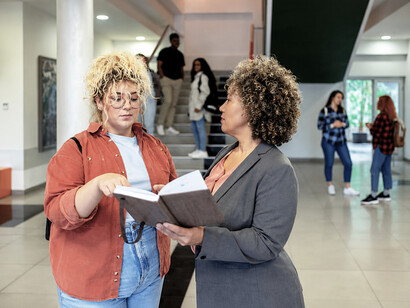
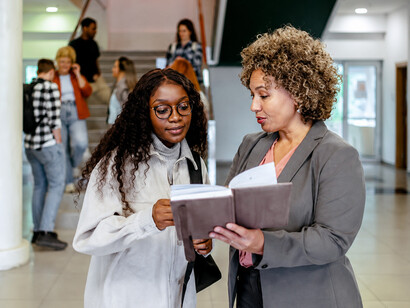
Perhaps what makes teaching unique among professions is the amount of emotional labour it quietly demands. Students often think of university education as the transfer of knowledge, but anyone who has spent time in higher education knows that learning is rarely that straightforward. Professors become mentors, advisors, motivators, problem-solvers, and, at times, unofficial counsellors. They write recommendation letters that shape careers. They support students through personal crises. They encourage students who are on the verge of giving up. They celebrate achievements and help process disappointments. Much of this work happens behind closed doors, in office hours, email exchanges, and conversations that never appear on a course syllabus.
Yet because this labour is largely invisible, it is easy to underestimate. Students often encounter these moments individually. They experience their own conversation, their own challenge, their own request for support. What they do not see is that they are one of many students seeking help from the same person. The professor who appears calm and attentive during a meeting may already have spent the day navigating a series of similar conversations. The patience students appreciate often requires considerable effort to sustain.
The issue becomes even more relevant in an age where higher education increasingly adopts the language of customer experience. Universities speak of student satisfaction, student services, and student-centred approaches. While these developments have brought important improvements, they have also subtly shifted expectations. In some cases, students begin to view education as a service transaction rather than a collaborative relationship. When this happens, professors risk being perceived less as educators and more as providers whose role is to deliver a product efficiently.
The problem with this mindset is not that students expect quality education. They absolutely should. The problem is that transactional thinking tends to flatten human relationships. It encourages people to focus on outputs rather than individuals. In a transaction, we care primarily about whether a need has been met. In a relationship, we recognise the person on the other side of the interaction. Education, at its best, has always belonged to the second category.
What makes this particularly important is that students themselves benefit when they see their professors as human beings. Some of the most transformative moments in higher education occur not because a professor possesses extraordinary knowledge but because students recognise something relatable in them. A professor who shares a story about struggling with research. A lecturer who admits to changing their mind after new evidence emerged. A supervisor who speaks openly about rejection, failure, or uncertainty. These moments remind students that expertise is not the absence of struggle; it is often the result of learning how to navigate it.
There is something deeply reassuring about realising that even the most accomplished academics were once confused students sitting in classrooms, wondering whether they were good enough. Every professor has submitted work that received criticism. Every researcher has encountered failure. Every expert has experienced moments of doubt. Yet students rarely see this side of academia because universities tend to showcase achievement while hiding the long and often messy process that produced it.
Perhaps this is why helping students understand the humanity of their teachers is not simply about being kinder to professors. It is about creating a healthier academic culture altogether. When students recognise that educators have limits, they become more thoughtful communicators. When professors feel seen as people rather than functions, they often become more engaged and approachable. The relationship becomes less adversarial and more collaborative. Learning feels less like a performance and more like a shared intellectual journey.
Universities often describe themselves as communities. It is a word that appears in mission statements, strategic plans, and graduation speeches. Yet communities are not built solely through shared spaces or institutional affiliations. They are built through mutual recognition. They emerge when people see one another not merely as roles but as individuals.
In many ways, this may be one of the most valuable lessons higher education can offer. Long after students forget the details of a lecture or the contents of a textbook, they will continue to encounter people occupying positions of authority, expertise, and responsibility. They will work with managers, doctors, executives, policymakers, and colleagues whose professional roles can easily overshadow their humanity. Learning to see the person behind the title is a skill that extends far beyond university walls.
And perhaps that is why the conversation matters. Not because professors need sympathy, and not because students need another orientation session. It matters because universities are among the few places where thousands of people come together in pursuit of knowledge. If institutions dedicated to understanding human beings cannot encourage students to recognise the humanity of those who teach them, then they are missing an opportunity to teach one of the most important lessons of all. The person standing at the front of the lecture hall is not simply a professor. They are a person first. And remembering that has the power to make universities not only more respectful places but also better ones.