English
 Español
 Français
 Deutsch
 Italiano
 Português
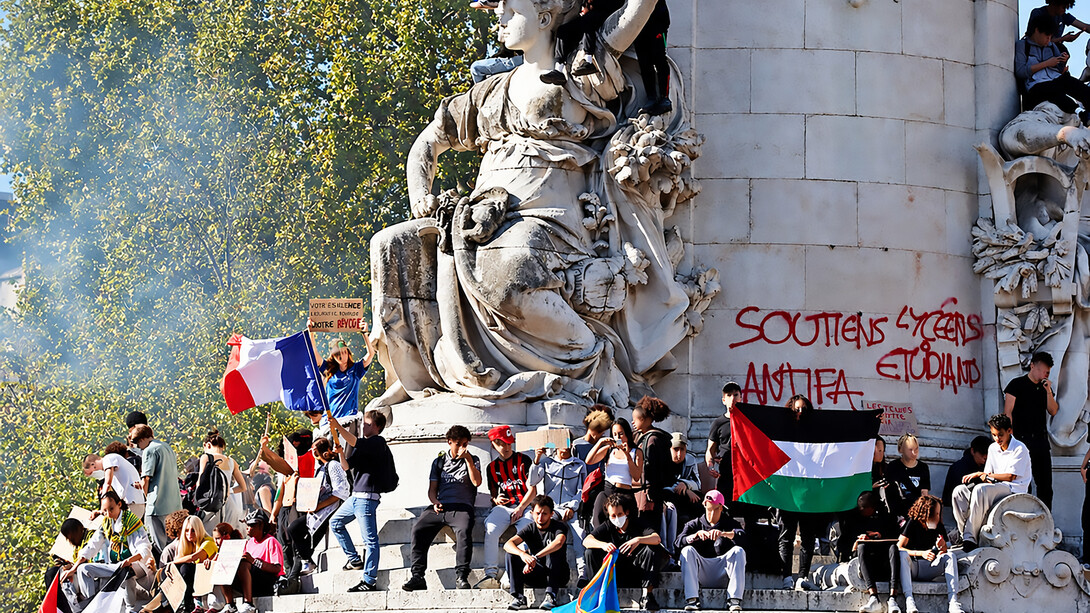
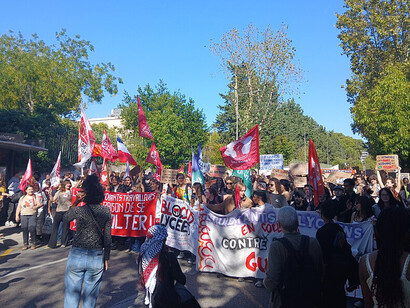
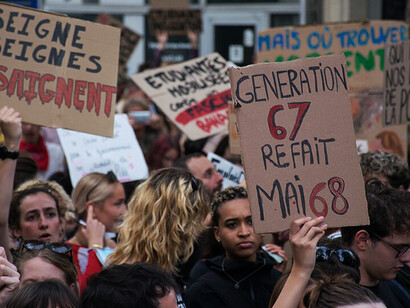
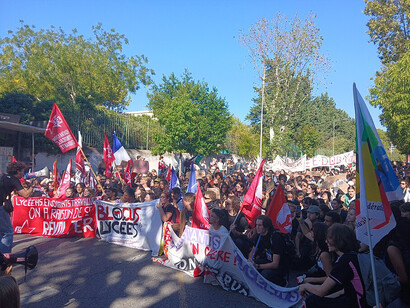
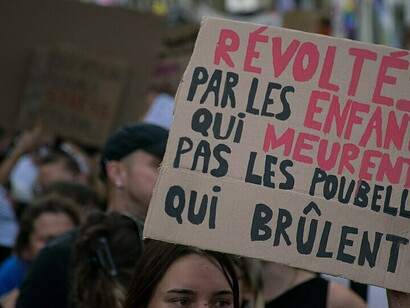
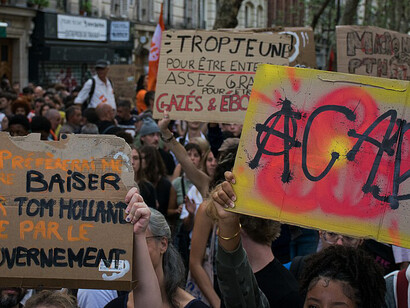
Last weekend’s marches make the pressure hard to ignore. Authorities counted 550,000 people across France on 17 October. Early tallies listed at least 1800 arrests1 after hooded groups clashed with police. Organizers claimed more. Parallel actions ran in Belgium, Portugal, and Italy. Shared complaint is plain enough. Essentials cost more than many wages cover, and governments have little spare capacity left to close the gap.
Think about the sequence this way. Europe still imports a large share of the fuel that sets the price of electricity, heat, transport, and fertilizer. When those import prices jump, the cost lands on household and company bills before any domestic policy can slow it. Public budgets already carry the debt from earlier crises. That pairing is the root condition.
Energy dependence remains the main channel. Eurostat put overall energy import dependency at 57 percent in 2024. Oil and petroleum products made up the largest share, followed by natural gas.2 European Commission President Ursula von der Leyen told the European Parliament that gas prices have risen 140 percent since the end of February and diesel prices have doubled. The extra cost of imported fossil fuels, she said, has reached €100 billion without any additional volume of energy.3
Russian gas has fallen from roughly 45 percent of imports four years ago to 12 percent, yet the bloc stays exposed to global spot markets. Renewables and nuclear now supply more than 70 percent of electricity generation. Electricity itself still covers less than a quarter of final energy use. Commission estimates put the potential annual saving from doubling the electricity share by 2040 at €260 billion. Until that shift advances further, external shocks continue to set domestic prices.
Inflation numbers show the speed of transmission. Eurostat reported euro-area inflation at 3.8 percent in September 2026, up from 3.2 percent in August and from 2.2 percent a year earlier4. Energy rose 18.9 percent and contributed the largest share. Italy stood at 4.2 percent and Spain at 5.0 percent. In February, before the Middle East conflict widened, the rate was 1.9 percent. Acceleration is concentrated in energy and the costs that follow from it, not in a broad surge of domestic demand.
Food and housing carry the pressure into monthly budgets. Eurostat data examined by Euronews show that EU food and non-alcoholic beverage prices rose 34 percent between August 2021 and August 2026. Over the same span, a French minimum wage bought 4 percent less food, and a Spanish minimum wage bought 5 percent less5. House prices in the EU rose 4.7 percent and rents rose 3.0 percent in the year to the second quarter of 20266. Portugal recorded a 17.8 percent rise in the first quarter. France was one of the few countries where house prices fell, so French anger has focused more on wages, fuel, and the condition of schools and other public services. Movements of this size change what a paycheck covers.
Public finances constrain the usual response. France runs a deficit of 5.4 percent of GDP and debt near 119 percent of GDP7. Its 10-year borrowing rate has moved to around 4.87 percent, a level last seen in the early 2000s. Yields have risen roughly 150 basis points since the recent energy disruption began, and the spread over German bonds has widened. The IMF has described the increase as manageable in the short term but noted that persistently higher yields will raise the pressure for a credible medium-term plan.
The draft 2027 budget freezes public-sector salaries and seeks savings on pensions and health spending. Households that need support face a treasury that is itself tightening. Other governments have asked Brussels for more room, yet the Commission has preferred targeted vouchers and income support over broad subsidies because broad support would add to already high debt. (Which matters because temporary measures have a way of lingering.)
Opinion data track the same pressure. A recent Eurobarometer survey found that 47 percent of Europeans list rising prices as the top issue they want the European Parliament to address, up six points from the previous survey. Twenty-nine percent expect their living standards to fall over the next five years. In France, the share expecting their situation to worsen reaches 44 percent8. These figures do not forecast any particular election result. They show that the distance between expected stability and current costs has grown large enough to bring large numbers of people into the streets.
Political risk follows from the numbers. France holds presidential elections next year. Violence on the edges of the marches has been attributed by the interior ministry to ultra-left groups and to opportunistic looters. Courts will sort individual cases. What is already clear is that repeated disorder tends to strengthen parties that campaign on restoring order. If the main answer is police deployments plus short-term vouchers, the underlying exposure stays in place. The next external energy spike will meet the same fiscal limits and the same public impatience.
Europe has cut one earlier vulnerability by reducing Russian pipeline gas. It has not yet removed the broader condition that makes external shocks expensive: continued reliance on imported fossil fuels whose prices are set outside the continent, paired with public balance sheets that already carry high debt. Mario Draghi’s 20249 competitiveness report documented the price gap in plain terms. EU companies faced electricity prices two to three times those in the United States and gas prices four to five times higher. The report treated the gap as a structural competitiveness problem. The years since have not closed it.
Mid-October protests are best read as a signal of that unfinished condition. Targeted support can limit immediate harm to the most exposed households. Faster electrification and additional nuclear capacity can reduce the volume of imported fuel that sets domestic costs. Both steps cost money and require choices that will disappoint some groups. The alternative is a repeated sequence already visible in the data: an external price shock, limited fiscal capacity to absorb it, and another round of street pressure ahead of elections.
References
1 Arrests over France protests rise to 1,800, with whole streets in Paris ‘devastated’ – as it happened.
2 Energy in Europe: imports dependency.
3 EU fossil bill surges by €100b as gas dependence slashed to 12%.
4 Annual inflation up to 3.8% in the euro area.
5 Food prices vs minimum wages: Where in Europe has pay kept up?
6 House prices and rents continued to rise in Q2 2026.
7 French public debt soars to 119% of GDP, highest level since 1946.
8 Almost one in three Europeans expect standard of living to decline, survey says.
9 Mario Draghi’s report on the future of European Competitiveness.