English
 Español
 Français
 Deutsch
 Italiano
 Português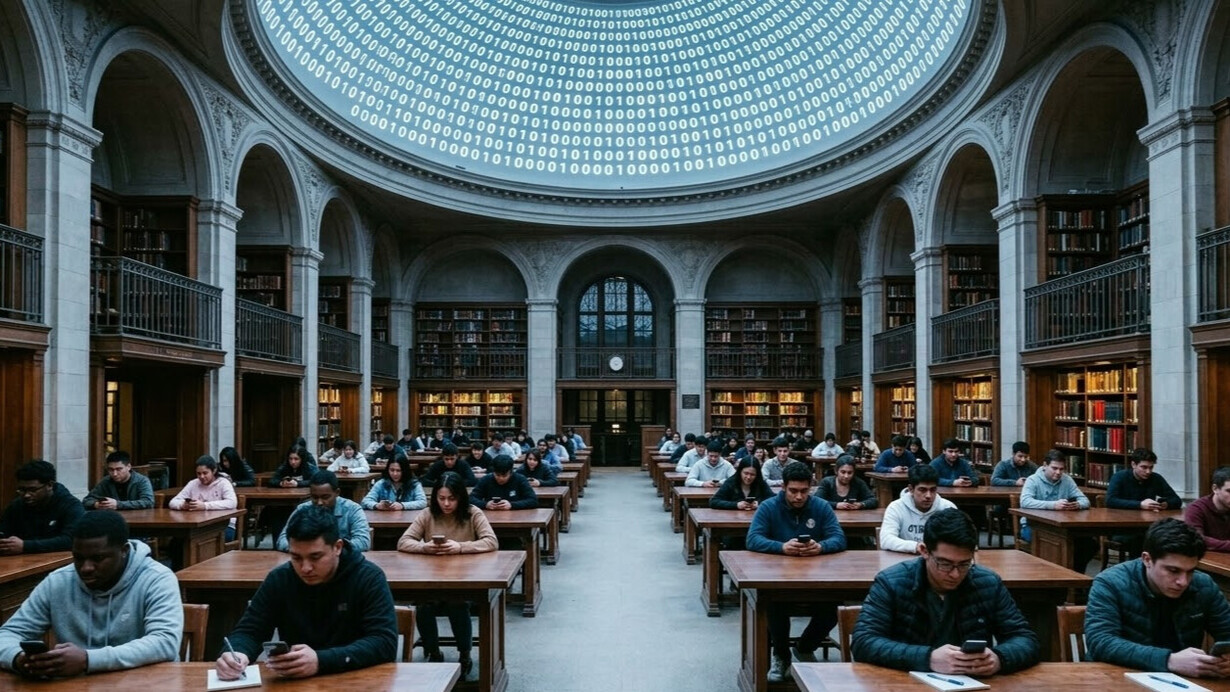
The change from old information media – printed newspapers, magazines, and books – to social networks, video portals, and blogging platforms was an earthquake that originated in the United States and shook the entire world. The epicenter of the quake was in the field of technology, and its greatest cultural impact was the media upheaval discussed here.
This massive disruption was heralded in the second half of the twentieth century by a multitude of technical advances: the development of Arpanet (1969); the spread of personal computers (such as Apple II, 1977); acoustic couplers, modems, and the use of private mailboxes such as FidoNet. The upheaval became apparent at the beginning of the twenty-first century with the establishment of Facebook, YouTube, and Twitter.
The media revolution in the field of technology fulfills my requirement for historic change, namely that even a strongman can only make history under favorable conditions.1 The storms of this revolution cut devastating swaths through all traditional communication technologies. Otherwise, Trump would probably have failed in 2016 due to the resistance from the old elites and their print media. Hence my thesis: the media upheaval in the field of technology aided and abetted the breakthrough of Trumpian populism.
Goodbye Gutenberg, welcome Zuckerberg
Facebook and Twitter are prime examples of the rapid rise of new social media. Both took just one year to develop, test, and refine. Their services were then made available to end users and end users to them. Facebook.com was launched in 2006 and Twitter.com in 2007. When Trump was first elected, Twitter was not even ten years old, but already a significant force in shaping public opinion. After centuries of experience with tangible books, humanity became acquainted with Zuckerberg’s Facebook. The name is inadvertently ironic, because Facebook has nothing to do with books but a lot with faces, first portraits of students, now billions of human eyes.
Much of what has been taught since the printing of the Gutenberg Bible (1455) is fading, especially the accurate determination of facts. Humans have been dealing with printed matter for over half a millennium, but only two decades with electronic information and communication systems. Yet there is no going back. The shift from Marshall McLuhan’s “Gutenberg Galaxy”2 to the digital universe has taken place for good.
In 2010, when the media revolution was already several years old, a Google engineer calculated how many books had been published using movable metal type and all subsequent printing techniques. He came up with 129,864,880 original books.3
130 million is a large number but not much compared to the number of users the new social media has marshalled. Facebook alone has over two billion active daily users and over three billion monthly users worldwide.4 What’s more, these users are not just readers, but also authors, publishers, and republishers. The thousandfold leap across three logarithmic orders of magnitude (from millions to billions) achieved in such a short time is spectacular and transformative.
It is, of course, true that comparing books and social media accounts is like comparing apples and oranges. Books have print runs, mostly small but occasionally large, are borrowed from public and private libraries, passed on to friends, etc. So, we don’t know how many people in total have read the 130 million original books. Nonetheless, we can assume that the total number of active social media users has by far exceeded the number of people who read books in the past and still read them today.
The rapid transition from workstations to desktops, laptops, tablets, and ever more powerful smartphones, as well as from passive consumption of static websites (with the Netscape browser in 1994) to interactive, user-generated content (Web 2.0 since 2004), shows that the brave new digital world is growing at breakneck speed, increasingly supported by artificial intelligence. It grows faster than consumer comprehension and competence, but also, it seems, quicker than the ability of the technical wizards to fully understand and control the “thinking” of their ever-advancing systems.
The electronic human has replaced McLuhan’s “typographic human.” This new type of human, the e-human, although still in its infancy, will be surpassed, perhaps as early as tomorrow, by the AI-human, and it in turn, hypothetically, by transhuman entities.
Our information gathering and consumption of news has shifted from print to screens and from books and newspapers to Elon Musk’s X, formerly Twitter, and networks like it – all within the span of a generation. The number of actors has exploded and their constant input into events is simultaneously the driving force, goal, and foundation of the new social media.
It is tempting to lament that humanity didn’t have enough time to adapt to this epochal change. However, the younger generations, my children and grandchildren, are handling the proliferating gadgets, apps, programs, and platforms of rapid-fire technological progress without much difficulty.
One could follow backward-looking philosophers like Martin Heidegger and think modern science and technology put humanity on the wrong path. But it would change nothing. Removing technoscience from our societies is no longer an option. Since the invention of the printing press, the Heideggerian “frames” of technoscience have been so deeply inserted in all our activities that they cannot be removed without catastrophic consequences. Though they cannot be eliminated, they are open to debates about good, less good, and bad uses.
Thus one can, and I think we must, speak of dark technology, meaning technology that is used for sinister purposes, rather than technology in general. Social media is no exception. Technology becomes dark when unscrupulous users of Facebook, X, YouTube, TikTok, and other social media invent fake news or feed Trump’s menacing words and disturbing memes into the echo chambers of social networks.
The new communication tools can be used to attack, pummel, and destroy what we hold dear – democracy, the rule of law, civil society, decency, compassion, tolerance, fairness, public courage, ecological balance, and truth – and when that happens, when the distribution of hateful memes and fake news is not a slip-up, but the intention, we must use these tools ourselves to battle dark technology.
He rode the waves, unseen
Trump was better positioned in the technology field than any other candidate in the 2016 election. He opened his Twitter account in March 2009 and was therefore an experienced user of the microblogging platform long before his first presidential campaign. More importantly, he recognized both the populist potential as well as the enormous reach and speed of the new media environment. During the campaign, his follower count grew rapidly and soon surpassed those of prominent institutional accounts such as Google, BBC World News, The Economist, the National Football League, and NASA. Even so, and to his chagrin, in mid-2017 he still trailed the Twitter strongholds of CNN, the New York Times, and former president Barack Obama.
On the day before the election, November 7, 2016, Trump had roughly 13 million Twitter “followers” (the equivalent of Facebook “friends”). Considering his initial underdog status in national politics, this represented a remarkable level of direct public attention. Within days after the election, his follower count rose to more than 14 million and continued to increase rapidly during the transition period. By July 2017, his account had attracted more than 33 million followers. Social-science research on celebrity and media coverage has interpreted Trump’s exploding visibility as a case of “ultrafame,” meaning a level of public attention that is both extremely high and sustained over time.5
From May 2009 to January 2017, Trump posted more than 30,000 tweets. His average daily output rose from fewer than one tweet per day in the early years of the account to more than twenty per day at some points in 2013. Throughout his first campaign, the daily average remained high at around fifteen tweets per day. Analyses of Twitter messages mentioning Trump during the campaign indicate that immigration dominated the discussion, followed by foreign policy, taxation, and health care. By monitoring these reactions closely, Trump was able to identify anti-immigration sentiment as an issue with particularly strong resonance among his supporters.
Trump was the bird of prey behind the mask of the clown that was laughed at by the old elites. He knew how to use the new social networks to his advantage, they did not. He never tired of attacking immigrants, refugees, Muslims, the establishment, the Clintons, and the mainstream media with glee and the greatest possible political incorrectness. Even when his scandalous tweets seemed to catch up with him, they ensured that his name was always on top of the latest news.
Like most of his supporters, Trump got his information primarily from social media, mainly Twitter, followed by Facebook, Instagram, and YouTube. The right-wing website Breitbart News was the most frequent source of his tweets and retweets. However, Trump’s information ecosystem also included conventional media such as the Washington Post, provided they reported positive news about him or polls in his favor. However, he preferred content from “right-leaning, hyper-partisan sites and opinion blogs” with an “affinity for factually murky stories bolstered by opinion, circumstantial evidence, and hearsay that appear[ed] generally supportive of his most controversial statements.”6
Trump was the politician who benefited most from the dark possibilities of the new social media in the 2016 election year. They enabled him to:
Communicate directly with his supporters.
Release the pent-up energy of his base.
Expand his reach under the radar of traditional media.
Free himself from political correctness.
Develop a subversive discourse with the obscure ideologues of radical Trumpism.
Establish a reactionary identity politics for white Americans.
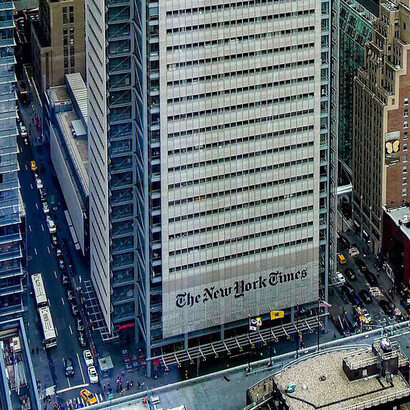
The major newspaper publishers in the US, led by the New York Times, slept through the shift from the old to the new social media. They missed Trump’s ascension in the chaos of the media revolution. They saw the clown but not the bird of prey and regarded his followers as an unrefined audience rather than a formidable fighting force. They failed their mission of public enlightenment – until it was too late.
After the shock of the election, the old media recognized their blinders. Looking back, they discovered the extent of the local and global changes. They had to admit to themselves and their readers that they had missed the revolution. Their belated reporting confirmed what could no longer be denied: “The pro-Trump media understood that it was an insurgent force in a conversation conducted on social media on an unprecedented scale.”7
The New York Times acknowledged the media upheaval in retrospect:
The election of Donald J. Trump is perhaps the starkest illustration yet that across the planet, social networks are helping to fundamentally rewire human society. They have subsumed and gutted mainstream media. They have undone traditional political advantages like fund-raising and access to advertising. And they are destabilizing and replacing old-line institutions and established ways of doing things, including political parties, transnational organizations and longstanding, unspoken social prohibitions against blatant expressions of racism and xenophobia.8
Trump marks the transition into the wild, virtual territories of the digital universe. Platforms such as Facebook and Twitter were the gateways. But not only that. They established themselves as world-shaking forces. Their super-rich owners and countless users are global actors; they can trigger big waves and violent storms in every conceivable area of life on this planet.
Mark Zuckerberg’s Meta empire encompasses three of the world’s largest media platforms: Facebook, WhatsApp, and Instagram. Facebook currently has about 3.1 billion monthly active users, WhatsApp roughly 2.7 billion, and Instagram around 2 billion. The video platforms YouTube (Google) and TikTok (ByteDance) operate on a comparable global scale: YouTube reaches more than 2.7 billion logged-in monthly users, while TikTok has about 1.6–1.7 billion. Slightly smaller but still massive platforms include WeChat, Telegram, and Snapchat, each with hundreds of millions to over a billion users worldwide.
Around the world, new social media are providing ever more people with news and information. Wireless mobile Internet access is growing rapidly, as is the number of hours spent online. Opening a large, printed newspaper or researching something in a heavy multi-volume encyclopedia has become a thing of the past.
In the United States, novel information behavior spiked during Trump’s first campaign but appears to have stabilized. According to the Pew Research Center, about 62 percent of American adults got news from social media in 2016, compared with 53 percent in 2020 and 54 percent in 2024. What has changed, however, is the source of that information.
Pew reports that 21 percent of Americans now regularly get news from social-media influencers, a figure that rises to nearly four in ten among adults under 30. Most of these influencers are independent creators rather than journalists affiliated with established media organizations. The media system is shifting from an age of mass media to an age of mass personalities.
Why “anything goes” works
What is new about the new social media besides this trend in authorship is their anchoring in the technology field. Companies such as Facebook, which have left the old print media far behind, are not media companies in the traditional sense. The fact that they disseminate news and opinions is tertiary. Technology and profit come first or second, depending on which hat the young founder wants to wear: that of engineer or capitalist – normally both.
The new social media has a problem with journalistic content selection. A motto like the New York Times’s since 1896 – All the News That’s Fit to Print – arouses suspicion. The social media industry does not want to have an editorial voice but rather be open to everyone and everything. It wants to remain true to its technological roots and use “neutral” methods to promote user-generated content. One insider described this as the mindset of an engineering-first culture: “[Facebook] and Google and everyone else have been hiding behind mathematics. They’re allergic to becoming a media company. They don’t want to deal with it… An engineering-first culture is completely antithetical to a media company.”9
This techno-libertarian attitude became apparent in Spring 2016 when Facebook was accused of “routinely suppressing” conservative content.10 The sensational accusation prompted Facebook to fire its entire team of news curators in August 2016 and replace them with an algorithm-driven process. The company then announced that its news section no longer required “people” to edit trending topics. Unintended consequences of the switch to machine-selected stories included true fake news going viral, such as “The Pope has endorsed Donald Trump [for president].”
For Facebook, bias was a human weakness and the accusation of liberal news promotion a user-dividing predicament. Hence, Zuckerberg sought to distance his platform from any political attack through objective scientific calculations and neutral code. That seemed like a sure way to steer Facebook through the unforgiving political waters between Scylla to the right and Charybdis to the left.
Yet the neutrality of Facebook’s algorithms is also a myth. The platform’s business is based on profit-boosting clicks, likes, shares, and comments, which requires code that maximizes visitor engagement. Careful selection and differentiated weighting of these parameters is therefore crucial. As a result, Facebook’s bias is embedded in its algorithms. An astute observer noted the real, algorithmic biasing of the social media industry as follows:
This setup, rather than the hidden personal beliefs of programmers, is where the thorny biases creep into algorithms, and that’s why it’s perfectly plausible for Facebook’s work force to be liberal, and yet for the site to be a powerful conduit for conservative ideas as well as conspiracy theories and hoaxes – along with upbeat stories and weighty debates. Indeed, on Facebook, Donald J. Trump fares better than any other candidate.11
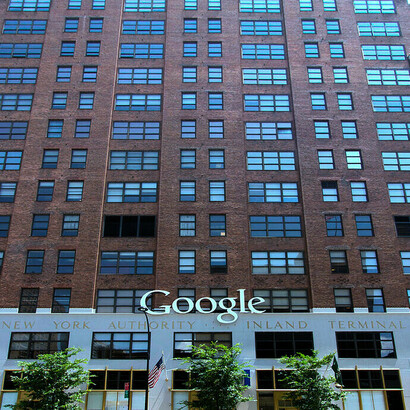
Prejudiced data processing is a common problem for all social media and online services. For example, Google’s vast advertising machinery has repeatedly served as a conduit for misleading, fraudulent, and manipulative promotions. Confronted with the scale of the problem, the company tightened its advertising policies and invested heavily in automated systems designed to detect so-called “bad ads.” A large team – reportedly more than a thousand employees – was tasked with helping to identify such ads. The overwhelming challenge was revealed by Google’s own figures: the company blocked roughly 1.7 billion ads for violating its rules in the election year of 2016 – more than twice the number removed the year before.
Thus, the questions arise: what happens when the magnitude of digital events exceeds the capacity of human work forces and when the non-technical problems of politics and journalistic ethics beat the technical competence of engineers? First, machine-based interventions appear as the only viable option and make the automatic management of the expanding digital universe inevitable. Second, since value judgments cannot be incontestably curated by algorithms, they are given a free ride across all platforms. Consequently, the new social media has become irresponsible.
The media upheaval has created an anarchistic world in the sense of “anything goes.”12 Right-wing extremists recognized this anarchism and exploited it up to the hilt. The attack on Facebook as an allegedly left-liberal social media platform, came from the right and cleverly turned the right-wing instrumentalization of the new media on its head. But that was only the beginning. Now, after Trump’s second election, there is no stopping this method:
Corrections of lies and half-truths originating from Trump and Trumpism are mislabeled fake news.
Research universities that do the United States credit are attacked and denounced as breeding grounds for anti-Semitism and anti-Americanism.
Law firms that defended the constitution and the rule of law are financially pressured.
Those who broke the law in Washington on January 6, 2021, are granted amnesty.
Those who stood up for diversity, equality, and inclusion are silenced.
My conclusion: The anarchy of the new social media has facilitated the breakthrough of Trump’s brand of populism. The upheaval in the technology field has overturned the old progressive order that was striving for the advancement of facts and justice; it has allowed Trump and his supporters to successfully use the new communication tools for their alternative wishmachines.
Notes
1 See Wolf Schäfer, “Populism as a wishmachine: the Trump brand.” Meer, 25 February 2026.
2 See Marshall McLuhan, W. Terrence Gordon, Elena Lamberti, and Dominique Scheffel-Dunand, The Gutenberg Galaxy: The Making of Typographic Man. Buffalo: University of Toronto Press, 2011 (1st ed. 1962).
3 Leonid Taycher, “Books of the world, stand up and be counted!” 5 August 2010.
4 Naveen Kumar, “Facebook Users Statistics (2026). Global Data & Growth Trends.” 8 May 2025.
5 Peter Sheridan Dodds, Joshua R. Minot, Michael V. Arnold, et al. “Fame and Ultrafame: Measuring and comparing daily levels of ‘being talked about’ for United States’ presidents, their rivals, God, countries, and K-pop.” arXiv, October 29, 2021.
6 Charlie Warzel and Lam Thuy Vo, “Here’s Where Donald Trump Gets His News.” BuzzFeed, December 3, 2016.
7 John Herrman, “Online, Everything Is Alternative Media.” The New York Times, November 10, 2016.
8 Farhad Manjoo, “Social Media’s Globe-Shaking Power.” The New York Times, November 16, 2016.
9 See Antonio Garcia-Martinez, a former Facebook and Twitter employee, quoted in Kate Conger, “Zuckerberg reveals plans to address misinformation on Facebook.” TechCrunch, November 19, 2016.
10 See Michael Nunez, “Former Facebook Workers: We Routinely Suppressed Conservative News.” Gizmodo, May 9, 2016. Nunez pointed to “a small group of young journalists, primarily educated at Ivy League or private East Coast universities, who curate the ‘trending’ module.” He foreshadowed higher education as a target of Trumpian populism.
11 Zeynep Tufekci, “The Real Bias Built In at Facebook.” The New York Times, May 19, 2016.
12 See Paul Feyerabend, Against Method. Outline of an anarchistic theory of method. London: Verso 1993 (1st ed. 1975).