English
 Español
 Français
 Deutsch
 Italiano
 Português
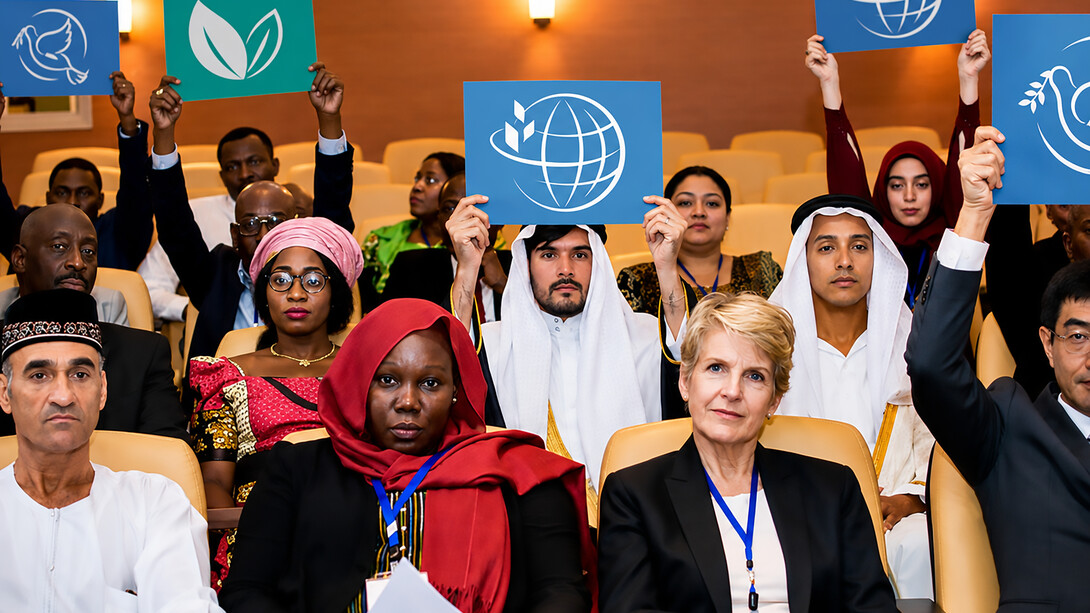
Writing about the importance of culture raises a series of critical questions: why do so many government policies fail to achieve their goals? Why are political leaders not held to account for policy failures? Why do policymakers need to take culture seriously? How does culture shape the political system for what governments should do? The answer to these questions all comes down to placing culture at the heart of the policymaking process. Culture affects how people act economically, how people engage politically, how people perceive each other as being members of a community and how they develop and evolve values, all of which are related to how and why public policies are developed differently in different countries. In this sense, culture is not peripheral but central to understanding policy success and failure.
Building on this, policymakers need to avoid simply replicating policies from outside and look instead for evidence from their own local area or situation that would apply to them due to similarities in their culture. Past experience shows that trying to mirror particular policy solutions is usually a waste of time. Instead of asking, “Can we use the policy that has been successful in country X?” policymakers need to consider the reasons that have made the policy development and implementation successful by asking questions such as “Why do policies in country X work?” By framing the question this way, the emphasis is put on the culture and system properties that allowed the policy to be developed and to be successful. While policymakers will find it more difficult to replicate these "system properties" and "cultural foundations" than they would to implement their own version of the original policy, doing so will increase their likelihood of achieving "sustainable success". Therefore, understanding culture becomes a practical necessity rather than a theoretical concern.
Policymakers should be aware of their nation's culture to better implement a policy. They should evaluate how well various policies relate to this cultural goal and use such evaluations to establish the means by which the culture is modernised and developed; therefore, policies will evolve over time. While cultures exist, there are also biological, philosophical, and linguistic differences between cultures. Consequently, societies today are larger and more flexible than ever. Therefore, policies need to consider the cultures of the entire population. By understanding how cultures relate to evidence, we can create evidence-based policies that improve the effectiveness of these policies. This highlights the need to connect cultural understanding with evidence in policymaking.
A successful combination requires a nuanced view of the evidence, understanding how it is used in the policy-making process and where it interfaces with narrative, symbols, culture, and the unpredictable notions of political opportunity: people creating evidence for policies need to reflect on how these policies will be understood and communicated. They also need to put more effort into practical, rapidly available evidence to incrementally improve practice, as that is the reality of policy changes that occur time and again. The cultural baggage that comes with an appeal to evidence is also real and colours how it will be received. Thus, evidence itself is shaped by cultural context and interpretation.
In this regard, the democratisation of culture represents a top-down approach that promotes what is defined as a public good; accordingly, if political democracy is to be meaningfully practised, cultural policy must be recognised as a fundamental prerequisite. Democratic cultural policies should therefore clearly articulate their purpose in ways that demonstrate how they serve the public interest. However, cultural policy spans a wide and often ambiguous range of activities, from art policy to education policy, and from art education to broader cultural governance. While art policy engages with critical societal issues such as education, health, and the environment, many of the activities associated with it in the 2010s were not clearly grounded in, or consistently aligned with, the general interest. This reinforces the need for clearer alignment between cultural policy and public interest.
Ultimately, the key to a successful country is a culture based on a strong and widely shared set of transparence, beliefs, and values, supported by policies and structures. These beliefs or values must be widely shared and held in high esteem and must be consistent not only with the core objective of the society, but also with its core values. In conclusion, policymakers should take culture seriously in itself, not as a value-neutral statement. It presumes that such an approach is within acceptable bounds and that the outcomes will be valuable. Thus, culture must be placed at the heart of any policymaking.
Furthermore, culture provides the framework through which citizens interpret government actions and assess their legitimacy. Policies that fail to reflect social expectations, norms, and lived realities often encounter resistance, regardless of their technical merits. For this reason, policymakers must recognise that effective governance depends not only on sound evidence and institutional capacity but also on cultural compatibility. Ignoring this dimension risks undermining public trust, weakening implementation, and reducing the long-term sustainability of policy outcomes.