English
 Español
 Français
 Deutsch
 Italiano
 Português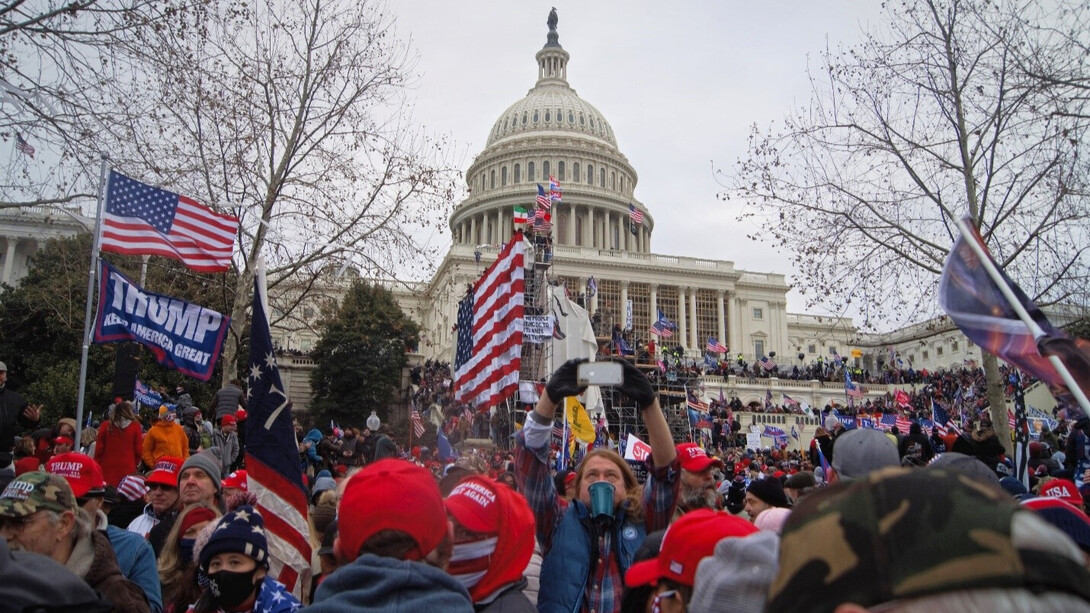
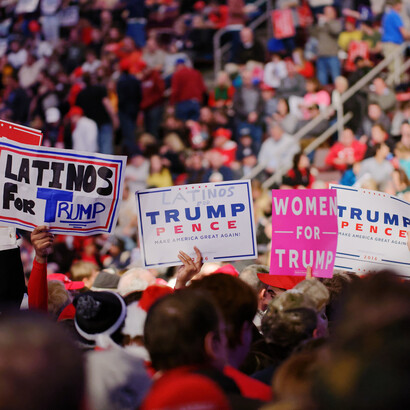
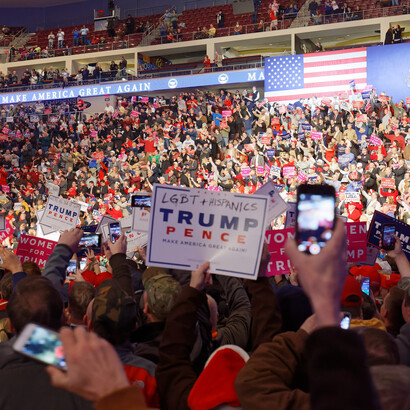
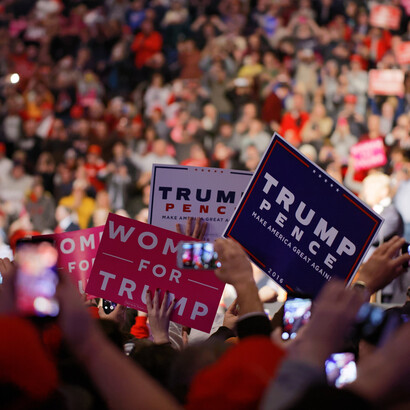
Populism is a collective wishmachine that runs like clockwork on the two words believe me. European dictators have been using this machine since ancient times, from Caesar to Napoleon, Mussolini, Stalin, and Hitler. It has now gained global reach. In Hungary, Turkey, India, and North Korea, for example, it is operated by Viktor Orbán, Recep Erdoğan, Narendra Modi, and the Kim dynasty. And in the US, thanks to Donald Trump, it has been running at full speed for a decade now.
All populists have two things in common: contemporary methods of direct communication and highly virulent antipathies. Populist politics has always sought the shortest route to its base: speeches in the Roman Forum, Hitler’s radio addresses, and today social media messages. Populist rhetoric talks to its target audience both in plain language and with dog-whistles.
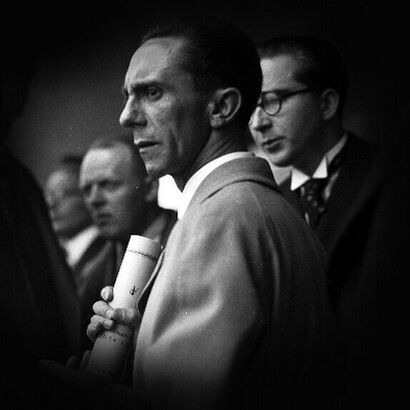
To reach the “people as a whole” and “saturate” them with propaganda, Nazi Germany developed its own radio, the National Socialist Volksempfänger (people’s receiver). A 1936 poster advertised it with the words “All of Germany hears the Führer with the Volksempfänger.” The inexpensive Bakelite device (long since a design icon) was created at the request of propaganda minister Joseph Goebbels. It was designed by electrical engineer Otto Griessing and industrial designer Walter Maria Kersting and went on sale in the fall of 1933 as model VE 301. “VE” stood for Volksempfänger and “301” for January 30, 1933, the day Hitler became chancellor.
The priority of direct communication between the populist leader and his audience creates a structural barrier against intermediaries. Professional elites, independent institutions, and all critical media are always under attack. Nationalism and nativism are usually allied with right-wing populism. Left-wing populism originally favored international solidarity – “Proletarians of all countries, unite!” – but that was before the global age. Now, all populists are against cosmopolitanism.
Normally, the person the people are supposed to believe in is a strongman. No wonder, then, that populist leaders favor authoritarian forms of rule: Caesarism, Bonapartism, Fascism, Stalinism, National Socialism, and Trumpism. History also teaches that populist regimes regularly impose horrendous costs on the people and countries that fall for their promises. Why should the US be an exception? In the end, all Americans (and not only they) will have to pay dearly for the follies of Trumpism.
Trump promises to Make America Great Again (MAGA – his trademark slogan). He constantly says, believe me, but never, I believe. He frequently announced that he would end the war in Ukraine on the first day of his second term. That day has passed, and the war continues, as fiercely as ever. He vowed to radically reduce the US national debt and repeatedly stated before his re-election that Medicaid would not be touched.
Nevertheless, Trump signed a massive cut (over $1 trillion) to various welfare programs into law, including Medicaid (on July 4, 2025). What did this U-turn cost Trump? Nothing. Did his mostly economically weak and needy voters rebel? No. Trump seems immune to any reality checks on his promises from the opposition Democrats and critical journalists. How is that possible?
Three reasons. First, Trump reacts to all criticism with brutal and escalating countercriticism. For example, he immediately responded with a $10 billion lawsuit to an unfavorable article in the Wall Street Journal and the exclusion of WSJ journalists from his accompanying press corps.1 Second, he constantly generates breaking news that provides a steady stream of fodder for critical attention and distracts both the media and the public. The third reason is the most important and concerns Trump’s followers.
They ignore his untruths and unfulfilled promises, yet note all those pledges that are important to them and which he has kept or is working on. And there are quite a few of those, such as his vow to stop illegal immigration by any means necessary. A keen observer has summed up this difference in perceptions of Trump: the press takes Trump literally but not seriously, and his supporters take him seriously but not literally.
Trump’s populist promises have fueled the collective wishmachine of his supporters from the very beginning. From mid-June 2015, the start of Trump’s first election campaign, to January 2016, the then presidential candidate made at least 76 promises.2 This list of Trump’s early pledges shows that Trump, whom neither the Democrats nor the Republicans expected to win the election at the time, made empty and sustainable promises.
Now, in his second term, he is fulfilling some of the promised realities with all his might. In other words, when the strongman comes to power, he produces not only noise and sensational headlines but also facts.
Politician is a dirty word in the dictionary of populism. In the eyes of Trump’s voters, he is incomparable to this despised species. He is the savior who has descended from the heights of his worldly accomplishments to lift the country and its people up and make them victors.
The MAGA wishmachine promises victory in perpetuity. On April 11, 2016, Trump declared at a rally in Albany, New York: “We’re going to win so much – one victory after another – that you’re going to beg me: ‘Please, Mr. President, let us lose once or twice. We can’t take it anymore.’ And I will say: ‘No way. We will keep winning. We will never lose. We will never, never lose.’”
After Joe Biden’s victory on November 3, 2020, America got to know the dark side of this promise and learned what never, never lose also means: the storming of the US Capitol and the consistent negation of the basic democratic rule of peacefully accepting the results of free and fair elections, even in the case of a narrow defeat.
The fantasy that all battles will be won goes hand in hand with the illusion that no American will have to pay for these battles. American taxpayers and soldiers will never lose their money nor their lives. Everything will simply always be won. Supporters of populist movements are suspicious of intellectual consistency and, moreover, do not care about it. If they are convinced that their strongman will defeat anything that runs counter to their dreams, then their support for this politician is unshakeable.
Populist leaders can span the political spectrum from far right to far left. Traditional ties such as patriotism and religion have no substantive meaning for them, but rather a functional one, namely that they are extremely well-suited to generating mass followings. Truth and facts are irrelevant. Trump can say that he attends a certain church in Manhattan, even if that church denies it.
Populists are contradictory, slippery, and elusive. But that is precisely where their strength lies. They are transactional and their choice of policies is promiscuous. Without any unconditional commitment to a particular program, philosophy, or theory of history (as in Marxism), populist leaders are enormously flexible. Trump can tailor his rhetoric to what his base wants to hear and, at the same time, get his base to go along with his own intentions. There is no big difference between the two, because whatever he feeds into the wishmachines of his base is automatically the right thing, because he alone truly loves, understands, and defends the people.
So-called enemies of the people are the reason for the rousing fire of populist speeches and slogans. Who the enemies are is open to interpretation. All kinds of resentments are on offer.
The strongman determines the demand based on what inspires the wishmachines of his supporters and who stands in his way. Enemy of the people can target a single category – that was the Jew in Nazi Germany – or a combination of real or alleged criminal forces: immigrants, democrats, liberals, conservatives, Muslims, journalists, newspapers, experts, professors, universities, foreign students, socialists, capitalists, communists, Wall Street, big banks, multinational corporations, the media, drug dealers, gangs, corruption, globalization, China, the European Union, the Anglo-Saxons, the West, elites, big capital – whoever and whatever.
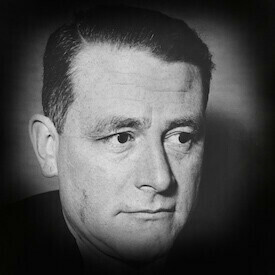
No populism without enemies of the people, one could say. The logic of combining the people with a strongman who defends them requires enemies who existentially threaten the national collective. The Weimar lawyer and political theorist Carl Schmitt (1888-1985) defined this polemical relationship with the concept of “friend-enemy grouping.”3 Schmitt’s distinction is no less important today, in the wake of Trump’s growing power and in the context of social polarization, than it was on the eve of Hitler’s dictatorship.
According to Schmitt, the friend-enemy opposition is the fundamental “phenomenon of the political.” For Schmitt, the political is determined by conflict, because “the concept of the enemy includes the possibility of a conflict in the realm of reality.” And for Trump, conflict is central. His immediate exclamation with raised fist, “Fight! Fight! Fight!” after the assassination attempt in Butler, Pennsylvania, on July 13, 2024, confirmed this.
Schmitt also stated unequivocally what the centrality of conflict ultimately means: “The terms friend, enemy, and conflict [Kampf] derive their real meaning from the fact that they refer and continue to refer in particular to the real possibility of physical killing.” Trump sees it the same way.4
Trump’s enemies are mainly Americans. His relationship with the strongmen of other countries – Putin above all – is rather friendly. The bloody battles of Trump-style populism are more determined by domestic than foreign policy conflicts. Schmitt also found clear words for this: “The real possibility of conflict, which must always exist for politics to exist, no longer refers to war between organized groups of people (states or empires) in a situation of such ‘domestic primacy’, but rather to civil war.”
We do not yet fully know how high Trump’s threshold between unarmed conflict and war (as armed conflict) is. However, we may assume that it is only a threshold and not a high wall, and that Trump is closer to waging civil than foreign wars. (Will his longing for territorial expansion at the expense of militarily dependent allied countries risk real war? I don’t think so.)
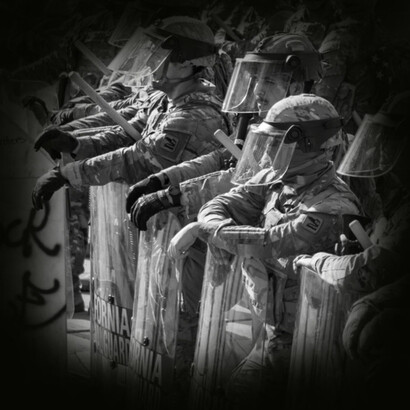
The deadly potential of Trump’s populism is aimed at the enemy within. The mobilization of over 4,000 National Guard and Marine troops in Los Angeles in June 2025 (ordered by Trump and opposed by Governor Gavin Newsom) to suppress demonstrations against “Operation Metro Surge” – federal raids on illegal immigrants by masked US Immigration and Customs Enforcement (ICE) officers – gives rise to fears of the worst.
But this, too, is entirely in line with Schmitt’s thinking: the unwanted (illegal) immigrant is “simply the other, the stranger, and it is sufficient to his nature that he is, in a particularly intense sense, existentially something different and foreign, so that in extreme cases [deadly] conflicts with him are possible.” The January 2026 killings of Renee Good and Alex Pretti in Minneapolis by ICE and Customs and Border Protection (CBP) agents have shown that all constitutional protections are off for foreigners and citizens alike if they are perceived as belonging to the enemy within.
The populist breakthrough of 2016 that brought Trump to the top of American power still awaits a complete explanation. Many (avoidable) problems and mistakes facilitated Trump’s success. These include the angry frustration of whites without a college degree and no future; discouraged and angry blacks who abstained from voting; widespread distrust of Hillary Clinton; the Democratic Party’s neglect of the working class; zealously politically correct language rules and identity politics of the well-educated and well-off; and the toxic sludge of untruths sucked up by the myriad tentacles of social media and incorporated into the body politic.
What else? In my opinion, primarily the inability of most Trump critics to take him seriously. This not only helped Trump in the beginning but continues to allow him to catch his opponents off guard.
In December 2016, after Trump's first election victory, Steven Levitsky and Daniel Ziblatt, Harvard professors and experts on the emergence and collapse of democratic orders in Europe and Latin America, asked in the New York Times: “Is Donald Trump a threat to democracy?”
Using a ‘litmus test’ that examined acceptance of violence, the desire to put rivals in prison, and the willingness to deny election results, they concluded: “Mr. Trump tests positive. During the election campaign, he called on his supporters to resort to violence, promised to prosecute Hillary Clinton, threatened legal action against unwelcome media outlets, and suggested that he would not accept the election results.”
Despite all of this, Levitsky and Ziblatt ended their analysis on a reassuring note: “American democracy is not in immediate danger of collapse. Under normal circumstances, our institutions will most likely survive a Trump presidency.” That was the consensus of most critics of Trump at the end of 2016. Ten years later, the question is no longer one Trump presidency but two (not to mention an unconstitutional third or a successor molded by Trumpism).
America’s centrist, democratic, and republican elites have hesitated far too long to seriously consider that Trump could dismantle American democracy and tear the country’s liberal political culture to pieces. They initially believed, and many still believe in 2026, that American democracy and its institutions are strong enough to survive Trump and Trumpism. This seems to be correct in retrospect.
The US has weathered Senator Joseph McCarthy and the authoritarian tendencies of Governor Huey Long; it has survived the anti-Semitism of Charles Coughlin, the racism of Governor George Wallace, and the LGBTQ bigotry of Senator Jesse Helms; it has withstood demagoguery, violence, and hate crimes, as well as the intrigues of extreme fringe groups, admiration for Hitler, and all kinds of political assassinations. But that was then. Today, the White House is occupied by a strongman, and the US is ruled by a militant populist movement. America’s past cannot explain what this means for America’s future.
I think we need to capture the conditions that made Trump and Trumpism possible with a much broader net than has been attempted so far. The following 8-winds-image5 illustrates my proposal.
.png)
The winds of the world always had names; they were revered and feared as divine or semi-divine beings. In Greek mythology, the four main winds were called Boreas (cold north wind), Notos (humid south wind), Zephyros (mild west wind), and Euros (ominous east wind).
At the beginning of the modern era, the age of exploration, the custom of personifying the main and secondary winds was transferred from Greek and Roman agriculture and the Mediterranean to Atlantic seafaring and New World discovery. Strong winds propelled the European sailing vessels to North and South America. Spanish and Portuguese explorers learned to traverse various wind fields and not to underestimate storms, whether on the high seas, along the coasts, or in harbors.
The ancient Greeks saw in the winds that turned into dangerous storms and storms that escalated into wild hurricanes the work of winged women with bird bodies (harpies), creatures that kidnapped souls and contaminated food. And when hurricanes arose, they observed the destructive rage of the demonic sons of Typhon, a giant monster. Terrible gales in the wind field are still shaking our world, but beyond that, we are also challenged by new kinds of storms.
Our age has not found a name yet. We only feel that we are at a turning point in history. We sense that the changes that are now occurring worldwide and in the novel fields of our scientific-technological world are epochal, but we’re still tapping in the dark. We are surprised by the turbulent political changes the US has wrought lately, which are continuing to unfold and are unlikely to be limited to the US. We wonder how Trump and the strong winds of Trumpist populism could emerge. To answer that, I would like to expand the focus of our perception to eight fields of American society and modern life.
The crucial fields of our time are technology, free speech, capitalism, demography, party politics, geopolitics, political culture, and philosophy. These are no longer personified deities, but impersonal fields of energy where the forces that shape advanced civilizations with an open future originate. We have this future in our hands, though with different individual capacities. Trump has far more power and potential than you and I. But even a strongman can only make history under favorable conditions. My next essays will therefore attempt to identify the auspicious structures, developments, actors, and events in the eight fields that paved the way for Trump and Trumpism.
Notes
1 See Stephen Fowler, “Trump files defamation suit over ‘Wall Street Journal’ story on his Epstein ties.” NPR, July 18, 2025.
2 Jenna Johnson, “Here are 76 of Donald Trump’s many campaign promises.” The Washington Post, January 22, 2016.
3 See Carl Schmitt, The Concept of the Political, Chicago 2007. Schmitt’s influential ideas were first published in German in an article in the Archive for Social Sciences and Social Policy (Vol. 58, 1927, pp. 1-33), then in his book Der Begriff des Politischen, Munich, 1932. My quotes are translated from the early pages of this book.
4 See note 1, promise no. 27: “Target and kill the relatives of terrorists” and no. 37: “Drop that ‘dirty, rotten traitor’ Bowe Bergdahl out of an airplane into desolate Afghanistan without a parachute.”
5 Image source: Pedro de Medina, Arte de Navegar (The Art of Navigation), Valladolid 1545. Adapted by the author.