English
 Español
 Français
 Deutsch
 Italiano
 Português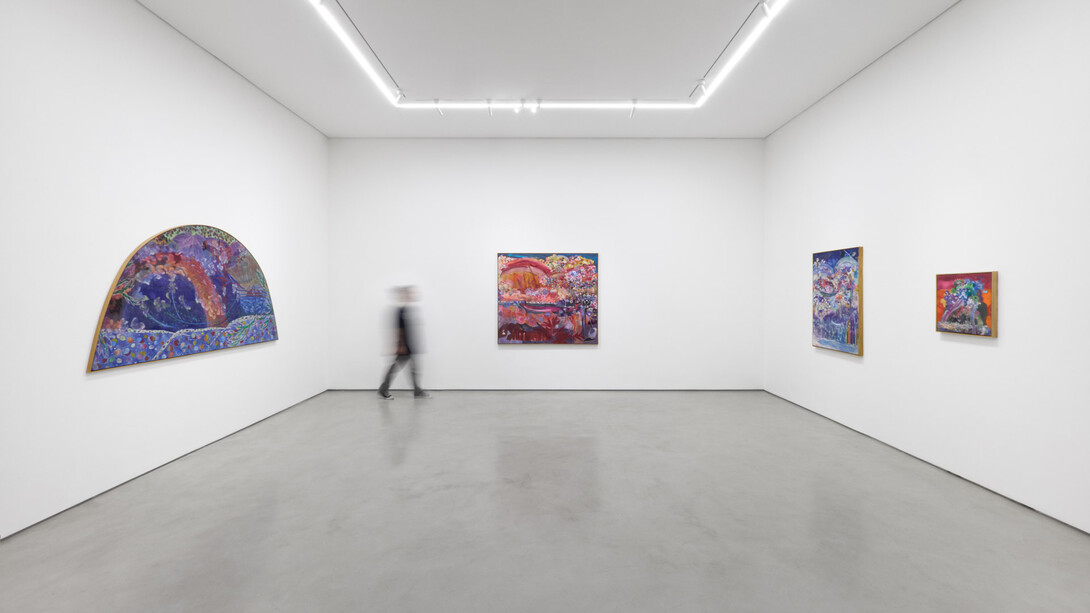
The word, this composition of black letters typed on a white background, seems timid in expressing the wonder that Thalita Hamaoui's paintings evoke. Faced with a present marked by successive environmental disasters, which remind us that nature is not a passive object at our (humans') disposal, but rather a whole of which we are a part, her canvases bring interpretations of an exuberant and luminous natural world that surrounds us, embracing us with its warm and vibrant colors. For a few moments, we can forget, inebriated, that we are “postponing the end of the world,” paraphrasing Ailton Krenak's famous quote1.
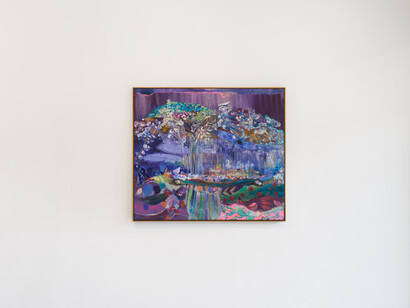
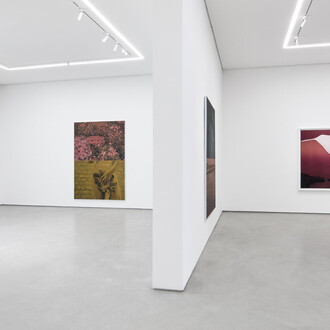
Aware that nature is not an inert thing to be represented, the artist creates a universe of organic forms, especially botanical ones, in front of which we are free to make our own interpretations, associations, and projections. Her painting is suggestive, not mimetic. Not coincidentally, there is something that brings them closer to the pictorial universe of Odilon Redon (France, 1840-1916), master of French symbolism who claimed to seek in his painting the “representation of the invisible based on the logic and truth of the visible.”2 To this purpose, the painter-writer immersed himself in the scientific repertoire of his time, from Darwin to drawings based on what new discoveries made possible by telescopes had recorded, with a view to studying reality from its most significant details. Those studies, he said, “always made me immediately inclined toward imaginary creations.”3 For both artists, this evoked natural universe is a place where the invisible is represented through visible references, an allusive imaginary creation that is always indeterminate.
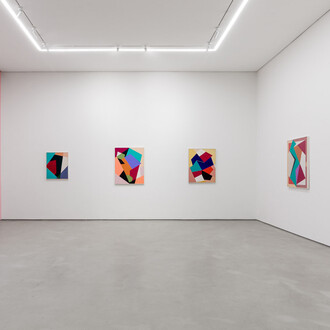
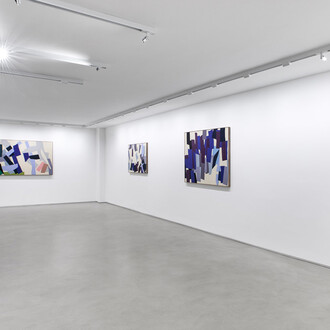
In the case of Redon, a critical stance toward nineteenth-century realist tradition was at stake, whereas in the case of Thalita, the dialogues and distances are other. The detachment from mimetic realism has different connotations. One of them, already mentioned, is to refute the idea of the artist as a subject who dominates and shapes the “natural” as if it were an inert entity, an inanimate object. Differing from some current works, which, in their eagerness to respond to pressing and relevant political issues, have preferred to adopt a didactic tone, Thalita's painting is suggestive, without imposing a predetermined meaning on us. An invitation to enchantment, to savor each canvas slowly and with delight, does not mean an appeal to empty aesthetic pleasure. Her rejections express a desire to distance herself from the image of the artist as an all-powerful being who controls discourse and representation. While addressing her work, Thalita Hamaoui mentions her choice to “not prioritize elements,” such that the contrast between larger and smaller things and beings, between foreground and background, or between figure and background, does not make sense to her. Not prioritizing is an aesthetic principle, but also an ethical one.
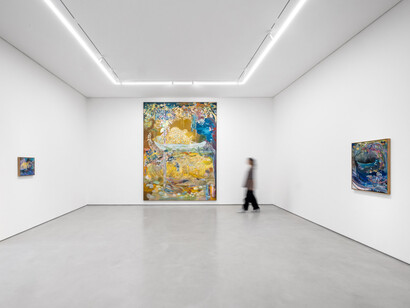
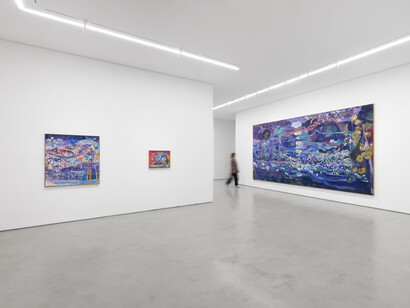
It is on large canvases that Thalita says she feels most comfortable, as they allow her to freely and fluidly explore the gestural nature of her practice. Smaller works require more precise and condensed choices, becoming a greater challenge. Observed from the place that women artists have historically occupied in the field of gestural painting, this perspective reflects profound and liberating transformations. The climax of gestural painting coincided with the national and international recognition that American artists gained from the 1950s onwards, when New York became the world's artistic metropolis due to the destruction of European cities caused by World War II (1939-1945). At that time, names such as Barnett Newman, Mark Rothko, and especially Jackson Pollock achieved unparalleled visibility, with the support of powerful critics such as Clement Greenberg. This recognition, however, came about through the invisibility of several female painters, such as Lee Krasner, Helen Frankenthaler, and Elaine de Kooning, who are now receiving more attention from critics, art historians, galleries, and museums4.
The place of the monumental as a space for personal fulfillment also calls to mind other stories, such as that of mural painting, in which practically all the (re)known names (Claude Monet, Fernand Léger, Diego Rivera, José Clemente Orozco, David Siqueiros, and in Brazil, Portinari and Di Cavalcanti, etc.) are men5. By making the monumental and the gestural her places of pleasure, comfort, and fulfillment, Thalita Hamaoui challenges this legacy. Her work is rigorous, involving research into the expressive effects of various pigments on materially diverse surfaces. But such rigor does not translate into restraint, quite the contrary, her work is expansive and overflowing, an invitation to return to the pleasure of enjoyment through the gaze. In times fraught with anxiety about the present and fear for the future, it is essential to wonder.
(Text by Ana Paula Cavalcanti Simioni)
Notes
1 Krenak, Ailton. Ideias para adiar o fim do mundo. São Paulo, Cia das Letras, 2020.
2 Undated letter from Odilon Redon. In: Gamboni, Dario. La plume et le pinceau. Odilon Redon et la littérature. Paris, Editions Minuit, 1989, pg. 270 (translation by the author).
3 Idem et ibidem.
4 Read, among others: Marter, Joan (ed.). Women of abstract expressionism. New Haven: Yale University Press, 2016. At the time, one of the few to be recognized was Joan Mitchell, who, as Linda Nochlin pointed out, refused to be labeled a “woman artist,” as the term was then quite pejorative; it was understood that being a “real artist” meant being included as “one of the boys.” See: Nochlin, Linda. A rage to paint: Joan Mitchell and the issue of femininity, In: Reilly, Maura. Women artists: the Linda Nochlin Reader. London: Thames and Hudson, 2020, pg 264.
5 On this topic, see: Mirkin, Dina Comisarienco. Eclipse de siete lunas: mujeres muralistas en México. Mexico City, Universidad Iberoamericana, 2017.