English
 Español
 Français
 Deutsch
 Italiano
 Português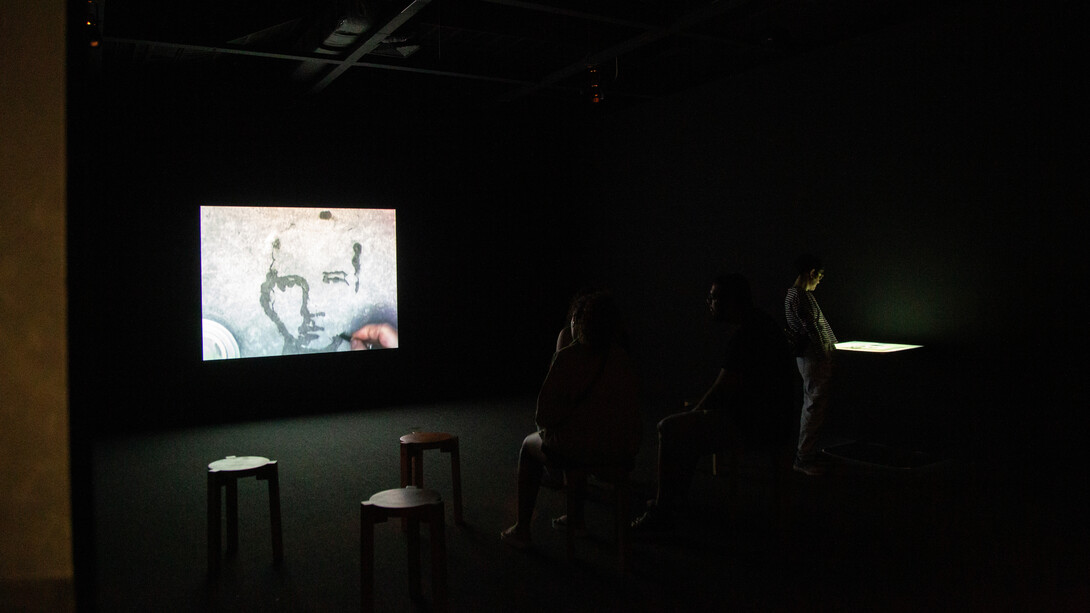
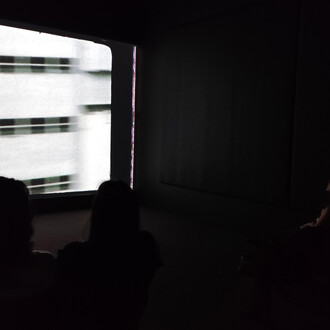
Beginning April 2, MASP – Museu de Arte de São Paulo Assis Chateaubriand – will present three videos produced by artist Oscar Muñoz (Popayán, Colombia, 1951) in the exhibition Video room: Oscar Muñoz. The exhibition showcases Muñoz’s exploration of the impermanence of the image and memory, employing transient visual processes to reflect both the historical Colombian context of violence, disappearances, and political conflicts, as well as the fragility of images.
Oscar Muñoz’s career has been marked by the disappearance of individuals, a recurring phenomenon in civil conflicts, in this case linked to drug trafficking in Colombia. This landscape of violence and erasure permeates his artistic practice. In his work, this manifests itself in the dissolution of images—echoing the actual erasure of people—and in the capacity of images to preserve memory.
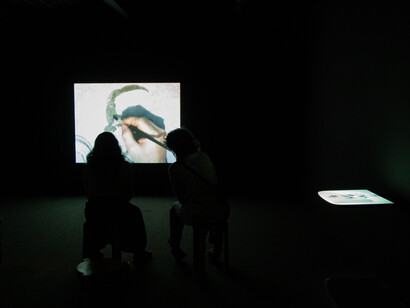
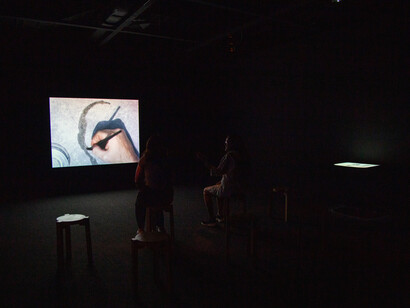
Curated by Matheus de Andrade, curatorial assistant at MASP, the video room features three works shown simultaneously and on a continuous loop. Through the use of materials such as water, charcoal powder, and the body, the works challenge the notion of the permanence of images and records, highlighting the fragility of memory and representation.
Throughout his career, Muñoz has used a variety of media to explore themes such as image, identity and the processes of memory, combining techniques from photography, drawing, printmaking and painting. In the early 21st century, he started using video as his main medium, which allowed him to reveal how images are formed. Video enables him to capture the instability of his chosen materials, which tend not to withstand the test of time, and to blend references from photography and other visual arts.
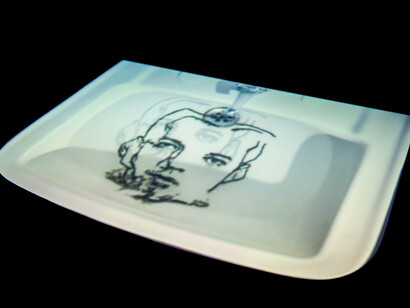
In Narciso [Narcissus] (2001), the work depicts a face made of charcoal powder that is floating on the surface of water in a sink. When the plug is pulled, the water drains away and the image disappears. This piece engages with the myth of Narcissus, the Greek mythological hero who falls in love with his own reflection and ultimately drowns while trying to capture it. The video highlights the impossibility of fixing identity in time. "His work invites us to reflect on how we perceive what is visible, and on what we choose to preserve and what we allow to be lost. It reminds us that the image is always a fragile and contested construction in the face of what is preserved and what flows down the drain of history,' comments Matheus de Andrade.
In Línea del destino [Line of destiny] (2006), the artist captures his own reflection in a pool of water held in his palm. As the hand moves and the water flows, the image distorts and vanishes, revealing a fluid portrait destined to disappear. In Re/trato (2004), the artist paints faces with water on hot concrete. Before the drawing is finished, the water evaporates, causing the image to disappear and prompting the process to restart continuously. This work evolved into a major installation at the 2005 Venice Biennale, titled Proyecto para un memorial [Project for a memorial].
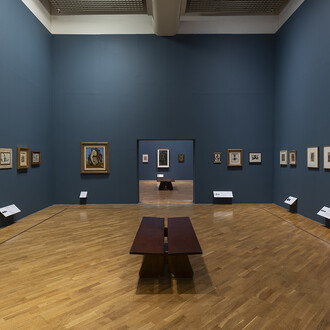
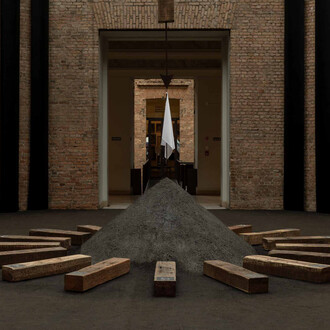
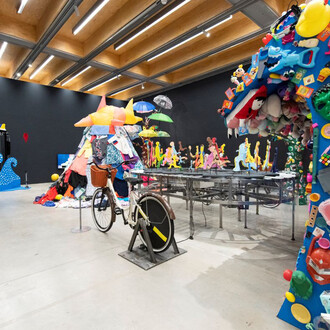
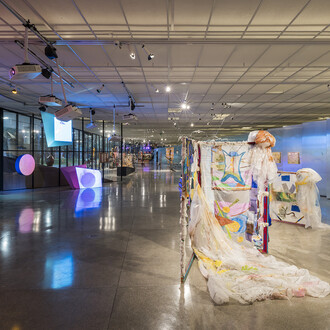
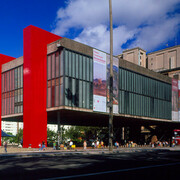
Video room: Oscar Muñoz is part of MASP’s annual program dedicated to Latin American histories. This year’s program also includes exhibitions by Carolina Caycedo, Colectivo Acciones de Arte, Claudia Alarcón and Silät, Damián Ortega, Jesús Soto, La Chola Poblete, Manuel Herreros and Mateo Manaure, Pablo Delano, Rosa Elena Curruchich, Sandra Gamarra Heshiki, Santiago Yahuarcani, and Sol Calero. There are also audiovisual exhibitions by Clara Ianni, Regina José Galindo, Claudia Martínez Garay, and Edgar Calel.
![Various artists, Histórias latino-americanas [Latin american histories], exhibition view. Courtesy of MASP](/attachments/2ec1b7615df2d9b9c3f211de14c70faefd850aea/store/fill/330/330/8481e63599516249cba60f15e188644bb76fc1eec25547e2c4b88b8f1c92/Various-artists-Historias-latino-americanas-Latin-american-histories-exhibition-view-Courtesy-of.jpg)