English
 Español
 Français
 Deutsch
 Italiano
 Português
![Colectivo Acciones de Arte, No+ [Não mais] [No more] (detail), 1983. Courtesy of MASP](/attachments/ea1cac95093d09f8031a0e0c8e5237341c12d41a/store/fill/1090/613/0fcbe6a1da1016b4e092bd89473b45f8f01cb2d5d8ed180582c9b452d1b0/Colectivo-Acciones-de-Arte-No-plus-Nao-mais-No-more-detail-1983-Courtesy-of-MASP.jpg)
MASP — Museu de Arte de São Paulo Assis Chateaubriand presents, from April 7th to August 2nd, 2026, the exhibition Colectivo acciones de arte: radical democracy. Curated by André Mesquita, curator, MASP, the exhibition presents photographs, films, documents, publications, drawings, and posters from eight art actions carried out by Colectivo Acciones de Arte (CADA) between 1979 and 1985. Such interventions took place mainly in public spaces, were carried out quickly, and in many cases also anonymously, as a strategy to circumvent the Chilean dictatorship’s mechanisms of censorship and surveillance.
Founded in Santiago in 1979, the collective developed actions that stirred up the relations between art and politics in a context of repression and worsening of social and economic inequalities. The group was composed by artists Lotty Rosenfeld (1943–2020) and Juan Castillo (1952–2025), writer Diamela Eltit (1949), poet Raúl Zurita (1950), and sociologist Fernando Balcells (1950), with eventual changes in its composition over time.
In No+ (1983), CADA’s best-known action, the collective spread throughout the urban landscape the open slogan No+ [No more] so that citizens and social movements could complete it according to their specific demands. The sentence was then appropriated incorporating different statements, like No+ dictadura [No more dictatorship], No+ muerte [No more death], No+ hambre [No more hunger], among many others. Such popular participation turned the action into a powerful means to manifest collectively, going beyond the boundaries of the collective and symbolically anticipating the 1988 Plebiscite, landmark of the end of the dictatorship in Chile. CADA’s actions served as forms of collective participation and protest against the hardships and constraints imposed by the regime, becoming essential to understand the connections between art and politics in Latin America during the 1970s and 1980s.
“The slogan No+ has consolidated itself as an expression of activism in Latin America, finding its place in urban interventions and demonstrations across various political contexts. In the final years of the Chilean dictatorship, it was widely used in actions calling for its end, while also appearing in demonstrations by the feminist movement Mujeres por la vida [Women for life], which is also present in the exhibition with photographs and posters of its activities. There are also more recent records of its use in new political contexts, such as the photograph published in a Chilean newspaper of a mobilization demanding public funds to build a hospital in 2009,” comments the curator André Mesquita.
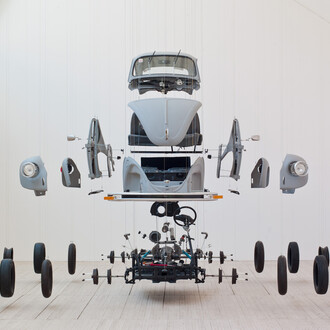
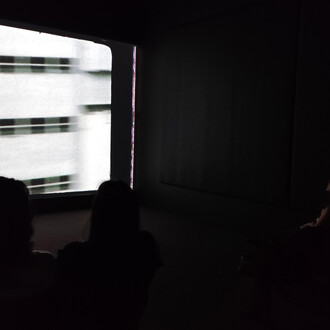
Photographic and video records of the action ¡Ay Sudamérica! [Oh, South America!] (1981) document the flight of six planes over different neighborhoods of Santiago, from which approximately 400,000 leaflets were dropped, promoting the idea that everyone is an artist. The images evoke the political memory of the bombing that struck the La Moneda Palace on September 11, 1973, by the military forces of General Augusto Pinochet (1915–2006), who violently overthrew the government of Salvador Allende (1908–1973), in a symbolic inversion that replaces bombs with messages connecting art to life spaces.
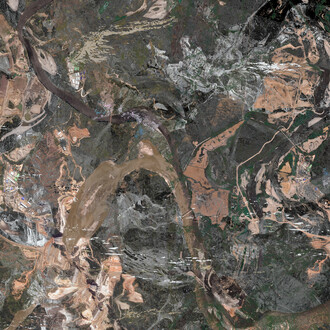
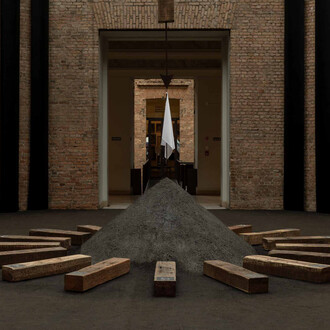
In Inversión de escena [Inversion of scene] (1979), the collective articulated daily objects that, under the military regime, took on new connotations. In the action, held in 1979, they organized a motorcade of milk trucks heading towards the Museo Nacional de Bellas Artes, whose entrance was blocked by a huge white fabric. The passage of the vehicles was perceived as a parade of war tanks. The white fabric and the milk symbolically referred to the food shortage experienced by Chilean people and the consequences associated with the violence of the dictatorship. By blocking the museum’s entrance with a huge white fabric, CADA signaled a shift in the focus of art away from institutions and toward the city, transforming daily life into a collective work.
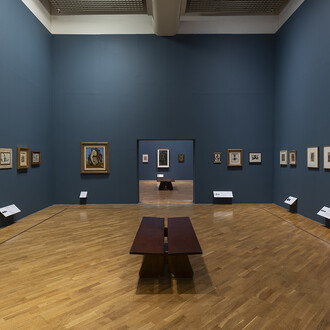
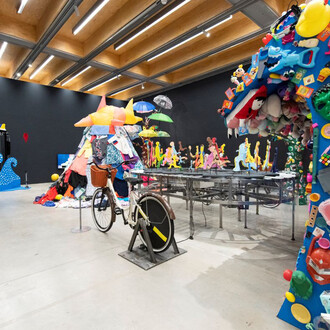
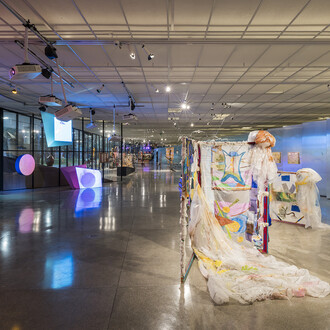
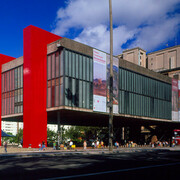
Colectivo acciones de arte: radical democracy is part of MASP’s annual program dedicated to Latin-American histories. The year-long program also includes exhibitions by Carolina Caycedo, Claudia Alarcón and Silät, Damián Ortega, Jesús Soto, La Chola Poblete, Manuel Herreros and Mateo Manaure, Pablo Delano, Rosa Elena Curruchich, Sandra Gamarra Heshiki, Santiago Yahuarcani, and Sol Calero.
![Colectivo Acciones de Arte, Inversión de escena [Inversion of scene] (detail), 1979. Courtesy of MASP](/attachments/f04cf9a2056c8342c25db3d5681eeb2cacd91868/store/fill/410/308/c56aebfbcc8aee4f95e2ad8a3d1ee9733854618fbbc91916fcd8ad6fd3a9/Colectivo-Acciones-de-Arte-Inversion-de-escena-Inversion-of-scene-detail-1979-Courtesy-of-MASP.jpg)
![Victor Hugo Codocedo, Para no morir de hambre en el arte [So as not to die of
hunger in art] (detail), 1979. Courtesy of MASP](/attachments/7284136336d2a029460b9d36f4ea1d08571117b6/store/fill/410/308/aa90b51b624242482487ae10b67d1c5700a8a6cbc9fafcdfc6a93f2f4f8c/Victor-Hugo-Codocedo-Para-no-morir-de-hambre-en-el-arte-So-as-not-to-die-of-hunger-in-art-detail.jpg)
![Colectivo Acciones de Arte, ¡Ay Sudamérica! [Oh, South America!] (detail), 1981. Courtesy of MASP](/attachments/f3ea5953ee1ec5825069ad66156ab13d174be1f4/store/fill/410/308/58c1aeec28f1680d3750e8532a08ee2018ace5602b20a0463efd1ab789fb/Colectivo-Acciones-de-Arte-Ay-Sudamerica-Oh-South-America-detail-1981-Courtesy-of-MASP.jpg)
![Various artists, Histórias latino-americanas [Latin american histories], exhibition view. Courtesy of MASP](/attachments/2ec1b7615df2d9b9c3f211de14c70faefd850aea/store/fill/330/330/8481e63599516249cba60f15e188644bb76fc1eec25547e2c4b88b8f1c92/Various-artists-Historias-latino-americanas-Latin-american-histories-exhibition-view-Courtesy-of.jpg)