English
 Español
 Français
 Deutsch
 Italiano
 Português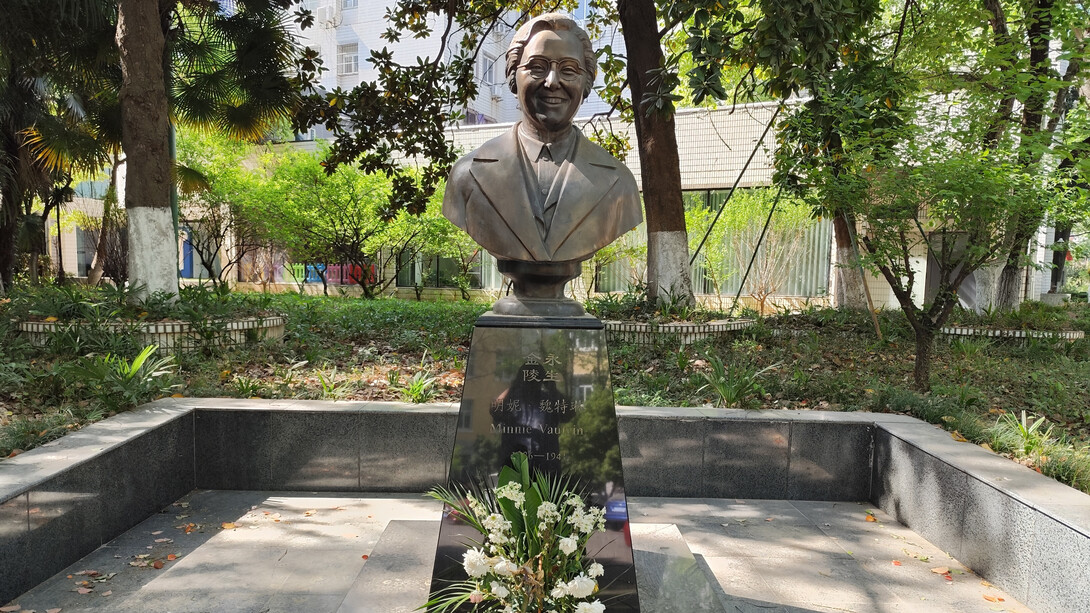
In the 20th century a farm girl from Illinois utilized opportunities offered by a progressive religious organization and the American educational system to go beyond the limited experiences accorded to American women at the time. Following her sense of piety, service and intellectual brilliance, she would travel to the other side of the world to help educate women and to ultimately confront the worst evil humanity may be capable of. And, she won. The farm girl from Illinois defeated the superman. But the fight, ultimately, took her life as well.
Wilhelmina “Minnie” Vautrin’s life was one of extraordinary intelligence, compassion and courage, a journey that began in a small farming community in America’s Midwest, and ended shortly after she distinguished herself as one of the bravest humanitarians in Nanjing during the Japanese occupation of 1937. Through her faith, her work in education, and her profound love for her fellow Nanjingers, Vautrin became a symbol of selfless service during one of the darkest episodes of 20th century history.
From rural roots to global calling
Minnie Vautrin was born in 1886 in Secor, Illinois, a small Midwestern farm community. Her mother died when Minnie was young, and she spent part of her childhood living with neighbors and doing farm chores during severely cold Midwestern winters.
Vautrin showed early promise as a motivated and dedicated student and even took on part-time work to support and further her education. Her academic excellence first led her to Illinois State Normal University but later to the University of Illinois at Urbana-Champaign, where she graduated with honors in 1912. It was in college that Vautrin’s humanist-based religious faith and compassionate spirit were able to develop. She became president of the Student Volunteer Movement for Foreign Missions, indicating early on her desire to serve beyond the familiar fields of Illinois.
Inspired by her progressive Christian faith and a deep sense of mission, and aided by her keen intellect, she was able to jump into studies at Teachers College, Columbia University, at that time a truly unique school of innovative research and social engagement. This path, supported and shaped by progressive and human-centered religious organizations that encouraged women to engage with the wider world, opened doors to such women as Minnie, who wanted to see the wider world beyond the USA and to be of service where she might be wanted and needed.
The Foreign Missions movement was ostensibly run as a Christian organization, but it promoted social and economic welfare around the world and not the spread of any type of Christian fundamentalist dogma. There is no record of Minnie ever trying to promote any overt Christian doctrine, as she kept any religious beliefs to herself. This organization was a way, back in 1912, for an American woman who wanted to experience the world and help promote humane change to do so.
A love for China and a life in education
In 1912, Vautrin accepted a commission from the Foreign Christian Missionary Society and embarked for China. This was not an especially easy thing to do, as China was undergoing a violent revolution at the time. This was the era dominated by Sun Yat Sen, which eliminated the Qing Dynasty but struggled against powerful ‘warlords’ to create a unified China.
So this farm girl from Illinois with a keen mind, a good heart and a desire to learn about the world found herself in the middle of an earth-shaking situation – a revolution within a nation undergoing immense economic, social and political change. The Qing dynasty had just collapsed, ending more than two hundred years of oppressive and mostly incompetent imperial rule. It was the Qing Dynasty that was negligent in regard to modernization and lived in denial as various Western powers began to invade and exploit the country.
It was into this uncertain, often violent, post-imperial landscape that Vautrin arrived as a simple teacher who viewed education, particularly women’s education, as central to her life as a moral being. An emerging China sought qualified, conscientious and progressive teachers from overseas to catch up with the modern world, especially for women, and Minnie volunteered.
She began her work as a school principal, devoting herself to education and the empowerment of young women in a society where opportunities were then scarce. She chose to extend her mission beyond the typical one-year term, and she helped establish educational systems that honored both academic rigor and social responsibility.
By 1916, Vautrin had joined Ginling Women’s College in Nanjing, where she eventually became chair of the education department and then acting president. Her work there laid a foundation not only for academic programs but also for the school’s ethos: she believed that education must transcend the classroom, encouraging students to engage with their communities and respond to suffering with empathy and action.
China became her home, a place where she formed deep emotional and spiritual bonds with her students and neighbors. She was known affectionately by her Chinese name, Hua Qun, and her dedication to her adopted country grew with every year she spent teaching, building schools and caring for local communities.
Heroism amid atrocity: the Nanjing massacre
In late 1937, the Japanese military invaded Shanghai and was moving toward China’s capitol Nanjing. Everyone knew the Japanese military was pursuing the Three Alls Policy - kill all, burn all, steal all. Thus, a group of 27 Westerners, including Minnie, chose to stay specifically because they had heard what the Japanese were planning for Nanjing. These foreigners realized their presence as objective observers provided the slim chance that tragedy in Nanjing might be averted.
It must have been an easy decision for Minnie as China had become a new home for her. She had been embraced by colleagues and students, was doing meaningful work there, and had, apparently, no intention of returning to the USA in the near or distant future. She decided to stay in Nanjing and also face the Japanese in order to assist her students and anyone else who needed her help.
These foreigners created the Nanjing Safety Zone, where 200,000 residents of Nanjing who had been too poor to flee the city sought protection. The approaching Japanese military authorities refused to acknowledge the Zone, yet it was hoped the Zone might be respected anyway due to the presence and efforts of these remaining volunteers, who would be there to bear witness to the world. Indeed, Japanese military leadership formally objected to the fact that neutral observers would be witness to what they knew their soldiers wanted to do in that city.
When the Imperial Japanese Army captured Nanjing in December 1937, Minnie Vautrin faced a crisis that would test every principle she held dear. The city’s fall was followed by what history has named the Nanjing Massacre, six weeks of unspeakable atrocity, during which at least 300,000 Chinese civilians and disarmed soldiers were killed in the most sick and inhuman ways, and at least 20,000 women were raped.
Men were buried alive, live prisoners were used for bayonet practice, civilians were routinely beheaded with swords, and gasoline was poured over restrained captives who were burned to death. Women were regularly raped “to death” by gangs of Japanese soldiers.
Under Vautrin’s leadership, the campus of Ginling Women’s College became a crucial part of the Nanking Safety Zone. While originally intended for a few hundred, the refuge eventually sheltered up to 10,000 women and children during the massacre.
Japanese soldiers soon came to Ginling demanding that female Chinese students serve as “comfort women” to Japanese soldiers. Minnie Vautrin confronted the soldiers directly, refusing to hand over any of the women in her area of the zone, often standing in the gate and physically blocking entry, constantly at risk of harm.
She argued, stalled, but stood her ground despite the Japanese threatening behavior. Among other methods, she used her American citizenship as leverage, implying to the Japanese that any harm to her would lead to significant repercussions. She repeatedly physically placed herself between soldiers and the women, sometimes for hours at a time, unarmed.
Her diaries describe these encounters as some of the most terrifying moments of her life. Contemporary accounts credit her with actually saving thousands of women from rape and abduction. Vautrin spent nearly every day of late December 1937 and January 1938 fighting off attempts to abduct women at her college.
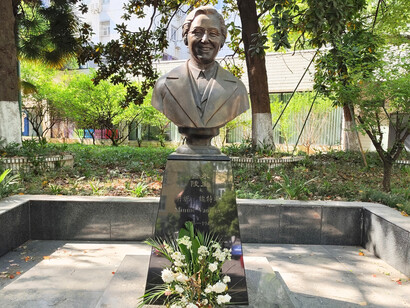
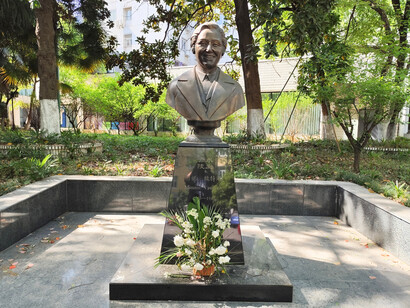
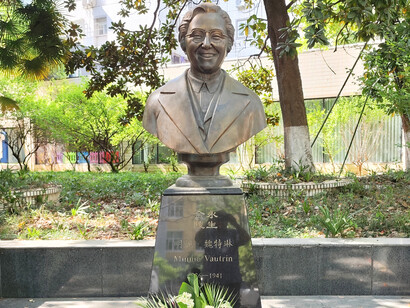
There is a bust of Vautrin and a plaque at Ginling Women’s College (now at Nanjing Normal University) in which Vautrin is credited with saving 10,000 women and children.
Vautrin’s bravery was notable not just in numbers saved, but in the risks she took: she patrolled campus grounds, confronted Japanese soldiers attempting to seize women, barricaded doors against incursions, and worked tirelessly to bring food, medical care and a semblance of humanity to those under her care.
The psychological cost and tragic end
Those weeks of relentless stress, horror and moral responsibility took a profound toll on Minnie Vautrin’s mental health. While she worked around the clock to feed, protect and assist the lives of thousands, she also saw countless suffering others she could not save, images and memories that remained with her after the immediate danger had passed.
By the spring of 1940, after nearly three decades in China and after ongoing struggles to sustain Ginling Women’s College’s mission, Vautrin suffered a nervous breakdown and returned to the United States for medical care. Her last diary entry, dated April 14, 1940, reflected exhaustion and deep emotional strain, as she confessed that she was at the end of her energy and struggling to continue her work amid seemingly endless obstacles.
Although she received some treatment and support, the psychological wounds proved too deep. On May 14, 1941, exactly one year after departing China, Minnie Vautrin took her own life in an Indianapolis apartment, turning on the gas stove in a final act that underscored the emotional scars carried by those who witness immense human suffering. She was 54 years old. She had once written that if she had been given 10 lives, she would have given all of them for the Chinese people who had embraced and accepted her so warmly.
I am guessing that sending Minnie back to the US seemed like a wise strategy at the time. Yet, this was no longer her real home. She had spent more than 30 years in China, integrating into this new culture. Her separation from her beloved new home and those who loved her there must have weighed on her immensely.
Also, she committed suicide during a time when the Nazis and the Imperial Japanese seemed to be winning. This must have been one of the darkest periods of World War 2. Living far from those she loved, and the country she had committed her life to, during a time of pessimism and relative inaction by her homeland to fight against the evils of Nazism and Japanese aggression, the pressures toward suicide were just too immense.
Legacy: remembrance and honor
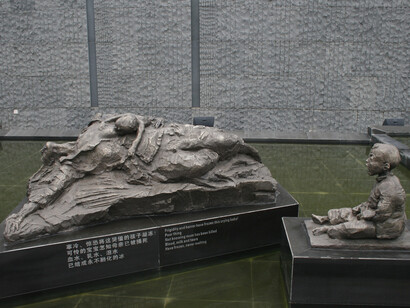
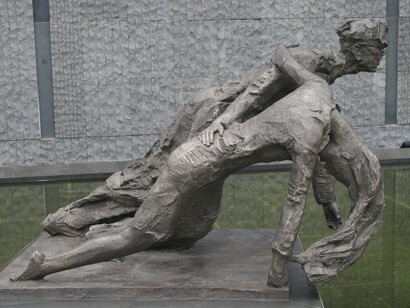
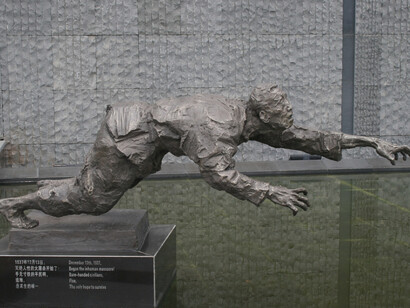
Minnie Vautrin’s legacy lives on in the accounts of those she saved, in the historical record she helped preserve and in the honors bestowed upon her memory. The Chinese government posthumously awarded her the Order of the Jade, one of the highest honors for foreign nationals, acknowledging her selfless service and enduring love for China. There is also a tribute paid to her at the Nanjing Massacre Museum in Nanjing.
Her life reminds us that courage and compassion often arise in the unlikeliest places, and that the moral legacies of individuals can be more powerful than the historical catastrophes they confront. In the end, Minnie Vautrin did not merely witness history, she stood in its most terrifying moments and held a shield over those who had no one else to defend them. Her story is not just one of tragedy, but of a relentless, compassionate heart that chose love in a world overwhelmed by violence and loss. She did not see the ultimate victory, but she worked toward it.
Postscript
I feel a special love for Minnie. We are both Illinoisans, both progressive “this-worldly” Christians, both attended Teachers College at Columbia University and both came to China. On my last birthday, I traveled to Nanjing to spend time with Minnie at the statue erected for her at Nanjing Normal University, where Ginling Women’s College (now Ginling College) is still located.
I sat across from her beaming statue, in silence, just keeping Minnie company for a while before heading back to my own duties in the world. She is still loved at Ginling - I did not need to leave the flowers I had brought, as a fresh bouquet is left for her regularly.
When I arrived at the school, the bao an (security guards) would not let me in because I had failed to make an appointment through some kind of app, and it was now too late for that day. Some female students of the university heard me talking to the guards and came to my assistance, arguing passionately for the guards to let me in. Those guards… were stone.
The students, however, refused to give up, made phone calls, and soon an alumni representative drove over, spoke briefly to the guards, and swiped me onto the school grounds using her own ID. I think Minnie would have appreciated the effort made by those students so that a guy from the Land of Lincoln could bring flowers to a fellow Illinoisan so far from our original homes.