English
 Español
 Français
 Deutsch
 Italiano
 Português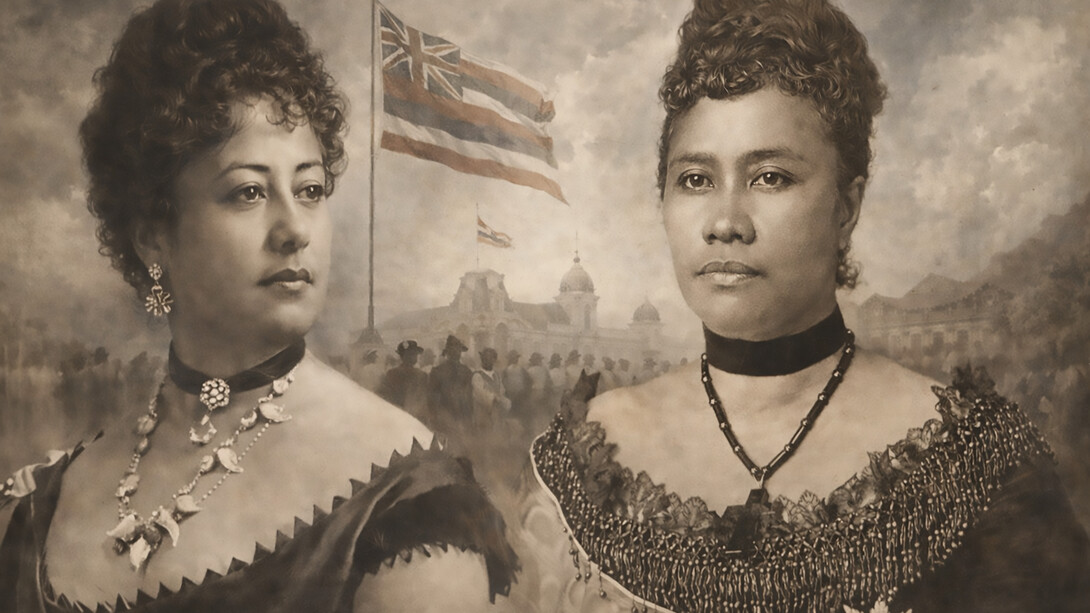
The political history of the Hawaiian Kingdom is often told through the actions of kings, foreign businessmen, and colonial governments. Yet this focus tends to obscure the critical role played by royal women, particularly during moments of instability. The succession crisis of 1874, which followed the death of King Lunalilo, offers a revealing case study of how female authority operated within Hawaiian political culture. At the center of this moment were Queen Emma and Lydia Liliʻuokalani, two aliʻi women whose influence, symbolism, and political alignments reflected competing ideas about monarchy, legitimacy, and sovereignty. Their relationship was not marked by open hostility, but the tensions surrounding them exposed deep structural divisions within the kingdom that would have lasting consequences.
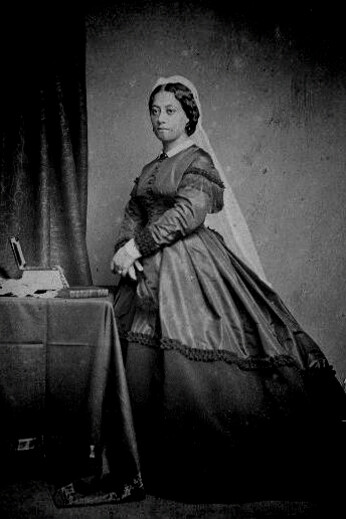
Queen Emma Kalanikaumakaʻamano Kaleleonālani Naʻea Rooke was widely admired as a figure of moral leadership and continuity. As the widow of King Kamehameha IV, she was closely associated with a period many Hawaiians remembered as more stable and dignified. Her education at the Chiefs’ Children’s School, her Anglican faith, and her lifelong commitment to philanthropy, especially the founding of Queen’s Hospital, earned her widespread loyalty among Native Hawaiians (Osorio, 2002). Emma’s authority was rooted less in formal political power than in public trust and emotional connection.
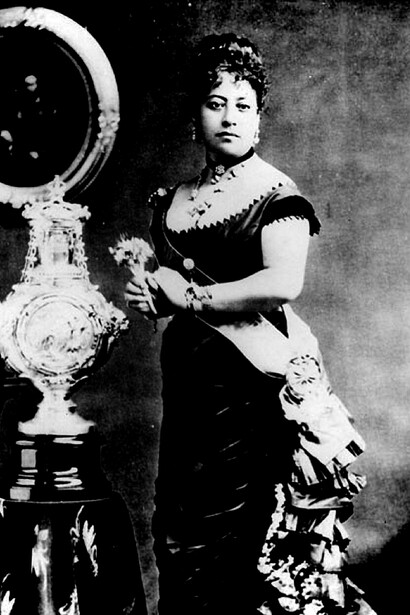
Lydia Liliʻu Loloku Walania Kamakaʻeha, later Queen Liliʻuokalani, shared a similar upbringing and education, but her political world was markedly different. As the sister of David Kalākaua, she became aligned with a constitutional system that increasingly constrained the monarchy. Liliʻuokalani’s authority developed within legal and institutional frameworks shaped by foreign interests, forcing her to rely on constitutional legitimacy rather than popular enthusiasm alone. While both women were deeply committed to the lāhui, they came to represent different approaches to leadership under pressure.
These differences came into sharp focus after King Lunalilo’s death in February 1874. With no named successor, the 1864 Constitution required the legislature to elect the next monarch. Queen Emma emerged as the popular favorite almost immediately. Large crowds gathered in Honolulu to support her candidacy, seeing her as the rightful heir to the moral authority of the Kamehameha dynasty (Silva, 2004). Her supporters believed that public will, genealogy, and service to the people should determine the throne.
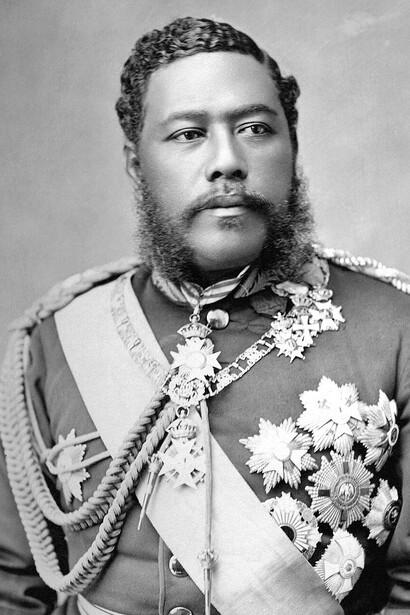
Liliʻuokalani, by contrast, supported her brother Kalākaua’s candidacy, which rested on constitutional procedure rather than popular acclamation. When the legislature elected Kalākaua, the disappointment among Emma’s supporters erupted into violence outside the courthouse. The situation deteriorated to the point that foreign troops were called in to restore order—an intervention that foreshadowed the growing erosion of Hawaiian sovereignty (Schorske, 1980).
Although Queen Emma did not directly oppose Liliʻuokalani, the political symbolism surrounding the two women placed them on opposite sides of a widening divide. Emma came to represent a vision of monarchy grounded in moral authority and popular support, while Liliʻuokalani increasingly embodied constitutional governance under external constraint. This distinction is important: their “rivalry” was not personal but structural. It reflected competing understandings of how authority should function in a kingdom under mounting colonial pressure.
After Queen Emma’s death in 1885, her influence did not disappear. When Liliʻuokalani ascended the throne in 1891, she inherited a monarchy already weakened by the Bayonet Constitution of 1887. Unlike Emma, she ruled at a time when ethical leadership alone could no longer protect Hawaiian independence. Still, scholars have noted that Liliʻuokalani drew upon earlier models of royal dignity, models closely associated with Emma, particularly in her emphasis on restraint, service, and moral responsibility (Kameʻeleihiwa, 1992).
This continuity became especially visible during the overthrow of 1893. Liliʻuokalani’s decision to yield authority temporarily rather than provoke bloodshed has often been framed as political failure. However, viewed within the context of Hawaiian leadership traditions, it appears instead as a deliberate ethical choice. Like Emma before her, Liliʻuokalani believed that legitimacy rested not in force, but in moral right (Liliʻuokalani, 1898).
Gender shaped how both women were understood by contemporaries and later observers. While Hawaiian political culture long accepted female aliʻi as legitimate rulers, Western audiences often filtered their authority through Victorian expectations. Emma was praised by foreign elites as charitable, pious, and maternal, while Liliʻuokalani was increasingly portrayed as unstable or threatening when she sought to restore royal power (Silva, 2004). These gendered narratives played a significant role in shaping international responses to Hawaiian political conflict.
Culturally, both queens acted as caretakers of Hawaiian identity, though in different ways. Emma focused on healthcare, religion, and social welfare during a period of population decline and disease. Liliʻuokalani, especially after her imprisonment, turned toward cultural preservation, composing mele and recording Hawaiian history as acts of resistance. Their legacies, when viewed together, reveal a broader strategy of survival rooted in care, memory, and dignity.
Ultimately, the tensions surrounding Queen Emma and Liliʻuokalani during the 1874 succession crisis reveal more than a political disagreement. They illuminate the fragile balance between tradition and constitutionalism, popular will and imposed legality. Emma represented one of the last moments when public sentiment might have shaped the monarchy’s future. Liliʻuokalani inherited the consequences of that lost possibility, ruling a kingdom already fractured by foreign intervention.
Examining these two women side by side shifts the narrative of Hawaiian history away from inevitability and toward human choice. Their leadership, shaped by gender, culture, and circumstance, offers a deeper understanding of how sovereignty was challenged, defended, and ultimately undermined. In doing so, Queen Emma and Queen Liliʻuokalani emerge not as symbols of failure, but as figures of moral clarity whose legacies continue to resonate in Hawaiian memory.
References
Kameʻeleihiwa, Lilikalā. Native Land and Foreign Desires: Pehea Lā E Pono Ai? Honolulu: Bishop Museum Press, 1992.
Liliʻuokalani. Hawaiʻi’s Story by Hawaiʻi’s Queen. Boston: Lee and Shepard, 1898.
Osorio, Jonathan Kay Kamakawiwoʻole. Dismembering Lāhui: A History of the Hawaiian Nation to 1887. Honolulu: University of Hawaiʻi Press, 2002.
Silva, Noenoe K. Aloha Betrayed: Native Hawaiian Resistance to American Colonialism. Durham: Duke University Press, 2004.

![Liliʻuokalani (Hawaiian pronunciation: [liˌliʔuokəˈlɐni]; Lydia Liliʻu Loloku Walania Kamakaʻeha; September 2, 1838 – November 11, 1917) was the only queen regnant and the final sovereign monarch of the Hawaiian Kingdom, reigning from January 29, 1891, until the overthrow of the kingdom on January 17, 1893](/attachments/f9f93e9a3e65c1f45b922817d19bb4236d2499d0/store/fill/490/735/cf3be3d632b83c3e5701e3dbee87012a6e552048c7318a813f2d63bb8709/Liliuokalani-Hawaiian-pronunciation-li-li-uok-at-lani-Lydia-Liliu-Loloku-Walania-Kamakaeha.jpg)