English
 Español
 Français
 Deutsch
 Italiano
 Português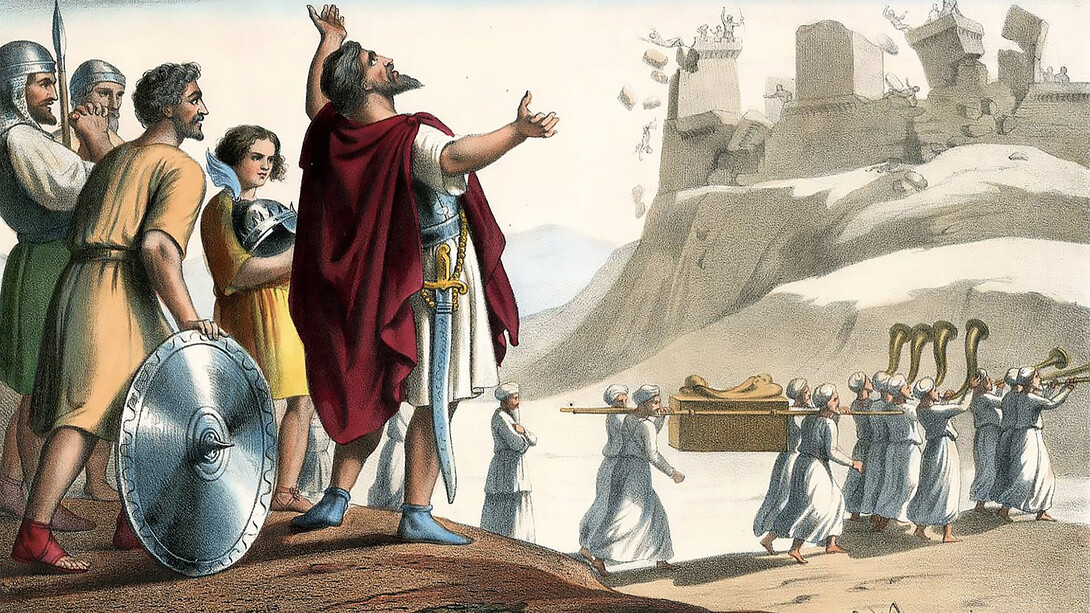
When we think of beginnings, true beginnings….we often drift toward ancient stories carved in stone, whispered through artifacts, or told in sacred texts. But among all the places that echo with the breath of humanity's dawn,
Jericho holds a singular space. Not because it was the first city ever built. But because it was the first to endure, and fall, and endure again. It is a place of paradox. And perhaps, that’s what draws me to it most.
As a soulscape artist and seeker of truth through the journey of art.
Jericho was not a place I intended to write about. It found me. Just as most truths do, not in the thunder of recognition, but in the silence between questions.
The oldest city, they say
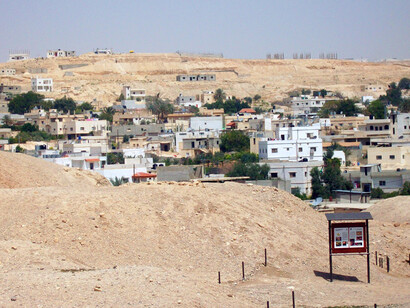
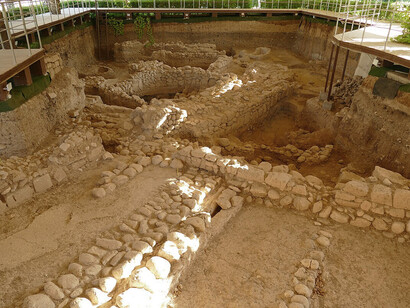
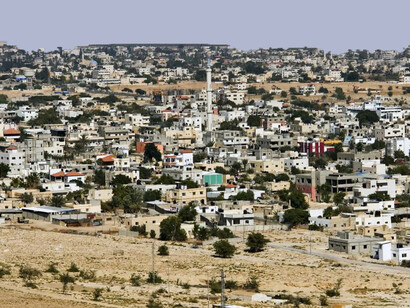
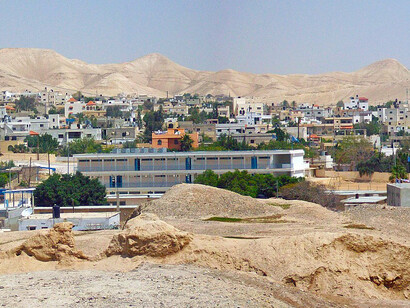
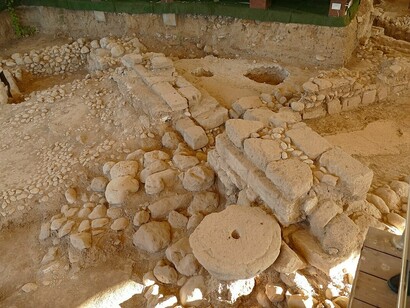
Jericho lies in the West Bank, north of the Dead Sea, its ruins known as Tell es-Sultan. Archaeologists have uncovered layer upon layer of civilization here, dating back more than 11,000 years. Some even call it the oldest continuously inhabited city in the world.
But what does that really mean?
It means that Jericho is not merely a city. It is a timeline. A soulprint of humanity itself. Each layer tells of people who once lived, loved, built, fell, and rebuilt. Its very dust holds memories older than language.
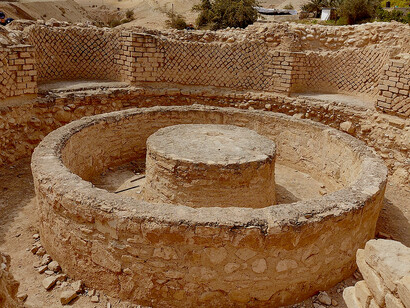
When I first saw images of the round tower of Jericho, built nearly 10,000 years ago, I was stunned. A 28-foot-tall stone structure, circular, deliberate, monumental.
Why would hunter-gatherers, still figuring out domestication, build something so architectural?
So organized?
So purposeful?
Some say it was a watchtower. Others, a marker of power. But I believe it was something else, a declaration.
A statement to the universe: We are no longer wanderers. We have arrived.
The threshold of permanence
Jericho’s ancient residents weren’t just experimenting with architecture; they were experimenting with permanence. Here, for the first time, we see evidence of collective stability: homes made of mudbrick, stacked next to each other. Granaries. Burial sites within the home, suggesting both connection and continuity.
They were not just surviving. They were remembering.
The journey from movement to settlement is, in many ways, the journey from survival to meaning. Jericho symbolizes the moment when we stopped chasing life and began shaping it.
And yet, this decision to settle came with consequences. For every wall we build to protect, we also build a barrier between ourselves and something else. Every enclosure breeds hierarchy, ownership, and separation.
And Jericho, ironically known for its walls, teaches us exactly that.
The walls that fell
The most famous story of Jericho comes from the Book of Joshua. A tale of conquest, where the walls of the city came tumbling down after seven days of ritual. Trumpets, silence, footsteps, and then…collapse.
Whether myth or memory, this story speaks to something deeper: the fragility of what we build. The illusion of control. The inevitability of change. No wall, no matter how thick, can withstand the tides of time, faith, or transformation.
I often wonder if the original builders of Jericho could have imagined their walls becoming metaphors in a holy book. Or that their settlement would one day be more remembered for its fall than its founding.
But maybe that’s the point. Jericho teaches us not just how to build, but when to let go. When to surrender. When to listen for the sound of truth, soft as a ram’s horn…echoing through the silence.
Skulls and spirits
What moved me most about Jericho wasn’t its walls or towers, but its people.
Or rather, what they did with their dead.
In the Pre-Pottery Neolithic period, archaeologists found human skulls, detached from bodies, reworked with plaster to resemble faces, cheeks rounded, lips shaped, seashells inserted as eyes. These skulls weren’t buried anonymously. They were honored. Displayed. Perhaps even revered.
What were they trying to preserve?
A memory?
A presence?
A lineage?
To me, these skulls are not grotesque, they are sacred. They are the earliest portraits. The first attempts to hold on to identity, to connection, even after death. It’s as if they whispered: You were here. You mattered. We will remember.
There is something so innately human in that…this deep yearning to preserve not the body, but the soul’s imprint.
A tender defiance of death.
A gesture of love disguised as ritual.
A mirror to ourselves
In Jericho, I see humanity reflected in raw form…ambitious, spiritual, fragile, wise. We often assume the people of the past were primitive, less evolved, or driven solely by need. But Jericho proves otherwise.
This city was not just functional; it was expressive. It reveals that even at the edge of survival, humans craved belonging, ritual, and beauty.
They didn’t just build homes. They buried their dead with care. They shaped towers. They painted walls.
They left messages. Not in script, but in stone, bone, and silence.
As an artist, I often think in layers.
When I paint, I begin with the unseen. The energy. The emotion. Only then do the forms emerge.
Jericho was no different. Its power lies not in its final form, but in the layers beneath: the ones time could not erase.
The lesson of Jericho
We live in an age where walls are rising again, physical, political, emotional. But Jericho reminds us: all walls fall, eventually. Not through force, but resonance. Through time, through truth.
What remains is what was always meant to remain: the stories.
The spirits.
The soulprints.
Jericho was not the peak of civilization. It was the beginning of consciousness. It marked the threshold where humans began to shape not just their environment, but their identity.
And perhaps, the fall of its walls was not a defeat, but a revelation.
A reminder that permanence is an illusion. That real power lies in surrender. In connection. In remembering what came before.
Why I wrote this
This article isn’t just a reflection on an archaeological site. It’s a reflection on us. On our shared journey. On the paradoxes that shape human history, the desire to belong and the fear of being forgotten, the urge to protect and the need to open.
As I write this, I think of all the seekers who came before me. Who walked through Jericho’s dust, heard its silence, and felt something stir.
Maybe what they felt is what I feel now, a gentle call from the past. Not to reconstruct it. But to listen.
To feel.
To carry it forward in the only way that truly matters: by honoring its truth.