English
 Español
 Français
 Deutsch
 Italiano
 Português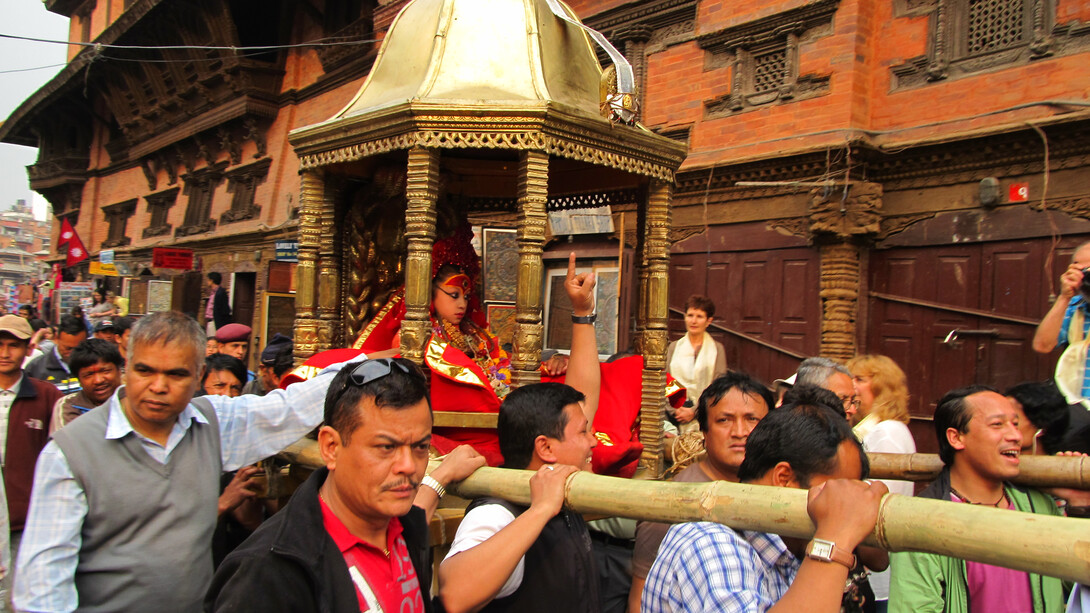
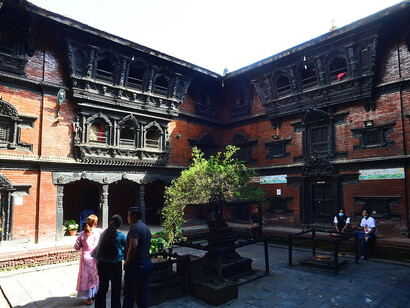
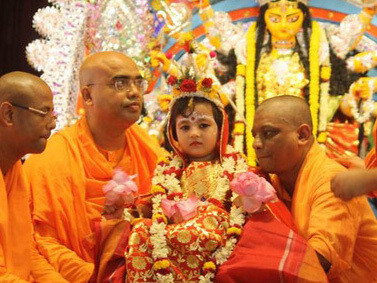
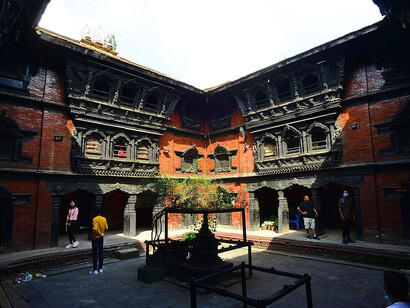
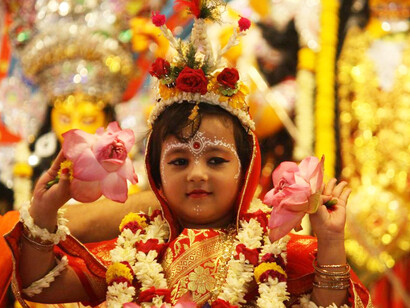
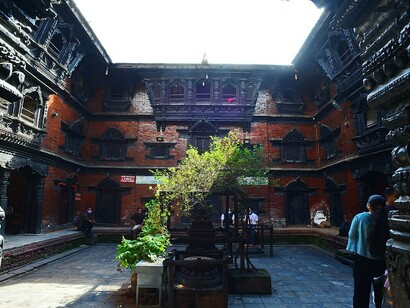
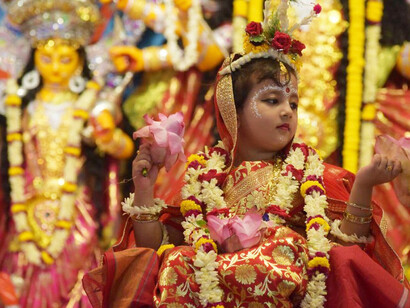
In the heart of Kathmandu’s Durbar Square, the doors of the Kumari Ghar swing open, and a two-year-old girl is carried into a courtyard of hushed reverence. She is dressed in crimson, gold ornaments shimmering on her tiny body, and a painted third eye glowing on her forehead. Her name is Aryatara Shakya, a two-year-old girl chosen in September 2025, who on this day ceases to be seen as just a child. From now until her first menstruation, she will be worshipped as a living goddess: the Kumari of Kathmandu.
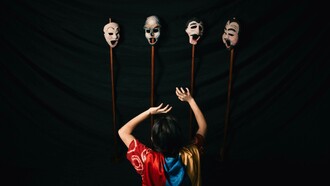
This is a tradition that has defined Nepal’s cultural identity for centuries. Rooted in both Hindu and Buddhist practices, the Kumari is believed to be the human embodiment of Taleju, a goddess of power and protection. The girl is chosen through an elaborate ritual in which priests, astrologers, and community elders search for symbolic “perfections”: serene eyes, flawless skin, and a horoscope free of ominous signs. In earlier centuries, according to legend, candidates were placed in a darkened room with symbolic objects or animal heads to test their courage — though many historians now view this as a traditional tale rather than a verified practice. Those who showed no fear were believed to carry divine strength.
Once chosen, the Kumari leaves her family home and moves into a palace-like residence where her feet rarely touch the ground. She makes occasional appearances, blessing devotees who bow at her throne, and during festivals, she is paraded through the city in a gilded chariot. To her people, she is not simply a symbol; she is the very presence of a goddess, a source of blessings and protection for the city.
And yet, under the layers of silk and centuries of belief, she is also a toddler. She may giggle, squirm, or cry when the crowds grow too loud. She may want to play with toys, chase after a sibling, or simply be held by her parents. The paradox of the Kumari lies here: she is elevated to divine status precisely when she is least able to understand what that means.
Childhood in a cage
For many Nepalese, the Kumari represents continuity in a nation marked by change. Monarchies have risen and fallen, governments have dissolved, and constitutions have been rewritten, but the living goddess remains. Still, beneath the reverence lies a difficult reality: the Kumari is not only a symbol but also a child, and her life is shaped by restrictions few outsiders can imagine.
She does not run barefoot on the streets of Kathmandu. Her playmates are limited, and her contact with the world is carefully controlled. For years, Kumaris received little formal schooling, but since 2008, reforms following a Supreme Court ruling have allowed private tutors and, in some cases, limited classroom attendance. Still, many former Kumaris describe struggling with education after their “retirement.” Imagine being ten years old and starting school with the knowledge of a goddess but the academic level of a child half your age.
The social reintegration can be just as painful. One day, the Kumari is adored by politicians, business leaders, and pilgrims who treat her every smile as prophecy. The next, she is an ordinary teenager sitting at the back of a classroom. Former Kumaris have spoken of confusion and loneliness during this transition, some afraid to touch the ground when they left the Kumari Ghar, others bewildered by classmates who did not bow to them.
The very structure of the role is tied to patriarchal ideas about purity. A Kumari can only serve until she menstruates; her first period marks the departure of the goddess. In this sense, the tradition both venerates girls and limits them. Their worth, symbolically, exists only in their untouched state. Critics argue this reinforces outdated notions that link female value to virginity and purity. Supporters counter that the Kumari embodies the divine feminine, proof that Nepalese culture has long recognized the power of women and girls.
This tension has drawn the attention of human rights activists. In 2005, a petition was filed claiming the Kumari tradition violated international child rights. In 2008, Nepal’s Supreme Court ruled that the tradition could continue, but ordered reforms to guarantee Kumaris’ rights to education, healthcare, and personal freedom. On paper, this was a compromise. In practice, implementation has varied. Some Kumaris have benefited from reforms, while others still recount feeling unprepared for ordinary life.
The Kumari is thus caught between sacred heritage and human rights. To many Nepalese, ending the tradition would be unthinkable, like erasing a piece of their soul. To others, preserving it without meaningful reform risks treating a child not as a human being but as a vessel for belief.
Between faith and the future
The selection of Aryatara Shakya as Kumari comes at a charged moment for Nepal. Just beyond the walls of her residence, young people have been holding demonstrations demanding accountability, jobs, and political reform. While the protests have shaken the government, reports of a prime minister’s resignation or interim rule remain unconfirmed. In this atmosphere, the crowning of a living goddess offers a rare moment of unity, a symbol that something ancient and unshakable endures even as politics burn.
But the contrast is striking. Outside, Nepal’s youth are calling for freedom, opportunity, and reform. Inside, a two-year-old girl has been elevated to divine status at the cost of her own freedom. For the next decade of her life, she will live under rituals she cannot fully understand, adored by thousands but denied the simplest joys of an ordinary childhood.
To look at the Kumari, then, is to glimpse Nepal’s paradox. She is both a cultural treasure and a human rights dilemma. She is both a goddess and a little girl. The devotion she inspires speaks to the depth of Nepal’s spiritual traditions, but the questions her role raises reflect the country’s struggle to balance heritage with the realities of modern life.
Someday, Aryatara will grow older. She will bleed for the first time, and the goddess will “leave” her body. She will walk out of the palace and return to her family as just Aryatara, with no throne, no painted eye, and no bowing crowds. She will pick up books, try to make new friends, and perhaps feel out of place. And then, another child will be chosen, another small girl who will inherit the throne, the rituals, the worship, and the questions.
For now, the little girl sits on her throne, her hair tied neatly in pigtails, watching a world she does not yet understand bow before her. In her, Nepal sees divinity. In her, we might also see the complexity of tradition, the beauty, the burden, and the challenge of carrying faith into the future.
A goddess today. A girl tomorrow.