English
 Español
 Français
 Deutsch
 Italiano
 Português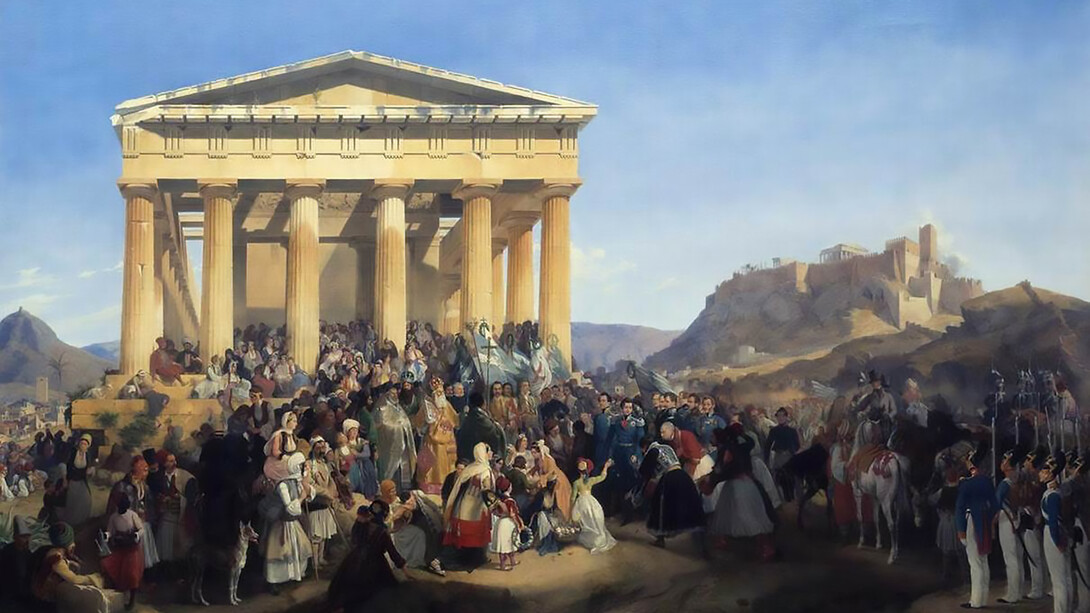
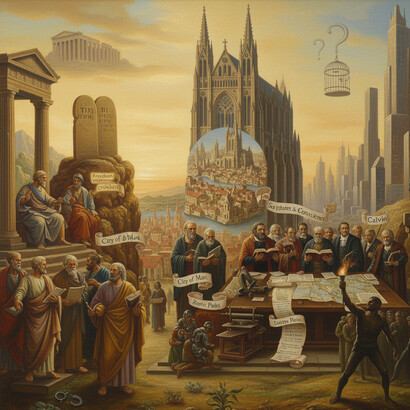
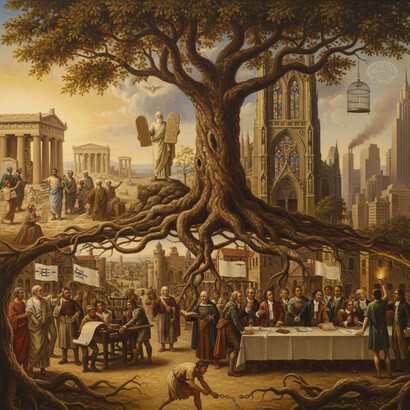
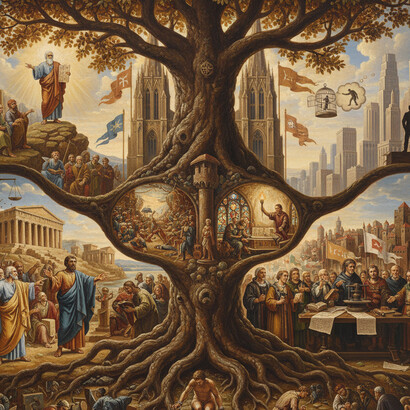
Being one of the key values in democratic cultures, liberty has been depicted in a chronological reformation of various philosophical and political perspectives. By considering liberty as a concept and examining ancient Jewish and Greek political thought, medieval Christian political thought, the Reformation and Counter-Reformation periods, and the shift from classic to modern political thought, the purpose of this essay is to establish the importance of liberty. In this project, learning about liberty through Ayn Rand’s Anthem and reflections of Václav Havel helps us understand its significance to today’s culture and personality.
From the ashes of classical Greece, from the sands of the Near East, the idea of liberty began to grow in the fertile soil. The ancient Greeks, who were lovers of rhetoric and philosophy, endeavored to define the form of justice and the type of political system. Socrates denied the possibility of establishing a just polis based on myths, conventions, or the sheer capricious decision of the majority: his version of justice is justice that is intelligible. This is true because the play explores the theme of people’s political power conflicting with the quest for knowledge when Socrates was executed by the Athenian democracy. Seeing his teacher imprisoned and executed, Plato condemned democracy as the rule of the mob and introduced a new system with the philosopher-king as the supreme ruler. Aristotle, however, mitigated this vision, defending the seemingly biological phenomenon of private property & family and the impossibility of having philosopher-kings in most contexts.
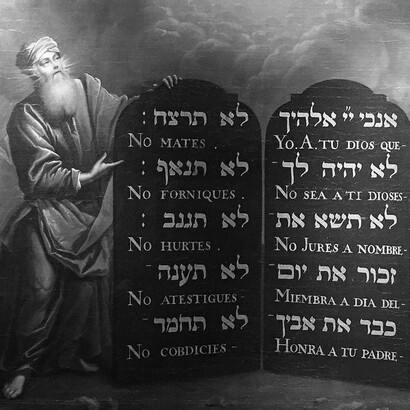
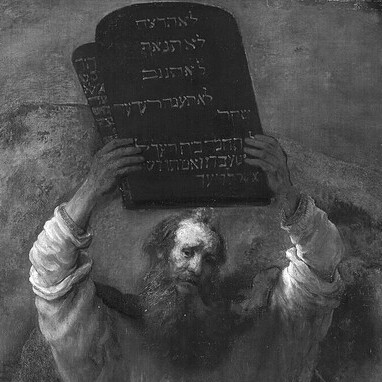
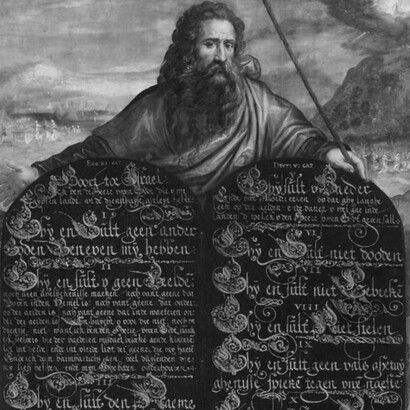
The Jewish tradition was based on concepts of revelation and faith and provided an alternative method of attaining liberty. The commitment to God, as embodied in the Decalogue at Sinai, directed individuals towards accountable freedoms and right behaviors. This was not just political liberty but a more Puritan way of identifying freedom—freedom of the individual leading to freedom for the community and freedom for adherence to the word of God.
In medieval times, the tension between religious spirituality and rational learning defined the discussion on freedom. We see this if we consider the differentiation that Saint Augustine made between the City of Man—which is driven by greed and wars—and the City of God, where people are saved and where there is eternal life. He further argued that the real freedom was in striving for the latter, though it entails dwelling in a flawed and painful existence. St. Thomas Aquinas, following Aristotle, claimed right reason in faith and claimed that the assent of reason is the path to true liberty.
The Reformation delegitimized the Church and paved the way toward the emergence of the nation-state of the modern age. During the Reformation, the new reformists, such as Martin Luther and John Calvin, preached less authority by the papacy and the clergy but more authority by the scriptures and conscience. During this age, the world saw the beginning of religious tolerance and the seeds of secularism as liberty moved from being a specifically theological concept to a civil and political interpretation.
One of the most notable shifts that occurred in the transition from classical to modern political philosophy was in the concept. For different purposes and in different eras, Machiavelli, Hobbes, Locke, Rousseau, Hegel, Marx, and Nietzsche were among those philosophers who tried to explain problems of power, contract, and the individual in society. Healthy souls in ancient philosophy sought the virtues and the goods of the polis, and in this period, there was a shift of paradigm and the proclaimed rights of the individual and his/her possessions. It also paved the way for the formation of modern liberal democracies, where liberty is presumed to be an inalienable right of the people.
Based on this perspective, one might suggest that “Anthem’ is an anti-utopian novel through which Rand vigorously weeded out the evils of collectivism and propagated the virtues of individualism. Prim, a postmodern everyman who transforms his role from a mere pawn of post-apocalyptic culture to a man who chooses his name, represents the importance of freedom and the assertiveness of a person. As for the topic, Rand’s work is based on the ideas of freedom and individual rights and the possibility of harming them for the sake of society’s well-being.
On the other hand, we also have the dissident playwright and former president of Czechoslovakia, Václav Havel, questioning the true meaning of freedom in his open letters. He claimed that liberty is not just freedom from oppression but freedom of self-determination and the exercise of the individual’s conscience, combined with the freedom to be useful to society. The fundamental philosophical point drawn from Havel’s works is that the concept of liberty has the existential implication of being true to oneself and active in the political sphere.
Freedom has been both a complex process and a subject of speculation through philosophy, politics, religion, and personal narrative across the histories of people. From the Ancient Greeks’ passion for justice and the Jews’ contract with God to the medieval pursuit of religion and science, and finally to the modern sentimentalism of liberties as the rights of individuals and their social engagements, liberty has been a significant concept that has shifted to society’s demands. Self-governance and the concepts of liberty and freedom, exemplified by both Ayn Rand and Václav Havel, add to the understanding that the fight for these rights is a constant one, the need for people and individuals to live free, control their own destiny, be respected, and engage with their community and environment on their own terms.
This article was written by Luis Pedro Santis Fuentes. Luis is a writer on politics, policy, economics, and philosophy. He is a former lecturer and the co-founder of Q-Network.