English
 Español
 Français
 Deutsch
 Italiano
 Português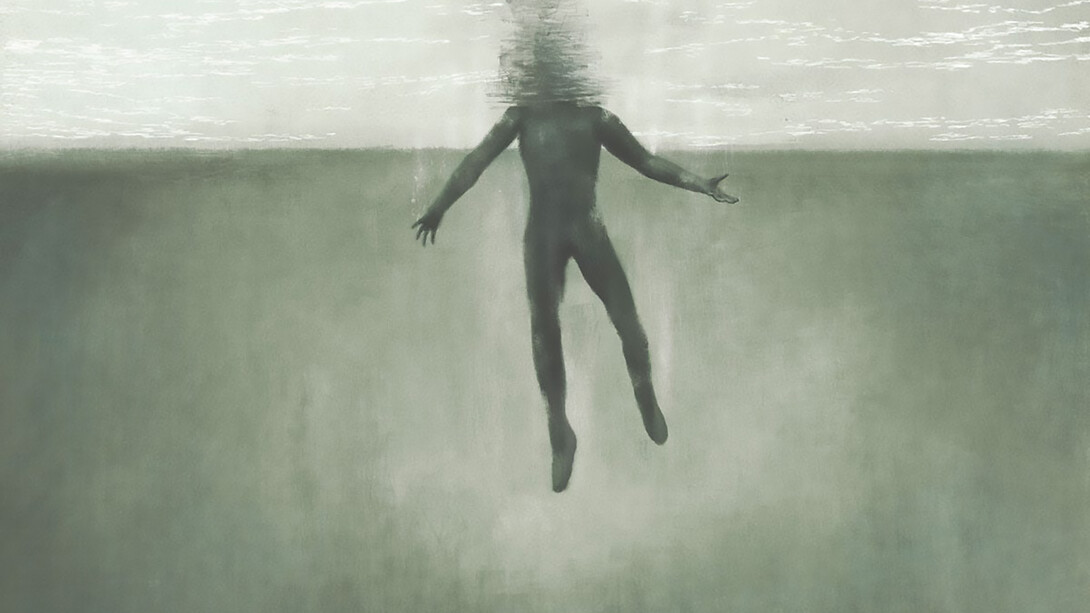
Since childhood, I have noticed that the words I chose to express or speak often carried more weight than I consciously intended due to the circumstances I was born in. Growing up with a disability and constant scrutiny, I learned that direct expression was sometimes unsafe. My mind, like many others, developed a secret language: metaphor.
A metaphor seems harmless. It is “just a way of expressing thoughts.” But over the years, I realized that the metaphors we use were and are the windows into the truths we hide even from ourselves. They are encrypted messages from the unconscious, much like how engineers hide data in carrier signals or how machine learning models embed meaning in vectors.
Metaphor as a cognitive circuit
George Lakoff and Mark Johnson, in Metaphors We Live By, argued that metaphor is not decorative but foundational. We understand complex concepts by mapping them onto familiar domains. “Argument is war.” “Time is money.” Each mapping reveals how our mind structures reality.
As an electrical engineer, I see a metaphor like a circuit. The surface word is the visible wire, but the current—the repressed meaning—flows underneath. To read the circuit properly, you need to trace the hidden connections.
My childhood metaphors
As a boy, when others mocked my physical impairment, I would tell myself, “I am a broken machine.” At the time, it felt like an explanation. Only later did I see the repression inside it: shame, grief, and the fear of never belonging.
The metaphor wasn’t random. It reflected both my early love of machines and my hidden belief that my body was defective hardware. By decoding it, I uncovered the pain that words like “disabled” could not fully capture.
Freud, Jung, and the disguises of speech
Freud believed dreams disguised repressed desires through symbols. Jung expanded this, seeing archetypal images as universal metaphors. Both pointed to the same truth: the psyche speaks indirectly when it cannot speak directly.
Modern cognitive psychology echoes this. Susan Sontag noted how metaphors of illness—“battle,” “invasion,” “decay”—shape not just how we describe disease but how we feel it.
When I began noticing my own metaphors, I realized I was unwittingly narrating my unconscious state. Saying “I feel like a shadow” revealed alienation. Saying “life is a test I cannot finish” revealed fear of inadequacy.
AI and the hidden embeddings
In machine learning, embeddings condense meaning into hidden dimensions. A word vector for “king” minus “man” plus “woman” yields “queen.” Beneath the surface token lies compressed truth.
Human metaphors function the same way. They compress emotional complexity into simple forms. Saying “my mind is a storm” compresses layers of confusion, chaos, fear, and intensity into one phrase.
AI models like GPT can generate metaphors because they map associations across vast texts. But humans generate metaphors because our unconscious maps pain across lived experience. The metaphor is the embedding of repression.
Electrical engineering and signal encoding
When engineers transmit data, they often hide it in carrier waves. Modulation disguises meaning. Only a tuned receiver can decode the signal.
Metaphor is a psychological modulation. The surface statement is the carrier; the repressed truth is the hidden signal. “I am drowning at work” is not about water—it is about overwhelm, fear, and helplessness.
Just as engineers design demodulators, psychologists—and self-reflective individuals—must design methods to decode their own metaphors.
Metaphor in collective speech
Cultures also reveal repression through metaphor. Political leaders speak of “cleaning the system,” repressing the fear of corruption. Economists describe “market crashes” and “bubbles bursting,” betraying anxiety about instability.
In India, when disability is discussed in metaphors of “burden” or “weight,” it reveals collective repression of responsibility. Lakoff showed how metaphors frame thought. But I argue they also expose denial. The metaphors a culture clings to reveal what it cannot confront directly.
My turning point with metaphor
In my twenties, after a series of personal betrayals, I found myself repeating the metaphor: “I am a ghost in my own life.” I thought it was poetic. In reality, it was repressed grief. I felt not seen, not heard, erased.
By observing and analyzing the metaphor and asking, “Why do I think I am a ghost in my own life?” I discovered truths I hadn’t dared to name: loneliness, invisibility, and the fear that I could contribute so much and still vanish.
That realization was painful—but liberating. The metaphor had been knocking for years. I finally opened the door.
Authors who heard the hidden voice
Friedrich Nietzsche was of the opinion in most of his works that “all great truths begin as blasphemies.” He often conveyed insights metaphorically because direct language would have been too incendiary.
James Hillman saw the psyche as fundamentally poetic, arguing that metaphor is the psyche’s native language.
Maya Angelou spoke of caged birds singing, a metaphor that revealed the repressed truth of racial and personal pain.
Carol Gilligan revealed how metaphors of “voice” in women’s psychology represented deeper structures of repression and silence.
Each of these thinkers used metaphor not just as decoration but as revelation.
Towards decoding repression
How can we decode the truths in our metaphors?
Listen Closely to Spontaneous Speech—What phrases repeat? “I’m under pressure.” “I hit a wall.” Each carries a hidden load.
Ask, "Why this image?", Why storm and not desert? Why prison and not a labyrinth? The chosen metaphor reveals the unconscious landscape.
Test substitution: replace the metaphor with literal language. If “drowning in work” becomes “terrified of failing expectations,” you reach the truth.
Track recurrence: recurring metaphors across years point to unresolved repression.
Engineering the decoder
In systems engineering, every encoded signal requires a decoder. In psychology, metaphor is the encoding; self-awareness is the decoder.
When someone says, “I am drowning at work,” the system should decode the metaphor as a signal of overwhelm and underlying helplessness.
This pseudocode mirrors the work of therapy: identifying the metaphor and mapping it to repressed emotional content.
Positive metaphors and healing
Not all metaphors hide pain. Some reveal resilience.
When I began describing myself as “a bridge,” it revealed my deeper truth: a desire to connect worlds—technology and psychology, India and the global community, and disability and contribution.
Positive metaphors are not escapes; they are repressed strengths surfacing in coded language.
The AI mirror
As AI systems become more advanced, they will generate metaphors without repression. But when humans read them, we project our own unconscious into the text. The danger is mistaking machine metaphors for truths—when in fact they reflect our interpretation.
But there is also promise. AI can act as a mirror, surfacing metaphorical language we would otherwise dismiss, giving us another chance to decode ourselves.
Closing: the courage to decode
Metaphors are not harmless ornaments of speech. They are coded transmissions from the unconscious. They reveal what we repress or, in broader terms, suppress—shame, fear, grief—but also what we secretly hope for—strength, resilience, transcendence.
I have lived my life inside metaphors of machines, shadows, ghosts, and bridges from electrical engineering to AI/ML to psychology. Each time I decoded one, I found not just words but truths I was afraid to face.
The challenge, and the opportunity, is to stop dismissing metaphors as “just words” and start hearing them as signals. In their disguised poetry, they tell us what our conscious mind refuses to say.
And once you name the truth, you are no longer its prisoner.