English
 Español
 Français
 Deutsch
 Italiano
 Português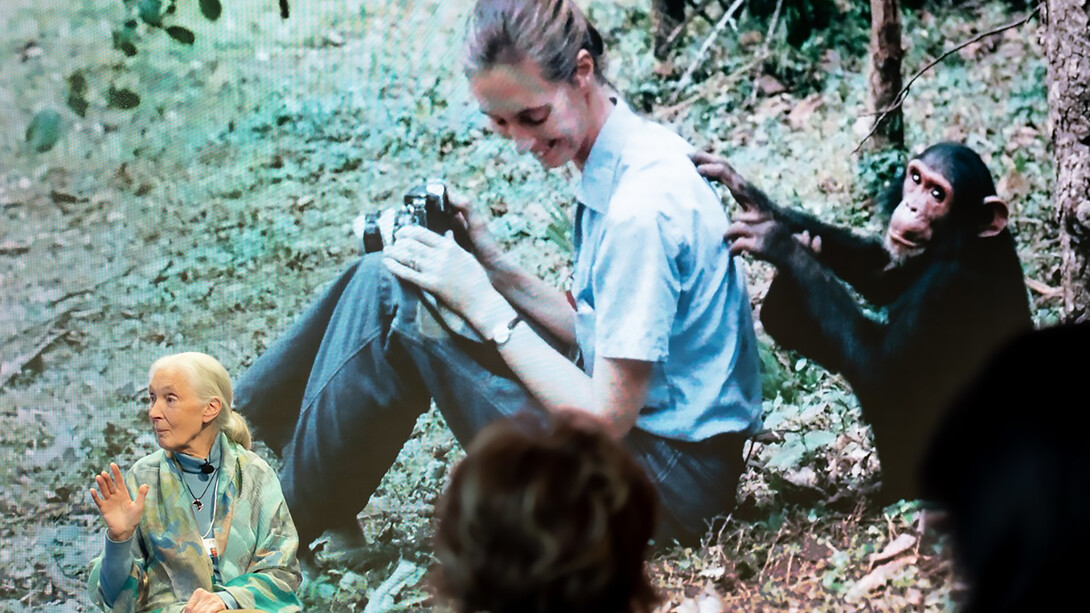
The wonderful Jane Goodall died in October last year, at the age of 91. I looked up to her as an inspiring role model ever since I first became an environmental campaigner in the 1970s and felt very privileged to have worked together as patrons of a UK-based charity called Population Matters.
So, I scoured the outpouring of dozens of beautiful and very moving obituaries that marked her death. I can't honestly say that I was very surprised by this, but hardly any of them mentioned her lifelong interest in population issues. Even her own institute barely referred to this part of the work; the Wikipedia obituary ticked it off in 10 words. For the rest, zilch.
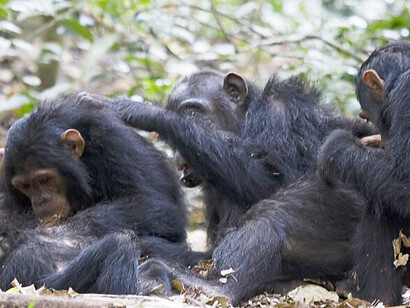
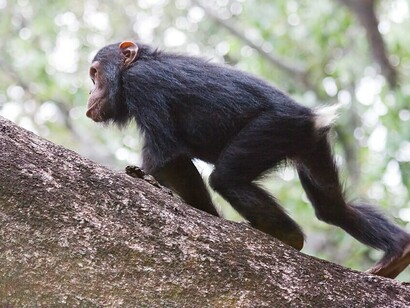
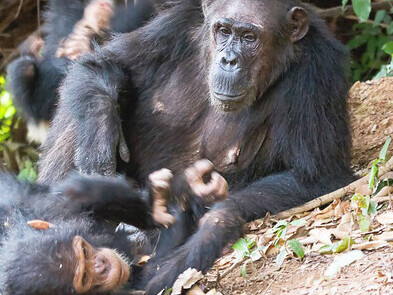
That is pretty startling. Throughout her life, Jane Goodall cared passionately about making the connections between conservation, education, and population. Her groundbreaking research studying chimpanzees in the Gombe National Park (which started in the 1960s) found her having to confront all sorts of human/wildlife conflicts. This is what she wrote in 1990:
It first hit me, really hit me, when I flew over Gombe National Park in 1990, a tiny island of forest surrounded by completely bare hills; it was obvious that there were more people living there than the land could support.
My hunch is that some readers here may be feeling somewhat uncomfortable about those words. Is it right for a privileged white woman to be reflecting on the balance between the needs of conservation and the needs of local communities in a country like Tanzania?
I am, of course, being deliberately provocative. But I've spent much of my life trying to understand why so many environmentalists today find it so difficult to talk about population and why so much ‘population silencing’ (to use Professor Diana Coole’s telling phrase) still goes on.
Let's step back a bit from the deeply uncomfortable point that I've invited you to engage in. As we all know, these are complicated matters, but Jane Goodall herself was clear about how best to engage with them. First, in castigating point-blank those who refused to engage at all:
Population is one of the most important issues we face today. We can't go on like this; we can't push human population growth under the carpet... I would encourage every single conservation organization and every single government organization to consider the absurdity of unlimited economic development on a planet with finite natural resources.
Second, she refused to be cowed by those who accused her head-on of being insensitive to the victims of deeply abhorrent racist beliefs and behaviors since the days of the British Empire in Africa. Nothing could have been further from the truth. Her approach to these issues was imbued with a deep understanding of the lives of those people living near the Gombe National Park and of the daily pressures they had to cope with:
If you know enough about poverty and its helplessness, you totally understand why people are cutting down trees and setting snares for bushmeat.
That kind of compassion and empathy (starting from the place of loving all humans equally) is what is often lacking in conversations about population and the environment. As is love and reverence for the whole of the non-human world with which we share this planet.
Lastly, although always very soft-spoken and respectful, Jane Goodall had little time for the politically correct evasions of mainstream environmentalists (particularly in organizations like WWF International) who simply refuse to respond to the reality on the ground, with wildlife populations having declined by 75% since 1970 and more than 1 million species now at risk of extinction. As she said, “It's irritating to find conservationists not wanting to bring people into the picture.”
I don't know this for a fact, but I can't help but imagine that she was mightily perplexed by today’s so-called ‘pro-natalism debate.’ Over the last decade, we’ve seen the emergence of more and more people angsting that there are going to be too few people in the future rather than too many. Endless think tanks and polemicists are out there shouting about ‘the existential risk of population collapse,’ intent on persuading people that this is now the greatest long-term threat to the future of humankind (rather than runaway climate change, or collapsing ecosystems, or the renewed threat of nuclear conflagration, or future pandemics, etc., etc.), as well as being a massive short-term threat given that our growth-obsessed economies depend on there being more and more consumers to sell more and more stuff to every year.
I would argue that this whole concocted ‘fertility crisis’ is driven by our addiction to economic growth and is really pretty stupid, as in Jane Goodall's reflection about natural resources above. But it would be wrong to dismiss such crass pro-natalism out of hand. It's true that two-thirds of people today live in countries where average fertility is already below the replacement rate of 2.1 children per woman, and in a significant number of countries, that average fertility rate is continuing to decline.
It's important here, however, to stay focused on the global story. In July 2024, the latest projections from the UN’s Population Fund (which has had a pretty good track record on forecasting over the years) are that our population will reach about 10 billion by 2060 (up from 8.2 billion today) before peaking around 2080 at around 10.3 billion.
When Jane Goodall was born in 1934, the population of the world stood at 2.2 billion. That's 6 billion additional human beings in one lifetime. It's true that the rate of population growth has now slowed markedly, with ‘just another 2 billion’ baked in, mostly in countries in Sub-Saharan Africa. Including Tanzania, where the average fertility is still 4.5. Current levels of population growth throughout this region are already driving unheard-of levels of drought, land degradation, and desertification—as powerfully laid out in Population Matters’ recent report, “Dried Up Future.”
As the Intergovernmental Panel on Climate Change continues to point out, “globally, GDP per capita and population growth remain the strongest drivers of greenhouse gas emissions from fossil fuels in the last decade.” And whilst it's absolutely true that most of those increased emissions are caused by the most well-off consumers living in the most well-off countries, particularly the ever-more profligate billionaire class, we also have to take into account additional pressure on land, on biodiversity, and on often very scarce water resources.
The Jane Goodall Institute is well aware of all this. It does amazing work and weaves family planning, reproductive health care, and education about HIV/AIDS into all its work in East Africa. But it doesn't exactly shout out about it. Perhaps another, quieter version of ‘population silencing’?
Will this ‘conspiracy of silence’ ever be broken? Unfortunately, I think that's unlikely. Mainstream conservation and environment organizations are comfortable in their continuing silence and simply don't want to face the unavoidable controversies involved in seeking to make the connections that Jane Goodall did.
But who knows what might happen when the astonishing life of David Attenborough (an equally iconic champion of the natural world as Jane Goodall) finally comes to an end? As another patron of Population Matters, he has been even more outspoken in his advocacy for treating overconsumption and overpopulation as two sides of the same coin. And like Jane Goodall, he too refuses to be silenced on this critical issue.