English
 Español
 Français
 Deutsch
 Italiano
 Português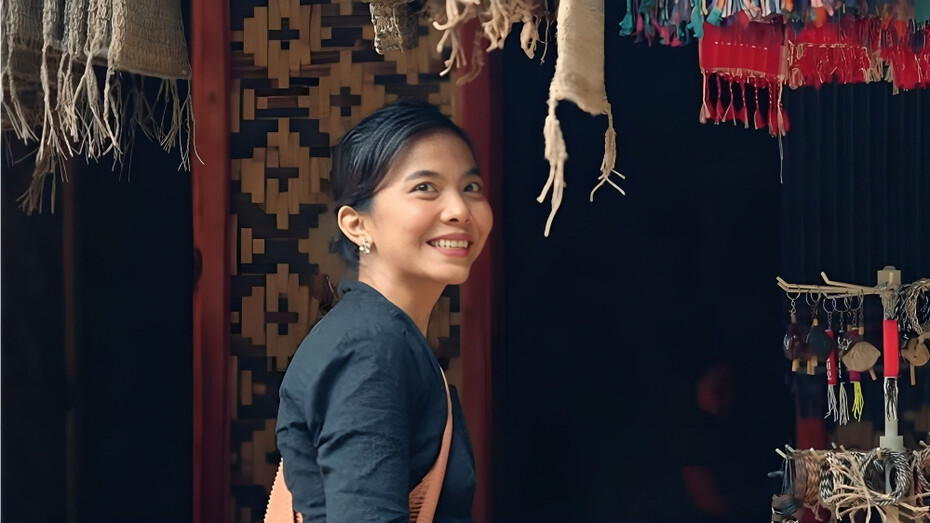
Just 120 kilometers from the bustle of Jakarta lies a world untouched by modern convenience. Nestled in the Leuwidamar subdistrict of Banten’s Lebak Regency, the Baduy people live in quiet resistance to the pace of the outside world. Often referred to as “the Amish of Indonesia,” the Baduy offer a living portrait of an ancient way of life—one rooted in harmony with nature, ancestral laws, and spiritual discipline.
The mysterious origin
What’s always fascinated me about the Baduy isn’t just their lifestyle—it’s the mystery that surrounds their beginnings. No one can say for certain when they began living in the Kendeng Mountains or where they came from before that. As a Sundanese myself, I grew up hearing whispers about them—almost like folklore. A hidden community in the forest, untouched by modernity, bound to ancestral rules.
What we do know is this: they inhabit a protected 5,200-hectare reserve in Banten. The Baduy people, numbering over 13,000, are divided into two clans: the Baduy Dalam (Inner Baduy), who strictly uphold traditional laws and are forbidden from leaving their territory, and the Baduy Luar (Outer Baduy), who serve as a cultural buffer, allowed limited interaction with the outside world but still living under sacred restrictions.
During my visit, I stayed with Pak Sarpin, a Baduy Luar member who graciously hosted us. After dinners of boiled cassava and tea, we’d sit beneath an oil lamp and talk. “There are 65 villages right now,” he told me. “Soon, we’ll have 67, as two new ones are being built.”
I asked him how a society with no formal government functions.
“The main authority is still the Inner Baduy, the Puun,” he explained. “They live in Cibeo and Cikeusik. Here in Baduy Luar, we have Jaro Seven, our council. They handle rituals, weddings, festivals—everything.”
Jaro Seven has become vital as Baduy Luar gradually opens to outsiders. “Tourism helps us sell our weaving and crafts,” he said, “but it also brings change. Some of it good, some of it too fast.”
Despite having no formal bureaucracy, the Baduy have a social structure grounded in reverence. The Puun are like silent high priests—respected, never boastful. Their wisdom isn’t broadcast. It’s lived.
A walk into another world
My first morning in Baduy began with the crow of a rooster—not gently, but cartoonishly loud. I had to walk down barefoot to the Ciujung River, which flows from the Baduy forest all the way to Rangkasbitung. This 142-kilometer river is sacred. No soap. No chemicals. I washed using leaves that grew nearby. At first it felt strange, but the icy water was enough to make me feel clean without needing anything else.
The Baduy follow Sunda Wiwitan, an ancestral spiritual philosophy. Reverence for nature is woven into everything—from how they bathe, to how they build homes, to what they eat. Any act that pollutes or disrupts nature is not just a mistake—it’s a sin.
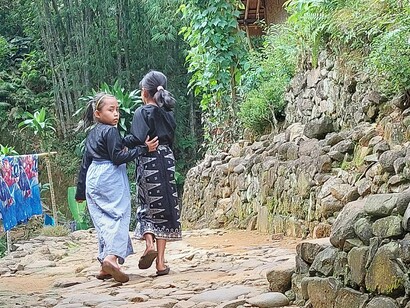
There are no vehicles here. You walk everywhere. As I made my way back to Pak Sarpin’s home, I observed the rhythm of morning: men heading to the fields, lean and strong from real labour. Women drying bananas, weaving, and cleaning. Children running barefoot on compacted earth.
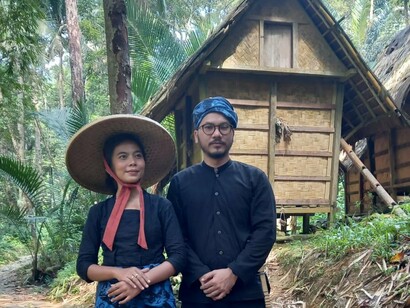
Though I wore a black kebaya and navy batik sarong like the locals, they still knew I was an outsider at first. But because I speak Sundanese fluently, conversation came naturally. People slowly warmed up, and by the fourth day, some mistook me for Pak Sarpin’s in-law. It was the first time blending in felt like a sincere gesture rather than a performance. And for them, that mattered.
Time moves differently here. Without notifications, deadlines, or traffic, I found myself breathing slower. It felt indulgent to do nothing. But maybe that was the point—to unlearn urgency.
Tradition vs. survival
I spent a lot of time reading, and eventually Pak Sarpin’s son, Marno, noticed. I was surprised to learn that he and his brother could read and write—despite formal education being forbidden in the Baduy worldview. Literacy is often frowned upon, seen as a threat to oral tradition.
Yet Marno and his brother quietly started “Baduy Membaca”—a reading club for children. After farming hours, he teaches them the alphabet in Sundanese.
“Even if we don’t go to school,” he said, “our parents still want us to be able to read contracts, signs, and packaging. It helps us avoid being tricked.”
That’s especially relevant now that Baduy Luar has opened to tourism. Reading became necessary for survival. Though met with initial resistance, literacy has gained quiet acceptance. Many now can write simple sentences—even if they’ve never entered a classroom.
Tourism brought fear at first. Locals worried it would disrupt their way of life. But Baduy tourism remains niche—precisely because they refuse to stage spectacles. There are no curated shows, no souvenirs with QR codes. Everything is slow, real, and quiet. And maybe that’s why it feels so profound.
The unique discovery
On my third day, I walked to Gajeboh Village, where I met two musicians: Pak Ijom and Jone. Outside Ijom’s home, a peculiar-looking suling (bamboo flute) caught my eye. Curious, I asked about it. He invited me in, served me tea, and began to play his handmade kecapi (zither), while Jone joined in with the flute.
The sound was unlike anything I’d heard before—mournful, textured, and unexpectedly haunting. Ijom explained that they use the pelog scale, a tuning system more commonly associated with Javanese gamelan, not Sundanese music.
“We play for fun,” he said, “but also for weddings and harvest rituals. In the past, every young person had to learn. Now, not many are interested anymore.”
Their music wasn’t just performance—it felt like a living archive. Cultural memory translated into melody, played with weathered hands.
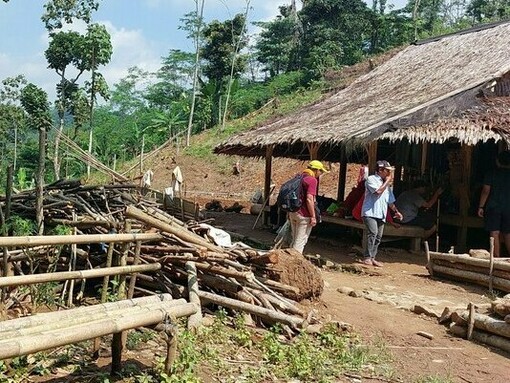
As it turned out, my timing was fortuitous. A wedding was about to be held in the village, and I was invited to witness the preparations. In Baduy tradition, weddings are not just family affairs—they're communal ones. The entire village gets involved. There is no RSVP, no catering service. Instead, everyone plays a role, from peeling bananas to stirring great pots of sticky rice.
In this world, money isn’t the only currency. Labour is love. The act of helping—serving food, preparing wajit, wrapping snacks in banana leaves—is how closeness is measured. You don’t give gifts. You give your time, your sweat, and your attention.
In some villages, the men cook wajit, a sticky and heavy mixture that requires muscle and patience. Women handle preparation—slicing, wrapping, and arranging. No one rushes. There’s laughter. Children run between houses. And even as an outsider, I was handed a task and welcomed into the rhythm of it.
The art of weaving
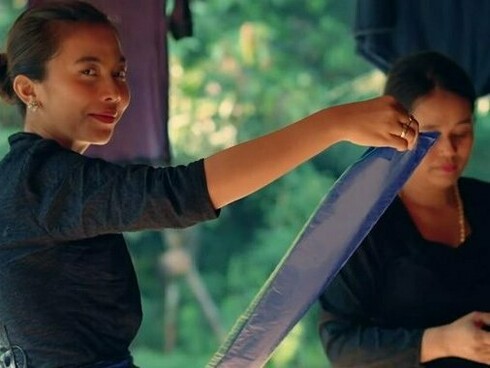
Back at my host village, I spent time weaving with Ambu, my host mother. She has no daughters of her own but mentors 17 young women. She took me in without hesitation.
Baduy ikat is woven from local cotton, dyed with natural pigments, and created entirely by hand. Each motif carries meaning—Sowat Camata for weddings and Sowat Songket for sacred ceremonies.
“We weave not just to sell,” Ambu said, “but to fill the days between harvests. It keeps us grounded. And it keeps gossip away,” she added with a wink.
Before the pandemic, she and her team could complete up to 20 pieces per month. Now, with tourism slower, output has dipped—but the spirit remains. Her works have been displayed in Jakarta expos, and she beams every time someone shows her a photo of a woman wearing Baduy motifs. “It feels like a part of us has travelled,” she said.
Because I dressed like everyone else and spoke their language, villagers stopped seeing me as a guest. “You don’t look like a stranger,” Ambu once told me. And she meant it. Some even mistook me for a relative. That sense of belonging—however fleeting—was a gift.
A tender exit
I only stayed for five days, but the experience unravelled something in me. Yes, it was off-grid—but never isolating. In fact, I felt more connected. Not just to people, but to the rhythm of the day, the scent of woven fabric, and the sound of knees brushing against wooden floors.
There’s great wisdom here. Not the kind that shouts, but the kind that lingers in silence.
Before I left, Ambu pressed a woven bracelet into my palm. “Wear it when you miss the forest,” she said.
I do. Often.