English
 Español
 Français
 Deutsch
 Italiano
 Português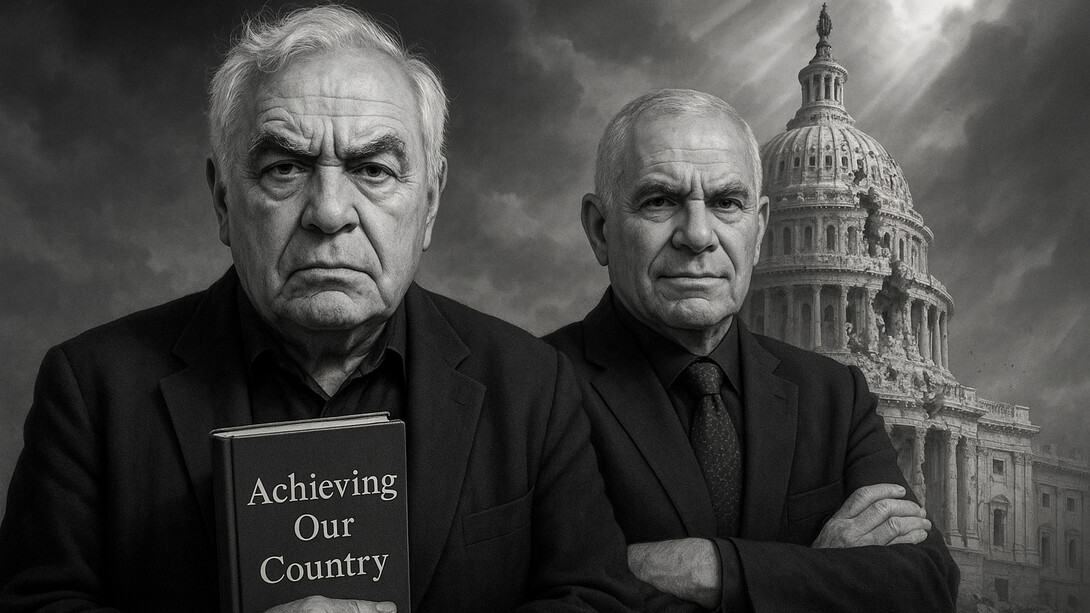
Woe to the country that ignores its philosophers and historians! Germany did so during the Weimar Republic and paid for it with the destruction of the country in World War II. In the United States of America, many believe that their country is not suited to comparisons with experiences of this kind. The illusion of uniqueness has become entrenched in the theory of American exceptionalism. It underpins Americans' self-confidence and is useful in that respect. But it is also a weakness, because it makes the US deaf to historical warnings.
However, it is not entirely wrong to think that what has happened in other countries is not possible here. History rarely repeats exactly what happened elsewhere. Rather, it opens new abysses. And it does so constantly. It is therefore not the repetition of the same crash, but the probability of falling into a genuinely new abyss that makes it necessary to consider historical warnings instead of ignoring them.
The abysses that could open are often foreshadowed in the nightmares of critical observers of a society. Of course, historians and philosophers are not the only ones standing guard. They are joined by many journalists and bloggers, influencers and evangelists, traditional and new media. No wonder, then, that most prophets initially drown in the surf of diverse opinions, commentary, and predictions. That is the lot of prophets. The nightmare that comes true is the exception. It reappears, more intense, demanding to be heard.
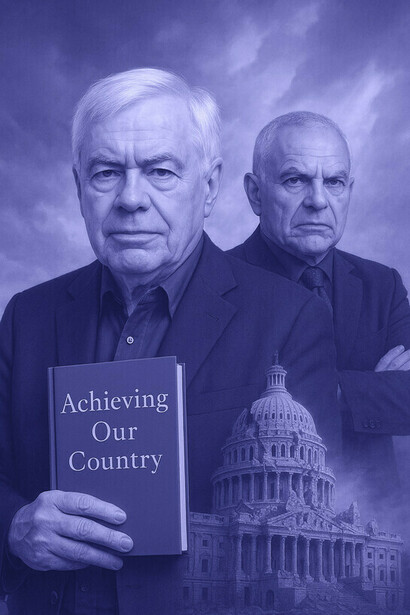
In 1998, American philosopher Richard Rorty described such a nightmare in his book Achieving Our Country, drawing on the work of Romanian American military strategist and political scientist Edward Luttwak. At first, Luttwak’s and Rorty’s words fell on deaf ears. After Donald Trump’s election victory in 2016, however, they were no longer ignored.1 And now, after Trump’s avoidable re-election, the old question of learning from history arises once again: Is it possible to draw lessons for the future from the verification of social nightmares?
The real nightmare
But first, let’s look at the text of the prediction, which has been verified twice by Trump’s two elections. Rorty warned of the danger of a populist takeover by a strongman in a passage of his book. His prophecy was expressed in four paragraphs:
Many writers on socioeconomic policy have warned that the old industrialized democracies are heading into a Weimar-like period, one in which populist movements are likely to overturn constitutional governments. Edward Luttwak, for example, has suggested that fascism may be the American future.2 The point of his book “The Endangered American Dream” is that members of labor unions and unorganized unskilled workers will sooner or later realize that their government is not even trying to prevent wages from sinking or to prevent jobs from being exported. Around the same time, they will realize that suburban white-collar workers–themselves desperately afraid of being downsized–are not going to let themselves be taxed to provide social benefits for anyone else.
At that point, something will crack. The nonsuburban electorate will decide that the system has failed and start looking around for a strongman to vote for – someone willing to assure them that, once he is elected, the smug bureaucrats, tricky lawyers, overpaid bond salesmen, and postmodernist professors will no longer be calling the shots. A scenario like that of Sinclair Lewis’ novel “It Can’t Happen Here” may then be played out. For once, such a strongman takes office, nobody can predict what will happen. In 1932, most of the predictions made about what would happen if Hindenburg named Hitler chancellor were wildly overoptimistic.
One thing that is very likely to happen is that the gains made in the past forty years by black and brown Americans, and by homosexuals, will be wiped out. Jocular contempt for women will come back into fashion. The words ‘nigger’ and ‘kike’ will once again be heard in the workplace. All the sadism which the academic Left has tried to make unacceptable to its students will come flooding back. All the resentment which badly educated Americans feel about having their manners dictated to them by college graduates will find an outlet.
But such a renewal of sadism will not alter the effects of selfishness. For after my imagined strongman takes charge, he will quickly make his peace with the international superrich, just as Hitler made his with the German industrialists. He will invoke the glorious memory of the Gulf War to provoke military adventures, which will generate short-term prosperity. He will be a disaster for the country and the world. People will wonder why there was so little resistance to his evitable rise. Why was it only rightists like Buchanan3 who spoke to the workers about the consequences of globalization? Why could not the Left channel the mounting rage of the newly dispossessed?4
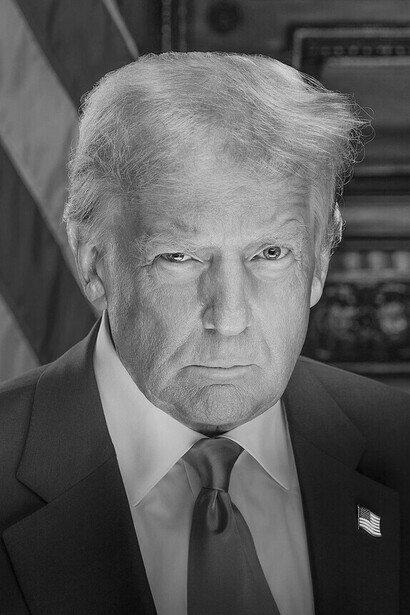
Donald Trump
The decision that Rorty saw coming for the American future more than a quarter of a century ago has been made. The poorer voters have broken with the established order of the country, and a strongman has been elected twice. The general question – How could this happen? – as well as the specific questions at the end of Rorty’s prescient reflections are easy to answer. The American left, in which the philosopher had placed his hopes, had developed other interests and had long since ceased to live on the margins, but instead lived comfortably in the academic milieu.
For citizens with secure jobs, higher incomes, and good education, the downside of economic globalization was not a real problem and was hardly noticeable. Postmodernist professors could tease intellectual sparks out of globalization and concern themselves with seemingly abstruse issues such as politically correct pronouns. Anyone who, like Bertolt Brecht’s Mack the Knife, was at home in the dark knew this, of course: “There are some who are in darkness / And the others are in light. / And you see the ones in brightness / Those in darkness drop from sight.” Or, to put it another way: those citizens who lived in brightness saw little and felt nothing of what economic globalization was doing in the shadows.
Trump had bet early on the anger of the losers in the globalization lottery. He recognized his driving force in Hillary Clinton’s “deplorables”. And now, after his re-inauguration on 20 January 2025, he is realizing Rorty’s nightmare with tremendous vigor and beyond all measure.
In addition, Trump and his government aides are exacerbating political polarization in the US in a manner reminiscent of Weimar; they are pursuing the interests of their populist movement against immigrants without regard for the dictates of the US Constitution; and they are acting as brutally as possible against anyone they have declared to be internal and external enemies of the president (and, in their eyes, of America). This also includes Trump’s unabashed expression of the ultra-nationalist values of fascism, including its anti-intellectualism, authoritarianism, social Darwinism, and expansionism; and his favoritism toward billionaires who have flocked to him and companies that comply with his wishes and dictates.
What the nightmare did not anticipate, however, is that Trump has not only long been vocal about the miserable experience of American industrial workers – the outsourcing of their jobs to low-wage countries – but has now also made it the cornerstone of his bellicose trade policy in line with MAGA.5 Like everything Trump touches, the intention to revitalize the US as an industrial location is, of course, primarily selfish and designed to keep his voters on board. Nevertheless, the declaration of war against the export of industrial jobs and for their repatriation or reestablishment in the country goes beyond that. It articulates a legitimate political goal. In other words, Trump’s anti-globalization policy serves a good cause in and of itself.
First strongman assessment
However, one must ask oneself, what is the point of looking at someone like Trump in detail and then not finding everything bad about him? Hitler and Stalin also did some “good” in a limited sense, when they built highways and industrialized the Soviet Union, for example. Strongmen are cut from one cloth. They do not allow individual aspects to be taken out of their entirety. You can only take them as a whole. We must therefore judge them in their entirety. The overall picture of Trump’s conversion of all civil norms and traditions in the United States includes the restoration of traditional prejudices against women, homosexuals, brown, and black Americans. A sadistic climax was the televised choreography of the deportation of shaven-headed Venezuelans to a notorious high-security prison in El Salvador in April of 2025.
A resurgence of prejudice against Jews, which the nightmare also predicted, is not desirable at present. This is also a good thing, even though the Trump administration’s anti-anti-Semitism is primarily a tool against pro-Palestinian student protests. These protests are, of course, only indirectly relevant, namely as a convenient opportunity to strike fear into the hearts of liberal American elite universities such as Columbia University in New York. The latter – the state sabotage of outstanding American research universities – will not make America greater, but smaller.
And when you also consider everything that has become clear and happened locally and globally in the first months of Trump’s second term (apart from the “well-intentioned” but incoherent tariff policy), then you must describe Trump and Trumpism, as predicted in the nightmare, as a disaster for America and the whole world.
Trump’s negative record at the national level includes:
The constant circumvention of the rule of law through unconstitutional actions and decrees.
The appointment of loyalists to cabinet posts and government offices without regard for the necessary skills.
The entrusting of Elon Musk with the implementation of radical government reform, disregarding the billionaire’s conflicts of interest.
The informal influence of conspiracy theorists such as Laura Loomer over important personnel decisions.6
The undermining of scientific expertise by empowering environmental, climate change, and vaccine skeptics, such as Robert Kennedy.
Trump’s preliminary record on the international stage is even more damning. Its entries point to government policies that are global in scope, affect far more people than just Americans, and are fundamentally designed to undermine democratic structures with autocratic and illiberal practices. Among other things, it lists:
The high-level support of all populist European parties, including the far-right German AfD, by Musk, Stephen Bannon, and US Vice President J.D. Vance.
The public rebuke of Ukrainian President Volodymyr Zelenskyy by Trump and Vance in the Oval Office of the White House at the end of February, followed by the defamation of Zelenskyy as “dictator” without elections.
The U-turn from strong support for Ukraine to embracing Putin’s propaganda lie that blames Ukraine for the Russian invasion.
The weakening of Western democracies through Trump’s exchange of declarations of friendship with Putin and simultaneous distancing from Europe by questioning the continuing American interest in the Atlantic Alliance (NATO).
The repeated announcement of US territorial claims to Greenland, Canada, Panama, and Gaza, thereby indirectly accepting Russian, Chinese, and American spheres of influence.
The wanton destruction of the US’s political and economic capital of trust through wild tariff wars that negate the difference between America’s friends and enemies, and make the country unpredictable.
For Trump, unpredictability has paid off and proven to be a personal strength against his opponents. But for America and the world, it is an invitation to disaster.
Retrospective prophet assessment
Why did the political elites in the US fail to see at the beginning of the Trump era in 2016 what an American thinker had already predicted in 1998? Everyone heard Trump’s dark tirades, saw his demagogic appearances, shook their heads at the common folk who supported him, and dismissed the whole thing as a circus that occasionally pops up and then moves on. But that’s not what happened. On the contrary, Trump and Trumpism have overwhelmed the center-left and center-right establishments of both parties in a double coup. The old elites have been disempowered. Trump’s Republicans kowtow to their strongman, and the Democrats are at a loss.
When we ask ourselves what we can learn from such ignorance, we will probably find nothing earth-shattering, only the depressing fact that it is regularly too late when the warning “arrives” and is heard. Perhaps we should concern ourselves less with the hard-of-hearing in history, who always have all sorts of reasons for not listening fully to nightmares, and more with the Luttwaks and Rortys, who are surely haunted for a reason by nightmares that become true.
What distinguishes these people who rightly saw catastrophic things heading toward their world? Wouldn’t the authors of nightmares come true be worth a historical study? It would be useful to know a little more about what makes a reliable prophet.
Notes
1 These Academics Foresaw That Working-Class Resentment Would Lead to Trump by Sam Roudman on New York Magazine.
2 Edward Luttwak: Why Fascism is the Wave of the Future by Edward Luttwak on London Review of Books. See also Edward N. Luttwak: The Endangered American Dream. How to stop the United States from becoming a third-world country and how to win the geo-economic struggle for industrial supremacy. New York, 1993.
3 Patrick Joseph (Pat) Buchanan, a “paleoconservative” Republican politician and commentator who fought against the “neoconservative” orthodoxy of his party.
4 Richard Rorty: Achieving Our Country: Leftist Thought in Twentieth-Century America. Cambridge, Mass.: Harvard University Press, 1998, p. 89-91.
5 MAGA is the battle cry of the Trumpists and stands for Make America Great Again.
6 Trump Fires 6 N.S.C. Officials After Oval Office Meeting With Laura Loomer on the New York Times. See also Laura Loomer on Wikipedia.