English
 Español
 Français
 Deutsch
 Italiano
 Português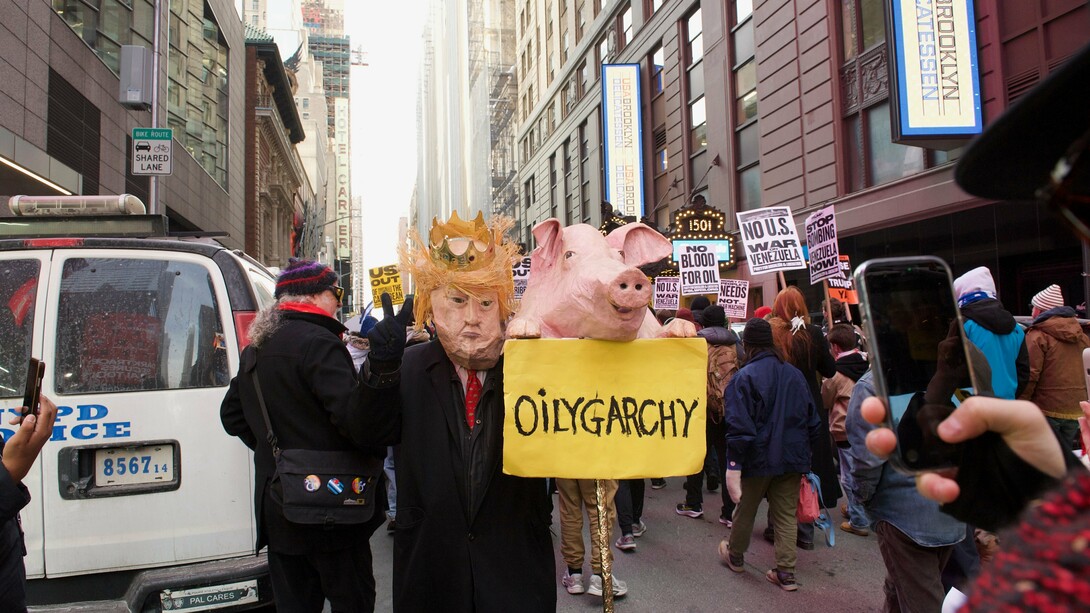
The capture of President Nicolás Maduro in a US commando operation in the early hours of 3 January was the culmination of four months of hard power. It began with verbal warnings, followed by a show of force involving the aircraft carrier USS Gerald R. Ford and a fleet of other ships off the Venezuelan coast. Fighter jets were also deployed in support of the operation, and, in preparation for the final objective, 35 boats carrying drugs were destroyed in the Caribbean Sea and the Pacific Ocean, resulting in the deaths of more than 100 people.
President Trump's decision to depose Maduro was clear; the ships, planes, and troops were not going to withdraw without achieving their objective, as this would have been a significant political setback. Russia did something similar in November 2021, deploying over 100,000 troops and tanks to the Ukrainian border. The invasion finally began on 21 February 2022, and the war continues to this day.
But is this the first time that Venezuela has been blockaded and bombed by naval forces?
No — between 1902 and 1903, the German and British empires, together with the Kingdom of Italy, conducted a naval blockade of Venezuela. They subsequently bombed part of the Venezuelan coast and some ships, demanding that the government of Cipriano Castro (1899–1908) pay outstanding debts from internal wars. Bombings and the persecution of ships continued until the United States finally mediated, under the government of Theodore Roosevelt (1901–1909), leading Venezuela to accept payment of the debt.
This established the Monroe Doctrine, inspired by the thinking of American President James Monroe (1817–1825), which prevented European forces from having ambitions on the continent. Roosevelt established the first corollary, 'America for the United States', and President Donald Trump has established the second, defining the new doctrine as 'Donroe': complete control of the continent and preventing extra-continental powers, namely China, from accessing critical infrastructure and strategic military resources.
The regime established in Venezuela in 1999, when Commander Hugo Chávez won democratic elections imbued with nationalist, patriotic, anti-imperialist, and leftist sentiments, aroused sympathy and enjoyed legitimacy and popularity after years of civilian governments being accused of corruption. With the support of high oil prices, Chávez was able to provide financial aid to small Caribbean states and Cuba. This coincided with the so-called 'pink tide' of leftist governments in several South American countries in the first decade of this century.
However, President Chávez quickly drifted towards a militaristic system closely linked to the Cuban government led by Fidel Castro until 2006. Following Chávez's death in 2013, Nicolás Maduro assumed the presidency, accentuating caudillismo and populism. This led to a regime that has been accused of serious human rights violations, corruption, the persecution of opponents, and the imprisonment of thousands of political prisoners.
The regime has also been accused of falsifying the last elections, in which Maduro was clearly defeated by Edmundo González, who obtained 67% of the vote against Maduro's 30%. The military established itself as a powerful institution; the Venezuelan armed forces grew from just over 300 generals and admirals in the 1990s to around 1,000 by 2010. By 2020, it was estimated that this figure had grown to over 2,000 — more than in the United States and Russia, and similar to the total number of high-ranking uniformed personnel in the EU, close to 2,300.
Venezuela is a country rich in natural resources and is estimated to hold 18% of the world's oil reserves. In the 1990s, Venezuelan and US companies produced around three million barrels of oil per day; today, this figure has fallen to around 800 thousand barrels per day. The economic crisis, characterized by falling investment, currency devaluation, high inflation, unemployment, and a lack of confidence in the future, has caused around eight million Venezuelans to emigrate.
For this reason, the military operation ordered by President Trump is seen as an act of liberation by large sections of Venezuelan society. However, the accusation of drug trafficking against Maduro remains in doubt. Furthermore, in December last year, President Trump pardoned former Honduran president Juan Orlando Hernández, who had been sentenced by the US justice system to 45 years in prison for smuggling 400 kilograms of cocaine into the United States.
Until President Trump mentioned it, what was never clearly stated is that Washington's main goal is to gain access to Venezuelan oil, not to combat the alleged illicit trafficking of narcotics or defend democracy. In addition to oil, Venezuela has rare earths, gold, iron, diamonds, and many other natural resources. In other words, this is a return to a past that seemed to have been overcome. The United States has conducted more than 40 direct or indirect interventions to overthrow governments in Latin America and install dictators to protect its interests. The CIA's first operation on the continent was in Guatemala in 1954, when it overthrew the government of Jacobo Arbenz, who had initiated a process of agrarian reform affecting the US company United Fruit. Co. In the context of the Cold War, a campaign based on terror and fear of communism was developed, culminating in a coup d'état and putting an end to dreams of distributing land to peasants.
Just as Somoza in Nicaragua, Trujillo in the Dominican Republic, and Batista in Cuba came to power as dictators, so too did Castelo Branco, Onganía, Pinochet, Videl,a and Banzer in South America, all of whom were supported by Washington. The interventions have never been motivated by a desire to defend democracy, but rather by a wish to protect economic interests or for security reasons. The last US military invasions to depose governments occurred in 1983 on the small island of Grenada and in 1989 in Panama, where dictator Manuel Noriega was captured for drug trafficking and for his impact on US interests in the canal.
Interests, force, and power are what the administration of President Trump has imposed on Venezuela. International law has not been considered because there are no consequences for those who disregard it. Who can punish the United States? This has been the case in the past, and what has happened in Venezuela cannot be attributed solely to President Trump.
During the administration of Democratic President Bill Clinton, NATO, led by the United States and with the collusion of its member countries, bombed Serbia for 78 days outside the legality of the United Nations. Washington then disregarded Serbia's sovereignty and borders to create a fictitious, independent country: Kosovo, which is not recognized by all European states, and which today hosts a major US military base.
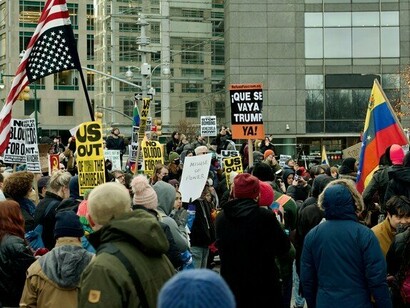
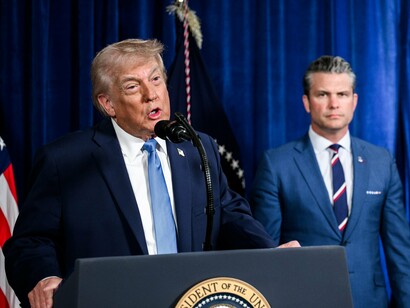
Due to President Trump's statements that he will “administer the country until there is a safe transition” and that he will rule from Washington, Venezuela is effectively being turned into a kind of US protectorate. This legitimizes the current succession in the hands of Vice President Delcy Rodríguez and an important part of the ruling civil-military leadership, at least for now. The person appointed ambassador to Caracas will be more than a diplomat; they will be a governor. There has been no mention of elections, restoring democracy, or respecting human rights, but President Trump has warned that if Washington's demands are not met, there will be new and much more devastating attacks.
Trump has announced that the United States will purchase between 30 and 50 million barrels of Venezuelan crude oil at market price. The message is clear not only to countries within Washington's strategic sphere of influence: Mexico, Colombia, Brazil, and Nicaragua, but also to NATO and EU partner Denmark. Greenland, which has been part of the Kingdom of Denmark since 1814, has been put on notice: the United States will negotiate, buy, or take it by force.
In other words, this is an ongoing operation, and Washington will not change its mind. The consequences must have been assessed, but the value of the rare earths, lithium, oil, gas and other natural resources found in Greenland's territory, which covers more than two million square kilometers, as well as the melting of the Arctic ice cap — which opens up new sea routes — are the real reasons for the decision to take Greenland, despite Trump's denial of climate change and not the presence of Russian or Chinese ships or submarines. This would mean breaking another treaty, raising the question of whether the United States would want to withdraw from NATO or cease to exist as it does today. In 2025, the United States spent nearly $960 billion on the alliance, which is more than all the other 31 countries combined spent ($510 billion).
If the vision of a new international order based on spheres of influence and bilateral alliances were to consolidate, Europe would be relegated to a secondary role.
Finally, we are constantly surprised by news from Washington. President Trump is the ultimate expression of unbridled capitalism in all its savage forms; he is the new face of imperialism. He has announced his country's withdrawal from over 60 international organizations, particularly those related to the environment, climate action, and democracy. Multilateralism, international law, and the rules established at the end of World War II are losing authority every day, which is the most obvious sign of the collapse of the international system or order that we have known until now. This leaves the weakest countries defenseless and consolidates force as the supreme law.