English
 Español
 Français
 Deutsch
 Italiano
 Português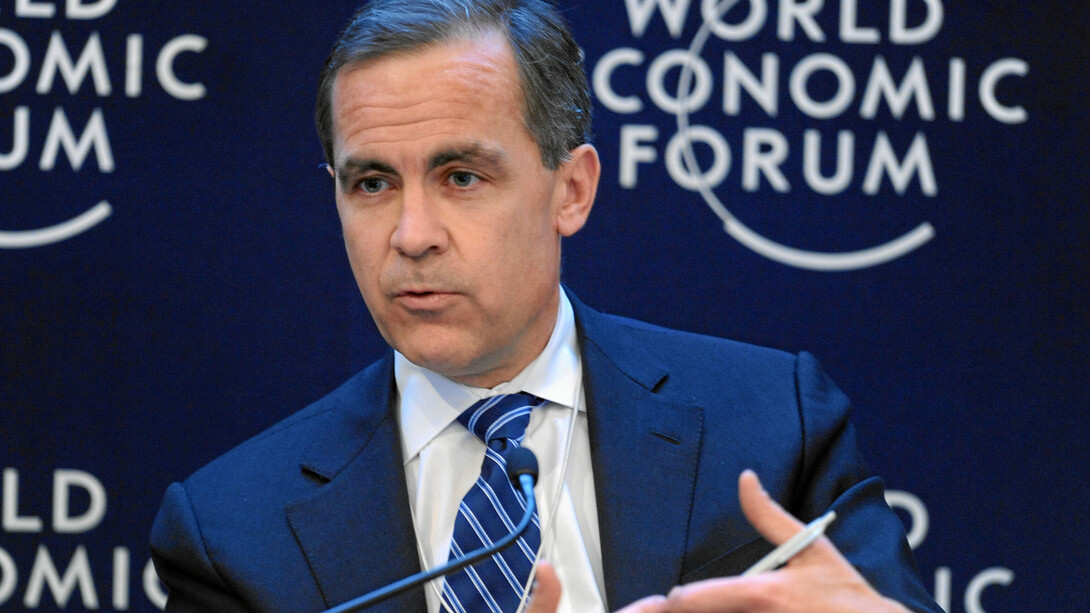
Canadian Prime Minister Mark Carney’s speech at Davos, Switzerland, on January 21st, 2026, was groundbreaking in its honesty and prescient in its vision of what must be done next. The older world system, he declared, was a “rules-based” system that led to stability and prosperity even though it was hypocritical and selective in how it applied the rules.
“Middle powers” (like Canada and European nations), he stated, went along with it even though their “value-based” orientations were sometimes challenged by the selective use of the “rules” by the great powers. One can assume he means the US global hegemony since the Second World War, under which Canada, Western Europe, and many other nations functioned reasonably well: “we could pursue value-based policies under its protection.”
Apparently, Carney thinks that international aggression and destruction of designated “enemy” nations fall within the scope of “value-based policies.” Canada was deeply militarily involved in the Vietnam War (which caused the deaths of an estimated 4 million people in Southeast Asia), in the destruction of the former Yugoslavia, in the aggression and occupation of Afghanistan, in the invasion and destruction of Iraq, and in the crushing of the stable government of Libya in 2011 (which resulted in horrific social chaos and disintegration within that country and helped spread terrorism internationally).
Now, Carney declares, we face a “rupture,” not a transition within a similar situation but a real break that calls for a serious revaluation of the policy of cooperating with the hegemon in the interest of one’s own stability and prosperity.
A critic might observe that Canada was willing to engage in the crushing and destruction of countries worldwide as a lackey of the hegemon until the hegemon turned its cynical eyes of domination and aggression toward its own lackeys. Then, suddenly, there is a “rupture” as the lackeys face the consequences of their own cynical “value-based” cruelty and inhumanity.
Carney puts it this way, through a parable from Václav Havel about how the Communist regime retained its power:
“Every morning, this shopkeeper places a sign in his window: ‘Workers of the world unite’. He doesn’t believe it, no one does, but he places a sign anyway to avoid trouble, to signal compliance, to get along. And because every shopkeeper on every street does the same, the system persists – not through violence alone, but through the participation of ordinary people in rituals they privately know to be false. Havel called this ‘living within a lie.’ The system’s power comes not from its truth, but from everyone’s willingness to perform as if it were true, and its fragility comes from the same source. When even one person stops performing, when the greengrocer removes his sign, the illusion begins to crack. Friends, it is time for companies and countries to take their signs down.”
It is time for the lackeys to take their signs down and form their own alliances to protect themselves from the predations of the hegemon. But they were all willing predators when it came to the old order in which they thought they were protected because of their obedience to its evil empire.
Carney asserts that the middle powers must now take an independent course and ally with one another, and they will be able to be more value-based and less hypocritical and selective. Canada has joined the military organization SAFE (Security Alliance for Europe) and has entered into trade deals with multiple countries, so that it is no longer economically dependent on the hegemon.
He declares: “Over the past two decades, a series of crises in finance, health, energy, and geopolitics have laid bare the risks of extreme global integration. But more recently, great powers have begun using economic integration as weapons, tariffs as leverage, financial infrastructure as coercion, supply chains as vulnerabilities to be exploited…. The multilateral institutions on which the middle powers have relied – the WTO, the UN, the COP – the architecture, the very architecture of collective problem solving, are under threat.”
Are these institutions under threat because the hegemon has recently begun the weaponization of the rules-based system, or are they under threat because the lackeys enabled the monster? Did the crises in finance, health, energy, and geopolitics of the past two decades happen because of the hegemon or because Carney personally was governor of the Bank of Canada and then head of the Bank of England from 2013 to 2020? Did these crises occur because of the predatory neoliberal capitalism that Carney promoted, or were they solely the fault of the hegemon?
The COP (Conference of the Parties) group is the ultimate decision-making body for the UN Convention on Climate Change, with 197 signatory nations. Like the UN in relation to war, COP represents an extreme failure to protect the environment or mitigate climate change. The lackey nations of the world clearly bear major responsibility for these failures. How many leaders have spoken the truth about the world disorder at the UN as did the President of Colombia, Gustavo Petro, in September 2025? Certainly, none of the European or Canadian lackeys of the empire.
In this new era, after the “rupture,” the middle powers, Carney urges, must practice a “Value-based realism”:
“Or, to put another way, we aim to be both principled and pragmatic – principled in our commitment to fundamental values, sovereignty, territorial integrity, the prohibition of the use of force, except when consistent with the UN Charter, and respect for human rights, and pragmatic in recognizing that progress is often incremental, that interests diverge, that not every partner will share all of our values.”
Here, the contradiction becomes stark: “value-based” and “realism” contradict one another. “Realism,” going all the way back to Hans Morgenthau’s 1948 book Politics Among Nations, means value-free power politics. The sole criterion of relations among nations is “power”; values have nothing to do with it. To speak of a value-based realism” is mere rhetoric according to the doctrine of geopolitical realism.
Concerning the “value” of sovereignty, entire libraries could be filled with the literature generated since the 17th century on the unworkability of the system of nation-state sovereignty. It is inherently a “war-system,” and that is why Carney’s recommended solution to the “middle-powers” is further militarization, not the ending of war, but increasing their strength vis-à-vis the great powers.
And this war-system is directly linked to global capitalism with its search for markets, resources, cheap labor, and its incapacity to deal with climate collapse (as Carney says, Canada will maximize exploitation of its “energy” resources—read: “fossil fuels”). In terms of the world system that has been in place since the 17th century, there has not been the slightest rupture.
The “middle-powers” are simply reorganizing for more of the same. Perhaps, by aligning with one another closely, they will become one of the “great powers,” along with Russia, China, and the USA. But this will change nothing. The threat of nuclear war wiping out all of humanity continues to increase, the climate continues to collapse, and the world-system that has caused these existential threats to human existence will not change in the slightest after Carney’s proclaimed “rupture” and new direction.
Kant already knew that this world system was an inhuman war-system in his 1795 essay, “Perpetual Peace.” Emery Reves, in the Anatomy of Peace, along with Albert Einstein and Mahatma Gandhi, stated this clearly at the conclusion of the Second World War, and many prominent thinkers today know it as well, at least since the time of Buckminster Fuller’s insightful 1972 book Operating Manual for Spaceship Earth.
This system that began some 350 years ago is destroying the ecosystem of our planet and threatening nuclear holocaust. You cannot have a “realism” that affirms and works within this system at the same time that you have a “value-based” approach. If Carney truly believed in “human rights,” he would be a leader in changing the system itself. In 2021, Christian global thinker David Ray Griffin declared correctly that “global democracy is necessary for the survival of the human race” (2021, 113).
The UN Universal Declaration of Human Rights of 1948 declared that respect for everyone’s dignity was the source of peace, justice, and freedom in the world. But capitalism continues to maintain a world in which one billion people live in horrible poverty and misery while a few live with unimaginable wealth.
At the same time, the nation-states are unable to end the war system, even in the era of weapons of mass destruction. A real values-based system is found in the Constitution for the Federation of Earth.1 Human beings are the same everywhere—everywhere we want prosperity, peace, justice, freedom, and environmental health. System change from “political realism” to an authentic “value-based” approach is necessary for this to happen.
Institutional respect for universal dignity and universal human rights is only possible when there are global institutions in place with the authority to disarm the nations and protect the rights of all people everywhere. We cannot achieve these things because we are not united. We are not only fragmented into “sovereign” nations, but we also maintain a fragmented system of exploitation of both nature and people, in which the private accumulation of wealth supersedes both ecological sustainability and human dignity.
Yet Carney is buckling down on this globalized economic system: “Since my government took office, we have cut taxes on incomes, on capital gains and business investment. We have removed all federal barriers to interprovincial trade. We are fast-tracking a trillion dollars of investments in energy, AI, critical minerals, new trade corridors and beyond. We’re doubling our defence spending by the end of this decade, and we’re doing so in ways that build our domestic industries.”
This is a direct quote because you can’t make this stuff up. Canada is freeing up the ability of the wealthy to invest and the fluidity of transnational capital to exploit people and resources worldwide.
Carney is empowering the fossil fuel industry of Canada and enhancing Canada’s militarization. He is buckling down on the “value-based” idea of national sovereignty. But it is precisely a fragmented world of some 194 national “sovereignties” that requires this absurd waste of resources on war and war preparations, while we should be spending our resources on conversion to sustainability.
“Sovereignty” is a false value, a kind of Antichrist among values. Freedom, independence, and self-determination for both nations and persons can only be found in a cooperative world system that ends war and protects the environment. We are all interdependent on this tiny planet, and true self-determination requires a system that protects, empowers, and makes such freedom possible. The only true democratic sovereignty belongs to the united people of Earth, not to militarized territorial fragments.
Here is a chart of values that will necessarily emerge from the unification of humanity under the Earth Constitution:

Genuine dialogue will supersede propaganda statements like Carney’s “value-based realism.” Nonviolence will become reality in a disarmed world. Dignity will actually be institutionalized in a world with no more poverty, torture, or genocides. Democracy will become real for the first time because the capacity of the rich to distort and derail authentic democracy will be brought under control.
Kindness and compassion will be able to flourish because hate and fear will no longer need to motivate people. Diversity will be respected precisely because humanity will have discovered unity and planetary solidarity. Justice means that economics will no longer destroy reasonable equality and the right of everyone to a decent standard of living. The ecology of our planet will be restored and protected using all the money formerly dedicated to war and defense.
And genuine education, designed to enable the human potential of every person on Earth, will be possible for the first time in history.
We should not be fooled by the “multipolar” world that Carney is advancing and that the BRICS movement is already far along in developing. It is simply the same world system in sheep’s clothing. Does Carney think the hegemon will stop lashing out now that its former lackeys have united independently?
Does anyone truly think that empowering the energy reserves of Canada is going to help the world convert to sustainable forms of energy? Who truly believes that Canada and Europe supplying more weapons to Ukraine (which Carney advocates) is going to help bring peace to the world or justify the 1.7 million Ukrainians who are already dead or missing?
The Provisional World Parliament has recently established a Permanent Secretariat that is now beginning to reach out worldwide to those who support a world system in a real transition from a war and exploitation system to a peace, justice, and freedom system.
The UN Universal Declaration was correct when it stated that respect for human dignity is the only true source of peace, justice, and freedom. Neither globalized capitalism nor sovereign nation-states are capable of a universal respect for human dignity. It requires an Earth Constitution within which this respect is institutionalized to make this a reality. This structural transformation to holism will open the path for a new level of common human awareness everywhere on Earth.
Carney’s speech was remarkable for its candor and its analysis that the nations that formerly played the game of the hegemon were doing so with awareness that the rules-based order was unjust, skewed, and hypocritical. But hypocrisy does not end so simply or readily. The movement that Canada is leading does not change the world system one iota. It is simply another hypocritical configuration. It will not give Canadians, nor anyone else, much of a future. We need to think outside the box. We need to think in terms of the Earth Constitution.
Notes
1 Constitution for the federation of Earth at Earth Constitution Institute.