English
 Español
 Français
 Deutsch
 Italiano
 Português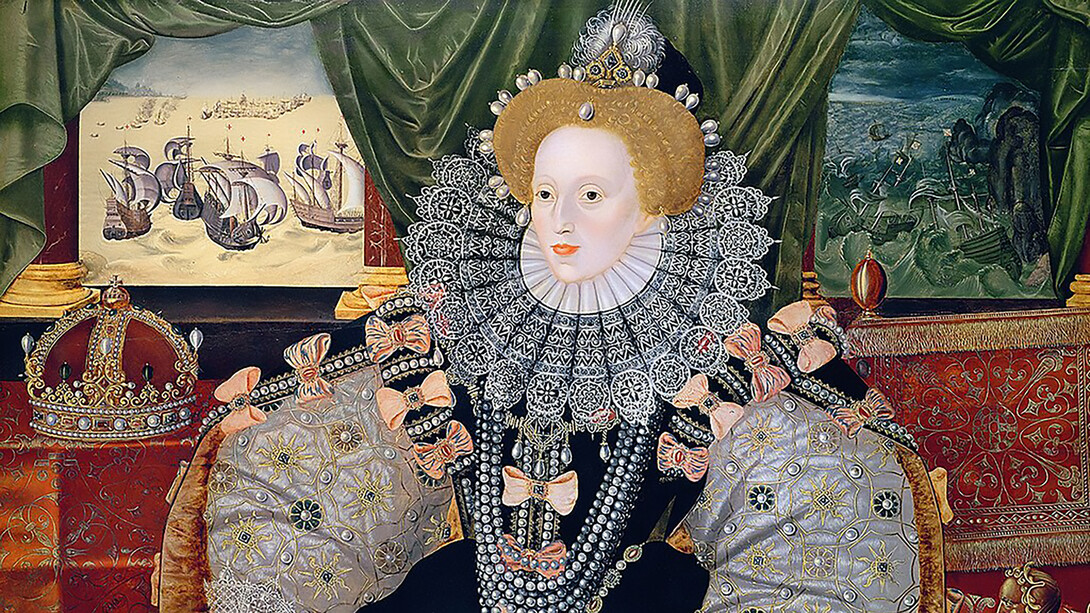
Je suis belle, ô mortels! comme un rêve de pierre.
I am fair, O mortals! Like a dream carved in stone.
(Charles Baudelaire)
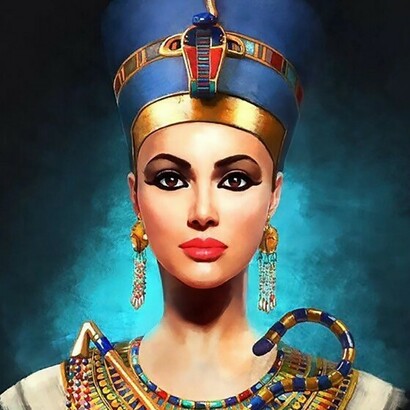
The symmetrical face, long neck and strong cheekbones of Nefertiti have become an icon of feminine beauty ever since her bust was discovered in 1912. But although it is one of the most copied Egyptian artworks, Nefertiti was known not just for her beauty but also for her political and religious influence. With her husband, Pharaoh Akhenaten of the famous 18th dynasty, she ruled over Egypt during a period of great prosperity. She probably ruled on her own right after Akhenaten’s death, although scholars disagree on that fact. Without doubt, Queen Nefertiti was one of the most powerful women in ancient Egypt.
Derived from the Egyptian root NFR, meaning ‘beautiful’ or ‘perfect’, her name translates as ‘The beautiful one has arrived’. Based on the evidence of the bust by Thutmose, she was indeed a beautiful woman; to this day, her almond eyes, full lips and high cheekbones are considered parameters of feminine beauty.
While the wife of a pharaoh is always a powerful presence, Nefertiti may have been more than that. She is portrayed wearing the blue crown, a symbol of royalty, which could mean that she was either a co-regent or, later, a queen in her own right. Inscriptions of the time indicate that she performed some duties usually reserved for the ruler. Alongside Akhenaten, she played an important role in the Egyptian religious revolution: the shift from polytheism to a form of monotheism. Her image became the face of the new religion and a symbol of the new era heralded by this significant change. She was present in the political and diplomatic life of Egypt, advising and supporting the pharaoh. Nefertiti may have influenced the succession process and the choice of a child (Tutankhamun) as the next ruler of Egypt. She may have been Tutankhamun’s aunt, or stepmother, or guardian; she may have been his mother.
Queens of France and England
She was beautiful, she was powerful, and she was rich. Aged just 15, following the death of her father, Eleanor of Aquitaine became the most eligible bachelorette in mediaeval Europe. She was quickly snapped up by Louis, son of King Louis VI of France, who soon became king of France himself. Two months after the annulment of this marriage, she was married again, to the heir to the English throne. She commanded armies, led a crusade to the Holy Land, was held prisoner for 16 years, and ruled England as regent into her 70s. Eleanor is mostly remembered for encouraging the arts and poetry, which flourished during her reign.
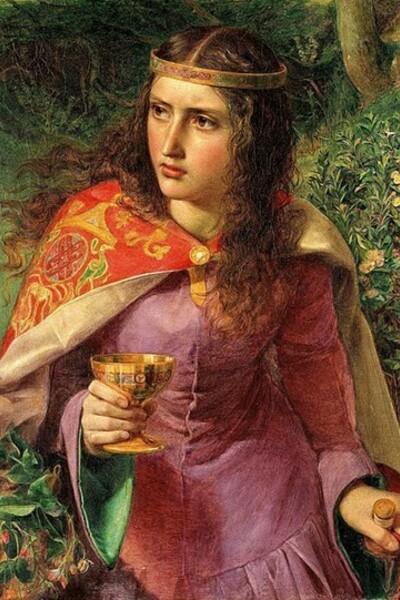
Despite her power and influence, there are no descriptions or portrayals of Eleanor by her contemporaries, except to praise her as ‘more than beautiful’, gracious and charming. Later artists felt free to imagine her as they wished, dark or blonde, blue eyes, brown eyes, tall or short. In the 19th century, in one of the few portraits of Eleanor, Frederick Sandys gave her long auburn hair and a determined gaze; holding a cup of poison on her way to murder her husband’s mistress, Eleanor looks more like a typical Pre-Raphaelite beauty than a XIIth century queen.
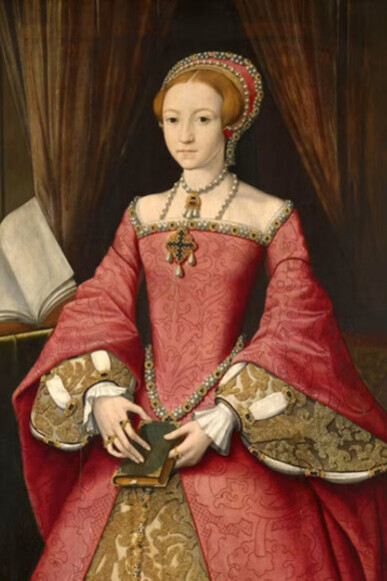
With her pale complexion, red ringlets and bright eyes, Elisabeth I established ‘the look’ of 1500 England. She is responsible for the upper classes fashion of the time, but her influence extended beyond clothing. Women painted false veins onto the skin, plucked their eyebrows and forehead and used belladonna drops and kohl to brighten their eyes and vermillon to redden the lips; they wore curly red hair wigs and even blackened their teeth in an attempt to look more like Elisabeth (who suffered from dental decay). Early portraits, when she may have still been expected to marry, show a pretty teenager who inherited her father (Henry VIII)’s red hair and her mother (Ann Boleyn)’s brown eyes, direct gaze and porcelain skin.
Several decades later, the Armada Portrait presents a woman confident in her power and beauty: dressed in luxurious clothes and adorned with opulent jewellery, especially the vast quantity of pearls, she represents authority and wealth, as well as elegance, purity and a standard of feminine beauty.
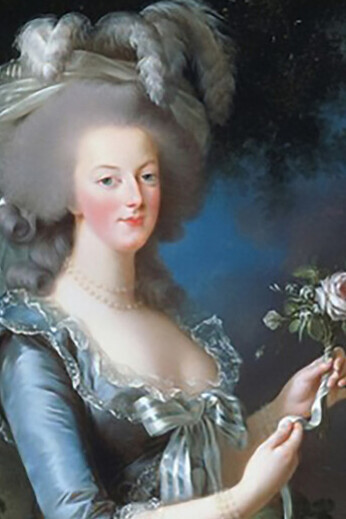
On the other side of the channel, a couple of centuries later, the standards were different, largely thanks to the teenage queen, Marie Antoinette. She was known for ordering 300 gowns a year (fashion changed frequently) and never advising Parisians to eat cake, but her influence on French politics was as significant as it was subtle. A complex character, the queen was admired and detested in equal measure, but there was no doubt that she was a devoted mother and, to some extent, wife. Her features are familiar to us due to portraitist Elisabeth Vigée Le Brun, who described her as graceful, charming and with good posture. The portrait presents a young woman with lively blue eyes, a fine nose and ‘brilliant’ skin tone, her lips a little fuller than they were fashionable at the time. Madame Le Brun was one of the queen’s protégés, as Marie Antoinette had exquisite taste and was the patron of several artists and musicians. The beautiful visage of the last queen of France became familiar throughout Europe mainly through Vigée Le Brun portraits (she painted 30 of them) and remains in the public conscience thanks to her appearance in TV shows and films.
On stage and screen
It is a truth universally acknowledged that a beautiful woman is more likely than not to spend some time acting or modelling. For those not born into wealth and nobility, physical beauty was the way to fame and power – and the route often started on stage.
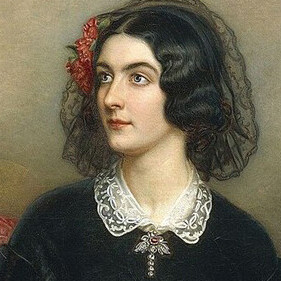
Although famous for her career as a Spanish dancer, Lola Montez was born in County Sligo in an Anglo-Irish family. During her short life she performed in London, Paris, Munich, New York, Los Angeles, and Melbourne; her extensive travels, unusual for a woman in the XIXth century, gained her the label of ‘adventurer’. In Paris, she met and may have had liaisons with Franz Liszt and Alexandre Dumas. When her career stagnated, she moved to Munich. Here, she soon became the mistress of Ludwig I of Bavaria and a powerful influence on the political scene. She used her ability to manipulate the king in order to support liberalism and anti-Catholicism. Despite scandalising Australia’s provincial society with her Spider dance, witnesses admitted that Lola’s beauty was ‘startling’ – ‘her eyes especially were so remarkable that one forgot almost to notice the other features of the handsome face’ (Elisabeth Ramsey-Laye).
Marilyn Monroe, our XXth century Mona Lisa, was a pretty curly-haired brunette. A hard-working model and actress, Norma Jean Mortensen spent her childhood in orphanages and her teenage years in abusive foster homes and unsuccessful marriages. Determined to live a fulfilling life, she persevered in her efforts of becoming a serious actress despite the early image as a ‘sexy dumb blonde’. She took control of her acting career by starting her own production company and shaping her style and her public image, in defiance of Hollywood's unwritten rules.
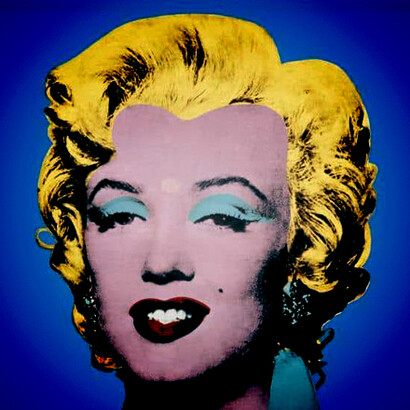
Behind the soft, innocent voice and the iconic white dress, there was a strong and determined woman – an artist, a businesswoman, a civic rights advocate, a pro-feminist, and a standard of modern beauty. Along with hundreds of photographs and film stills, one of the most enduring images of Marilyn is Andy Warhol’s Marilyn Diptych. The silkscreen consists of 50 images of Monroe, taken from a publicity photograph, 25 on the left in colour and the rest in black and white. The work is considered one of the most influential pieces of modern art, as its subject is one of the most influential women in modern history.