English
 Español
 Français
 Deutsch
 Italiano
 Português
On a quiet Sunday morning outside Kisumu, Mary Achieng’ finishes leading hymns at her local church. By dusk, she will kneel beside a pot of herbs behind her hut to honour her ancestors. For her, there is no contradiction. “My faith in God is firm,” she says, “but I cannot abandon the ways of my people. They are part of who I am.”
Across Africa, millions share Achieng’s layered identity—Christian or Muslim in public worship, African in cultural memory. Yet this delicate coexistence of faiths and traditions is unfolding at a time when the continent’s famed religious tolerance is being tested like never before.
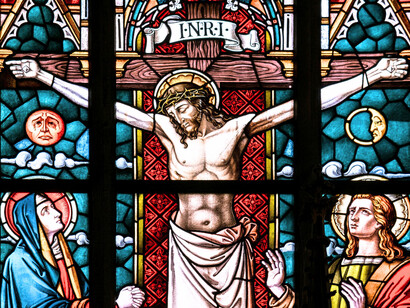
While Christians and Muslims account for nearly 90 percent of Africa’s population, interfaith violence is rising. From bustling markets in Lagos to pastoral villages in Mali, communities once known for coexistence now find themselves on opposite sides of armed conflict, humanitarian crises, and political turmoil. Africa is, quite literally, a continent where faith is on fire.
Nigeria: epicentre of a crisis
Since 2009, Boko Haram’s violent campaign to establish an Islamic state in northern Nigeria has left 20,000 people dead and displaced 2.5 million more. Churches, mosques, markets, and schools have all come under attack. Parallel to Boko Haram, militant Fulani herders have clashed with Christian farming communities over land, a conflict driven by climate stress, poverty, and youth unemployment.
The Nigerian tragedy is not merely a struggle between Christians and Muslims—it is a tangle of politics, inequality, resource scarcity, and historical grievances. But religion becomes the easiest banner to weaponize.
Spreading instability
This pattern is repeating across the continent. In Mali, Somalia, and the Central African Republic, extremist groups such as Al-Shabaab and Al-Qaeda exploit local frustrations to inflame religious divides. What begins as a political or economic grievance quickly morphs into interfaith hostility, deepening mistrust between Christian and Muslim communities.
“These conflicts are never purely theological,” says Rev. Dr. Sarah Otiende, a theologian at St. Paul’s University. “Faith becomes a battlefield because governance has failed.”
Human cost
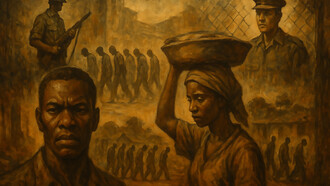
Beyond the statistics, the suffering is personal. Families scattered across displacement camps, children out of school, livelihoods destroyed, and communities gripped by fear. In many villages, markets have shuttered, leaving people dependent on humanitarian aid that arrives slowly and inconsistently.
“It is not just bodies being lost,” says Achieng’. “It is culture, family, and dignity.”
The deep roots of tradition
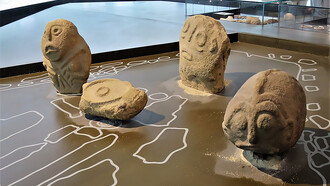
Yet beneath the violence, a quieter story persists—one of identity, resilience, and cultural memory. Even among converts to Christianity or Islam, traditional African beliefs endure, often blending into modern religious practices.
Burial rites are among the clearest examples. In Ghana, Nigeria, Kenya, and South Africa, families may recite Christian or Islamic prayers while also pouring libation, invoking ancestors, or performing ritual cleansing. These practices reveal a truth: while faith may change, the bond with ancestors remains unbroken.
In conflict zones, these customs have become acts of defiance and belonging. In Nigeria’s Middle Belt, displaced Christian converts insist on burying loved ones with traditional rites despite security risks. For them, it is a reclaiming of heritage. In Kenya’s Rift Valley, Muslim communities blend Islamic funeral prayers with customary chants and dances, asserting that culture outlasts creed.
“Our ancestors are our link to the past,” explains 76-year-old Daniel Aseka from Kakamega. “When we honour them, we honour ourselves. No war can erase that.”
Syncretic worship: a living faith
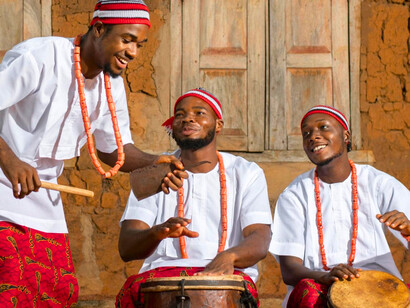
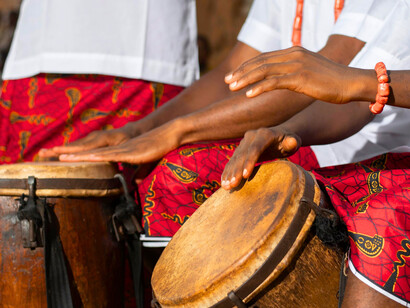
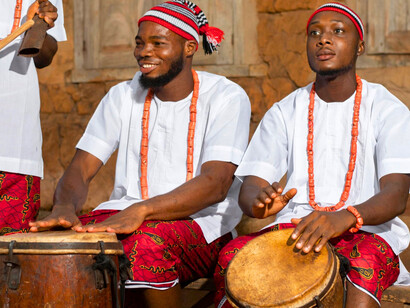
Far from fading, syncretic worship is growing. In churches, African drums accompany hymns; in mosques, elders quietly maintain rituals that predate Islam. Christians speak of the Holy Spirit and ancestral blessings in the same breath.
“This blending is not confusion,” says Rev. Otiende. “It is Africanization—a faith that is not imported but lived.”
The rise of Pentecostalism, however, has sharpened tensions. Many pastors condemn ancestral rites as superstition, arguing that mixing traditions dilutes Christian doctrine. In urban centres, young people increasingly view traditional practices as outdated, even backward, in a world shaped by digital culture and global religious movements.
But elders insist that abandoning tradition means erasing identity. “Young people forget that culture is what holds a community together,” says Aseka. “Without it, we have nothing.”
Festivals of resilience
Across West Africa, cultural festivals stand as powerful reminders that traditional religions are still alive. The Osun-Osogbo Festival in Nigeria draws thousands in honour of the river goddess Osun. Christians join the festivities not as worshippers of the deity, but as participants in an ancient cultural celebration.
In Ghana, the Homowo Festival commemorates a historic famine and celebrates survival. Christian priests often bless the proceedings. It is not contradiction; it is coexistence.
These festivals show that despite violence and doctrinal tensions, African cultural resilience endures.
Seeds of hope
Amid rising hostility, several initiatives are working to bridge divides. The Interfaith Mediation Centre in Nigeria brings Muslim imams and Christian pastors together to mediate conflicts. NGOs promote community dialogue and economic development in vulnerable regions, tackling the root causes of conflict rather than only the symptoms.
UNESCO has added several African funeral traditions to its Intangible Cultural Heritage list, signalling global recognition of the value of preserving cultural identity—even in times of crisis.
Scholars say protecting cultural traditions, strengthening local governance, and promoting economic inclusion can reduce the appeal of extremist narratives.
“People must feel seen—not just as Christians or Muslims, but as Africans with heritage,” says Otiende. “That is how peace begins.”
What's next?
Africa’s religious crossroads is both spiritual and political. Governments must address climate stress, unemployment, and corruption—the drivers extremists exploit. International partners need to support peacebuilding efforts rather than merely funding counter-terrorism. And faith leaders must reclaim their moral authority, resisting the temptation to let religion become a weapon.
Most importantly, Africans must be allowed to hold on to the traditions that root them to the land, even as they embrace global religions. The continent’s rich cultural mosaic—its languages, customs, burial rites, and festivals—is at stake.
For Achieng’, the road ahead is clear. “I can be Christian and still honour my ancestors,” she says. “Africa is big enough for both.”
Her conviction captures the struggle and the hope of a continent where faith, identity, and survival are inseparable—and where the future depends on finding a way for all three to coexist.