English
 Español
 Français
 Deutsch
 Italiano
 Português
The Age of Enlightenment emphasised reason over emotion, with the unexplained relegated to the realms of superstition and ignorance. Gothic writers of the late eighteenth century and Romantic poets of the early nineteenth century sought to reintroduce a sense of wonder and awe of the natural world. In Hard Times, Dickens looks at how facts stifle and corrupt individual expression of emotion and empathy. He also exposes the delusion and hypocrisy the characters labour under regarding their own lives.
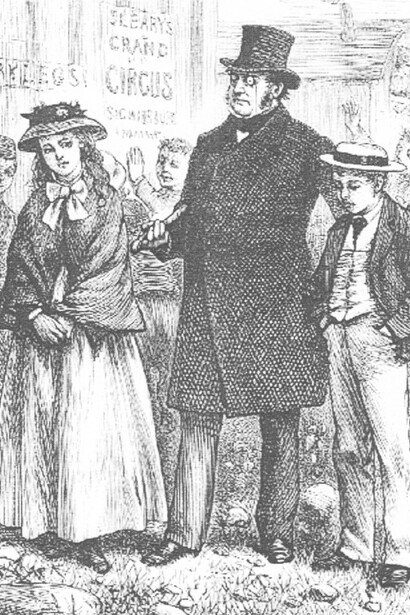
“You can only form the minds of reasoning animals upon facts: nothing else will ever be of any service to them.” This is the premise upon which Mr Gradgrind runs his “monotonous vault of a schoolroom” and brings up his own children. This type of education is contrasted with Slery’s circus, which stands for wonder and imagination, as the children are dressed in costume and taught to perform circus acts. This leads to Mr Gradgrind being shocked when he finds his own children peering through holes in the fence to look at the spectacle. He believes the circus to be a waste of time, and by agreeing to educate Sissy Jupe, he no doubt feels he is saving or elevating her from such frivolity.
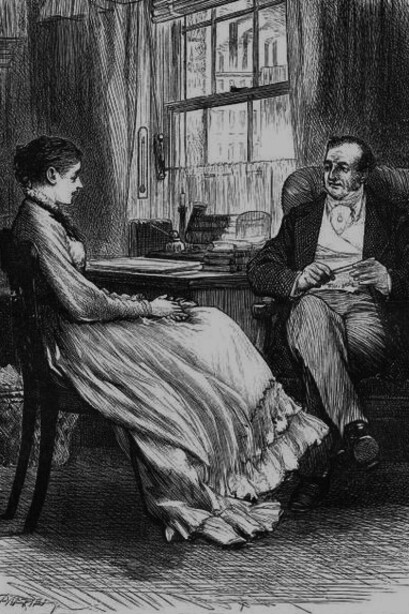
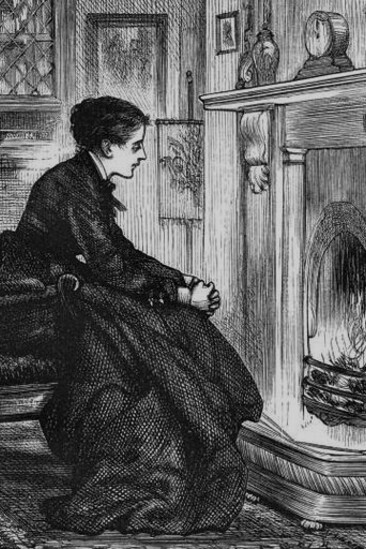
Later in the novel, when Louisa discusses Mr Bounderby’s proposal, it is from a factual basis; she states, “What do I know […] of tastes and fancies; of aspirations and affection?” She speaks of never having a child’s heart and dreams, a fact Mr Gradgrind sees as evidence of his success, but the reader will see as part of the tragedy of her life. This tragedy is reinforced by Sissy’s opinion; when presented with the married Louisa, she looks on her with wonder, pity, sorrow and doubt, to which Louisa responds with an impassive, proud and cold attitude.
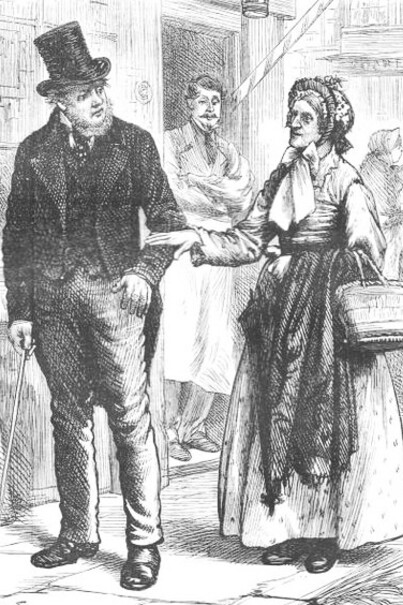
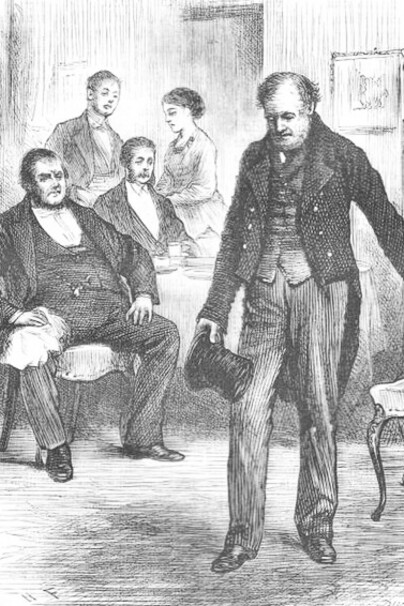
The other major character in the book is Josiah Bounderby. A man who insists on proclaiming himself a self-made man who, through poverty and hardship, has established himself as a prominent businessman. Described by Dickens as “a man who could never sufficiently vaunt himself a self-made man.” He pours contempt on luxury and those who seek it, suggesting all they want is an easy life, referring to it as a gold spoon and turtle soup. Just as Gradgrind cannot see beyond the necessity of facts, Bounderby cannot deviate from the image of himself he has created. Yet when we meet the old lady, Mrs Pegler, his mother, we learn that he was not abandoned and his suffering is a lie to elicit sympathy and admiration. Mrs Sparsit exposes this deception when she brings the woman before him and suffers Mr Bounderby’s wrath, telling her to keep her nose out of other people’s private business.
Mrs Sparsit is the opposite of Mr Bounderby; her connections are proud and noble, descending from the Powlers. When her husband died, she took up a salaried position as Mr Bounderby’s housekeeper, which Dickens advised was partly to support herself and partly to spite her relative Lady Scadgers. Working for a living was limited to those in trade, not the nobility. Mr Bounderby constantly exalts Mrs Sparsit’s heritage to diminish his own humble upbringing. Yet this elevated opinion of her status is not limited to his opinion, as when she goes to the bank, she believes she not only adds a feminine grace to the property but also an aristocratic one. She sees herself as the ‘bank fairy’, and the townspeople view her as the ‘bank dragon’ guarding the treasure. Just as Bounderby is a hypocrite in presenting more humble origins, so Mrs Sparsit is deluded in believing she is regarded with a higher status than she may expect.
The poor and unfortunate in the novel are represented by Stephen Blackpool. Like the other residents of Coketown, he works in the factory. His wife suffers from alcohol addiction and mental illness, but with no divorce, he is trapped in this relationship. When he asks his employer, Mr Bounderby, for advice, he is told that divorce can only be granted by an Act of Parliament, and even for the nobility, it is expensive. The factory workforce labels him a disruptive influence, and when the bank is robbed, he is immediately suspected and sacked. He is missing for a couple of days and is found injured by Louisa and Rachael. His main concern is that they agree to clear his name even if he does not survive. Stephen is the most honest and forthright of all the characters, yet he still suffers along with those who practise delusion, deceit, and lies.
Tom has been brought up under the same system as Louisa, being taught the importance of restraint, yet Dickens declares him a hypocrite. He speaks of him as being incapable of governing himself. When he complains to James Harthouse that Louisa could furnish him with money if she made herself agreeable to her husband, at which point Harthouse contemplates pushing Tom into the water. When he offers to help Tom by being his banker, Tom loses all colour, arguing it is too late. Money goes missing from the safe, and during the investigation, it is found that Tom has stolen the money to clear his debts. He hoped to cast suspicion on Stephen by having him wait outside the bank a couple of nights after closing. When he is discovered, his father’s idea is to spirit him abroad to avoid prosecution, but Bitzer, who had long suspected him, wants to turn him into Mr Bounderby so that he may be rewarded with Tom’s job.
Dickens exposes every character’s faults and the impact these imperfections have not only on their lives but also on other people’s lives. From a daughter’s happiness to an abandoned mother who can only see her son from afar. Only Sissy, the child of wonder, is blessed with loving children, where no fancy is to be despised.