English
 Español
 Français
 Deutsch
 Italiano
 Português
Storytelling is a significant component of human culture. This can be observed over centuries of history, from cave paintings during the Upper Paleolithic period of the Ice Age, through Antiquity and the Middle Ages, to the present day. Despite adapting to different kinds of forms over the millennia, its ongoing presence showcases the meaning and importance it has had and still has for humans. Depending on the resources at hand during the time period, people chose accordingly in what forms they would express themselves and invite others to partake as well. Humans are social animals, and we usually want to be heard, and we often enjoy sharing things with those around us. This has not changed to this day.
What has indeed changed a great deal, though, are the resources that are available for practicing storytelling. This increase in resources is quite recent and occurred only a few decades ago. Of course, a few hundred years ago, people already had a larger number of assets than those thousands of years ago. However, towards the end of the 20th century, technology was evolving extremely fast, introducing to the world a continuous amount of innovations and automations. A way to constantly be connected to those around us and share and receive information had arrived and was about to take a rooted place in society.
Storytelling took a form that was never seen before, and everyone could participate. Radio, television, the internet, computers, and smartphones revolutionized the modern world and created a web of connection and interaction. How heavily were these changes affecting the practice of storytelling, though? Did it just change forms, the same way it did over the centuries, depending on the resources, or was a whole new kind introduced to the world? Delving into storytelling today, we can find the answers to these questions and dive even deeper into the vast ocean of stories.
Depending on what one desires to communicate, there are a number of ways from which the individual can choose. The high degree of technology distribution in today’s world allows not only the selection of whatever storytelling form fits best, but also its customization according to one's desire. In addition to the decision for the form of storytelling communication, we can also freely pick the form of storytelling receiving. Whether you want to experience storytelling in a written, visual, or oral manner, it is all out there waiting to be discovered.
Written storytelling
Writing is one of the oldest storytelling methods. We know today so much about the past precisely because individuals around the world decided to capture the moments and write them down. Word after word, a body of text starts to develop that begins to make sense. The art of capturing an emotion, an event, or an image in a few words is truly something astonishing that has rightfully gained an important place in human culture through the centuries. Even something as simple as a cloudy day can become a sensation of emotions, embedded on the paper by the author.
This has not changed today. The written word does not seem to be able to be replaced so easily, and neither are its effects on the human mind. Today, books are fairly easily accessible in physical places such as libraries and bookshops, but also in virtual places like websites. Although the physical book seems to still be one of a kind, new variations of it have been introduced to readers. For example, the e-book and the audiobook are two new ways to enjoy books. Although it is fair to say that the audiobook lies between the written and the oral world of storytelling. Audiobooks are a good example of how the storytelling category can shift during the process of sharing and receiving; initially captured in the written word, it ends up being listened to, without losing any of its intended meaning. Anyone who was read to as a child will probably still remember the effect it had and the excitement it brought up.
Besides books, there are so many more forms of written storytelling to discover. Whether online or on paper, magazines, articles, short stories, and more can be found all around us. The internet has made them easily accessible and often free of charge. And the good news is, there is something for everyone’s interest out there to enjoy. From fan fiction to complex scientific writing, it can all be found in the vast world of literacy that exists today, including all the brilliant works of the past that, in the meantime, have typically been digitized, as well as contemporary work written by modern-day bright minds.
Having a look at the collection of written storytelling forms, we can see that none of the older ones truly disappeared or were entirely replaced. The count has rather increased over the years, with new or modified techniques being introduced. Poetry, novels, biographies, non-fiction books, and myths all still exist and are being created to this day, while drawing inspiration from the past as well as the present. Storytellers of the past have left us a significant legacy, and it seems only right to continue it and contribute to it in ways that represent the standard of the age we live in.
Visual storytelling
Upon hearing the term ‘visual storytelling,’ many people might first think of today’s great deal of visual stories, shaped through pixels, but might forget that it is one of the oldest forms in human history. The art of capturing the world through one's own eyes and the art of viewing it through the same lens are something that seem to have fascinated people very early on. Again, the admiration for the product has not changed dramatically today, either. Similar to the written and oral categories, the format has not necessarily changed or disappeared but rather evolved.
The biggest difference in today’s visual storytelling is perhaps the liveliness of the outcome, introduced through videography. Whether in the form of a television or movie production, a smartphone or camera video, or even an animated film, with the technology of recording moments and capturing them in a video format, visual storytelling has changed forever. Today, we are exposed to motion images at quite a high rate. Platforms like YouTube, Instagram, and TikTok are among the most popular ones out there that provide a visual narrative to their users.
Social media is an intriguing new way to tell stories. They allow for an easy, self-taught way to capture something while sharing it with the world. The rise of all kinds of influencers, with diverse audiences, shows what a steady part this form of narrative has taken today. Social media seems to have provided a place for individuals to share their passion and “target” the right audience. And, like with any other storytelling technique, there is room for all types of genres, giving every passionate storyteller the opportunity to put their own unique vision out there.
Today’s world has also introduced streaming platforms, putting the movie and TV production in a whole new era. Besides in the traditional cinemas, movies can, in recent years, also be viewed from the comfort of one’s home, without even leaving the couch. This might at first seem like the entire experience of the cinema viewing has gone extinct. Besides the obvious big screen and excellent audio settings, cinemas also provide the opportunity to experience the motion picture in a room full of strangers, which can sometimes lead to an exchange of thoughts and integrations.
Although cinemas are hardly replaceable (and it would be a real pity if they were), watching a movie at home does not automatically take away from the previous cinema experience. Again, things have not necessarily changed; they have evolved alongside already existing practices. Meanwhile, there are many platforms that allow their users to post their reviews of the movies they saw and also exchange ideas and explanations based on the story. Cinephiles often use film- and TV-related platforms like IMDb or Letterboxd to capture their reviews. However, social media and forums, like Reddit, are also used quite frequently for such purposes.
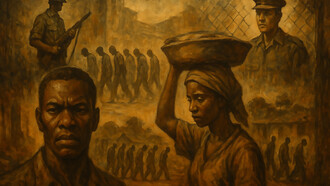
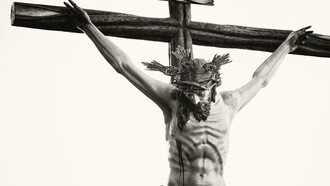
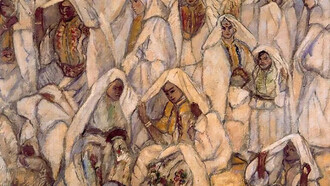
Besides moving pictures used for visual storytelling, there are, of course, still motionless pictures. Art has, like everything else, evolved as well. New interpretations of techniques for drawing, sculpting, etc., are being introduced to the world. The admiration that the human eye has had for art since very early on does not seem to disappear. Museums have become places where old artists meet new ones, and visitors have the opportunity to observe all of their stories in one day.
A common theme in the history of art has been to capture exactly what the naked eye is seeing while trying to include the artist's point of view. The closest we have come to fulfilling the desire to capture and tell the story of “the real” is when photography became an accessible tool. Today, with countless smartphone models and complex camera types, there are many options for taking photos, but perhaps it is not as easy as that. In order to become a visual storyteller, one has to first detect the story and capture it in a way that will do it justice. When smartphones first came out, some people had the opinion that photographers would not be needed anymore. But, as it seems, the eye of an artist is not something easily replaceable.
Oral storytelling
While the two previous storytelling methods have both been around for a long time, oral storytelling marks the beginning of human communication and curiosity. Many ancient cultures used this technique to convey myths, traditions, and folktales. Some of which are still being told and passed on to this day. Their presence today is a definite symbol of the power of oral storytelling and the significant mark it leaves on an entire line of generations across continents and oceans.
If you search for the term ‘oral storytelling’ on the web today and click on images—depending on the search engine—you will probably find images of people gathered around a fire and appearing to tell stories amongst them. A clear historical character to the photos can be noticed as well. Oral storytelling certainly still exists today, though. However, it might have shifted a little bit, similar to the other techniques presented here, and taken on some other forms compared to the ancient practices.
Music is one of the most persistent oral storytelling techniques, and it has been around for a very long time. After the introduction of specific music note notation, around a thousand years ago, its distribution was much easier and more accurate. A significant part of the musical piece was, however, still missing, and that was the original version demonstrated by the artists themselves. This all changed with the introduction of recording devices that started to reach their true potential with the beginning of the 20th century. The increase in the commercial use of radio put oral tradition in a new age, not only for music.
Today, we radio stations still produce a variety of content, but platforms like Spotify, Apple Podcasts, and Music, Audible, etc. have started to merge with traditional radio. A significant amount of musical pieces are available across the internet at any time of the day, all year round. Everything is saved and can be caught up with. We can listen to podcasts or audiobooks that reflect our interests on our way to work, at home, while traveling, or wherever else we feel like hearing a story. The same goes for music or any other recorded work. These can all be described as examples of a digital oral storytelling experience.
The images that come up after an internet search show depictions of people, usually gathered around a fire and telling stories to each other. Face-to-face communication is still a vital part of the community and our society. The classic formation of the circle of stories is still used today, and for good reason. It is practical, and everyone can see each other's faces and expressions while talking. We can often see it being used in educational settings, like in schools and universities, but also in gatherings of people in smaller groups, such as self-help, religious, and theatre groups, and many more. People meeting for the sole purpose of communicating with each other and sharing their feelings and impressions seems to be truly something that is irreplaceable.
Years of history show the significance of storytelling in human culture and the persistent role it has played over the centuries. The categories and examples presented here are only some of the existing ones. There are many more variations all over the world that reflect the deep-rooted passion for stories and community. Understanding and appreciating the world around us through the exchange of words is something that is still widely practiced to this day. If the records show anything, it is that it is probably safe to say that it will continue to be by our side for many more years. It is our responsibility to keep up with what seems to be a natural instinct of the human character.