English
 Español
 Français
 Deutsch
 Italiano
 Português
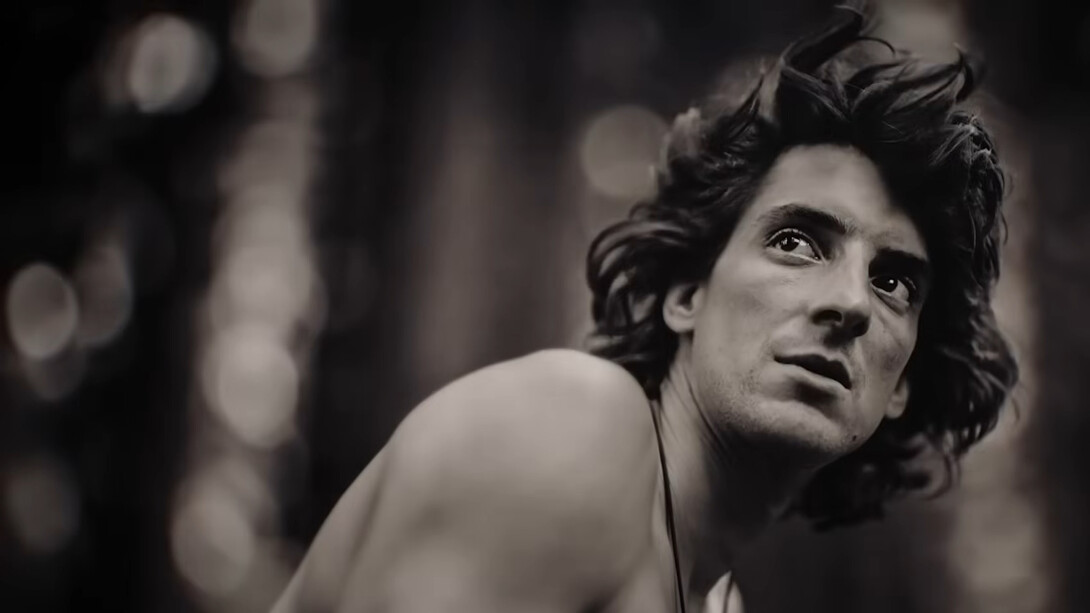
When I was a little boy, my first memory was this dream of falling.
(Dean Potter)
Climbing documentaries often walk a precarious line between depicting the objective or the climber. Some, like Free Solo and The Dawn Wall, focus more on a specific project and sprinkle in context of the climbers, their lives, and their motivations as we go along. These can be engaging and brilliant, but we never get a full look at the climbers as simply people, separated from their sport. Others, such as The Alpinist for Marc-André Leclerc, explore a climber’s career overall. That documentary covered his impressive career as an alpinist and climber, as well as the deep, near-religious connection he felt to climbing itself. We knew of its importance to him, how the mountains sang his name, but we still only knew of him in the context of alpinism or climbing.
The Dark Wizard takes a different path to the already-beloved climbing documentary subgenre.
Premiering in April 2026, the limited series was directed by Peter Mortimer and Nick Rosen (same directors of The Alpinist). It takes intense care in portraying Dean Potter, a rock climber, BASE jumper, highliner, alpinist, and creator of FreeBASE, which combines free soloing and BASE jumping.
Dean Potter has been an icon in Yosemite Valley for decades, and his death in 2015 rocked the community and the world beyond it. Everyone knew of his competitive nature, but the testimonials made by his partner and close friends—along with the excerpts from his own journals—fully fleshed out Dean in vivid reality. We learn of a complex man who had hurt many people, inspired many others, and was impossible to describe with simply one word or another. He was more than a climber and more than an athlete altogether, and this documentary paints a portrait unlike anything we had seen previously.
The Dark Wizard, unlike many other documentaries, does not shy away from the darker, more bitter parts of Dean Potter.
As the saying goes, the highs were high, but the lows were very low. He was a complex mess of competitiveness, jealousy, depression, and love for his craft, and this led to him pushing for increasingly difficult objectives in every sport he engaged in. Part of it was because he wanted to be the best; he wanted to satisfy that innate urge to continue defying fear at every step and do it better than others could. Another part of it was a deeper, spiritual connection to his craft, his athleticism a form of art for him that connected into something bigger than himself. However, I think it would be dishonest to say that many of his activities were based more on his spirituality than his unstable mental state. His mental illness degraded and blurred boundaries in many areas of his life, and he became reckless and desperate to prove himself.
The first episode, titled “The Death Consequence,” begins with Dean saying how his first memory from his childhood was a dream of him falling. He discusses how he wondered if it was a premonition of sorts, but it never stopped that magnetic attraction he had to push his own limits. He unlocked a new side of what the human body was capable of and expanded the rules and possibilities of many sports he engaged in.
To Dean, he did not feel alive if he was not facing death, and that motivation and endless drive did end up defining him as one of the greatest rock climbers in history. This dream plays a huge role throughout the series and Dean’s life, influencing his path towards BASE jumping and wingsuiting. He writes in his journal about how maybe his dream was never falling but flying, which only pushed him to work harder for grander projects that let him walk that precarious line between life and death, earth and sky.
Each episode portrays a different chapter of Dean’s life. With the focus on free soloing, BASE jumping, FreeBASE, and finally wingsuiting, we get a full view of the trajectory of both his career and his personal life. While it does highlight some of his greatest athletic achievements, it also explores his personal problems and messy relationships he had with friends, romantic partners, and rivals, all occurring simultaneously.
We learn of his controversial climb of the Delicate Arch in Utah, which caused both him and his wife at the time, fellow climber Steph Davis, to lose their sponsorships with Patagonia. Following this incident, he left Steph at their home in Utah and completely shut her out. She ended up going to Yosemite to find him, and journalist Katie Arnold witnessed the aggressive altercation that culminated in Dean tossing his wedding ring to his ex-wife and saying, “I want freedom.” This incident is one of many that highlight how nothing mattered more to Dean than what he wanted and that his needs took precedence over everyone and everything at this point in his life.
This was also during a period of Dean’s climbing career in which he was free soloing crazy objectives in Yosemite, which his friends were afraid of to some extent due to his manic behaviour and lack of self-preservation. We also learn of how his ego guided the competition he felt with Alex Honnold, a younger climber who grew up idolizing Dean and yet smashed every record and project Dean held and aimed for in the Yosemite Valley. His jealousy only grew darker, causing him to seek more intense sports such as BASE jumping and eventually creating the sport of FreeBASE.
The series also portrays Dean’s trip to China, for which he had a livestreamed performance of BASE jumping and slacklining. This took a deep toll on Dean, due to the fact that his personal life had been crumbling around him right before he left, and he barely made it out of the slacklining component alive.
The first three episodes paint a complex yet somewhat negative portrait of Dean. He was a bitter, jealous, and competitive man who did not seem to care which of his friends he hurt if it meant being the best at what he was doing. With the first episode exploring the end of his marriage, Episode Three, “This is Art, This is Spirituality,” covers the breakdown of many of his close friendships as his obsession consumed him. The interviews with the friends who had cut him off for his behaviour were brutally honest; they all loved him and spent years climbing by his side and experiencing every peak and valley with him. It was not from a lack of love that they cut him out of their lives—it was from a sense of self-respect, because Dean was not respecting them as friends or as people at his worst.
Dean’s longtime partner, Jen Rapp, showed a part of Dean that had been previously unseen in the rest of the documentary. The finale, “Transcending Human Limitations,” showed a brand new side to the climber, one that was soft and encouraging with Jen’s kids, a loving partner, and someone who was genuinely trying to get better. Jen confided in interviews that Dean had been to several doctors for his depression in the time they were together, but antidepressants were off the table. His mental health was improved with his dog, Whisper, and the relationship he built up with Jen and her children. Dean was almost unrecognizable from the violent, angry person he had been in the first three episodes.
Two things can be true at once. Dean was not a good friend or husband, he was a selfish person who cared more about what he wanted, and he was blinded by his own hubris. Simultaneously, he was someone struggling with something he could hardly find the words for, and we only know this because of his journal entries. He was driven to a type of insanity that allowed him to excel for so long in the most dangerous things, something he loved and took so much pride in. The last years of his life, however, were calmer before wingsuiting, and it seems he rediscovered himself and his art again when he had barely been aware he’d lost it.
That deep connection to nature that he felt never fully diminished, because Dean respected that death could claim him in every moment and chose to face the fear rather than run from it. He was forever enchanted with the feeling of falling or flying, respecting the sheer force of nature that he worked within.
As all things do, the story ends. Dean met Graham Hunt, a younger wingsuiter who loved pushing what is possible and who surpassed him in many ways. They formed a fast friendship, something that Dean had also been missing since he had fallen out with his old friends a few years earlier.
Dean had described towers in Utah that had never been used for wingsuiting, Graham travelled there and opened up each exit one by one, all without knowing Dean had wanted to be the first. Dean had gotten better and worked through many of his issues, but this perceived slight and growing resentment of his friend reignited the old flame of competition. He never told Graham this, as he felt guilty of feeling that way in the first place; not only was it something that he had worked to get past, but Dean had already learned the hard way that competition had no place in close friendships.
Nonetheless, this pushed him to move past his initial boundary of avoiding proximity flights (flying closer to objects while wingsuiting), and he, once again, became more reckless.
In both Dean and Graham’s final flights, they attempted to fly through The Notch, a small V-shaped cutout of the ridge seen from Taft Point in Yosemite. It was an impromptu flight at the end of a beautiful, calm day, on a route they both knew well already.
The Notch was a very dangerous proximity flight for wingsuiters due to the technicality and precision needed to clear it; as pro climber Leo Houlding put it, “It was perfect or dead.” As well, heavier wingsuiters were less likely to clear it because they could not get high enough after jumping off the lookout spot, which was a source of contention for Dean—he could not make it, but Graham could.
In their last moments, Graham had first veered left away from the Notch but turned at the last second above Dean to fly through it. Due to the way he was facing, he likely did not see the single tree sticking up before he clipped it and crashed into the rock. Dean had also made it through the Notch but lost altitude too fast and impacted into the slab headfirst. Both men died on impact.
Since his childhood, Dean had a special connection to ravens. It was partly what gave him the nickname of the Dark Wizard, as it only added to the mystic reputation he had with younger climbers.
He recorded his last flight on the back of his helmet, capturing towering rock walls and beautiful cloud-spotted skies moving past him as he flew. In the last few seconds before his impact, a raven flew high above his head, almost as if it were waiting for him to join it.
“Of course,” Jen said. “A raven followed him into his death.”
The Dark Wizard, which had spent four episodes trying to capture a man larger than life, delivered a touching tribute to Dean. Fanart, tattoos, and other tributes were shown montage-style, with Jen saying that she wished he had seen how many admired and loved him.
Dean may have been difficult and angry, but he inspired so much love and passion from an entire generation of climbers and brought genuine love into the lives of people who knew him. His friends that had cut him off all felt his loss with a brutal, vivid intensity, pained with the knowledge that there had never been the reconciliation they wanted. He was someone they loved, regardless of how things had ended between them, and The Dark Wizard encapsulated that complicated feeling of lost connections with stark clarity.
It is difficult to do such an honest, well-intentioned portrayal of someone who is so hard to describe, but The Dark Wizard did it in a perfect way, never fully allowing you to feel strongly about Dean one way or another. This documentary does not try to define him by his accomplishments or hismistakes butt gracefully resigns to showing us as he was—there was no other way he could be.