English
 Español
 Français
 Deutsch
 Italiano
 Português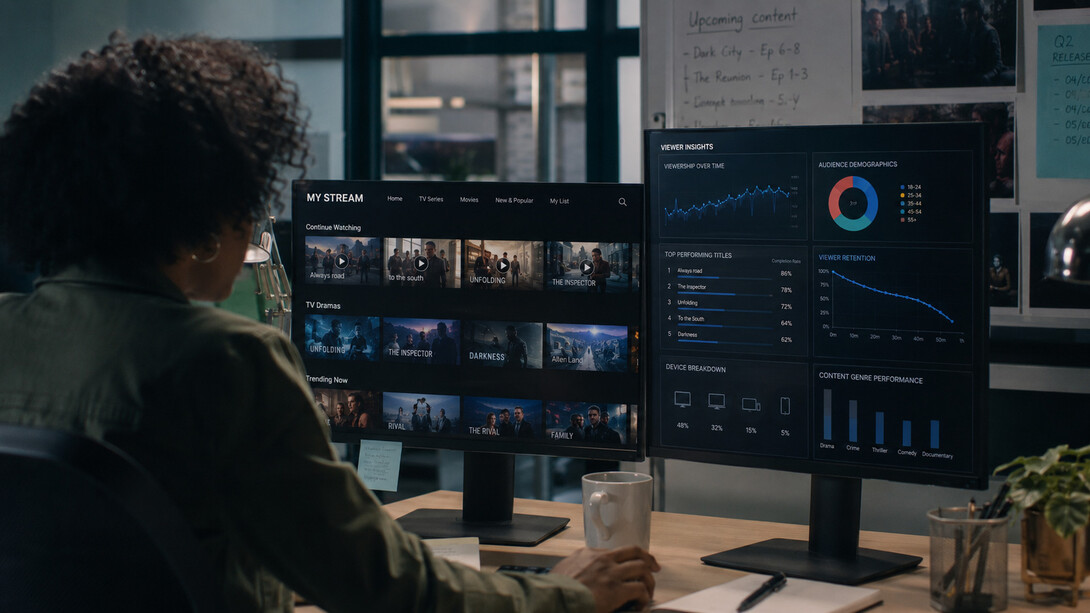
Have you ever sat down on your favourite couch or sofa all ready to indulge in a new series, only to discover that right from the very first scene you are completely hooked? The movie’s story does not just grab you; its characters are immediately convincing, and you don't even think twice about clicking on "Next Episode". The movie creates in you a feeling of magic, and it's the most ideal meeting of viewer and story.
However, what if all you've just experienced is not magic? What if it was an invisible force that was responsible for subtly creating that perfect hook and even the actors on screen? Welcome to the new dawn of moviemaking, where data is the new script doctor and the algorithm has become a silent director.
The ghost in the machine: from greenlight to your screen
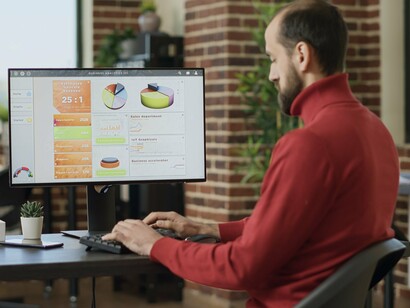
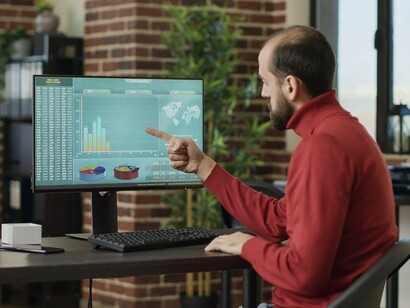
The days when it was the gut feelings of a studio executive that determined whether a film was approved are gone. Today, streaming platforms have a new and powerful decision-making partner: the data machine. A huge amount of information is analysed before a single scene is shot. This information includes:
How similar existing titles in their library performed.
Global social media buzz and search trends around particular themes or genres.
The "affinity" of particular segments of audience—for instance, if viewers who loved a creepy horror drama also frequently viewed a stand-up special by a particular comedian.
This data doesn’t just provide suggestions on what to make; it offers predictions on who is going to watch it and how big that audience might probably be. A digital forecast is now what backs up a creative pitch.
The thumbstick test: how A/B testing is rewriting film grammar
You might already know about A/B testing for website buttons. However, do you know that major shows and movies now make use of it? Platforms now make different versions of key moments in a movie, especially the opening that leads to the highest "completion rate". That completion rate refers to the percentage of viewers who view the whole episode and do not drop off.
What this means is that the vital first three minutes of a movie could be re-edited or reshot not because the director has a fresh idea but rather because the data revealed that if the intro were different, then 12% more viewers would remain and not click away. The traditional establishing shot that was usually built slowly is sometimes replaced by a high-emotion or a high-action moment that is deliberately designed to grab your attention instantly.
Scripts by spreadsheet: the data-driven "emotional map"
Imagine this: a script is first fed into a computer program and an "emotional map" is what it spits out as its output. Is this science fiction? No, it's not. These days, tools using AI can now make analyses of any screenplay and then offer their predictions about the levels of the engagement of audiences scene by scene. If act two is "slow", they can flag it, or if a secondary character’s arc is not resonating in test analyses, they can offer suggestions on how improvements can be made.
What the writer’s room is going to then receive are notes that are more about how optimisations can be made for constant engagement and less about narrative cohesion. The result is going to be a story designed to deliver plot twists and emotional punches at intervals that are mathematically precise to prevent viewers from ever getting bored.
The completion rate mandate: when the metric trumps the muse
In the world of streaming, the most sacred metric is the completion rate. This single number has a huge influence on the final product. It is the reason behind a lot of trends you may have already observed, such as:
Shorter episodes: If data reveals that there's usually a noticeable drop-off at the 45-minute mark, episodes might be cut to 37 minutes.
Faster pacing: Complex subplots that result in lower engagement are usually reduced or cut entirely.
The "binge-bait" ending: Every episode now concludes on a cliff hanger, not just as a choice of style, but because it has been demonstrated that this leads to an increased rate of viewers auto-playing the next episode.
In this environment, the desire of a director for a shot that is lingering and atmospheric may be overruled by the data that reveals it causes 5% of test viewers to skip forward.
Casting the net: how algorithms assembled your favourite ensemble
Actor suitability and chemistry reads are no longer what determines casting. These days, casting also depends on the "Q Score". The Q Score is a measurement of how appealing and familiar an actor is. Apart from the score, casting also depends on cross-demographic attractiveness and social media reach. Today, algorithms can conduct an analysis of a new teen drama's potential cast and give its prediction on what combinations of actors are going to perform best across various geographical regions and age groups.
This can result in casts that are appealing and brilliantly diverse and which have an inbuilt worldwide audience. However, it can also mean that an actor who is perfectly suited but less known could lose a role to another actor that the algorithm has suggested has a stronger and more international pull.
Beyond the binge: can the human spirit survive the stream?
So, where does this leave viewers? Movie audiences are at a crossroads. On one hand, creations that are driven by data provide us with entertainment that is incredibly accessible, engaging, polished, and tailored to what we prefer. It can assist obscure gems in finding their ideal audience and eliminates some of the financial guesswork.
On the other hand, there is the risk that a creative echo chamber can be created. Where is the room for the strange, the challenging, and the authentically human flop if we are only going to be getting more of what the data says we already want? The greatest movies in history usually defied expectations and also broke rules. It is likely that an algorithm whose primary focus is to minimise risk would most likely have rejected such blockbuster films.
Storytelling in the future may not be a fight between machines and human beings. Rather, the battle might just be a collaboration. The question we need to ask ourselves should be, 'Is data going to act as a tool for artists to make better connections with their audience?' Or is the artist going to become a tool in the service of the data? The answer is going to determine the types of stories that are going to occupy our screens for generations to come.