English
 Español
 Français
 Deutsch
 Italiano
 Português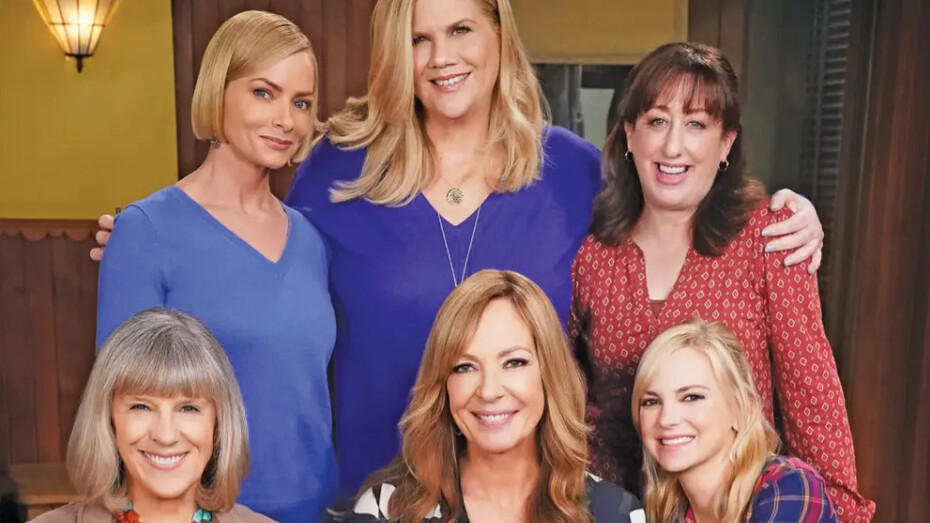
Like most millennials, American sitcoms are my poison of choice. They are addictive, cathartic, and a perfect escape from the bleak reality that has been laid out for my generation since 2008. There are several top shows that have captured the cultural zeitgeist and made an indelible mark on the lives of people all over the world. And one thing most of those sitcoms have in common are female protagonists whose non-conformity feels cocooned in a comfort zone, and quite predictably so. The point in their lives where we meet these characters are often in their early to mid-twenties, or in some cases, their teens. Their story lines are dictated by their dreams and aspirations that are not too out of reach if you factor in the pretty privilege. For young and younger women watching these characters, these storylines became an ideal to which many of them modeled their lives. While sitcoms and their characters – like any story delivered on film media – can liberate one’s worldview, it can also narrow it down when weighed against the backdrop of cultural context.
The first show that I ever watched that completely broke free from the norms of conventional network TV framework is Chuck Lorre’s Mom. Coming up with unconventional or unique characters in familiar and unfamiliar life settings alike is something Chuck Lorre is synonymous with; think Dharma & Greg, Mike & Molly, the abruptly truncated Bob Hearts Abishola, The Big Bang Theory and its spin-off Young Sheldon, among others. Despite TBBT being etched in my heart forever as my most favorite sitcom, the one show that truly made me feel deeply is Mom. In a world where women are constantly conditioned to believe that they are in their prime only in their twenties and all top achievements in life have to be made during our socially-ordained youth, the topic of starting over in your late thirties and early fifties was a breath of pure air. Mom broke all barriers of self-shackled thinking to which I had subjected myself in my younger years.
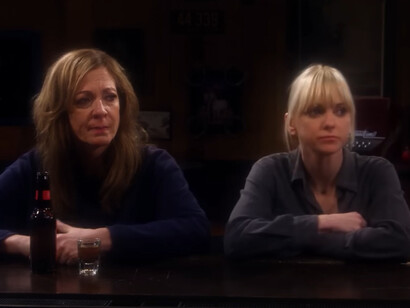
While alcoholism and drug abuse were not what I was escaping from unlike Christie and Bonnie, I suffered from addictive patterns and compulsive behaviors that kept me going in dizzying circles. When I first watched the show, the biggest draw was the naked portrayal of a contentious relationship between mother and daughter. As the episodes came out, there was a progressive unraveling of what personal growth looks like for women whose foundations for success were not laid in their 20s or even into their 40s. The plotline in spotlight is of course Christie’s recovery from being an addict, her commitment to sobriety, and her determination to go back to school at 37 or 38 so she can become a lawyer. While definitely inspiring, the unexpected twist for me came in the form of Bonnie’s re-entry into her life, and the subsequent repairment of their relationship on sober grounds that ends up becoming a stable platform on which Christie is able to rebuild her life. For someone who grew up believing success is achieved alone and is valuable only if done so, the importance of a support system – not necessarily from a parent – was a life-altering lesson.
To witness not just two but six women in the course of the entire series – all in their 40s and 50s – trying to resurrect their life stories from doomed proclamations to meaningful celebrations was hopeful and relieving. The strongest of all character development is, of course, Bonnie. The fact that the show addressed health issues like ADHD / ADD that can bring about adverse effects on life outcomes – not just for self but for others too – was groundbreaking. Bonnie not only grew as a mother but also as a partner, a friend, an individual, and a member of the community. The fact that the show could ride out its entire final season with her character as the anchor after Christie’s departure says something. Marjorie, as the ‘mother hen’ of the group, was a surprisingly multi-dimensional character. Showing her angry and frustrated side when she is not in her matronly guardian mode gave viewers a glimpse into how women are more often woven in contradictions rather than in simplistic formulae that most male writers would like us to believe.
Jill, as the wealthy woman with an unstable history of emotional duress and substance abuse, became more and more relatable as the show carried on. While her pompous demeanor gets a lot of laughs when juxtaposed with the debt-ridden hand-to-mouth existence of Christie and Bonnie, her stories of heartbreak, despair, and insecurity get uncomfortably real as she grapples with miscarriage and loneliness in a life of turbulent relationships. In those moments, Mom goes on to show just how powerful it is for women to move in groups where we can hold each other in our grief, fear, and agony to find hope, courage, and friendship.
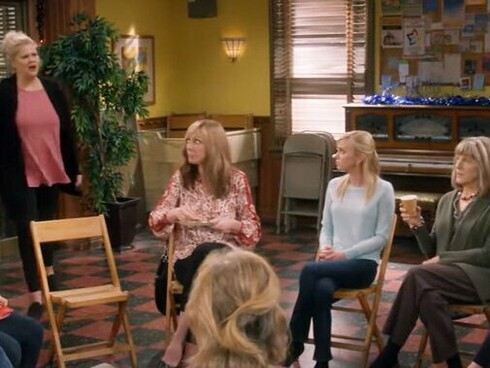
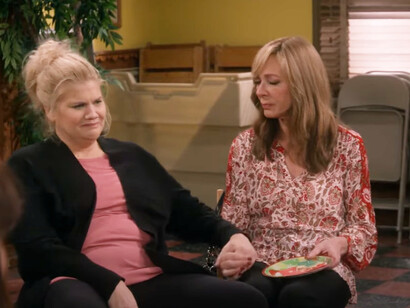
While it may sound all-girls-trippy and sisterhood-y, the POV of Wendy highlights the imbalance in group dynamics where some people are left behind in the shadows while others take away all the attention of the group. The fact that a kid from the gifted program who ends up in STEM can become a raging alcoholic just as much as a foster kid with ADD managing a run-down apartment building really evens the ground out for the diverse characters of Mom. The show does even better with the introduction of Tammy – a former convict and skilled handywoman fighting to reintegrate – giving viewers the perspective of what community means to those who are on the fringes of social approval.
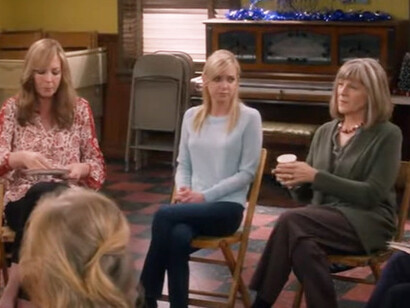
The choice of casting Anna Faris to play Christie, Allison Janney to play Bonnie, Mimi Kennedy for Marjorie, Jaime Presley for Jill, Beth Hall as Wendy, and Kristen Johnston as Tammy makes for remarkable performances. While the absence of multi-cultural representation in the main cast is unmissable, the range of adversity experienced by women for their age, size, personal history, or life circumstances is well represented.
While it might seem like Mom is all about dealing with mother-wounds and sobriety, it actually is about healing, growing, and rebuilding our lives at whichever age we may choose to do so. With every episode, Mom tells a resounding story about the resilience, self-belief, and sheer determination of its characters with deep, delightful arcs that confirm my belief in personal metamorphosis. It is a definitive reminder that women don’t come with an early expiry date on our value; instead, we rise over and over again in a culture that was not designed for us to thrive.
And don’t forget, these ladies are deliriously funny too.