English
 Español
 Français
 Deutsch
 Italiano
 Português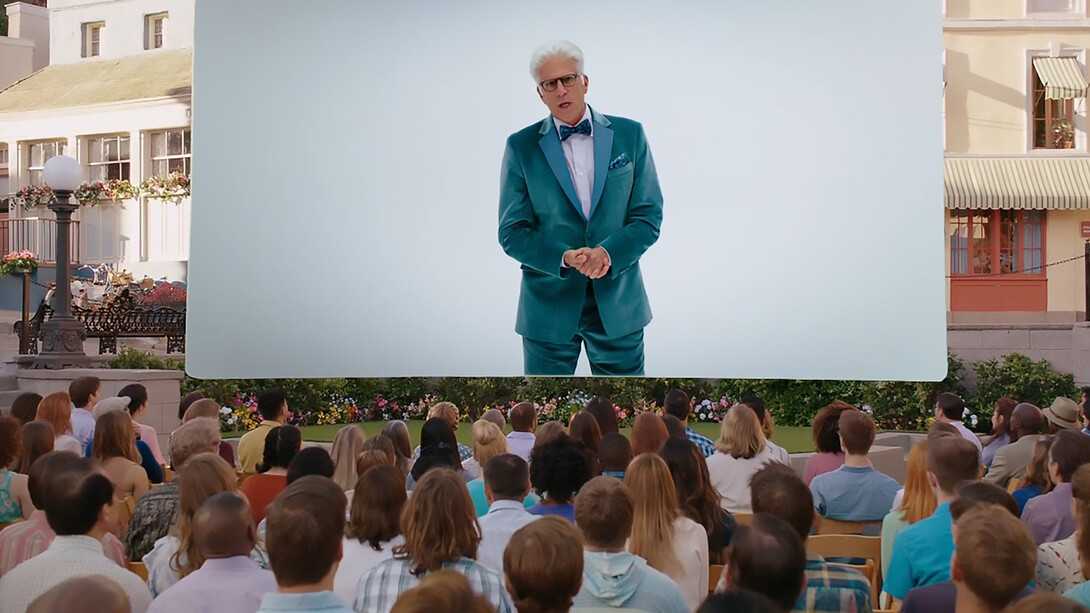
The Good Place is a United States fantasy sitcom available on Netflix. Although the show ended in 2020, I only watched it recently. It begins as a silly, non-pretentious joke about who deserves to go to heaven or hell, but it gradually becomes a philosophical exploration of the idea that we should simply strive to be good people.
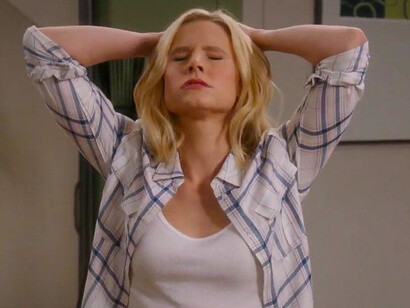
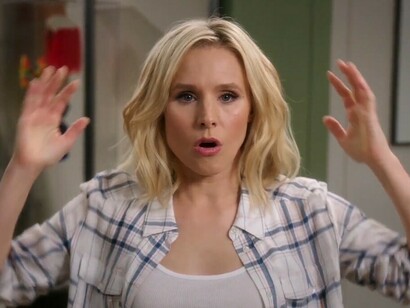
The series opens with Eleanor Shellstrop—our beloved trash bag of a human being, played by Kristen Bell—arriving in heaven. She is shown the city, the routines of the afterlife, and the pleasant eternity that awaits her alongside her assigned soulmate, Chidi, played by William Jackson Harper. The philosophical problem is that Eleanor does not belong there. A mistake has been made, and she now needs the help of her supposed soulmate to keep herself safe in the Good Place.
This traditional idea of heaven—where good actions are rewarded and bad ones punished—echoes Freud’s understanding of morality as a projection of parental authority: we imagine a fatherly figure who judges our behaviour and guides our conscience. While Scanlon approaches morality as a matter of reasoned agreements and duties to others, Freud sees moral rules as internalized authority and projections of parental control, tied to fear, guilt, and unconscious drives. The show cleverly blends these perspectives, letting comedy explore the tension between fear-driven morality and reasoned ethical reflection.
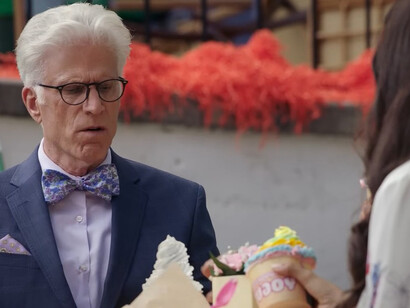
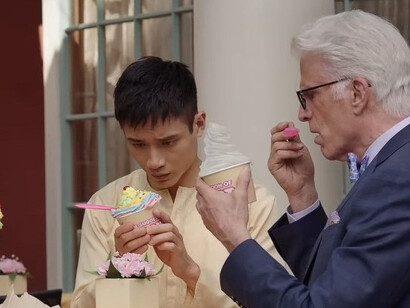
To navigate this journey, Eleanor’s neighbors include an apparently flawless pair: Tahani, a wealthy British socialite who dedicated her life to raising funds for major charities, and Jianyu, a monk who took a vow of silence at the age of seven. At first glance, they clearly deserve heaven—except they do not. Tahani’s good deeds are driven by her desperate need for approval, and Jianyu is not a monk at all, but Jason, a clueless Filipino man who died while attempting to rob a restaurant.
What unites all the characters is the absurdity of their deaths, which reflect the lack of dignity guiding their actions in life. Eleanor dies after arguing with an activist in a car park, getting distracted, and being pushed into the street by a chain of runaway trolleys, only to be killed by a mobile billboard advertising an erectile dysfunction pill called “Engorgulate.” Chidi is crushed by an air-conditioning unit that falls from the sky while he is paralysed by indecision during an argument with his best friend. Tahani is killed when a statue of her sister falls on her as she tries to topple it, desperate to prove her own superiority. Jason suffocates inside a safe with no air, following a disastrously stupid robbery plan. These deaths are deeply sarcastic, turning each character’s flaws into darkly comic moments.
Eventually, they all discover the truth: they are not in the Good Place but in the Bad Place, where they were always meant to be. At this point, the show moves away from a traditional, God-centered concept of heaven. Instead, morality is presented as a points-based system, a cosmic scoreboard measuring every good and bad action. The only way to change their fate is by becoming genuinely good people.
By introducing What We Owe to Each Other by T. M. Scanlon, which appears several times on screen, the sitcom encourages not only its characters but also its audience to reflect on what it truly means to be good, a response mirrored in the book’s increased sales during the show’s run.
Throughout the series, we watch the characters wrestle with what goodness actually means. The show explores everyday moral choices, from giving up your place in a queue to recognising how small actions can emotionally harm others. There could be no better guide for this journey than Chidi, a moral philosophy professor. He is perhaps the most important character, constantly pushing the others to confront their darker sides and to understand that goodness is not a destination but a practice.
As the show ultimately suggests, being a good person involves complex daily choices, empathy, and continuous effort. Eleanor repeatedly searches for an easy formula to become good, only to discover that morality offers no shortcuts. Being good is not a fixed state; it is an endless process of learning, failing, and trying again.
In the series, the characters slowly come to understand what we owe to each other. Living in a society is not simply about being nice or achieving good outcomes, but about treating people with dignity and being able to justify our actions to them.
A clear example of this is Chidi lying to everyone in order to help Eleanor. Normally, lying is morally wrong because it undermines trust and removes people’s ability to make informed choices. In this case, however, the situation is more complicated. Chidi’s intention is not selfish; he wants Eleanor to become a better person and avoid serious harm.
The real moral question is not whether Chidi’s intentions are good, but whether the lie could be justified to the people affected by it. Would they have strong reasons to reject a principle that allows lying in exceptional circumstances like this? Rather than offering simple answers, the show uses this tension to explore what moral justification truly means.
Through laughter and absurdity, the show reminds us that the pursuit of goodness is as messy—and as human—as it is essential.