English
 Español
 Français
 Deutsch
 Italiano
 Português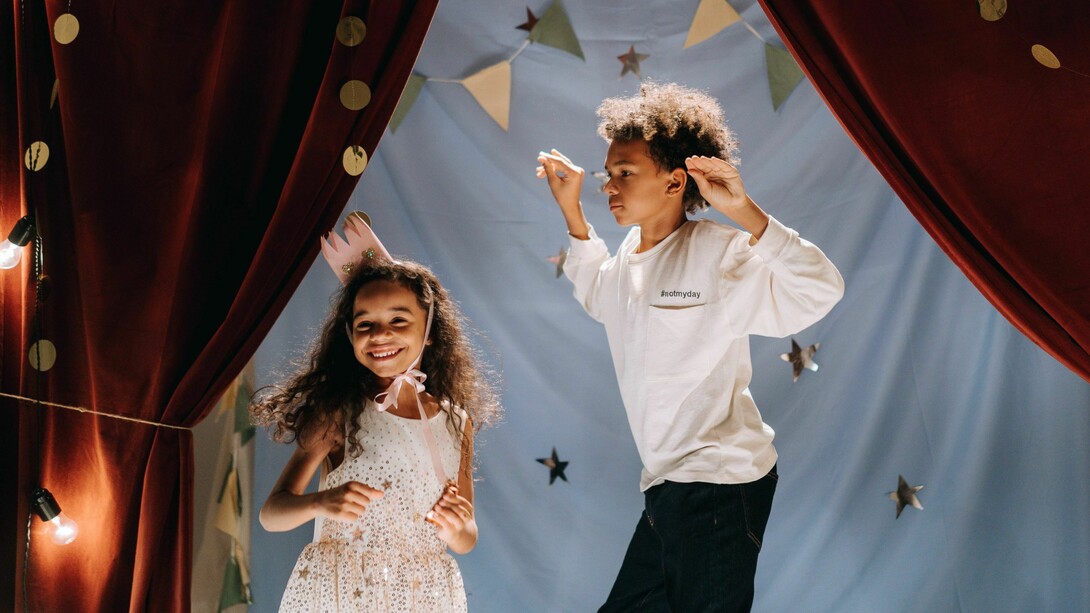
Imagine a child walking into a room that looks like the beginning of a movie. There is a forest, a spaceship, an underwater world, a laboratory, or perhaps an old-fashioned theater set.
The child is not sitting in front of a screen waiting for something to happen. Instead, the child is invited to step into the scene.
A light changes. Music begins. A camera captures the movement. The environment responds. Suddenly, the child is no longer simply visiting a play space. The child is inside a picture show.
This is the central idea behind the moving reels concept, an interactive play environment designed around an unusual souvenir: not a photograph of the experience, but a personalized picture show featuring the visitor.
The concept transforms the traditional souvenir from an object into a story.
From photograph to picture show
For generations, photographs have served as souvenirs because they freeze a moment. A family stands in front of a landmark. A child poses beside a character. Friends gather in front of a themed backdrop.
These photographs preserve evidence that someone was there.
Moving reels proposes something different: What if the souvenir could preserve what happened there?
Instead of receiving only a photograph, visitors could receive a short personalized video—a "Moving Reel"—that places them inside the environment they just experienced.
A child who enters an outer-space room might become the captain of a spacecraft. Another visitor might become an underwater explorer. A group of friends might appear together in a fantasy adventure.
The souvenir could be a one- to three-minute picture show combining recorded movement, environmental effects, music, dialogue, animation, and digital backgrounds.
The result is not merely: "I went there."
It becomes: "This is the story I created there."
The souvenir becomes part of the experience
The important design principle is that the Moving Reel should not feel like an afterthought.
The visitor should understand from the beginning that the environment is building toward a finished picture show.
The experience might follow a simple sequence:
Enter → Play → Perform → Capture → Create → Remember
First, visitors enter a themed environment. They interact with physical objects, props, scenery and projections. Next, they play within the environment.
The system captures selected moments of that interaction. Production technology then combines those moments into a personalized picture show.
At the end, the visitor receives a finished moving reel.
This creates an important psychological shift. The souvenir is no longer something purchased after the experience. The souvenir is the final chapter of the experience itself.
A child becomes the protagonist
Traditional entertainment generally separates the audience from the story.
A movie places the viewer outside the screen.
A theater places the audience in front of a stage.
A playground places the child inside a physical environment but does not necessarily create a lasting narrative record of the play.
Moving Reels brings these ideas together.
The child becomes both participant and protagonist.
Consider a space-themed room. A child might sit inside a simulated spacecraft, move through a sequence of controls, respond to projected objects, and interact with another child or adult.
The finished reel might transform those physical actions into a miniature adventure.
The child doesn’t need to be a professional actor. In fact, the spontaneity of ordinary play may be part of the charm.
A child's laugh, unexpected movement, creative answer, or improvised gesture could become part of the final production.
The technology therefore has a supporting role. The person remains the story.
Authenticity through participation
There is also an important distinction between a personalized Moving Reel and a conventional digitally generated video.
The goal is not simply to insert someone’s face into a prefabricated movie. The experience begins with something the visitor actually did. They physically entered the environment.
They moved through the space. They interacted with props. They made choices.
They played with other people. The finished picture show can therefore represent an authentic memory of participation, even if the environment itself contains imaginative or digitally enhanced elements.
A jungle can be fictional.
A trip to Mars can be fictional.
A magical castle can be fictional.
But the child's experience inside that world is real.
This combination of real participation and imaginative storytelling is what gives the souvenir emotional value.
Designing the Moving Reel
A successful Moving Reel would need to be designed from the beginning as both a physical experience and a media-production system.
Each room could have several predetermined story pathways.
For example:
The space mission: Visitors become astronauts preparing for an unexpected mission.
The jungle expedition: Visitors become explorers searching for a mysterious discovery.
The underwater adventure: Visitors enter an ocean environment populated by projected marine life.
The creative studio: Visitors become performers, artists, musicians, or filmmakers.
The time traveler: Visitors move through different historical or imagined periods.
Each environment could contain specific "story moments" that allow cameras and sensors to capture useful material. Rather than recording everything, the system could identify designated actions.
A visitor opens a door.
A character appears.
The visitor waves.
An object moves.
The visitor makes a discovery.
These moments can later be assembled into a coherent narrative.
The parent becomes part of the memory
Moving reels could also change the role of adults.
Parents frequently spend children’s entertainment experiences behind the camera. They take photographs, record video, supervise activities, and attempt to preserve memories.
Moving Reels could allow parents to enter the story themselves. A parent and child could become explorers together.
Two siblings could become a team. Grandparents could participate with grandchildren.
Adults without children could use the environments for birthdays, reunions, creative events, nostalgia experiences, or social entertainment. The result is a souvenir that represents relationships rather than simply individuals.
Years later, a family might not only remember where they went. They could watch themselves participating together.
A new kind of family archive
This creates another potential dimension of the Moving Reel: the creation of a personal archive. A family could accumulate Moving Reels over several years.
A child’s first adventure might be created at age five. Another could be created at seven. Another at ten.
The environments might change, but the format remains recognizable. Over time, these short picture shows become a visual record of growth, personality, and family relationships.
The souvenir becomes an archive. This is particularly powerful because childhood memories are often preserved through scattered photographs.
Moving Reels could create a more narrative form of preservation. Instead of hundreds of disconnected pictures, a family might have a collection of miniature stories.
The business of memory
From a business perspective, the moving reel also creates opportunities beyond admission. The basic experience could include a digital reel, while visitors could purchase additional formats.
Possible offerings could include:
Digital downloads
Edited family versions
Printed storybooks
Anniversary editions
Themed packages
Birthday packages
Multiple-room adventures
Seasonal productions
Group reels
Membership archives.
The physical environment generates the experience, while the personalized media creates an additional product. This creates a model in which play generates content and content extends the value of play.
However, the business should avoid turning every interaction into an aggressive sales opportunity. The emotional value of the souvenir depends on it feeling like a meaningful conclusion to the experience.
Privacy and children’s media
Because Moving Reels involves children and personalized media, privacy should be part of the concept from the beginning. Parents or guardians would need clear information about how recordings are captured, stored, edited, and delivered.
Participation should be voluntary, with appropriate consent and choices about whether content is retained. The system should also be designed around data minimization and security.
The most valuable Moving Reel may be the one a family can keep privately—not necessarily one designed for public social media. That distinction reinforces the idea that the product is a personal memory, rather than simply promotional content.
The moving reel as the final act
Ultimately, Moving Reels is built around a simple proposition: People remember experiences more deeply when they participate in them.
A traditional souvenir says: "I was here."
A photograph says: "This is what I looked like."
A moving reel can say: "This is the story I lived here."
That is what makes the concept distinctive.
The physical room creates the setting. Play creates the action. Technology captures the experience. Storytelling gives it meaning. The finished Moving Reel gives the visitor something to carry forward.
The souvenir is no longer simply something sitting on a shelf.
It moves.
It plays.
It tells a story.
And most importantly, the visitor is inside it.
Moving reels therefore reimagines the relationship between play, entertainment, and memory. Instead of asking visitors to watch someone else's picture show, it gives them the opportunity to become part of their own.
The ultimate attraction is not merely the room. It is the possibility of walking into an environment as yourself—and walking out with a story in which you became the main character.