English
 Español
 Français
 Deutsch
 Italiano
 Português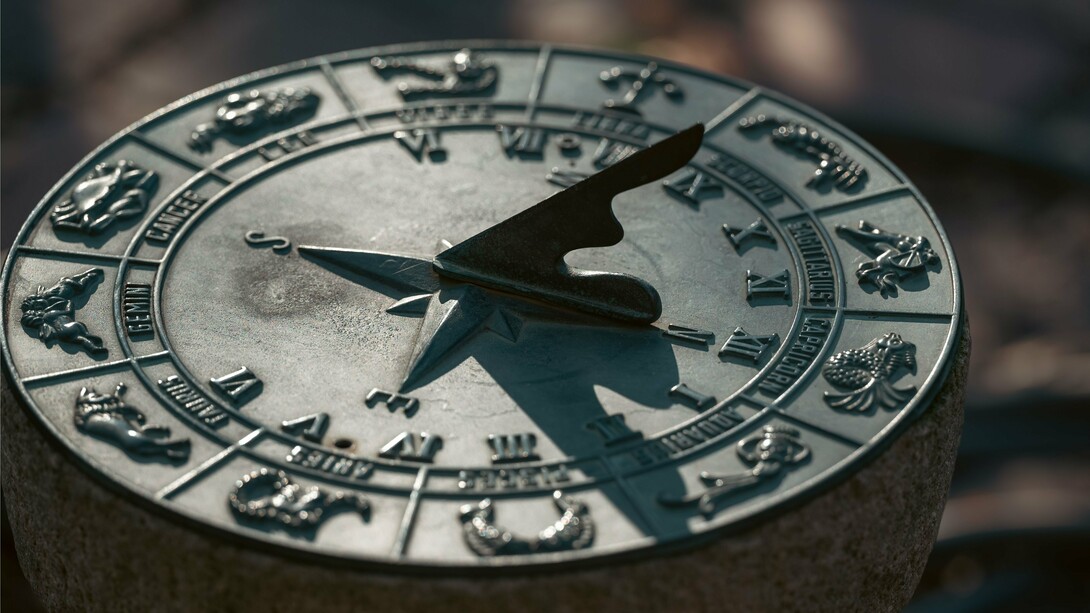
We live in an age where misinformation is no longer the exception; it is the background noise of everyday life. From politics to health to science, false or misleading claims circulate faster than verified facts. One of the most troubling strands of this phenomenon is pseudoscience: ideas that present themselves as scientific while fundamentally rejecting how science actually works.
Pseudoscience is not simply “bad science.” It is a belief system that borrows the language, imagery, and authority of science while ignoring its core principles: testing, falsification, peer review, and openness to revision. The word itself essentially means “false knowledge,” and history is full of examples, from alchemy and phrenology to miracle cures and paranormal claims. What has changed in the modern era is scale. Digital platforms have allowed pseudoscientific ideas to spread globally, persist indefinitely, and evolve faster than traditional institutions can respond to them.
Why this matters goes far beyond abstract intellectual debates. Many of the most important decisions societies make, about medicine, public health, climate policy, and emerging technologies, depend on understanding evidence and uncertainty. Scientific literacy is not simply about knowing facts; it is about understanding how knowledge is produced, tested, challenged, and refined over time.
For years, the US National Science Foundation has used belief in astrology as a rough indicator of whether people can distinguish science from pseudoscience. Astrology may appear harmless, even entertaining, but the underlying reasoning behind it reveals something deeper. The problem is not whether someone casually reads their horoscope; it is the willingness to accept claims that lack empirical support simply because they feel intuitive, emotionally satisfying, or culturally familiar. That same mode of thinking can easily extend into far more consequential areas, such as vaccine scepticism, anti-medical conspiracies, or misinformation surrounding diseases and treatments.
One reason pseudoscience is so resilient is that the line between science and non-science is not always obvious. Philosophers refer to this as the “demarcation problem.” Karl Popper famously argued that scientific ideas must be falsifiable, meaning there must be some conceivable evidence capable of proving them wrong. While this principle remains highly influential, it is not a perfect boundary. Some legitimate scientific theories are difficult to test directly in their early stages, while some pseudoscientific claims are constructed in ways that make them nearly impossible to disprove.
In practice, science is not defined by a single rule but by an entire culture of inquiry. Scientific knowledge advances through a collective process: proposing hypotheses, conducting experiments, sharing findings publicly, allowing criticism, revising conclusions, and replicating results. Science is inherently self-correcting. Pseudoscience, by contrast, often resists correction. Failed predictions are ignored or reinterpreted, contradictory evidence is dismissed, and criticism is framed as persecution rather than engagement.
That distinction becomes especially visible in the way pseudoscientific communities communicate. Scientific disciplines thrive on disagreement because criticism strengthens understanding. Pseudoscientific movements, however, often rely heavily on certainty. They present complex issues as simple, offer emotionally satisfying explanations, and frequently portray mainstream experts as corrupt, biased, or part of some hidden agenda. In many cases, the appeal lies less in evidence and more in psychological comfort. People are naturally drawn to explanations that provide clarity, certainty, or a sense of control in an unpredictable world.
Astronomy-related pseudoscience offers a revealing example of how these beliefs persist. Astrology, UFO theories, and ancient alien narratives all adopt the aesthetics of science while rejecting its standards. They reference planets, space, energy, or advanced civilisations in ways that sound scientific to non-specialists, despite lacking empirical support.
Long-running surveys at the University of Arizona, covering more than 13,000 undergraduate students across three decades, show that belief in such ideas is both widespread and remarkably stable. Around 40% believe planetary positions influence daily life or that some people possess psychic abilities. A quarter believe in faith healing or lucky numbers. Crucially, these beliefs show little correlation with actual scientific literacy and have changed surprisingly little over nearly thirty years.
National surveys paint a similar picture. Data from the National Science Foundation and Chapman University suggest that belief in paranormal and pseudoscientific claims is not disappearing in the information age. If anything, some beliefs expanded significantly through the 1990s and have remained deeply embedded in modern culture ever since. Only a minority of respondents reject all paranormal claims entirely, while many simultaneously hold multiple unsupported beliefs. This suggests that the issue is not simply a lack of information but a broader misunderstanding of how evidence itself should be evaluated.
The internet has intensified these dynamics dramatically. Before the digital age, information passed through gatekeepers such as publishers, universities, journalists, and scientific institutions. While imperfect, these systems provided at least some level of verification and editorial oversight. Today, online platforms reward engagement rather than accuracy. Content that is emotionally provocative, controversial, or conspiratorial often spreads faster than careful scientific explanations because it captures attention more effectively.
In these online spaces, pseudoscience does not need to prove itself rigorously; it only needs to sound plausible, emotionally compelling, or socially validating. Algorithms further reinforce this process by repeatedly exposing users to content similar to what they already engage with, creating informational echo chambers where false claims can appear overwhelmingly credible through repetition alone.
This article examines the rise of pseudoscience by looking at how often pseudoscientific topics appear in digitised books and how frequently they are searched for online. These measures are imperfect. Mentions in books reflect what authors choose to discuss, while search trends capture curiosity rather than direct belief. Someone searching for astrology may be sceptical rather than convinced. Still, taken together, these patterns provide a useful window into how pseudoscientific ideas attract attention, remain culturally visible, and evolve over time.
Understanding pseudoscience is not merely an academic exercise. It is increasingly tied to questions of public trust, institutional legitimacy, and social decision-making. In a world saturated with information, the challenge is no longer access to knowledge but distinguishing credible evidence from persuasive imitation.
Pseudoscience is no longer confined to the cultural margins. It has become a persistent feature of the modern information ecosystem, adapting itself to new technologies, social anxieties, and media environments. Recognising its rise is not about dismissing curiosity, scepticism, or alternative thinking. Rather, it is about understanding how easily the appearance of science can replace its substance and why that substitution can carry consequences far beyond the internet. (Impey)
Notes
Impey, Chris. ““The Truth Is out There”: Tracking the Rise of Pseudoscience Article Metadata.” CAPjournal.