English
 Español
 Français
 Deutsch
 Italiano
 Português
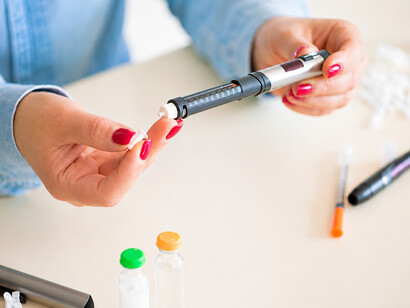
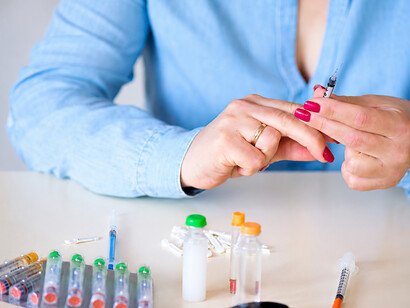
For more than a century, insulin has been the foundation of type 1 diabetes treatment. It transformed a once-fatal disease into a manageable condition and remains one of medicine’s greatest breakthroughs. Yet even today, millions of people still live in constant negotiation with their bodies, balancing injections, glucose monitors, meals, sleep, stress, and the fear of dangerous fluctuations.
Professor Ekaterine Berishvili believes the next era of diabetes treatment may no longer be about better management but about rebuilding lost biological function.
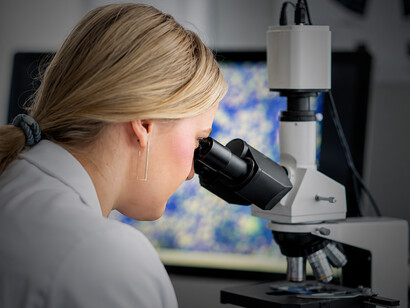
At the University of Geneva Faculty of Medicine, the Georgian scientist is leading one of Europe’s most closely watched regenerative medicine projects: the development of a bioartificial pancreas. Supported by the EU-funded Vanguard programme, the research aims to create a living implant capable of restoring insulin production inside the body.
The concept sounds futuristic, but the science behind it is already advancing rapidly.
“The goal is not simply to deliver insulin differently,” Berishvili explains. “The goal is to restore the body’s own ability to respond to glucose.”
Unlike current “artificial pancreas” technologies, which rely on external devices such as insulin pumps and glucose sensors, the bioartificial pancreas is designed as a biological solution. Instead of calculating insulin from outside the body, the implant contains living insulin-producing cells capable of sensing glucose and reacting naturally.
At the centre of the project is an engineered microenvironment built to help those cells survive.
The implant uses biomaterials derived from human amniotic membrane, a tissue naturally associated with protection and support during pregnancy. Researchers transform this material into a soft three-dimensional structure where insulin-producing cells can live and function.
The team also engineers tiny blood vessels directly into the implant, allowing it to connect quickly with the patient’s circulation after transplantation.
This detail is critical.
One of the biggest historical problems in islet transplantation has been oxygen deprivation. Insulin-producing cells are highly sensitive, and many die shortly after transplantation before they establish a sufficient blood supply.
“Our approach is not simply about transplanting cells,” Berishvili says. “It is about creating the right environment for those cells to survive and integrate into the body.”
The project represents a major shift in thinking within regenerative medicine. Instead of replacing organs entirely, researchers are increasingly exploring ways to rebuild specific biological functions through living tissues, engineered cellular systems, and biomaterials.
For Berishvili, this philosophy extends far beyond diabetes.
“For decades, medicine has mainly focused on compensating for lost function,” she says. “Insulin, dialysis, medications – these treatments save lives, but they often manage disease rather than restore biology.”
The promise of regenerative medicine, she believes, lies in changing that relationship.
Still, despite the excitement surrounding the project, Berishvili speaks carefully about timelines and expectations. The research remains in the translational stage, where laboratory results must prove they can function safely and reliably in humans.
“What works in small animal models does not automatically work in people,” she says. “Scaling the implant to human dimensions while maintaining oxygen supply, stability, and immune protection remains one of the biggest challenges.”
Another major obstacle is the immune system itself.
Current cell-based therapies for Type 1 diabetes often require lifelong immunosuppression to prevent rejection of transplanted cells. While effective, such treatments carry risks, including infections and other complications.
The Vanguard team is working on strategies to reduce that burden.
The biomaterial surrounding the cells already helps reduce local inflammation and creates a more supportive environment, but researchers are also exploring additional immune-protection approaches designed to make transplanted cells less vulnerable to attack.
“The challenge", Berishvili explains, “is protection without isolation. The cells still need oxygen, nutrients, blood vessels, and the ability to respond rapidly to glucose levels.”
Despite the scientific complexity, the human side of the work remains central to her motivation.
Born and educated initially in Georgia before continuing her scientific career in Switzerland, Berishvili says she was drawn early to diabetes research because of how deeply the disease shapes everyday life.
“Type 1 diabetes is not abstract,” she says. “It affects every hour of a person’s day.”
One of the turning points in her career came when her research focus shifted from the transplantation of insulin-producing cells alone toward the idea of engineering a complete biological environment around them.
That conceptual shift eventually led to the development of Amniogel and later to the broader Vanguard initiative involving international collaboration across multiple scientific disciplines.
Today, Berishvili sees regenerative medicine entering a new phase where different technologies — stem-cell-derived islets, engineered tissues, immune-modified cells, and biomaterials — are advancing simultaneously.
“I do not believe there will be one single solution,” she says. “Progress will likely come from combining multiple scientific advances into therapies that are safe, durable, and accessible.”
For patients, the implications are profound. Success would not only mean fewer injections or less dependence on monitoring devices. It would mean reclaiming mental and emotional space long occupied by the disease itself.
“Diabetes lives in a person’s mind constantly,” Berishvili says. “Real success would mean giving people back that freedom.”
The bioartificial pancreas is not yet a cure, and Berishvili is careful never to present it that way. But the project reflects something larger now unfolding across modern medicine: a transition from external disease management toward rebuilding the body’s own capacity to function.
For millions living with Type 1 diabetes, that shift may ultimately change far more than treatment alone.