English
 Español
 Français
 Deutsch
 Italiano
 Português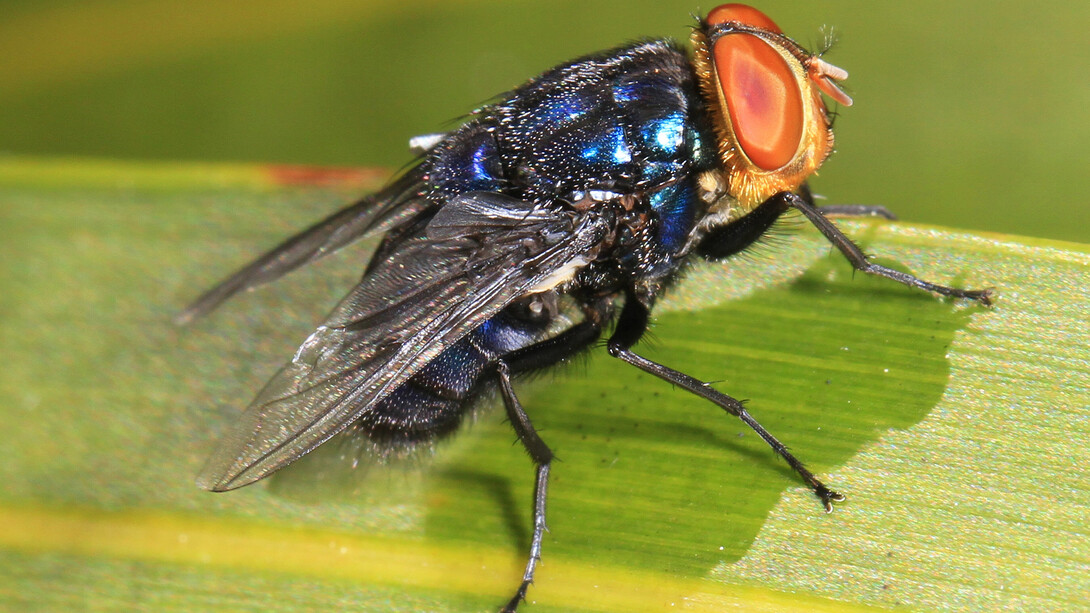
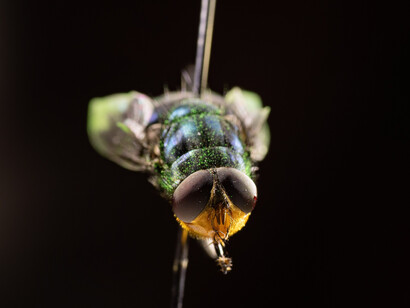
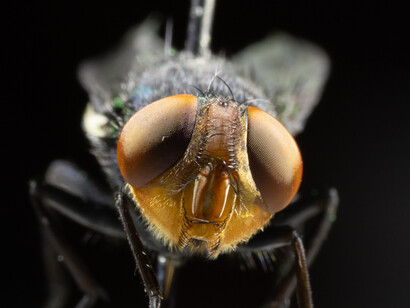
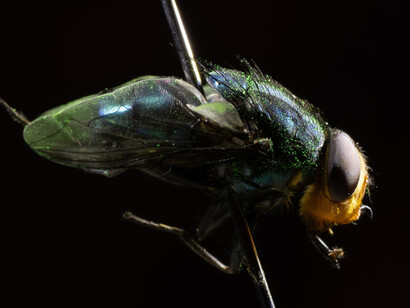
During these times of human conflict, it’s important to remember that scientists and international agencies continue a long tradition of cooperating to protect and promote public health. The USA, Mexico and Panama built a biological wall to keep the New World Screwworm, or NWS (Cochliomyia hominivorax) from entering Central and North America 1-2. It’s really a type of parasitic fly whose larvae look like worms. They are native to tropical regions of the Americas. While many fly maggots eat dead flesh, the NWS larva is unique in that the mother lays eggs inside living animals. Females lay their eggs on or in open wounds on live warm-blooded animals, and when they hatch, the young maggots burrow in and eat their hosts alive. If untreated, they can kill the animal in as little as a week. They were a major problem for farmers in the USA during the 1930s and 1940s. They infested farms and killed livestock across the southern USA, causing $10 million worth of annual livestock losses in Texas in 1935. They weren’t a problem in the USA for the following decades.
In the 1950s, American ranchers petitioned the Department of Agriculture (USDA) to find a solution to the NWS problem. This was during the nuclear age, when scientists were learning about the effects of radiation on living organisms. A research team based in Texas discovered that bursts of gamma rays could sterilize male screwworm flies without preventing them from mating. The researchers quickly developed a plan using the technology, which came to be called the sterile insect technique (SIT). They bred millions of screwworm flies and sterilized the males with radiation.
Specialized aircraft released the infertile males into infested areas to mate with the females. Since the screwworm females would lay infertile eggs, later generations would not be born, killing the targeted population. In 1953, the USDA conducted their first field test on Sanibel Island, Florida. By the late 1950s, the NWS was eradicated in Florida. The program was taken west through Alabama, Mississippi, and Louisiana. There was unprecedented cooperation between federal agencies, state governments, and individual ranchers.
Veterinarians and ranch hands were trained to identify and report cases of NWS infestation. The USDA would then use the information to strategically distribute sterile flies from aircraft.
The campaign worked well until they got to Texas. The problem was that the NWS population spanned the USA and Mexico. So, in 1972, the U.S. and Mexico signed the USA. and Mexico formed the Mexican American Commission for the Eradication of Screwworms. The established a sterile fly production facility in the Mexican state of Chiapas, NWS surveillance networks across Mexico, training programs for Mexican veterinarians and agricultural workers, as well as creating quarantine zones and inspection points.
Then the NWS extermination effort moved further south. Eventually it reached Panama, where a permanent barrier zone was established. A sterile fly production facility was established in Panama to maintain this barrier and prevent reinfestation from South America. The facility in Panama became a global model for pest control. The technique was applied to other invasive insect species worldwide. Thanks to widespread international collaboration on the SIT, the NWS was eradicated in the USA in 1982, Guatemala and Belize in 1994, El Salvador in 1995, and Honduras in 1996. The USDA still drops 14.7 million sterilized screwworms over the rainforest that separates Panama and Colombia every week. In total, more than one trillion sterilized insects have been transported from the over 50 sterile insect factories built around the world since SIT first started in the 1950s.
The biological wall can only stop that which comes up against it. Unfortunately, the NWS managed to get all the way across the Atlantic Ocean to invade Africa. So, it found its way around the border between the USA and Mexico. In 2016, the Florida Keys were abruptly overrun by NWS. The island paradise became a nightmare zone, with animals wandering around with gaping wounds, maggots falling out of them as they stumbled about. In late 2022- early 2023, the wall failed entirely. Scientists aren’t sure why yet, though it could be down to the fact that during the COVID-19 pandemic, monitoring and surveillance of the region were decreased, and at the same time, illegal cattle trafficking increased. Infected cattle could have slipped across the border without detection.
The result was catastrophic, and a wave of NWS began racing its way up through Panama and the rest of Central America. From there, it continued up into Mexico. The NWS factory in Panama has been pushed to maximum capacity. They breed and sterilize as many as possible and send sterile flies in an ongoing struggle to halt the oncoming storm. It hasn’t been enough to keep it out of the USA. As of August 2025, Texas has launched an $850 million project to combat the emerging threat. If the flies can gain ground in Texas again, the cost to ranchers alone would be devastating, not to mention the environmental cost to literally every other warm-blooded animal in the country, including us. On August 24, 2025, the US confirmed its first case of the NWS in a human, when a Maryland resident returned home from a trip to Central America with an unwelcome stowaway.
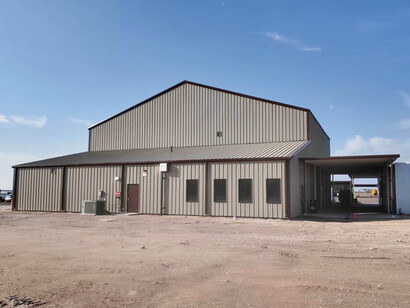
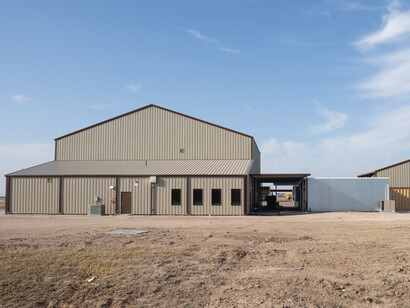
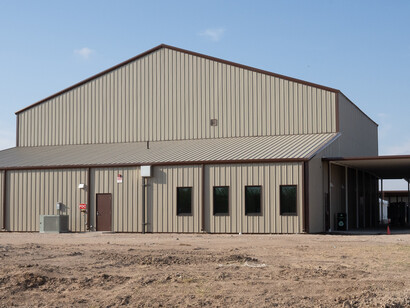
The USDA Secretary of Agriculture, Brooke L. Rollins, announced the largest initiative yet in the USDA’s plan to combat the NWS 3. This announcement followed the USDA’s plan that they issued in June 2025 to combat the northward spread of NWS from Mexico into the USA. The APHIS modified an existing building at Moore Air Base in South Texas to establish a domestic sterile insect dispersal facility. Construction of the $8.5 million facility was completed in February 2026 4. It can process up to 100 million flies a week, sourced from the existing production facility in Panama and, eventually, the facility USDA is helping renovate in Mexico.
While sterile flies are currently the most effective way to prevent the spread of NWS, technology continues to improve. So, the USDA is investing $100 million in viable innovations and promising technologies. Hopefully, this will help the facility in the USA and accelerate sterile fly production if proven successful. Importantly, this is part of an extensive contingency plan should NWS one day be detected in the USA.
APHIS is working in collaboration with the National Service of Agri-Food Health, Safety and Quality (SENASICA) in Mexico to help them contain the pest south of the border. They will increase oversight and surveillance. This will help them report cases better. They will prevent further spread by providing traps, lures, training, and verification of Mexican NWS activities. Successful implementation will help future trade decisions that affect cattle movements on the southern border.
Since announcing the plans in June, the USDA Secretary Rollins worked with federal and state partners to keep NWS out of the USA and prepare for all contingencies. After a case of NWS was reported 370 miles south of the USA-Mexico border in July, Secretary Rollins closed southern ports of entry to livestock trade. This new northward detection came about two months after northern detections were reported in Oaxaca and Veracruz, less than 700 miles away from the border. This triggered the closure of our ports to Mexican cattle, bison, and horses on May 11, 2025.
Also, the USDA is investing $21 million to renovate an existing fruit fly production facility in Metapa, Mexico. It will provide an additional 60-100 million sterile flies. APHIS technical experts developed a comprehensive work plan and will continue to share their expertise to help Mexico bring this facility online as fast as possible.
However, NWS may be able to infect dogs and cats, too. So, the FDA Center for Veterinary Medicine (CVM) has issued multiple emergency use authorizations (EUAs) and conditional approvals for drugs to treat and prevent NWS in animals, including Dectomax-CA1 for cattle, Credelio and Credelio Quattro-CA1 for dogs and NexGard products for pets 5-6. The FDA issued two Emergency Use Authorizations (EUAs) – one for NexGard (afoxolaner) chewable tablets for the treatment of NWS infestations (myiasis) in dogs, and the second for NexGard COMBO (esafoxolaner, eprinomectin, and praziquantel topical solution) for the treatment of NWS myiasis in cats.
For NexGard, the FDA concluded that it is reasonable to believe that NexGard may be effective in the treatment of NWS myiasis in dogs and puppies, and the known and potential benefits of the product outweigh its known and potential risks. As of February 18, 2026, NWS has not been detected in the United States. Most dogs and cats in the USA are at low risk of NWS due to their geographic location. However, pets near the USA -Mexico border and pets that have traveled to countries with active NWS cases are more likely to be exposed to NWS.
NexGard chewable tablets, which contain the active ingredient afoxolaner, are approved as a treatment and preventative for flea infestations in dogs and puppies. NexGard is given orally at the minimum dosage of 1.14 mg/lb (2.5 mg/kg). and should be used in conjunction with the mechanical removal of larvae remaining in the wound after treatment, according to the FDA.
NexGard COMBO is a topical medication with the active ingredients esafoxolaner, eprinomectin, and praziquantel. It has been approved for the prevention of heartworm disease, and treatment and control of roundworm, hookworm, and tapeworm in cats and kittens, among other indications. The dose is a minimum of 0.055 mL/lb (0.12 mL/kg) and should be applied topically according to body weight. Boehringer Ingelheim is the sponsor of both antiparasitic drugs, which require a prescription from a licensed veterinarian. When used to treat NWS larvae infestations, these drugs should be used in conjunction with the mechanical removal of larvae - live and dead – that remain in the wound after treatment, according to the FDA.
Credelio chewable tablets were authorized to treat NWS on October 24, 2025, for use in dogs and puppies 8 weeks and older. Then on November 21, 2025, the FDA authorized Credelio Cat (lotilaner) chewable tablets for use in cats and kittens 8 weeks and older. Both of them are prescription medications and already approved flea and tick treatments.
The FDA issued an Emergency Use Authorization (EUA) for Ivomec (ivermectin) injectable solution against NWS 7. The agency has concluded that Ivomec may be effective for the prevention of infestations caused by NWS larvae (myiasis) in cattle when administered within 24 hours of birth, at the time of castration, or when a wound appears, and the known and potential benefits of the product outweigh its known and potential risks. Ivomec is not for use in female dairy cattle producing milk for human consumption and calves that will be processed for veal. The slaughter withdrawal period for cattle is 35 days. This EUA will be effective until it is revoked, or the HHS Secretary terminates the declaration that the potential public health emergency presented by NWS justifies the emergency use authorization of animal drugs for NWS.
Ivomec is available over the counter without a prescription. Producers are responsible for using Ivomec in accordance with the product labeling and fact sheet. To reduce the risk of antiparasitic resistance and preserve drug effectiveness against both NWS and other parasites, producers are encouraged to use antiparasitic drugs like Ivomec only when medically necessary and as part of a comprehensive parasite management strategy. The FDA has previously approved Ivomec to treat and control other parasites in cattle, swine, reindeer, and American bison.
Notes
1 Smith, D. What is the Great Worm Wall? The Daily Concept. 2024.
2 Orr, R. A border wall of flesh. World Journal. 2025.
3 U.S. Department of Agriculture. USDA Announces Sweeping Plans to Protect the United States from New World Screwworm. 2025.
4 USDA. USDA Announces Completion of Sterile Fly Dispersal Facility in Texas. February 9, 2026.
5 U.S. FDA. FDA Issues Emergency Use Authorizations for Drugs to Treat New World Screwworm in Dogs and Cats. 2026.
6 AVMA. FDA grants emergency use authorization for more screwworm treatments in animals. 2026.
7 U.S. FDA. FDA Issues Emergency Use Authorization for Over-the-Counter Injectable Drug to Prevent New World Screwworm in Cattle.