English
 Español
 Français
 Deutsch
 Italiano
 Português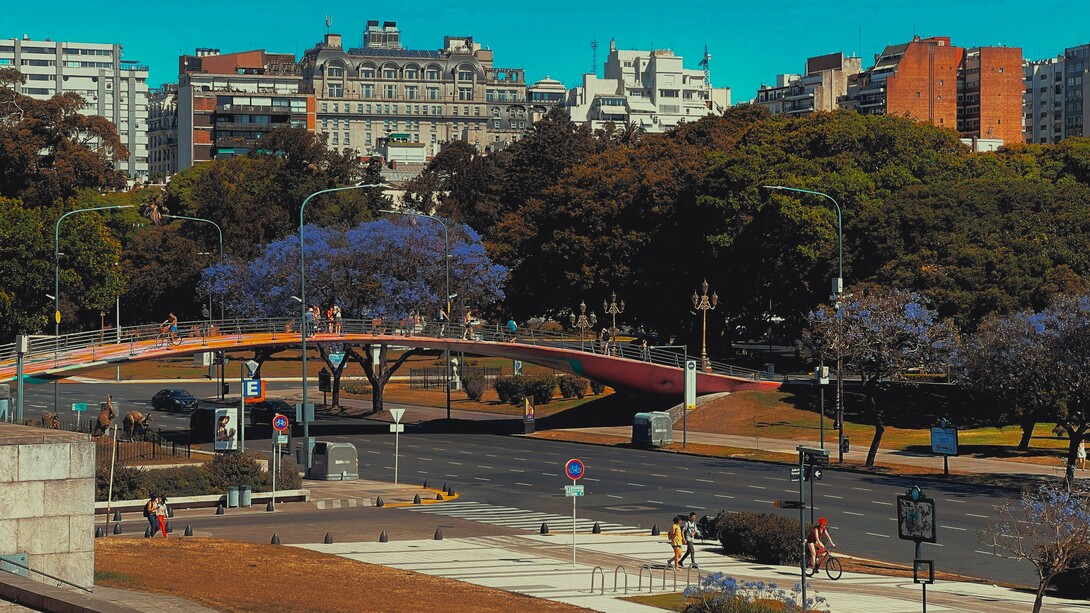
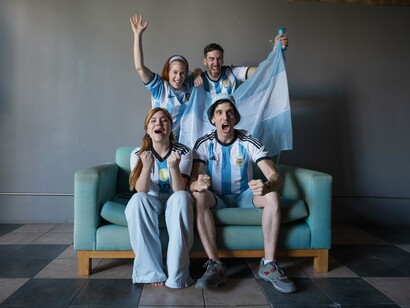
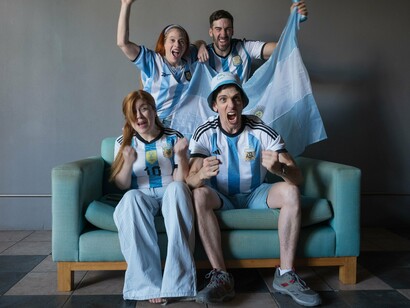
I'm putting the finishing touches on this piece a few days after the World Cup final. I'm writing from Buenos Aires, where winter has settled in and, with every passing hour, the defeat hurts a little more. It hasn't been an easy year to be Argentine. In June, we lost Carlos Alberto "Indio" Solari—the closest thing this country has to a secular prophet. Only in Argentina can God die twice. And now this.
This was an unusual World Cup for Argentina. We all knew winning a second consecutive title would take something close to a miracle. But performances like the one against Egypt gave us permission to believe again. In the days leading up to the final, we found lucky omens everywhere: numerology, coincidences, and patterns that suddenly felt like destiny. Losing was devastating. And spare me the cliché about "gracious losers." There is no such thing. Just look at Mbappé.
I won't waste either your time or mine debunking every myth and fabrication that circulated about Argentina throughout this World Cup. One user on X captured the absurdity perfectly: "According to the internet's version of events, Argentina is Schrödinger's country. We're simultaneously Aryan Nazi racists and "worthless Black Indians"; a fifth-world backwater and a geopolitical powerhouse capable of rigging FIFA; a helpless colony and an imperialist state." We are, somehow, all of those things at once. Nor is there much point in arguing with celebrities who decided to weigh in. As an old Chilean saying goes, opinions are plentiful in the mouths of fools.
I'd rather dwell on two things. The first is pointing out the peculiar contradiction of denouncing Argentines as racists, xenophobes, and every other conceivable variety of bigot while, in many cases, directing that accusation through outright verbal or physical aggression.
One of my closest friends lives in Paris. During the Argentina–Egypt match, she was verbally assaulted on the Métro by a man who, in a remarkable display of anti-racist conviction, began shouting that her country was racist as several bystanders filmed the scene on their phones. She had just finished work. She wasn't chanting patriotic slogans or proclaiming Argentina's civilizational superiority. She was simply chatting amiably with an Egyptian colleague about the match. Apparently, one has to choose one's battles. If anti-racism is your cause, a little misogyny is apparently a price worth paying. This is hardly an isolated incident; social media has supplied thousands more.
That brings me to an uncomfortable point. It is difficult to argue that Argentina is neither racist nor xenophobic when the country's own government routinely reinforces precisely those prejudices. The current administration has dismantled INADI, the national agency responsible for monitoring and addressing discrimination, which makes it rather difficult even to produce up-to-date official data on the issue.
Then there is the language. The president and his entourage have made insults a form of political communication, deployed daily across social media. Santiago Caputo, arguably the administration's most influential adviser, celebrated Brazil's elimination from the tournament by posting on X that "Black people bring bad luck" (but he used explicit language; this is the nice version). He may eventually have to eat those words if Kiki Ramós—a teenage footballer of Haitian descent who has already been called up to Argentina's Under-17 squad—makes it to the senior national team.
Which is why I find it increasingly difficult to defend Argentina's reputation abroad when those in power are themselves busy promoting fantasies of Argentine civilizational superiority. Faced with international criticism, their instinct is not reflection but a louder, cheaper nationalism. Days after the World Cup final, deputies from La Libertad Avanza (Milei’s party) floated yet another proposal to charge non-resident foreigners for public universities and healthcare. It is an old threat, largely symbolic and almost entirely ineffective: the number of people who would actually be affected is negligible. If the government's concern were genuinely immigration policy rather than political theater, it would make far more sense to revisit the country's residency rules instead.
The government, however, is hardly a faithful reflection of Argentine society. Its nationalism is performative and oddly selective. It wants to charge foreigners for universities and public healthcare while bankrupting state-owned companies, shedding thousands of jobs and leaving countless others buried in debt. That hardly qualifies as patriotism. But neither is the answer the one increasingly favored by parts of the local media, who now seem determined to parade Afro-Argentines across television panels and streaming shows as evidence that the country has solved its racial anxieties. It has the unmistakable flavor of that old refrain: "How could I possibly be prejudiced? I have Jewish, gay, and Black friends."
I'm heterosexual, university-educated, and, by Argentine standards, could probably be described as white. I was born here, studied here, and work here. That hardly makes me the right person to deliver a definitive verdict on whether Argentina is a racist country. I've never experienced racial discrimination myself—sexism, certainly, but that's another discussion. I teach at a public university, and some of the most difficult stories I've heard come from students who left their home countries because higher education had simply become unattainable there. It is worth asking what it says about Chile or Brazil that, for many young people, migrating to Argentina is the cheaper option, despite everything such a move entails.
Responding to international criticism with resentment or right-wing populism is no response at all. At the first sign of adversity, the populist right reaches for the same familiar scapegoat: migrants. They must be made to pay. It is the politics of manufactured scarcity, a hallmark of authoritarian nationalism. There is room for everyone in Argentina's universities and hospitals, yet the right insists that migrants' access to education and healthcare somehow comes at the expense of Argentine citizens. It doesn't. Even if one accepts that distinction in the first place—which I don't—the numbers simply don't support the claim.
According to Argentina's Secretariat for University Policies, only 4.2 percent of university students are foreign nationals, a figure that also includes exchange students. The real crisis facing both public universities and the healthcare system is chronic budgetary strangulation, something President Javier Milei continues to deny.
The other subject I want to address is the Argentina–England match.
To understand why that fixture still carries such extraordinary emotional weight in Argentina, one has to go back almost two centuries, to 1833, when Britain seized the Falkland Islands—Las Malvinas, as they are known in Argentina. That act inaugurated a long colonial dispute whose defining moment came in 1982 with the Falklands War, one of the most traumatic episodes in modern Argentine history.
It remains traumatic partly because the war was launched by a military dictatorship responsible for the disappearance of thousands of its own citizens in a desperate attempt to shore up its collapsing legitimacy. And yet the decision to reclaim the islands continues to command broad public support across the political spectrum. Argentines have never quite resolved the contradiction between rejecting the dictatorship and embracing one of its defining acts. Nor, for that matter, has the dispute over the islands ever truly been settled.
Britain won the war. The dictatorship fell soon afterwards, and four years later, at the 1986 World Cup in Mexico, Argentina defeated England in one of the most storied matches in football history. That was the afternoon Diego Maradona scored both the infamous Hand of God goal and the breathtaking solo effort that would later be christened the Goal of the Century. The story has been told countless times, but never, in my view, better than in The Match, the superb documentary by Juan Cabral and Santiago Franco. It premiered only a few weeks before the tournament to modest audiences. Then the World Cup draw paired Argentina with England in the quarter-finals, screenings sold out overnight, and pirated links began circulating online with remarkable efficiency—a peculiarly modern measure of cultural success.
After Argentina's victory over England in 2026, the players unfurled an improvised banner made from a hotel bedsheet bearing a simple message:The Malvinas are Argentine. Outside the country, the gesture was condemned in some quarters as an unnecessary provocation. At home, however, the reaction was closer to euphoria.
Britain's The Sun splashed the headline "Argie Arrogance" across its front page. Argie is not a neutral shorthand for Argentines; it is a slur, much as Paki has long been used against South Asians in Britain. Curiously, I saw little outrage from the international commentariat over that particular choice of words. The Argentine government, for its part, distanced itself from the players' gesture while adding that it was understandable in the emotional context of a football match.
In the end, none of the heroic narratives mattered. Argentina lost the final. Football, after all, is decided by goals, not aesthetic merit or moral deservingness. Whatever one thinks of the result, meritocracy has very little to do with it. And yet, by this point, it should be obvious that football has never been just a game. It is also a multi-billion-dollar industry, and FIFA president Gianni Infantino has been refreshingly candid about that.
According to The Guardian, the 2026 World Cup generated around $15 billion in revenue for FIFA. I have little patience for conspiracy theories, including those claiming Argentina was somehow punished for the Malvinas banner or that FIFA needed a European champion to strengthen Infantino's prospects of re-election. Still, I cannot dismiss those ideas as completely implausible. We are talking, after all, about the same Gianni Infantino who saw fit to overturn a suspension imposed on an American player after receiving a phone call from Donald Trump.
Whether any of those theories are true is ultimately beside the point. They would not change the scoreline, nor would they return the trophy to Buenos Aires. What I object to is the persistent insistence that football is just football. History tells a different story. One needs only to remember the so-called Football War between Honduras and El Salvador in 1969 or, more recently, the United States' decision as the World Cup host to deny visas to Iran's national team.
Football has never existed in a political vacuum. It is another arena in which power—economic, diplomatic, and ideological—is contested, performed, and, occasionally, disguised as sport.