English
 Español
 Français
 Deutsch
 Italiano
 Português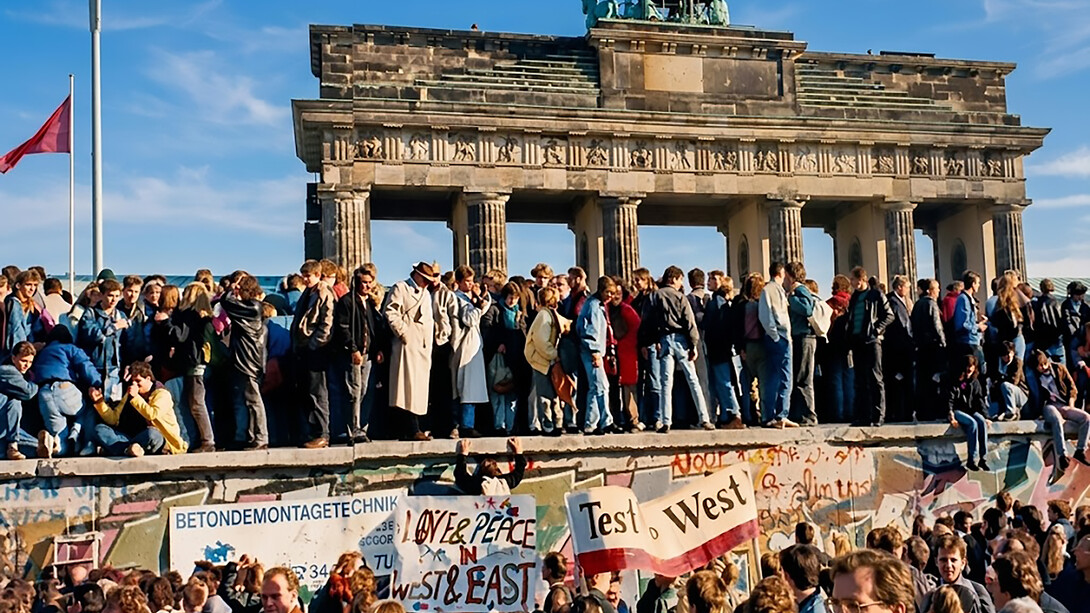
The interplay between the collective mind and political influence defines the modern era. Gustave Le Bon’s seminal work, The Crowd: A Study of the Popular Mind, remains a cornerstone for understanding how individuals within a mass transform into entities driven by emotion and the unconscious. In contrast, Joseph Nye, in his book Soft Power: The Means to Success in World Politics, introduces the modern instruments used by states to attract or control these masses without coercion. The synthesis of these two concepts offers a profound framework for understanding the dynamics of contemporary mass uprisings and their capacity to destabilise even the most entrenched regimes.
The metaphor of mind and spirit
Gustave Le Bon famously describes the individual within a crowd as "a grain of sand amid other grains of sand, which the wind stirs up at will." In this state, individual logic evaporates, replaced by a collective mind that is both emotional and impulsive. Yet, this impulsiveness does not emerge from a vacuum; it requires a magnet. Here, Joseph Nye’s metaphor of soft power as "cosmic gravity" becomes relevant—an invisible force that causes celestial bodies (or individuals) to orbit it voluntarily. The union between the drifting "grain of sand" and this "gravity" constitutes the essence of modern politics: the masses are not led by chains, but by mental images that capture their imagination, prompting them to execute the will of soft power as if it were their own.
The crowd: the engine of historical action
Le Bon argues that a crowd is not merely a human gathering but a "living creature" with a provisional soul. Within this framework, complex philosophical theories are distilled into "simple images" and "passionate slogans"—the only forms capable of penetrating the collective mind. Crowds do not think; they experience emotions. Consequently, a leader who grasps this reality does not appeal to reason but addresses the "unconscious" through "personal prestige", a form of magnetic charm. Napoleon exemplified this when he adopted the religious veneers of the nations he conquered, capturing their hearts before their cities.
Soft power: the art of political seduction
Conversely, Joseph Nye shifts the focus from the psychology of the mob to the strategy of the state. Soft power is the ability to attract rather than coerce. A state possessing an appealing culture, liberal political values, and a foreign policy perceived as morally legitimate wields a power that makes others want what it wants. In this context, the "global public" becomes the target. Instead of deploying tanks, the state exports films, music, and ideas that create a positive "psychological contagion" toward its model.
Contemporary uprisings: breaking gravity
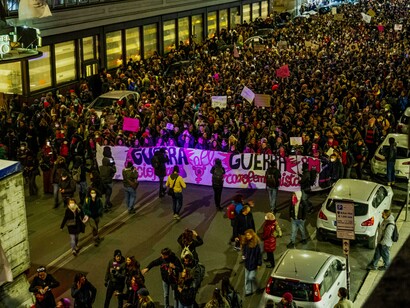
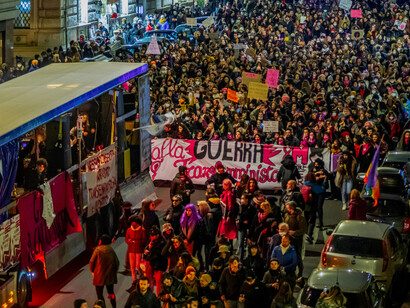
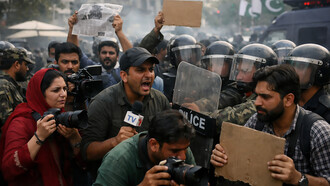
In the modern age, social media has become a transnational "mass engine". Contemporary uprisings are a living embodiment of Le Bon’s "psychological contagion". When a single image captures the public imagination, a collective emotional reservoir explodes. At this juncture, the regime's soft power is put to the test. If a system has lost its "attraction" and relies solely on hard power (repression), the crowd gains a "sense of overwhelming power resulting from numbers". They become ready for absolute heroism or total destruction, as the instinct for self-preservation vanishes before the reign of the revolting collective spirit.
Pressure of the squares: the masses and global decision-making
One of the most significant shifts in international politics is the role of "the street" in influencing decisions at global summits.
Legitimacy as soft pressure: leaders recognise that decisions lacking public support also lack legitimacy—a pillar of soft power.
Fear of contagion: when the masses rise in one state, leaders in neighbouring summits tremble at the prospect of "psychological contagion". This fear translates into preemptive political decisions or shifts in international alliances.
Manufacturing public opinion: great powers utilise soft power to provoke the masses of rival states, creating internal pressure that forces leaders to make concessions that align with the crowd’s aspirations.
Synthesis: how politics is crafted
States use soft power (symbols, narratives, values) to tickle the "imagination of the masses". When a regime succeeds in making its image attractive, it masters the psychology of the people, leading them toward its goals voluntarily.
A definitive example lies in the Cold War. Communism did not fall to nuclear bombs; it collapsed because the masses behind the Iron Curtain became "enchanted" by the soft power of the West—jeans, rock music, and images of freedom. This created a collective psychological contagion that eventually dismantled the system from within.
Key conceptual pillars
Crowd psychology: the transformation of a rational individual into a part of a "collective soul" driven by instinct. Logic vanishes, replaced by absolute faith in an idea or a leader.
Historical example: during the French Revolution, a wandering cook at the Bastille was convinced by the mob that beheading the prison governor was a "patriotic duty". Under this collective suggestion, his individual morality vanished; he felt like a hero, not a criminal.
Modern example: the "Arab Spring", where a single hashtag or image acted as a catalyst for millions, dissolving class and educational barriers into a single, emotional collective demand.
Soft power: the "power of attraction" that earns voluntary following through culture and values rather than weaponry or bribery.
Historical example: the Roman Empire did not rule by the sword alone but through "Romanisation"—the conquered sought to speak Latin and adopt Roman lifestyles out of admiration for their civilisation.
Modern example: the "Korean Wave" (K-Wave), where South Korea leveraged K-Pop and drama to enhance its global image, gaining immense political and economic influence without firing a shot.
References
Le Bon, G. (1895). The Crowd: A Study of the Popular Mind. London: T. Fisher Unwin.
Nye, J. S. (2004). Soft Power: The Means to Success in World Politics. New York: PublicAffairs.