English
 Español
 Français
 Deutsch
 Italiano
 Português
Somewhere on the sun-drenched island of Sardinia, a 97-year-old shepherd is eating lunch. It is not a complicated meal: some sourdough bread, a bowl of beans, a handful of garden vegetables, and a small glass of local red wine. He will walk home afterwards, tend his animals, and spend the evening with his family. He has no gym membership. He has never counted a calorie in his life.
And he will almost certainly outlive most people reading this article by a decade or more.
He is not an anomaly. He is a Blue Zoner.
The term "Blue Zone" was coined by researcher and National Geographic Fellow Dan Buettner, who worked alongside a team of demographers and epidemiologists to identify five regions on Earth where people consistently live to 90, 100, and beyond, not just in years but in vigour. These five regions are Sardinia (Italy), Okinawa (Japan), Nicoya (Costa Rica), Ikaria (Greece), and Loma Linda (California, USA).
What makes these populations remarkable is not just their lifespan but their healthspan, the period of life spent free from chronic disease, cognitive decline, and disability. Rates of heart disease, type 2 diabetes, dementia, and certain cancers are dramatically lower in Blue Zones compared to industrialised Western populations.
The question researchers set out to answer was simple: why? And while lifestyle factors like social connection, purpose, and moderate movement all play a role, diet emerges consistently as one of the most powerful levers. Here are the five most important eating secrets science has revealed and how to apply them to your own life.
Secret 1: make plants the star, not the side dish
Across all five Blue Zones, one dietary pattern appears with near-perfect consistency: plants dominate the plate. This does not mean every Blue Zoner is strictly vegetarian; most are not. But meat, when eaten, is consumed in small amounts and infrequently, typically as a flavouring or a celebration food rather than a daily centrepiece.
The Adventist community in Loma Linda, the only Blue Zone in the United States, provides some of the most rigorous scientific data on this point. The Adventist Health Studies, which followed over 96,000 participants, found that vegetarians in this community lived significantly longer than their meat-eating counterparts, with vegans and pescatarians showing particularly favourable outcomes for cardiovascular disease and certain cancers.
In Okinawa, the traditional diet before the post-war westernisation of the island was approximately 96% plant-based, with sweet potatoes alone accounting for roughly 60% of total caloric intake. Epidemiological data consistently show that this era of eating corresponded with some of the lowest rates of heart disease and age-related mortality ever recorded in a population.
The mechanisms are well-understood. Plant-rich diets are high in dietary fibre, which feeds beneficial gut bacteria, reduces LDL cholesterol, improves insulin sensitivity, and decreases systemic inflammation, all key pathways in the prevention of the chronic diseases that kill most people in the Western world. They are also rich in polyphenols, antioxidants, and micronutrients that protect against oxidative stress and DNA damage, two of the primary drivers of cellular ageing.
The hack: You do not need to become a vegetarian. Simply reverse the ratio on your plate, make vegetables, legumes, and whole grains take up 75% of the space, and treat meat as a garnish rather than the main event.
Secret 2: eat beans every single day
If there is one food that unites every single Blue Zone on Earth, it is legumes. Beans, lentils, chickpeas, black beans, fava beans, and edamame – the specific variety changes by culture, but the principle is universal. Blue Zoners eat approximately one cup of legumes per day, every day, for most of their lives.
This is not coincidental. Legumes are arguably the most nutritionally dense affordable food on the planet. They are rich in plant protein, complex carbohydrates, soluble and insoluble fibre, iron, zinc, folate, magnesium, and potassium. They are also low on the glycaemic index, meaning they release energy slowly and steadily, avoiding the blood sugar spikes and crashes that drive hunger, fatigue, and, over time, insulin resistance.
A landmark 2004 study published in the Asia Pacific Journal of Clinical Nutrition examined food intake data from elderly populations in Japan, Sweden, Greece, and Australia and found that legume consumption was the single most consistent dietary predictor of survival across all four cultures. For every 20 grams of legumes consumed per day, mortality risk fell by approximately 7–8%.
In Sardinia, fava beans and chickpeas appear in almost every traditional meal. In Nicoya, it is the classic combination of black beans and corn tortillas, a pairing that, nutritionally, provides a complete amino acid profile alongside resistant starch that feeds the gut microbiome. In Ikaria, lentil soup and chickpea dishes are everyday staples rather than special occasions.
Beyond their direct nutritional benefits, legumes also act as a displacement food. When you eat a bowl of bean soup, you are not eating a burger or a bag of crisps. The substitution effect alone is significant.
The hack: Add half a can of beans, lentils, or chickpeas to one meal per day. Stir them into soups, mash them onto toast, fold them into salads, or blend them into sauces. The barrier to entry is low; the payoff is enormous.
Secret 3: stop eating before you are full
In Okinawa, there is an ancient Confucian principle called hara hachi bu, roughly translated as "eat until you are 80% full". It is not a diet rule imposed by a nutritionist. It is a cultural practice embedded so deeply into the Okinawan way of life that it is said before meals like a quiet mantra, guiding every eating occasion.
The science behind it is compelling and increasingly well understood. The human brain receives fullness signals from the gut via hormones, including leptin, GLP-1, and peptide YY, but these signals take approximately 15 to 20 minutes to travel from the stomach to the hypothalamus. This lag means that if you eat quickly until you feel full, you have almost certainly overeaten by the time the signal arrives. Eating to 80% capacity accounts for this delay and positions you comfortably in the satiety zone without excess.
Over a lifetime, the cumulative caloric difference is staggering. Researchers studying Okinawan centenarians estimated that their average daily caloric intake was 1,800–1,900 kcal, roughly 300–400 kcal less per day than the average American adult. Over decades, this moderate, consistent caloric restraint is associated with reduced oxidative stress, lower insulin-like growth factor (IGF-1) signalling, and activation of longevity-associated cellular pathways, including AMPK and sirtuins, the same mechanisms targeted by caloric restriction research in animal models.
Crucially, the Okinawan approach achieves this not through willpower or calorie counting but through culture and environment. Portions are served in smaller vessels. Meals are eaten slowly, often communally. Televisions are not on during dinner. The social context of eating, present and mindful, creates the conditions for natural portion regulation.
The hack: Slow down. Put your fork down between bites. Eat at a table without your phone. When you think you could eat a little more, stop and wait 20 minutes. That is 'hara hachi bu' in practice; no translation is required.
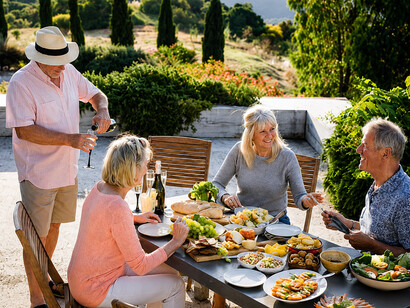
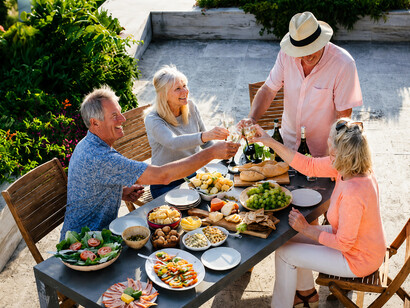
Secret 4: drink wine (a little) and eat with people (a lot)
This is the Blue Zone secret that surprises people most and the one most easily misunderstood. In Sardinia and Ikaria, moderate consumption of locally produced red wine is a consistent feature of the centenarian diet. Sardinian Cannonau wine, in particular, has been found to contain two to three times more flavonoids and polyphenols, particularly resveratrol and proanthocyanidins, than most commercial red wines, compounds associated with anti-inflammatory and cardioprotective effects.
Epidemiological data from the Predimed study, one of the largest randomised dietary trials ever conducted, found that moderate wine consumption as part of a Mediterranean dietary pattern was associated with significantly reduced rates of cardiovascular events. Observational data from Ikaria show that islanders who drink one to two small glasses of local wine daily with meals have lower rates of dementia and cardiovascular disease than non-drinkers in the same community.
It is essential to be clear about what the evidence does and does not say. The protective associations seen in Blue Zone wine drinkers are linked to small, consistent amounts consumed with food and in social settings, not to alcohol consumption in general. The context matters enormously. Drinking two glasses of wine slowly over a two-hour dinner with family produces a fundamentally different physiological and psychological experience than drinking two glasses of wine alone in front of a screen. And for individuals with a personal or family history of alcohol dependence, liver disease, or certain cancers, the risks of any alcohol consumption outweigh any potential benefit.
But the deeper lesson of this secret is not really about wine at all. It is about the social context of eating. Across every Blue Zone, meals are communal events. Food is shared, conversation flows, and eating is unhurried. Research consistently shows that eating with others is associated with better dietary quality, greater meal satisfaction, more mindful consumption, and stronger psychological well-being, all independently associated with longevity.
The hack: Eat with other people as often as possible. If you choose to drink alcohol, make it a small amount of quality red wine with food, and enjoy it slowly. If you do not drink, the social ritual of the shared meal is the part that matters most.
Secret 5: eat real food that your great-grandmother would recognise
Perhaps the most powerful and most overlooked feature of Blue Zone diets is their simplicity and lack of processing. Traditional Sardinian cuisine, Okinawan cooking, Nicoyan village food, and Ikarian home meals – none of them feature ingredient lists longer than five items, artificial emulsifiers, seed oils processed at industrial temperatures, or flavour enhancers engineered to override satiety signals.
Blue Zoners eat whole, minimally processed foods that are grown or produced locally, often seasonally, and prepared using traditional methods. Sardinian sourdough bread is naturally fermented for long periods, a process that reduces gluten content, lowers the glycaemic index, and produces beneficial organic acids. Okinawan miso is similarly fermented, contributing live bacterial cultures to the gut. Nicoyan corn tortillas are prepared using nixtamalisation, an ancient alkaline process that increases the bioavailability of niacin and amino acids and dramatically improves the nutritional quality of maize.
These are not superfoods. They are ancient, humble, everyday staples but prepared in ways that preserve and enhance their nutritional value rather than strip it away.
The contrast with the modern Western diet is stark. A landmark 2019 study published in the British Medical Journal found that each 10% increase in the proportion of ultra-processed foods in the diet was associated with a 14% increased risk of all-cause mortality. The mechanisms include chronic low-grade inflammation driven by food additives, disrupted gut microbiome composition, impaired satiety signalling from hyperpalatable formulations, and displacement of nutrient-dense whole foods.
The hack: Cook from scratch as often as you reasonably can. Use whole ingredients. Choose bread with five ingredients or fewer. Buy fermented foods, sourdough, live yoghurt, kimchi, kefir. The goal is not perfection; it is to shift the balance of your diet away from factory-made products and toward foods that look like the thing they came from.
Bringing it all together
Blue Zone eating is not a diet programme. It has no start date, no forbidden food list, no macronutrient targets, and no cheat days. It is a way of relating to food that has been refined over centuries, embedded in culture, and validated by some of the most robust longevity data in existence.
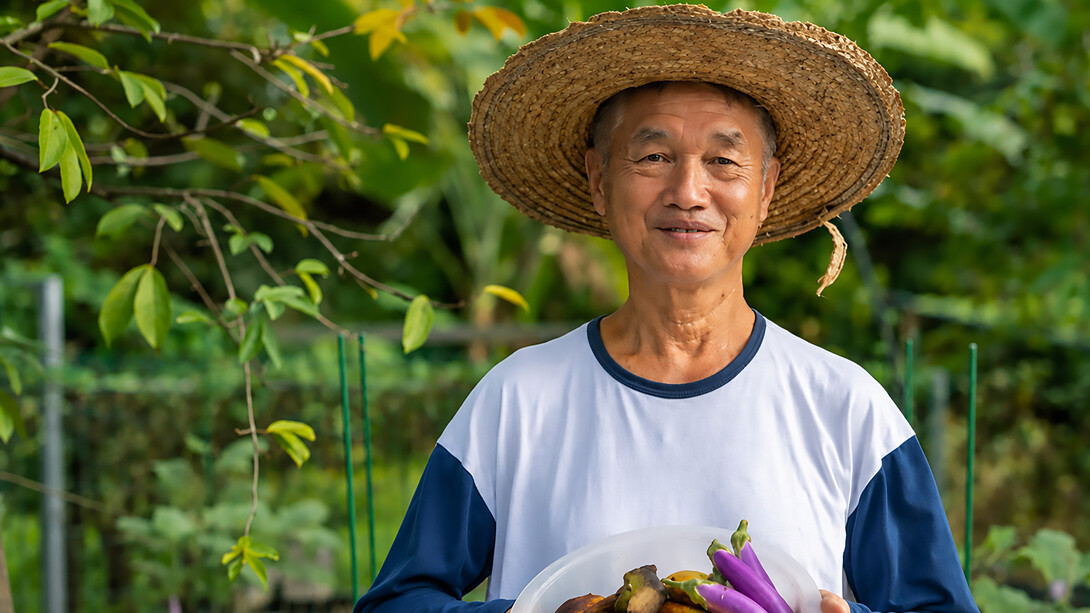
The five secrets – eating mostly plants, eating legumes daily, stopping before you are full, eating with others, and choosing whole foods over processed ones – are not radical. They require no expensive supplements, no specialist equipment, and no dramatic reinvention of your daily life. They simply ask you to eat more like a Sardinian shepherd or an Okinawan gardener than like a modern consumer in a drive-through queue.
The evidence is clear. The populations that live longest and healthiest do not follow trends. They follow tradition, and the science, increasingly, is catching up with what they have always known.
Start with one change. Add beans to dinner tonight. Eat it slowly. Eat it with someone you love.
That is the oldest longevity hack in the world.
References
Buettner, D., & Skemp, S. (2016). "Blue Zones: Lessons from the World's Longest-Lived". American Journal of Lifestyle Medicine, 10(5), 318–321.
Fraser, G.E., & Shavlik, D.J. (2001). "Ten years of life: Is it a matter of choice?" Archives of Internal Medicine, 161(13), 1645–1652.
Willcox, B.J., Willcox, D.C., & Suzuki, M. (2004). "The Okinawa Program: How the world's longest-lived people achieve everlasting health." Clarkson Potter/Publishers.
Darmadi-Blackberry, I., et al. (2004). "Legumes: The most important dietary predictor of survival in older people of different ethnicities." Asia Pacific Journal of Clinical Nutrition, 13(2), 217–220.
Estruch, R., et al. (2013). "Primary prevention of cardiovascular disease with a Mediterranean diet." New England Journal of Medicine, 368(14), 1279–1290.
Sofi, F., et al. (2010). "Accruing evidence on benefits of adherence to the Mediterranean diet on health: An updated systematic review and meta-analysis." American Journal of Clinical Nutrition, 92(5), 1189–1196.
Brandhorst, S., & Longo, V.D. (2016). "Fasting and caloric restriction in cancer prevention and treatment." Recent Results in Cancer Research, 207, 241–266.
Schnabel, L., et al. (2019). "Association between ultraprocessed food consumption and risk of mortality among middle-aged adults in France." JAMA Internal Medicine, 179(4), 490–498.
Chrysohoou, C., et al. (2011). "Long-term adherence to the Mediterranean diet reduces the prevalence of hypertension, hypercholesterolaemia, diabetes, and obesity among healthy adults." European Journal of Cardiovascular Prevention & Rehabilitation, 18(4), 583–591.
Levine, M.E., et al. (2014). "Low protein intake is associated with a major reduction in IGF-1, cancer, and overall mortality in the 65 and younger but not older population." Cell Metabolism, 19(3), 407–417.