English
 Español
 Français
 Deutsch
 Italiano
 Português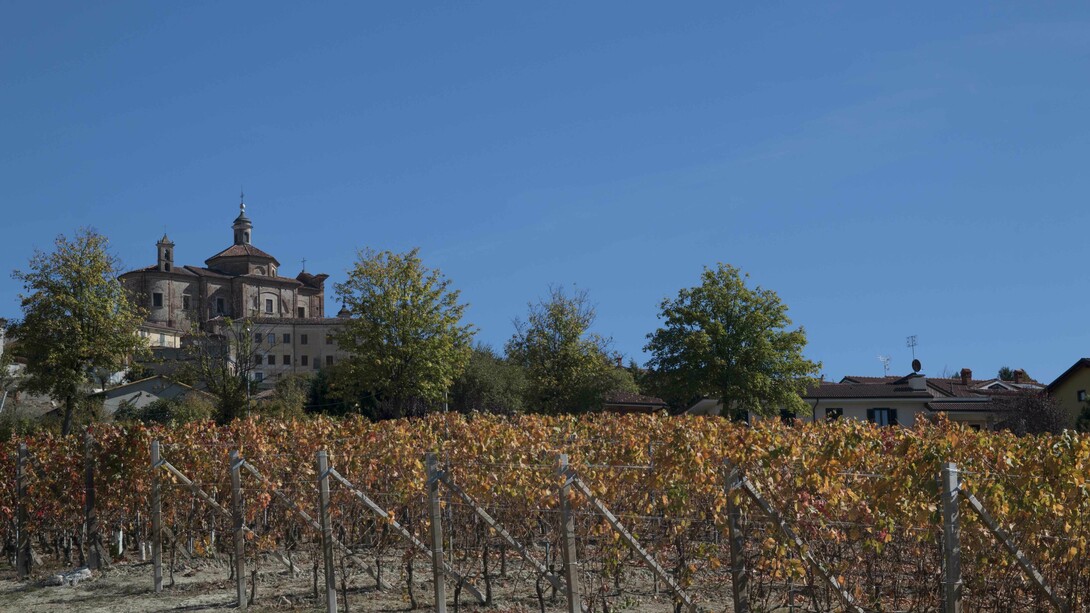
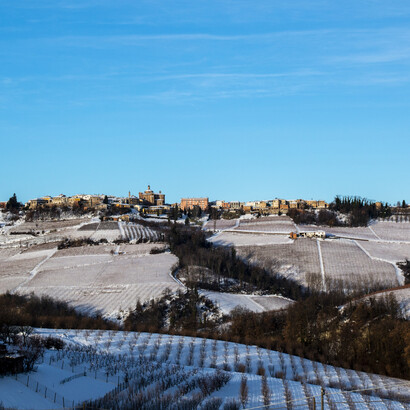
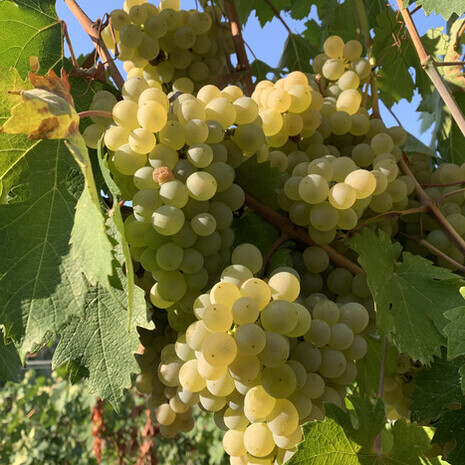
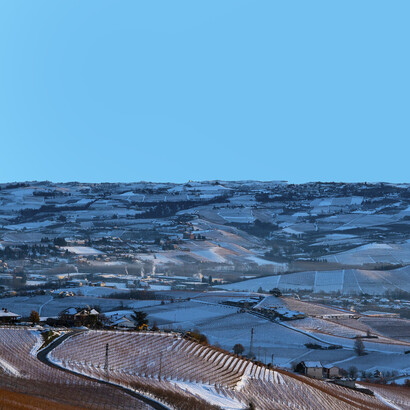
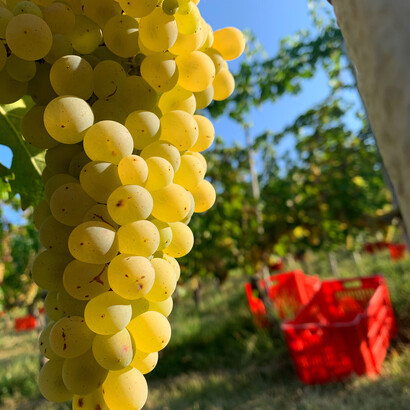
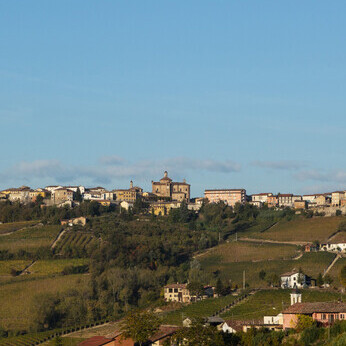
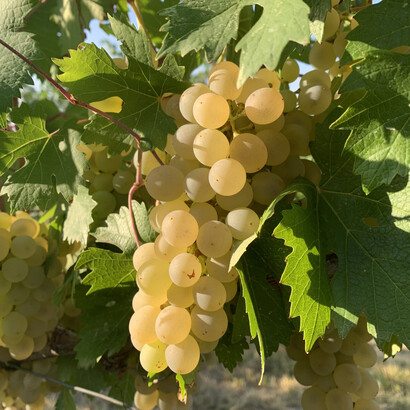
Piedmont and Langhe are synonymous with historical red wines like Barolo and Barbaresco, but in the Langhe, the small town—just over 1000 people live here—of Novello is the birthplace of Nascetta (also called Anascetta and Nas-cetta). I had a glass of Nascetta, and it was love at first sip; in a fraction of a second, it brought to mind Langhe, a region that has been enologically blessed. Desiring to learn more about this amazing wine, I spoke with Federico Moznich, sommelier and director of the Novello Social Cellar, and, among other things, author, with Nemo Villeggia, of “Nascetta Story,” a documentary that is a wealth of information on this wine, its territory, the history, and the science, all the while showing the beauty of winter and summer landscapes of this corner of the world made of gentle hills covered with beautifully trained vines. Related to the Gros Blanc of the Susa Valley, Nascetta is an autochthonous semi-aromatic varietal native not to the area but to this small town, thus taking the meaning of "indigenous" to a whole new level.
At the first sip of Nascetta, there is a feeling of awe before a poised, elegant wine that immediately brings to mind the image of Giovanna Tornabuoni by Domenico Ghirlandaio and the Renaissance ladies’ dresses: precious fabrics, damasks, silk velvets, and brocades often decorated with gold and silver threads and embellished by pearls and jewels to show splendor and status. Not only do its characteristics bring the mind back to the Renaissance, but also its rebirth, its own “renaissance,” after its almost complete disappearance from the oenological scene.
The earliest author mentioning Nascetta is Giuseppe di Rovasenda in 1877 (Saggio di Una Ampelografia Universale), stating it is an “extremely delicate grape and exquisite wine.” He is followed by Lorenzo Fantini in 1879 in his text on the Cuneo province viticulture, where he compares Nascetta wine to the great wines of the Rhine and underlines that it has the “same finesse as Muscat” and that “it produces very fine wine… It is cultivated in the Novello territory, where it yields greatly.” At the end of the 19th century, in France, it was quoted at the same price as Barolo, 2 liras per liter, while at the two Enological Competitions held in Turin in 1874, Nascetta was present and quoted at a price half that of Barolo (2 liras vs. 4 liras), both cases demonstrating that this wine was held in high consideration.
After that, however, a complete darkness falls on this wine that is forgotten and almost ignored. Considered the “forgotten queen of Piedmontese white wines,” Nascetta has been brought back on the scene thanks to Elvio Cogno and Daniele Salvo of the Le Strette estate, who believed in the variety. In 1993, Elvio Cogno and Valter Fissore, together with other producers from Novello, accepted an unusual invitation: in the presence of journalist Armando Gambera, they uncorked a few bottles of Nascetta from 1986. It was love at first sip: “The Nascetta astounded everyone for its fine and elegant profile. Notwithstanding the years, it had evolved towards passito notes and resisted oxidation,” said Valter Fissore. “It was completely unique and almost resembled a Sauternes. It was a white wine without equal in the Langhe.” The rebirth of this delicate and unstable varietal, difficult to cultivate and unpredictable in yield—Gabriele Madala defines it as “anarchist”—can be easily understood by looking at the extension of cultivation: 1 hectare in early 1990 to some 50 hectares today, mainly in Novello but also in other Langhe areas like La Morra, Serralunga, Dogliani, and Carru’ (home of the Fat Ox Fair, held in December of each year).
August 22nd, 1991, marks a turning point with the City of Novello starting the procedure to add Nascetta to the National Registry of Vine Varietals, a process that has taken over 10 years to come to a conclusion. Nascetta has gained so much prestige as to earn the official acknowledgement “DOC-Langhe Nascetta” as well as the MGA “Nas-cetta di Novello,” also thanks to the studies carried out on this grape variety by the Serra dei Fiori estate in partnership with the University of Turin Agricultural Department, beginning particularly with “Il FIORE” Langhe Bianco, a cuvée of Chardonnay and Nascetta. Trying to promote the spreading of knowledge of this wine is, since ten years ago, above all the Associazione Nascetta di Novello association, whose president is Luciana Desanso of the Massimiliano Passone winery. The association unites some fifteen wineries, small and big, that cultivate altogether some 17 hectares in the Commune of Novello with a total production of 80,000-100,000 bottles per year.
Outside of Novello, in an area comprising 96 communes, there are some 50 wineries producing Nascetta, and some of them belong to the Associazione Indigenous Langa, uniting producers of Nascetta outside the Commune of Novello who share the common objective of protecting and endorsing the Nascetta vine variety and its wine products: “The wines produced from the Nascetta vine,” reads the Charter, “represent an economic, touristic, and cultural resource, and for its unique characteristics, it is also a defense of tradition and the local environment.” In 2010, the Novello subzone was granted, and the denomination Langhe DOC Nas-Cetta del Comune di Novello is reserved for producers whose vineyards are within the Novello Commune and who abide by stricter rules in comparison to the Langhe DOC denomination. For the Novello subzone, in fact, it is compulsory to have a lower yield per hectare and to produce only varietal wines (in the Langhe DOC denomination, instead, it is possible to blend 85% Nascetta with 15% other varietals without the obligation to state the blending on the label).
In a Nascetta wine, it is not only poise and elegance that you can taste but also sapidity, minerality, and bright acidity. Aromas of citrus and exotic fruits, yellow apples and white peaches, a hint of aromatic herbs, a balsamic minty note, then propolis, honey, and beeswax; dry and structured, it has no fear of time, which actually confers hydrocarbon notes similar to what happens with Riesling. Nascetta pairs well with shellfish, arugula salads, and harder-to-pair vegetables like asparagus.
Benchmark producers are still Elvio Cogno and Le Strette estate, but also Tenuta Rocca, Casa E. di Mirafiore, and Anna Maria Abbona.
Wineries belonging to Associazione Nascetta del Comune di Novello: Elvio Cogno, Le Strette, Mauro Marengo, Luca Marenco, Sansilvestro, Casa Baricalino, Vietto, Roberta Valletti, Cogli l'Attimo, Stra, Massimiliano Passone, Cascina Gavetta, Merenda Sinoira, La Pergola e Arnaldo Rivera.
Wineries belonging to Indigenous Langa: Anna Maria Abbona, Alberto Ballarin, Belcolle, Cantina del Nebbiolo, Fracassi Ratti Mentone, Cascina Sot, Castello di Perno, Diego Conterno, Franco Conterno, Fratelli Serio & Battista Borgogno, Ettore Germano, La Tribuleira, Marco Capra, Osvaldo Viberti, Michele Reverdito, Rivetto dal 1902, Serra dei Fiori, Stroppiana, Terre del Barolo, Tenuta Rocca, Francone, Cascian Corte.