English
 Español
 Français
 Deutsch
 Italiano
 Português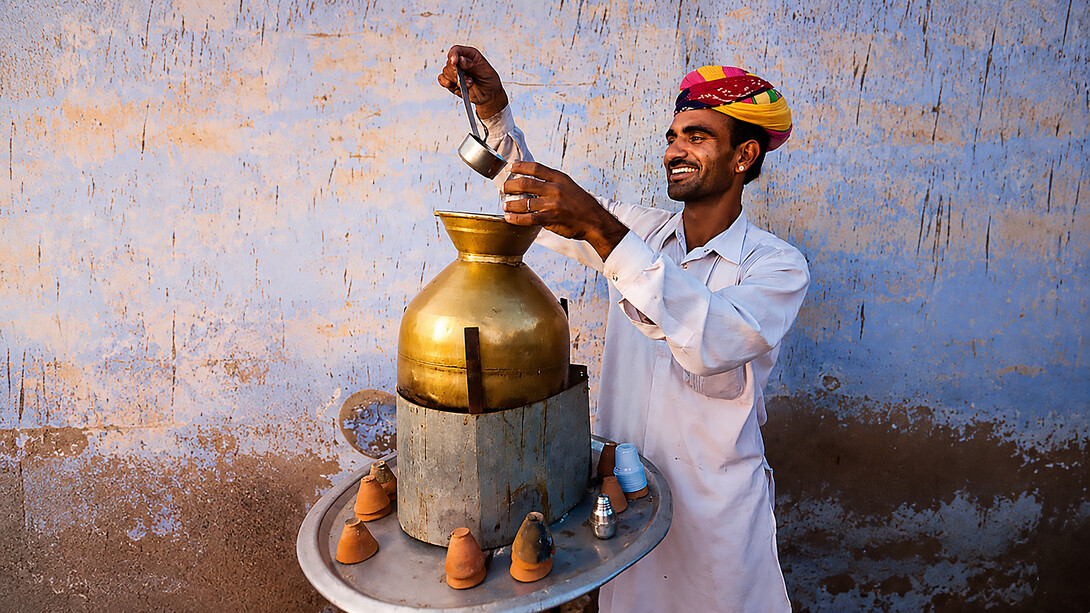
Unlike the vast majority of my country, chai has never really been my cup of tea. Cold coffees informed the days of my youth, then proceeded to inform my more adult self that I, like so many others of my brethren, lacked the requisite gene sequence that allows one to keep enjoying their dairy products as they grow older, rather than planning any milk-related adventure around the proximity of a toilet. Black coffee then became my constant companion on mornings after and otherwise everyday mornings.
Yet chai has always bubbled in the background. From hazy preschool days in my grandmother's kitchen to the tables of bright and underpaid teachers every morning once I joined school, to early mornings before college while nursing hangovers, to the heady days of professional life where a tea break was as sacrosanct as a smoke break in musty newsrooms and shiny boardrooms alike. And while I never partook of the chai itself, I was never apart from the ritual. Because that ritual is part of the Indian experience.
Which is rather strange when you think about it. Because for an ancient civilisation with living traditions and rituals stretching back to thousands of years, tea is a much more recent one.
India, after all, did not discover tea.
That honour belongs elsewhere, somewhere in the misty mountains and ancient kingdoms of China, where tea was being consumed centuries before anyone had heard of Delhi, Bombay or Calcutta. Yet it is difficult to imagine a country whose relationship with tea is quite as intimate as India's. Tea may not be ours by origin, but it feels ours by adoption. Like many things Indians encounter, we took it apart, remade it, added milk, sugar, spices and opinions, and somehow transformed it into something entirely different.
That is perhaps the story of tea in India. Not how it arrived, but how it stayed. And of course, tea didn't become India's favourite beverage entirely by accident.
When the British sallied forth in search of spices, trade routes and generally other people's stuff, they happened upon tea in China and became thoroughly addicted. The problem was that the Chinese wanted silver in exchange for their tea, and Britain was rapidly discovering that national addictions can get very expensive very quickly.
Fortunately for the British, they had India. Unfortunately for everyone else, India had poppies.
The solution was simple, if morally questionable. Opium grown in India was sold in China. The silver earned from that trade was used to buy Chinese tea. The tea was shipped back to Britain, where people drank it enthusiastically while presumably not dwelling too much on how the whole arrangement worked.
As these things tend to do, the arrangement eventually escalated into wars, diplomatic crises and the sort of imperial unpleasantness that historians make entire careers out of studying. China got the Opium Wars. Britain got Hong Kong. And somewhere amidst all this geopolitical chaos, tea found its way into India in ever greater quantities.
History is strange like that. Entire empires rose and fell, fortunes were made and lost, wars were fought and borders redrawn. And in the end, India got chai.
Yet history alone cannot explain tea's hold over India or why it has survived every challenge thrown at it. Coffee chains arrived. Energy drinks arrived. Smoothies, cold brews and wellness beverages arrived. Yet every office, workshop, kitchen, factory floor and construction site in the country still seems to operate according to the rhythms of tea.
It's not surprising, but the permanence of tea is still noticeable. During college, when I had to do my industrial training as a student of the culinary arts, I trained at the kitchens of some of the most luxurious hotels in the country. And yet. Whichever the hotel brand and wherever at the garde manger, or the butchery, or the Continental kitchen, the tea ritual was identical and sacred.
The lowest person on the totem pole (the intern, otherwise known as yours truly) had to go beg for milk from the service staff, pull out the tea leaves from the secret tin in the head chef's cubbyhole while he/she (usually) cursed my general indolence because that's how you grow in commercial kitchens, gather the sugar from various places, and then stand and brew the enormous pot of tea for every employee.
And while during the course of the day, chefs screamed, servers preened, and the dishwasher scrubbed and muttered, all fighting and combative, at 7am, 11am, 3pm, and 7pm, an easy truce prevailed in the company of the chai sippers.
The remarkable thing was that the tea itself was rarely remarkable. Some kitchens made it too sweet. Others brewed it strong enough to wake the dead. A few appeared to have declared open war on milk. Nobody cared.
The point wasn't the tea. The point was the pause.
For ten minutes, hierarchy dissolved. The executive chef stood beside the commis. The steward stood beside the dishwasher. People who had spent the previous hour shouting at one another suddenly became civil. Someone complained about management. Someone else complained about the weather. Gossip was exchanged. Cricket scores debated. New rumours born.
Then the tea ended. The cups were washed. The kitchen roared back to life. Tempers returned. Orders resumed. The truce had expired.
Years later, I would discover that the same thing happened almost everywhere.
In newsrooms, tea appeared just before deadlines became unbearable. Reporters would emerge from their corners, not because they were thirsty but because somebody had suggested chai. Political gossip was exchanged, editorial conspiracies were born, sources were discussed, careers were analysed, and management and media owners were criticised. Then everybody returned to their desks and pretended to work.
Government offices have their own tea rituals. So do factories. So do college campuses. So do housing societies and construction sites.
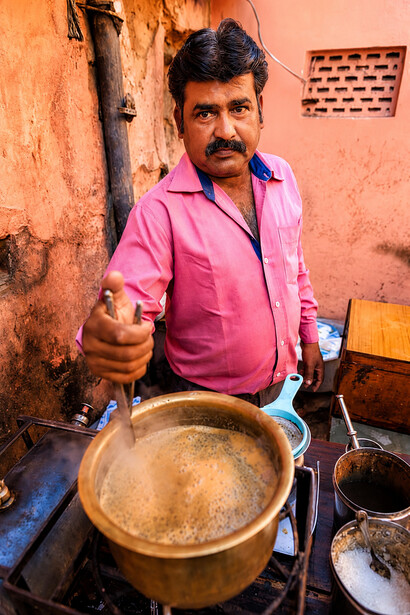
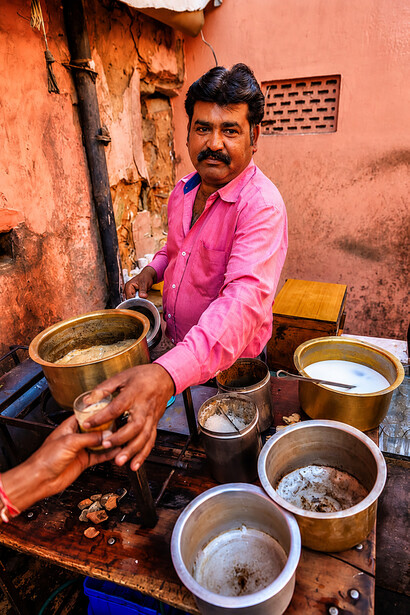
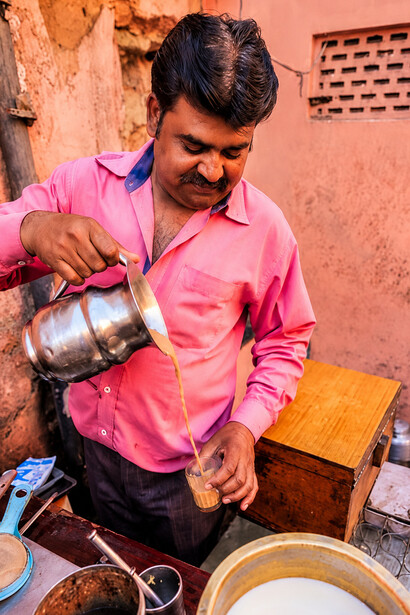
Perhaps nowhere is this more visible than at the humble tea stall.
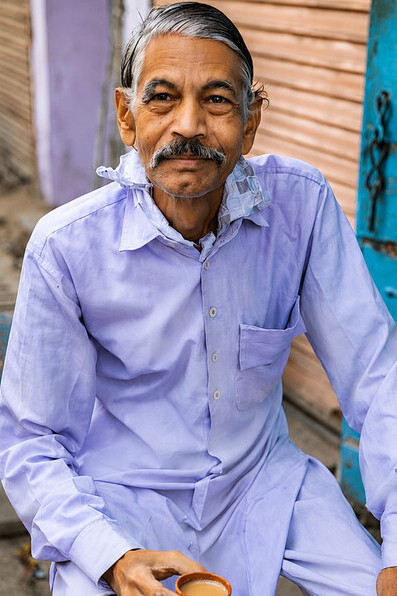
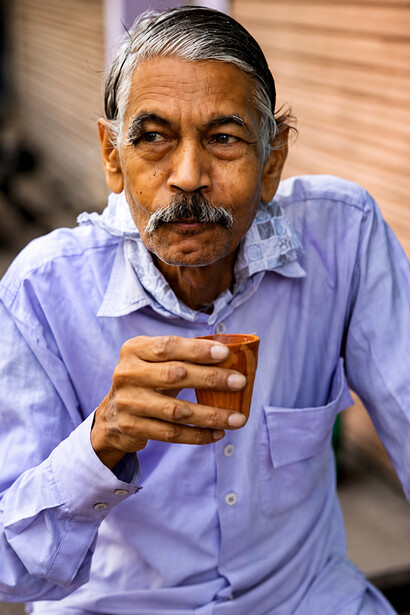
India's tea stalls are among the country's most democratic institutions. The tea may cost ten rupees or twenty. The benches may be plastic. The kettle may have survived several governments. None of it matters. For a few minutes, everyone belongs.
Auto drivers discuss geopolitics. Students discuss examinations. Retired uncles discuss cricket selections with the confidence of national selectors. Office workers complain about bosses. Politicians complain about other politicians. Strangers become temporary acquaintances united by caffeine and complaint.
It is difficult to think of another space that performs this function so consistently.
The irony, of course, is that tea itself is almost incidental. Because a tea break is rarely about tea. It is about permission: permission to stop working, permission to complain, permission to gossip, permission to think, permission to do absolutely nothing for a few minutes before returning to whatever battle awaits on the other side of the cup.
That may explain why tea feels so deeply Indian.
Not because we grow extraordinary quantities of it. Not because we consume extraordinary quantities of it. But because we transformed a colonial commodity into a cultural ritual and then quietly embedded that ritual into almost every aspect of daily life.
Long before wellness influencers informed us about mindfulness, Indians had already invented a socially acceptable reason to stop, gather, talk and breathe for ten minutes several times a day.
We just happened to call it chai.
India's tea culture is, in historical terms, relatively young. Yet it has woven itself so completely into daily life that it feels ancient. Few people think about the imperial economics that brought tea here. Fewer still think about the plantations where it was grown. Most simply put water on the stove and begin.
All that being said, though. For decades, I myself have cheerfully maintained that I'm not really a tea person. I've looked upon chai with the detached affection of an anthropologist observing a fascinating tribe. All my life I've stood beside the chai drinkers, participated in the conversations, enjoyed the pauses, and then ordered something else.
Anything but tea.
I’m only here to hear what’s spilt. But then isn’t everyone?
PS. I just realised I've been drinking green tea daily, and quasi-religiously, for close to a decade now. I guess I'm part of the cult of tea as well. Oh well. Mea Cuppa.