English
 Español
 Français
 Deutsch
 Italiano
 Português

Hungarian food has a strange way of following you wherever you go. Even after years abroad, certain smells and flavours can instantly pull you back home without warning. Recently, while getting ready for our trip back to Hungary, my family started doing what we always do before visiting, putting together the all-important list for my mum of everything we want her to cook while we are there. It started off as a joke at first, with everyone excitedly shouting out dishes they had missed, but the conversation quickly became far more emotional than expected. Living away from home changes the way you think about food. You begin to realise that some tastes are tied so closely to memories and family that they simply cannot be replaced anywhere else in the world.
One of the first dishes mentioned on our list was gombóc.
To somebody outside Hungary, gombóc might sound like just another dumpling dish, but for Hungarians, it means much more than that. It is comfort, nostalgia, childhood memories, and family traditions all rolled into one. The moment people hear the word, they usually picture homemade food served in a warm kitchen, often surrounded by family members talking over one another while somebody insists you take another helping.
Hungarian cuisine has always been deeply connected to family life. Recipes are passed down through generations, not through perfectly written instructions but through observation, habit, and memory. Most Hungarian grandmothers do not measure ingredients carefully. Instead, they cook based on instinct, experience, and feeling. They will tell you to add “just enough flour” or cook something “until it looks right”. Somehow, despite the lack of exact measurements, the food always turns out perfectly.
That is part of what makes traditional Hungarian dishes feel so personal. Every family has its own version of certain recipes, and gombóc is one of the best examples of this.
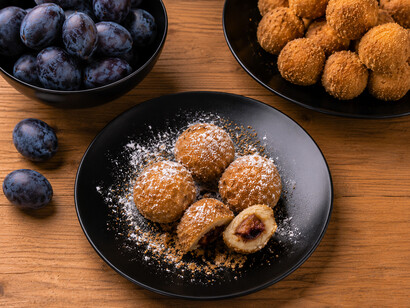
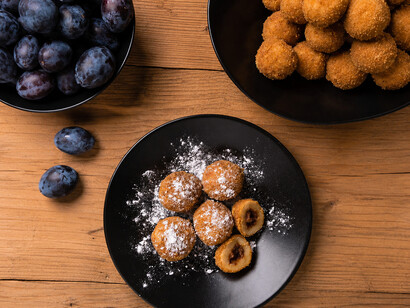
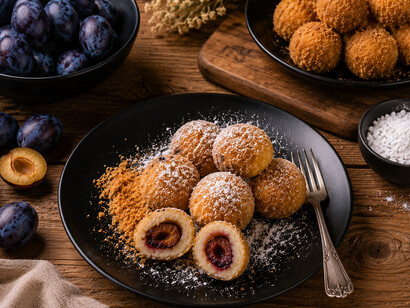
The most famous type is probably szilvás gombóc, or plum dumplings. These are made from soft potato dough wrapped around sweet plums, often with a little cinnamon sugar tucked inside the fruit before the dumplings are sealed. Once boiled, they are rolled in buttery toasted breadcrumbs and covered with sugar and cinnamon. The result is simple but unbelievably comforting.
For many Hungarians, szilvás gombóc is strongly connected to late summer and autumn because that is when plums are in season. It is the sort of dish that reminds people of school holidays, grandparents’ houses, and long afternoons spent in the kitchen watching somebody cook. Even the smell alone can feel nostalgic. Toasted breadcrumbs mixed with butter and cinnamon is one of those scents that instantly feels like home to many Hungarians living abroad.
What makes szilvás gombóc special is not just the taste itself but the memories attached to it. Many families make the dumplings together, especially when preparing large batches. Somebody peels the potatoes, somebody prepares the plums, and somebody else carefully seals the dough around the fruit. Children usually sit nearby waiting impatiently for the first dumplings to be ready while adults talk and laugh around the kitchen table.
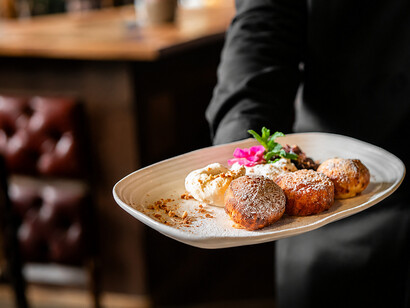
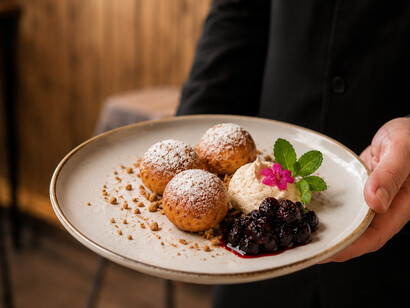
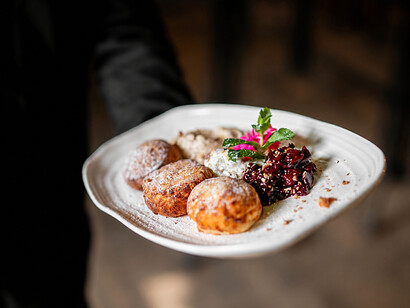
Another much-loved version is túrógombóc, made from túró, a soft Hungarian curd cheese. Túrógombóc is lighter and softer than plum dumplings, usually served with sour cream, icing sugar, or vanilla sugar. Some people roll them in breadcrumbs, while others prefer them plain and creamy. Like most Hungarian dishes, every family believes their own version is the correct one.
One reason so many Hungarians miss túrógombóc when living abroad is that túró is surprisingly difficult to replace properly. Although there are similar cheeses in other countries, they never taste quite the same. Anyone who has tried recreating Hungarian recipes abroad knows this feeling well. You can follow the recipe exactly, but somehow it still tastes slightly different. Sometimes it is the ingredients, sometimes it is the water, and sometimes it is simply because home cooking is impossible to fully recreate in another country.
That is probably why conversations about food become so emotional for people living abroad. Over time, food stops being just food. It becomes part of your identity. A single bite can remind you of childhood, family gatherings, Christmas celebrations, or ordinary evenings spent around the dinner table.
For Hungarians, especially, hospitality and food are closely connected. If a Hungarian mother or grandmother cooks for you, it is usually one of the clearest ways they show love and care. Nobody leaves the table hungry, and refusing second helpings is often seen as nearly impossible. Meals are not rushed occasions. People stay seated long after finishing, talking, laughing, drinking coffee, and sharing stories.
That is exactly why our “what mum should cook” list became far more important than it probably sounds. At first glance, it seemed like a simple conversation about favourite foods. In reality, it was a conversation about everything we missed about home.
Living abroad teaches you that homesickness is often triggered by the smallest things. Sometimes it is hearing your native language unexpectedly in public. Sometimes it is a familiar song. And very often, it is food. You suddenly realise how strongly certain flavours are connected to comfort and belonging.
For me, gombóc represents all of that perfectly.
It reminds me of being younger and sitting in my grandmother’s kitchen watching steam rise from freshly cooked dumplings. It reminds me of family lunches that lasted for hours, where everybody talked loudly over one another while insisting there was still room for dessert. It reminds me of the smell of cinnamon and butter filling the entire house.
There is also something comforting about the simplicity of Hungarian food. Most traditional dishes were created from basic ingredients like potatoes, flour, breadcrumbs, dairy products, and seasonal fruit. Historically, families made meals from whatever they had available. Yet despite their simplicity, these dishes became deeply loved because they were homemade, comforting, and shared with family.
In today’s world, where fast food and convenience meals dominate daily life, there is something genuinely special about recipes that take time and patience. Making gombóc is not difficult, but it is rarely rushed. It is the kind of food that encourages people to slow down, spend time together, and enjoy the process as much as the result.
That may be one reason why traditional Hungarian food still means so much to younger generations, even those who grew up partly abroad. These dishes are not only about preserving culture. They preserve memories too.
So while planning our trip back to Hungary, it was no surprise that gombóc ended up near the very top of our list for my mum. It is more than just a dessert or comfort food. It represents home in the purest sense of the word.
And honestly, after spending so long away, I cannot think of a better welcome home than walking into the kitchen and seeing a fresh plate of homemade gombóc waiting on the table.