English
 Español
 Français
 Deutsch
 Italiano
 Português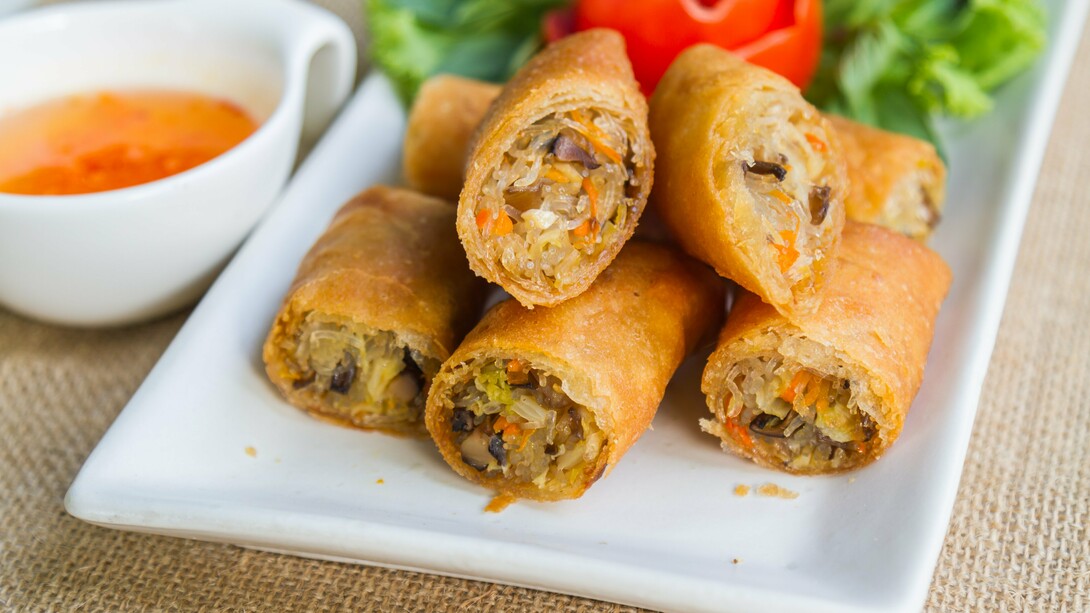
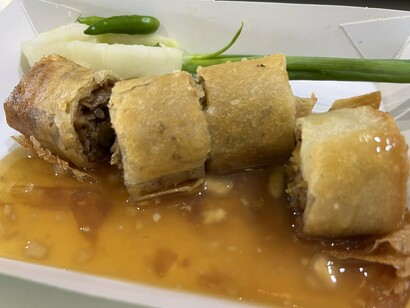
Last month, I went on a culinary trip in Semarang, the capital city of Central Java Province, Indonesia. During my trip, I visited Lunpia Cik Meme Restaurant, located at Gajahmada Street No. 107, Miroto, Central Semarang.
Lunpia is a unique dish born from the acculturation of Javanese and Chinese cultures, and today, it stands as an iconic culinary symbol of the city. After trying various flavours at the restaurant, I found the taste to be absolutely delicious and unforgettable. You might wonder how lunpia became Semarang's signature traditional food. In this article, I will explore the history of Semarang and its famous lunpia and share a recipe to recreate it.
The history of Semarang, Indonesia
Semarang has always been a vibrant, multi-ethnic city. Its story began around the 8th century in a coastal area called Pragota (now Bergota), which belonged to the ancient Mataram Kingdom. Over the centuries, it grew into a bustling trading hub that attracted people from all over the world. Chinese traders arrived in the 15th century, followed by the Portuguese and Dutch in the early 16th century, and later, immigrants from Malaysia, India, Arabia, and Persia in the 17th century. As these communities settled, they created their own unique neighbourhoods: the Dutch and Malays set up near the mouth of the Semarang River, the Chinese settled around Simongan, and the local Javanese lived in villages along the riverbanks.
The history of lunpia
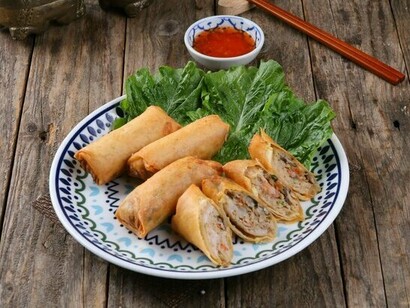
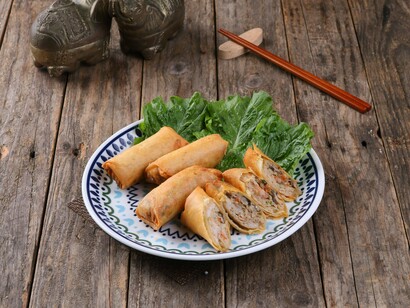
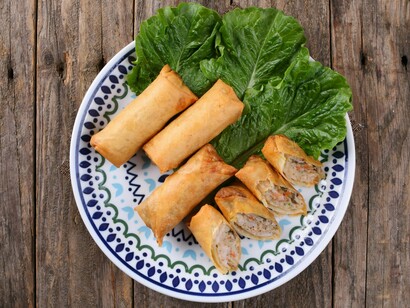
The name 'Lunpia' comes from the Hokkien Chinese dialect, where 'lun' means 'soft' and 'pia' means 'cake’. In China, lunpia are known as 'chun juan', where 'chun' means 'spring' and 'juan' means 'roll'. Today, the English translation 'spring roll' is internationally recognized to describe this long, round, rolled appetizer.
Semarang’s famous lunpia is actually the beautiful result of a love story between two cultures. In the 1800s, a Chinese immigrant named Tjoa Thay Yoe moved to Semarang and started selling traditional spring rolls from his homeland, which were filled with pork and bamboo shoots. At the same time, a local Javanese woman named Wasi was selling her own version nearby, featuring a sweeter filling made of chicken, shrimp, and eggs.
Instead of becoming bitter rivals, their healthy business competition brought them closer together. They fell in love, got married, and decided to combine their recipes. To respect the local Muslim majority in Indonesia, they removed the pork and lard, making the dish halal so everyone could enjoy it. This cross-cultural blend is the lunpia we know today.
Over the years, lunpia faced tough times, especially during periods when Chinese cultural traditions were restricted in Indonesia. However, the beloved snack survived. Its historical importance was officially recognized in 2014 when it was designated as part of Indonesia's national cultural heritage. Today, lunpia stands proud as the ultimate culinary symbol of Semarang.
The history of Lunpia Cik Meme Restaurant
The legacy of Lunpia Cik Me Me (LCM) spans over a century, tracing its roots back to 1870 when Cik Me Me’s great-grandparents, Tjoa Thay Joe and Mbok Wasi, first created Semarang’s iconic spring roll in Brondongan Village, East Semarang. It was in this very village that Meliani Sugiarto (the woman behind the name Cik Me Me) was born. She was raised and trained by her parents, Master Chef Tan Yok Tjay and So Tan Hwa. Her parents represent the 2nd generation of Lunpia Mataram and the 4th generation of the original Semarang Lunpia lineage. Now run by the fifth generation of Semarang's pioneering lunpia family, it is known as a pioneer in halal certification for lunpia in the city.
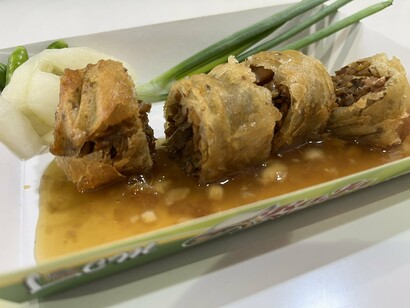
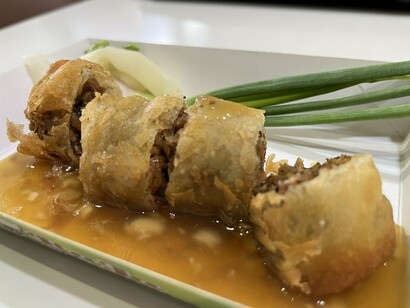
Their lunpia selection is built around a signature filling of bamboo shoots, shrimp, and chicken eggs, with several distinctive variations available. The LCM Crab adds crab to the classic recipe, while the LCM Snapper Fish features a red snapper and the LCM KaJamu has young goat. The LCM Raja Nusantara includes a filling with mushrooms and cashew nuts. They also have the LCM Plain, a vegetarian version made solely with bamboo shoots.
How lunpia is Made
Crafting the perfect Semarang Lunpia takes both skill and patience. It all starts with the bamboo shoots—the star ingredient—which are carefully boiled and seasoned with special spices to eliminate their strong, natural odour. Next, the savoury proteins, usually chicken and shrimp, are cooked separately before being tossed together with the bamboo shoots until every ingredient absorbs the rich flavours.
Once the filling is perfectly seasoned, it is neatly wrapped in a delicate pastry skin. Depending on how you like it, the lunpia can either be deep-fried until golden and crispy or served fresh and "wet". To complete the experience, it is traditionally served with a signature sweet-and-savoury thick sauce, crisp pickles, and fresh bird's eye chilies on the side for a little kick.
The modernisation of lunpia
While the classic lunpia remains a timeless favourite, local food entrepreneurs are constantly coming up with creative twists to catch the eye of the younger generation. Today, you can find modern versions stuffed with cheese, smoked beef, or even vegetarian options that swap bamboo shoots for savoury mushrooms.
Yet, even with these trendy innovations, keeping the original flavour alive remains a top priority. Many traditional makers strictly stick to old family recipes passed down through generations, ensuring that the authentic taste of Semarang's true lunpia is never lost.
Keeping the tradition alive
The survival of lunpia as a living cultural heritage is an effort between the local government and the community. Events like the annual Lunpia Festival in Semarang play a huge role in keeping the tradition buzzing and celebrating it as a vital part of Indonesia's rich culture.
On top of that, lunpia has stepped onto the global stage as one of Indonesia’s proudest culinary ambassadors. Thanks to "food diplomacy," this humble spring roll is frequently showcased at international food fairs and cultural festivals abroad, putting Indonesia on the map as a premier culinary destination.
A lasting cultural legacy
At its heart, Semarang’s Lunpia is far more than just a delicious snack; it is a beautiful symbol of harmony between Chinese and Javanese cultures. This blend shines through in its flavour, its history, and the way it is made. As a true culinary icon of Nusantara, it offers a bite of history—telling the story of centuries-old cultural exchanges that shape Indonesia's identity. By balancing authenticity with modern innovation, Semarang's Lunpia will undoubtedly continue to be a source of global culinary pride.