English
 Español
 Français
 Deutsch
 Italiano
 Português
Okay, everybody, raise your hand if you’ve never been on a diet!
I knowingly smile as I scan the crowd, hearing a cough from someone hiding in the back and a phone vibrating in a pocket. Not a single clap in the room.
So, we agree, we understand one another. I know I’ve struggled with those holiday feasts on my hips, bounced back into my jeans after having a bouncing baby boy (three times!), or woken up to reality after that yearly extra kilo that somehow slyly accumulates. Whatever the reason, most of us have tried to watch what we eat at some point in our lives.
I’ve personally swung through every diet trend since my teens, from zero fat to zero sugar to zero carbs, and every fashionable diet in between. All I ended up with was zero lasting results.
Those diets were about attention, not consistency.
As I matured and learned, from professionals and from experience, I found clarity. I separated hype from human reality and realized that common sense is the primary ingredient in any recipe for optimal health and a stable weight.
And honestly? It’s not even a secret. There’s nothing sexy or controversial about it. Just truth, awareness, and responsibility.
Trendy diets are exactly that, trends. They catch our attention with promises of miracle transformations. And I admit, I wholeheartedly went for it. I adapted my routine, enjoying distinctive meals and punctual schedules at every occasion. I felt happily secluded, believing I had won the lottery of diets!
But the reality is, after that one tiny slip, then another, those slips piled up until I completely forgot my newfound way of life. With time, I got dizzy hanging on to the string of a diet yo-yo. I was tired of this obsession and shook myself up to “Stop!”
I needed to energize my body with nourishment and not spend energy dwelling on food.
How did a basic need become so complicated?
A hundred years ago, the idea of “going on a diet” barely existed. People didn’t count calories. Their strong, functional bodies were simply a result of balanced living. Food was fuel for survival, not a craving to satisfy. And everyone moved, not for an hour at the gym, but all day long.
So, what changed?
Medicine, science, and sanitation leapt forward extraordinarily. A thriving long life became a reality, rather than an exception. Abundance replaced scarcity. Refrigeration, farming, and transportation brought us universal food, in cultural varieties, as often as we wanted. Instead of meat as a Sunday luxury, we now insist on eggs, poultry, fish, or meat protein at every meal. Anyone for a snack of Greek yoghurt?
At the same time, technology lifted the physical burden of everyday
chores. Washing machines, elevators, and cars all saved us time and effort. Physically demanding days were replaced with privileged comfort and freedom.
Imagine carrying groceries two, three, or four floors up! Today, I’m exhausted just hauling them in from the garage. My fatigue today compares to a warm-up back then.
As abundance exploded, so did temptation. Processed and ultra-processed foods flourished on shelves, menus, and, honestly, right at our grip. We flipped from eat to live to live to eat.
Desire overpowered need. Greed manipulated want. And somewhere between oozing fondant cakes and melting cheese pizzas calling, we delectably answered, “Yes!”
We are intentionally confused between a nutritious essential and a tempting sensation.
And when those jeans tighten, and the jacket squeezes around the shoulders, we wake up in panic to our fulfilled reality. Time to refine those generous curves, quickly!
So, we rush for the miracle fix, those bold pills, or the hopeful hustle. Even detoxing is popular now when a full stomach was the celebrity back then. It’s always the fast solution instead of patient stability that gets all the attention.
For example, those diets based on our ancestors- paleo, keto, or caveman- are noble but do not reflect the whole context. Cavemen didn’t stroll through Trees Unlimited picking and choosing fruit and prey off the branch. They spent days hunting, hoping to bring back a catch that still needed skinning, cleaning, and cooking. Food depended on luck, seasons, climate, and gruelling effort.
Our lives evolved. Our bodies adapted to modern habits, healthcare, and hygiene. We can’t freeze our biology in Stone Age nostalgia, no matter the influencers’ persuasion.
Whatever anyone says, whatever the extravagant huffing, the doubtful research, or the incredible promises, the reality of slimming our bodies comes down to one simple equation of calories in vs. calories out.
That’s it.
I can play Twister with as many possibilities as I can try; only a calorie deficit leads to weight loss.
Those natural or chemical metabolism boosters? They come at a high financial and physical cost. The real gain goes straight into the sellers’ pockets, while the love handles eventually return for free.
And, because I love definitions (but not as much as I appreciate food!), have you ever thought of the real definition for the word diet? It literally means “the kind of food a person habitually eats.”
It’s not a temporary momentum; it’s a lifelong direction.
If I can’t sustain it habitually, then it’s just a fleeting expectation.
Food should be simple. Our bodies are complicated enough. Why make eating harder than it needs to be?
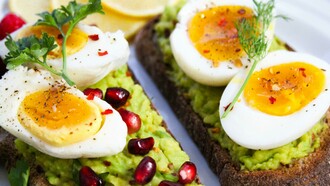
Reasonable portions. All food groups. Less fat, minimal sugar, and as little processed food as possible. Along with instinctive and continuous movement. I could live with that! Couldn’t you?
So, if I look into the crowd and say,
“Clap if you want to simplify food, enjoy your meals, and be sensibly responsible about your health!”
More than applause, I hear sighs of relief.
Food should not be a diet fixation. It’s a way to a healthy life.
That’s the only “diet” that’s ever worked for me. Becoming second nature—that’s how it lasts.
And, please, one more thing: be mindful and chew well.