English
 Español
 Français
 Deutsch
 Italiano
 Português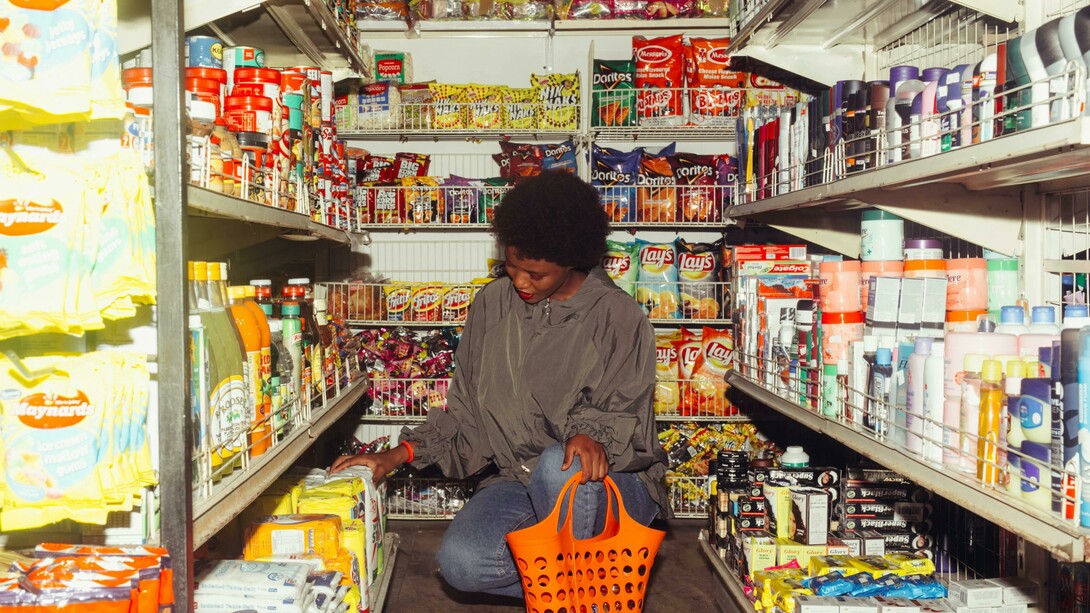
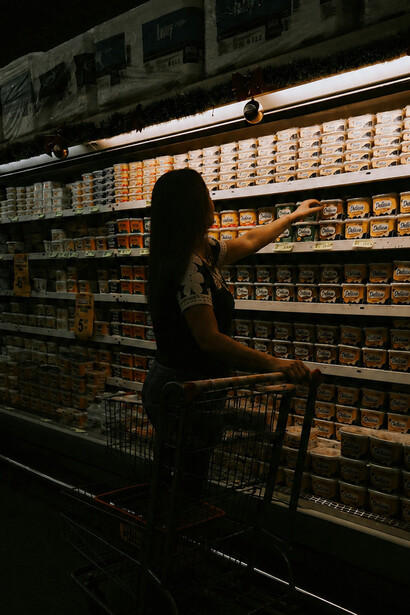
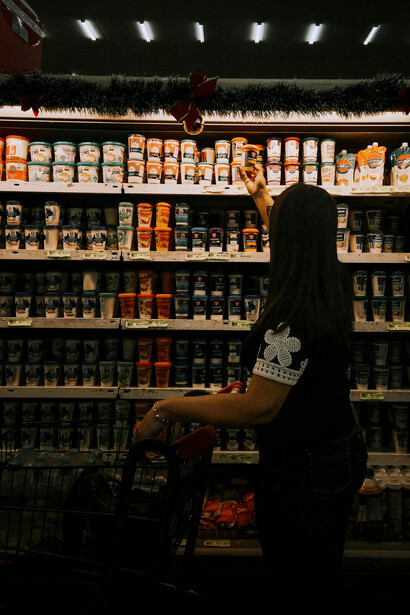
There is a moment in supermarket shopping history that nobody marked at the time, because nobody recognised it as significant. It was the moment when a consumer reached past the familiar branded product they had bought for years, picked up the supermarket's own version instead, and decided it was good enough. Not better. Not dramatically cheaper to the point of being irresistible. Just good enough, in combination with a price difference that had become harder to ignore.
That moment has been happening millions of times a day across every major retail market in the world. And the cumulative effect of those individual decisions, multiplied across categories, across countries, and across years, is reshaping the power dynamics of the food and beverage industry in ways that the national brands who dominated the twentieth century did not anticipate and are still struggling to respond to.
The historical arc of private label
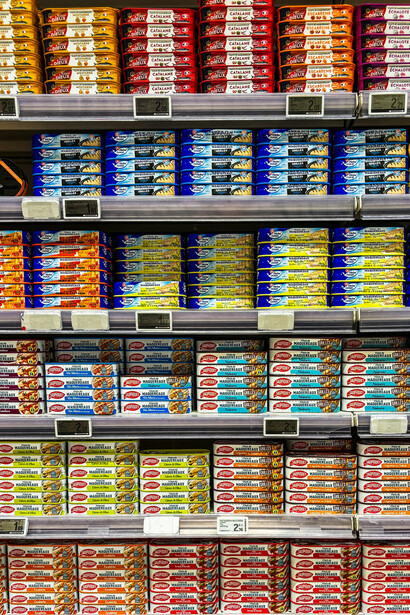
To understand where private label is going, it helps to understand where it came from. For most of its history, the supermarket's own-brand product was an unambiguous budget option. It lived in utilitarian packaging. It occupied the bottom shelf. It was the choice of the consumer who could not afford the brand, and both the consumer and the retailer understood the implicit transaction: you get a lower price, you accept a lower quality, and you do not expect the same experience as the branded product.
This model served the industry reasonably well for decades, but it contained the seeds of its own disruption. As retailers became more sophisticated in their understanding of consumer behaviour and more confident in their own brand management capabilities, they began to question why private label had to be positioned as an inferior product. The cost advantage of their own label, derived from the absence of national advertising spend and the use of simpler packaging, was real and substantial. The quality gap was, in many categories, largely a matter of perception and marketing rather than actual product difference.
European retailers, particularly German discounters like Aldi and Lidl, had understood this for years. Their private-label first model, in which branded alternatives were largely absent and the own-brand product was positioned simply as the product rather than a discount version of something else, demonstrated that consumers would accept and even prefer this arrangement when the quality was maintained and the price advantage was transparent. The German discounters did not win market share by selling worse products cheaply. They won it by selling equivalent or occasionally superior products at lower cost and communicating that proposition clearly.
The American awakening
For a long time, the American retail market seemed to resist the European private label model. American consumers showed stronger brand loyalty than their European counterparts, and the dominance of national brands across most packaged food categories appeared durable. Private label existed but remained in its traditional positioning as a budget alternative rather than a genuine competitor.
Then several things happened at once. The inflationary pressure that hit food prices particularly hard from 2022 onward, as documented in the second article in this series, made price differences between branded and private label products more salient to a broader range of consumers. Supply chain disruptions created stock availability gaps that pushed consumers to try alternatives they might not otherwise have considered. And retailers, observing the European model with growing interest and improving their own product development and quality control capabilities, began building private label ranges that were genuinely competitive on quality rather than merely adequate.
Walmart's Bettergoods launch in 2024 was the most visible expression of this shift. Crucially, it was not positioned as a budget brand. It was positioned as a premium brand that happened to be a private label, with strong emphasis on ingredient quality, recipe development, and packaging design that communicated value in the modern sense of the word rather than simply cheapness. In its first year, Bettergoods approached 500 million dollars in sales, making it one of the fastest-growing private label launches in American food retail history. The market had been readier for this move than many in the branded goods industry had assumed.
The Private Label Manufacturers Association's data confirmed the trend in aggregate: private label sales grew by 2.5 per cent in 2024 while national brands declined by 0.8 per cent. That crossover, of private labels growing while national brands contracted in the same market environment, is the kind of structural signal that cannot be explained by a single year of unusual conditions. It reflects a genuine redistribution of consumer preference.
The tiered portfolio strategy
The most sophisticated retailer response to the private label opportunity has been the development of tiered portfolio strategies, in which the own-brand offer spans multiple price and quality positions simultaneously rather than occupying a single budget tier.
The German retailer Edeka's approach illustrates this clearly. Rather than a single Edeka brand, the company maintains a portfolio of sub-brands: its budget Gut und Günstig line for price-sensitive shoppers, its premium Genussmomente range for quality-focused consumers, its MinusL brand addressing dairy-intolerant and lactose-free requirements, and its My Veggie plant-based line for consumers interested in the alternative protein trends described in the fourth article in this series. Each of these brands speaks to a distinct consumer need and competes with national brands in its specific segment rather than positioning itself as a generic alternative to everything.
This architecture is significant for several reasons. It allows the retailer to capture consumer spending at multiple price points rather than ceding premium and speciality categories to national brands. It creates a data feedback loop through which the retailer learns, in detail, what its own customers actually want across different purchase occasions. And it builds the kind of brand equity in individual categories that makes consumers actively seek out the retailer's own product rather than simply accepting it as a fallback.
For national brand manufacturers, this shift in retailer ambition changes the competitive landscape substantially. A brand that competed primarily on price against a generic private-label alternative now faces competition from a premium private-label product that is investing in quality, innovation, and brand communication in ways that were previously the exclusive province of national brands.
What national brands are getting right and wrong
The national brand's response to private label's ascent has been uneven. Some companies have responded effectively. Others have made mistakes that have compounded their difficulties.
Among the effective responses is the recognition, explicit in McKinsey's analysis of the sector, that superior product performance is the most defensible position for a national brand. When a brand can genuinely claim a product that delivers a meaningfully better experience than the private label alternative, consumers with the income to pay the premium often will. The challenge is that this claim requires ongoing investment in product development and quality maintenance, and in a cost-conscious operating environment, these investments are under pressure.
Brands that have maintained their quality investment while reducing complexity, with fewer SKUs with stronger performance rather than a proliferating range of marginally differentiated variants, have generally held their positions more effectively than those that competed on breadth and promotional spending.
Where national brands have struggled most is in the middle ground: products that are not meaningfully better than a good private label alternative but are priced significantly above it. Consumers can now access detailed product comparison information through a combination of social media reviews, ingredient list comparisons, and their own accumulated experience with private label quality. The information asymmetry that once protected national brand pricing power has been substantially eroded.
The response that has backfired most consistently is what is sometimes called 'shrinkflation': reducing product quantity while maintaining or increasing price. Consumers notice shrinkflation. Investigative journalists, social media accounts, and consumer advocacy groups document it. When a consumer discovers that the branded product they have been loyal to for years now contains 10 per cent less product than it did two years ago for the same price, the loyalty calculus changes immediately. Private label, which has no heritage of quantity to erode, does not carry this liability.
The innovation dimension
One of the most interesting debates in the food and beverage industry concerns where genuine product innovation actually comes from. The conventional narrative assigns innovation to national brands: they have the research and development budgets, the technical talent, and the brand platform to commercialise new ideas at scale. Private label, in this view, is inherently reactive, waiting for national brands to prove a concept before offering a cheaper version.
This narrative is becoming less accurate. Retailers with sophisticated private label operations have invested in their own product development capabilities to a degree that challenges the assumption. Own-brand ranges in premium and speciality categories now regularly incorporate ingredient innovations, formulation advances, and flavour profiles that are concurrent with rather than derivative of national brand developments.
The case of functional beverages illustrates this. Retailers have launched private label probiotic drinks, adaptogenic beverage blends, and protein-fortified waters at a pace that is competitive with branded equivalents, drawing on contract manufacturing relationships with the same suppliers that produce for national brands. The functional ingredient is the same. The brand name on the label is different. And increasingly, the consumer who knows this reaches for the own-brand version without the hesitation that might have characterised their behaviour five years ago.
The private label model in food service
The dynamics of private label in retail have a less-discussed parallel in food service. Restaurant chains and food service operators have their own version of the private label strategy in the form of proprietary menu items developed exclusively with specific suppliers; branded house sauces and condiments; and, in some cases, fully owned food production for their own supply.
A restaurant chain's signature burger sauce, its proprietary spice blend, or its house-brand bottled water are all forms of private label in the food-service context. They serve the same strategic function: differentiating the operator from its competitors, capturing margin that would otherwise flow to a manufacturer, and building the kind of product-specific loyalty that is attached to the restaurant rather than to a branded ingredient.
This trend is particularly relevant in the context of the ghost kitchen model discussed in the fifth article in this series. Virtual restaurant brands that exist solely in the delivery context have a strong incentive to develop proprietary product attributes, whether recipes, sauces, or signature ingredients, that cannot be replicated by a competitor operating from the same type of facility. In the absence of physical differentiation, product distinctiveness becomes the primary competitive asset.
What the future of private label looks like
The trajectory of private labels in food and beverage points clearly in one direction: up. Not just in market share, which is already growing, but in quality, in ambition, and in the breadth of categories that retailers believe they can compete in effectively.
Premium and speciality food categories that were once considered safe territory for national brands because of their complexity or the premium required to develop them are being entered by retailers with growing confidence. The international expansion of retailers with sophisticated private label capabilities, as the Aldi example demonstrates, is also spreading the model into markets where private label penetration has historically been lower.
For consumers, the trajectory is broadly positive. More competition for their food budget, including competition from well-made own-brand products, generally means better value for money. The compression of the quality gap between private label and national brands means that the choice of what to buy is increasingly a genuine one rather than a trade-off between quality and price.
For national brand manufacturers, the challenge is more uncomfortable. The margin premiums they have historically extracted from retail shelf space are under sustained pressure from retailers who increasingly understand both how to make competitive products and how to communicate their value to consumers. The brands that will survive and thrive in this environment are those that offer something genuinely irreplaceable: a product experience, a cultural identity, an emotional connection, or a technical performance that a retailer's own brand cannot credibly replicate.
Some national brands have exactly that. Many others are only beginning to reckon with the fact that they do not.
The consumer reaches past the familiar label again. This time, she knows what she is reaching for.
References
Infiniti Research. (2025). Past trends in food and beverage: Key insights for 2025.
McKinsey & Company. (2026). State of food and beverage: The choices CPG leaders can make to renew growth.
Prepared Foods. (2024). Top articles of 2024: Key insights and trends shaping the food and beverage industry.
Private Label Manufacturers Association. (2024). Private label sales data 2024.
RSM US (2026).Food and beverage industry outlook.
Trinity Logistics. (2025). Trends in the food and beverage industry.